What factor in the progenitor star's environment often leads to complex, non-spherical planetary nebula shapes?
Answer
The star having a binary companion that redirects ejected gas
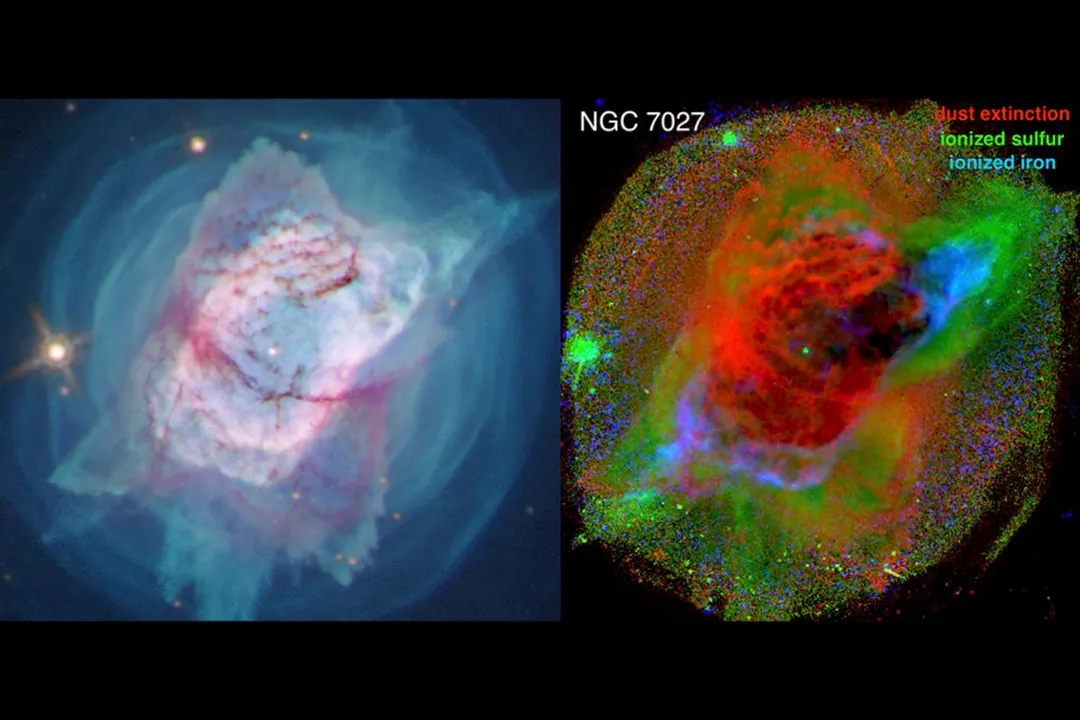
Complex shapes, such as bipolar structures or rings, are often sculpted by secondary, faster outflows or by interactions with material redirected by a binary companion star into denser rings or disks.
Related Questions
What mass range defines the stars that evolve into planetary nebulae?What object remains at the center of a planetary nebula providing the energy for its glow?What primary physical process is responsible for making the ejected shell visible as a nebula?How long does the visible phase of a planetary nebula typically last on astronomical timescales?What atomic process generates the observable light emitted by the energized gas cloud?What factor in the progenitor star's environment often leads to complex, non-spherical planetary nebula shapes?Why were these objects historically given the misleading name 'planetary nebula'?How does the illumination mechanism of a planetary nebula differ fundamentally from a reflection nebula?What specific chemical element's strong emission is often responsible for younger, highly ionized nebulae appearing blue-green?If a bipolar planetary nebula is viewed exactly pole-on, what shape might its visibility suggest?