What is a planetary nebula and why do we see it glowing?
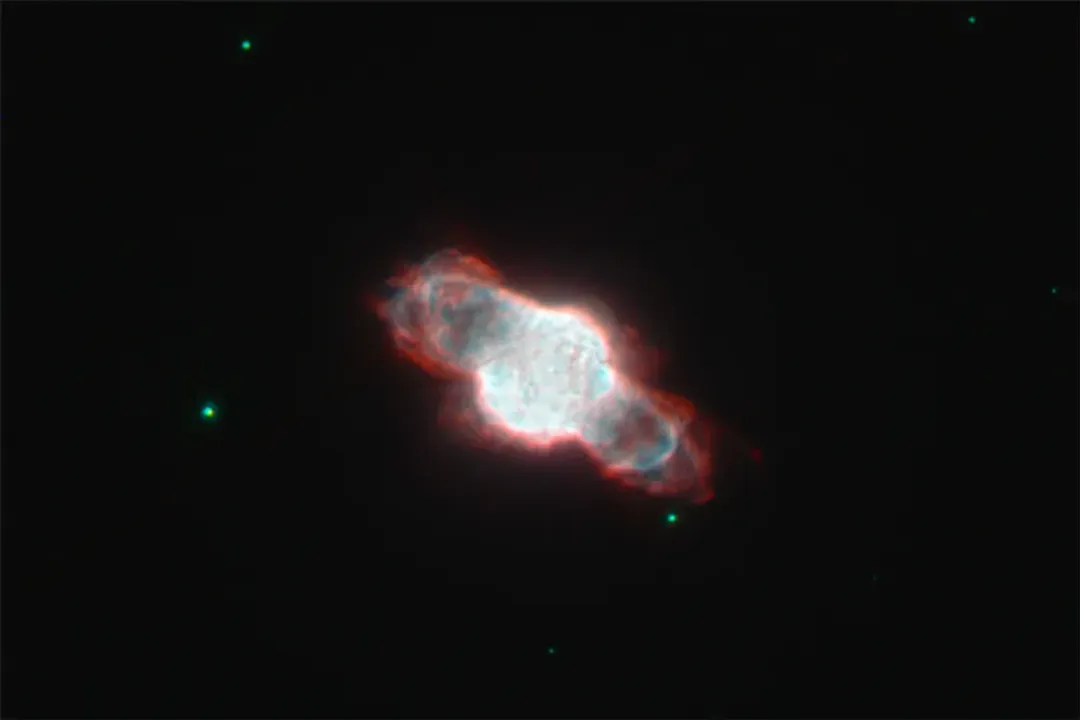
The glowing spheres and intricate shapes scattered across the night sky, often captured in stunning detail by telescopes like Hubble, represent one of the final, dramatic acts of medium-sized stars like our Sun. [4][6] These objects are called planetary nebulae. [1][8] Despite the name, they have absolutely nothing to do with planets. [1][7][9] The misleading title dates back to the late 18th century when early astronomers using less powerful telescopes observed these fuzzy, round celestial objects and thought they resembled the disks of planets such as Uranus. [1][7][8] In reality, they are vast, expanding clouds of gas and plasma ejected by a dying star at the center of the structure. [1][7]
# Stellar Endings
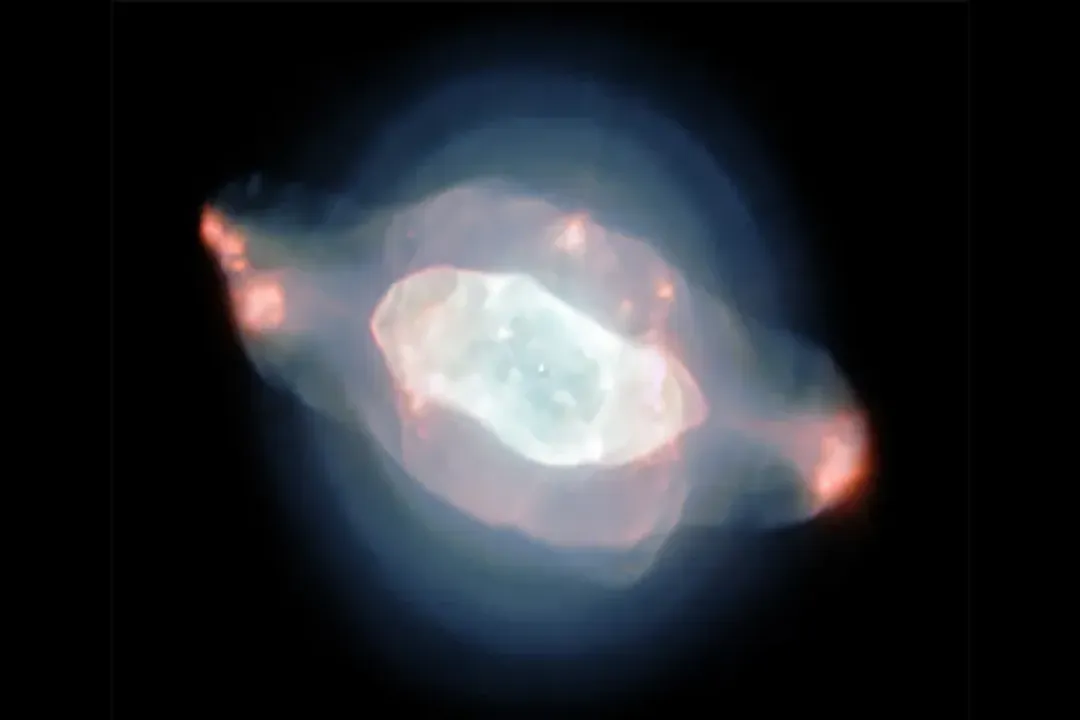
The story of a planetary nebula begins long after a star has exhausted the hydrogen fuel in its core. [1][7] For stars of low to intermediate mass—roughly $0.8$ to $8$ times the mass of our Sun—this exhaustion leads to a dramatic change in structure. [1][7][9] Once the core fusion stops, the star begins to burn hydrogen in a shell surrounding the core, causing the outer layers to swell immensely and become a red giant. [1] Following this phase, the star sheds these outer layers into space over a relatively short period. [1][8]
This ejection process is not gentle; it involves the star expelling significant amounts of its mass, sometimes up to half of what it was previously. [1] What remains behind at the center of this expanding shell is the star’s extremely hot, dense core, which eventually becomes a white dwarf. [1][7] This transition marks the end of the star’s long main-sequence life, which can span billions of years, leading into this relatively brief, final luminous phase. [1][7]
It is fascinating to consider the time disparity here. A star like the Sun spends perhaps ten billion years generating energy through stable fusion, only to spend the next ten or twenty thousand years creating this spectacular gaseous display before settling into its final form as a white dwarf. [1][7] This brief, brilliant finale illuminates the stellar graveyard for an astronomical blink of an eye. [7]
# Light Emission
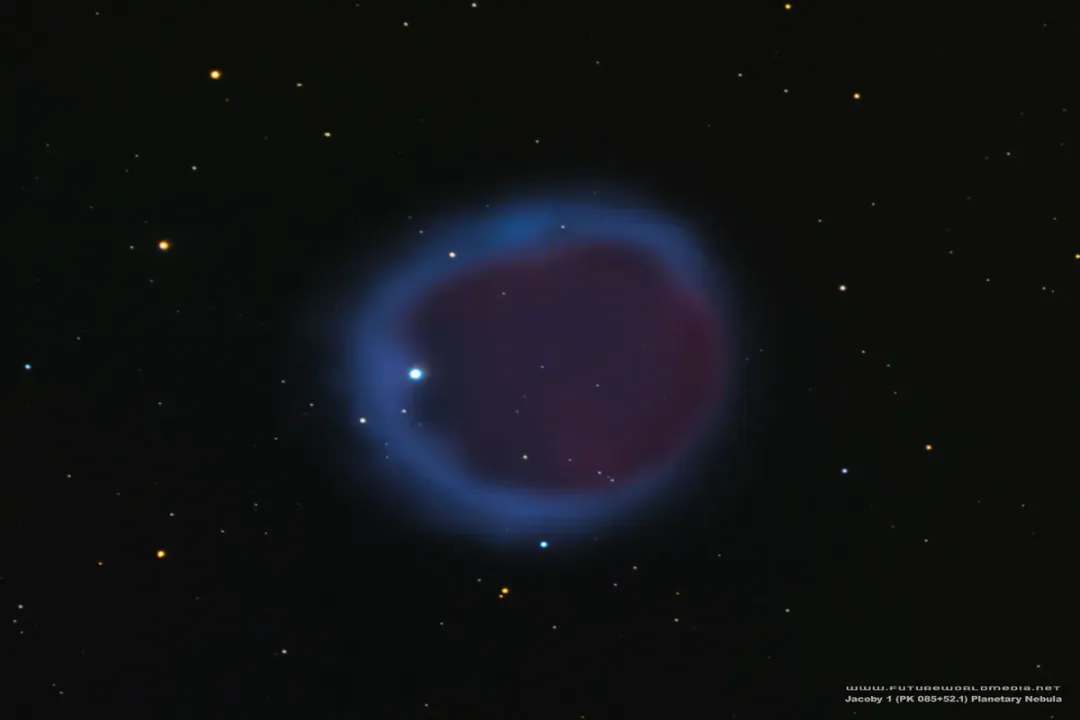
The reason we observe these objects shining so brightly is directly tied to the remnant core they leave behind. [8][9] As the outer layers drift away, the central object—the nascent white dwarf—is intensely hot, with surface temperatures that can soar to over $100,000$ Kelvin. [1] This small, superheated stellar ember emits copious amounts of high-energy ultraviolet (UV) radiation. [1][7][9]
This intense UV light streams out into the surrounding, newly expelled gas cloud. [1][7] The photons have enough energy to strip electrons from the atoms in the gas—a process called ionization. [1][7][9] When these ionized atoms later recapture an electron, they release the excess energy in the form of light at very specific wavelengths, producing the characteristic emission spectra we observe. [1] For instance, the greenish glow often seen in nebulae is typically caused by doubly ionized oxygen atoms. [1] The colors visible in a planetary nebula are therefore a direct map of the chemical composition and the energy being pumped into the gas by the central star. [1][4]
# Varied Forms
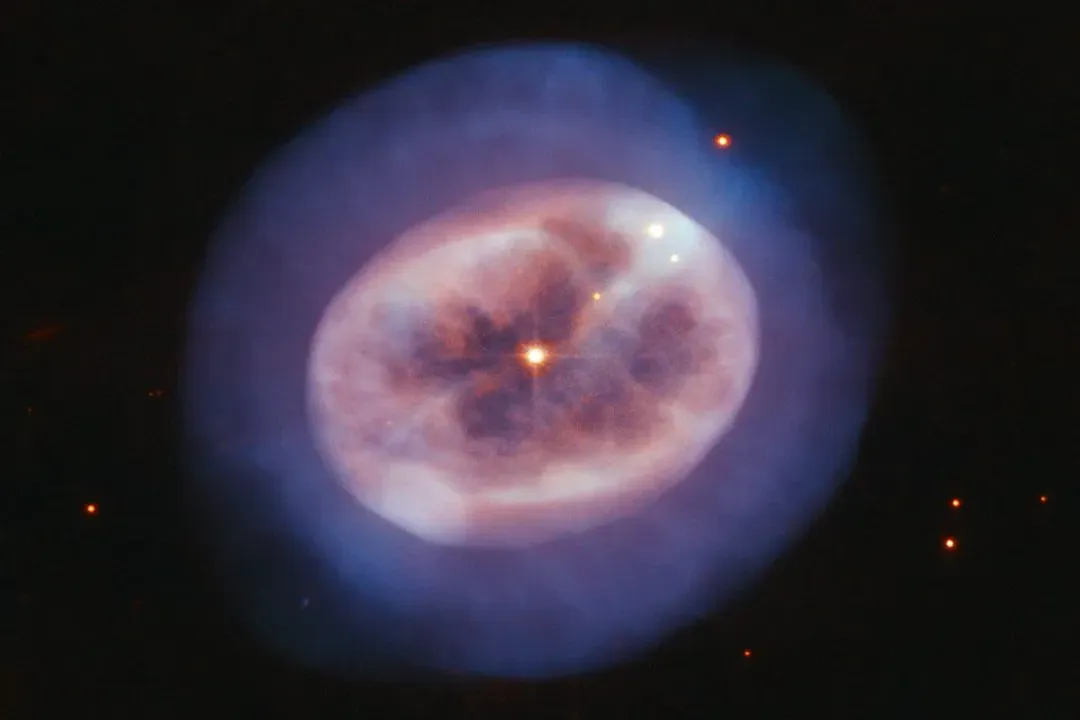
Planetary nebulae are not all simple, uniform spheres; their observed shapes vary widely, leading to some of the most visually stunning objects in the night sky. [1][3][4] While some appear as simple, expanding balls of gas, many exhibit complex, often beautiful, structures. [1] Common morphologies include elliptical, spherical, and bipolar shapes, which resemble hourglasses or bow ties. [1][3]
The diversity of shapes suggests that the simple model of a perfectly spherical star shedding its layers is often incomplete. [1] Astronomers suggest several factors influence the final morphology:
- The initial star might have been rapidly rotating. [1]
- The presence of a companion star or a binary system can alter the outflow pattern through gravitational interactions or accretion disks. [1]
- Magnetic fields threading the star can funnel the escaping material into tighter beams. [1]
Hubble Space Telescope images, for example, showcase extreme variety, from the tightly focused jets seen in some bipolar nebulae to the intricate, layered shells of others, like the famous Cat's Eye Nebula. [4] These structures offer clues about the star's immediate pre-death environment and the processes at work during mass ejection. [1]
# Brief Existence
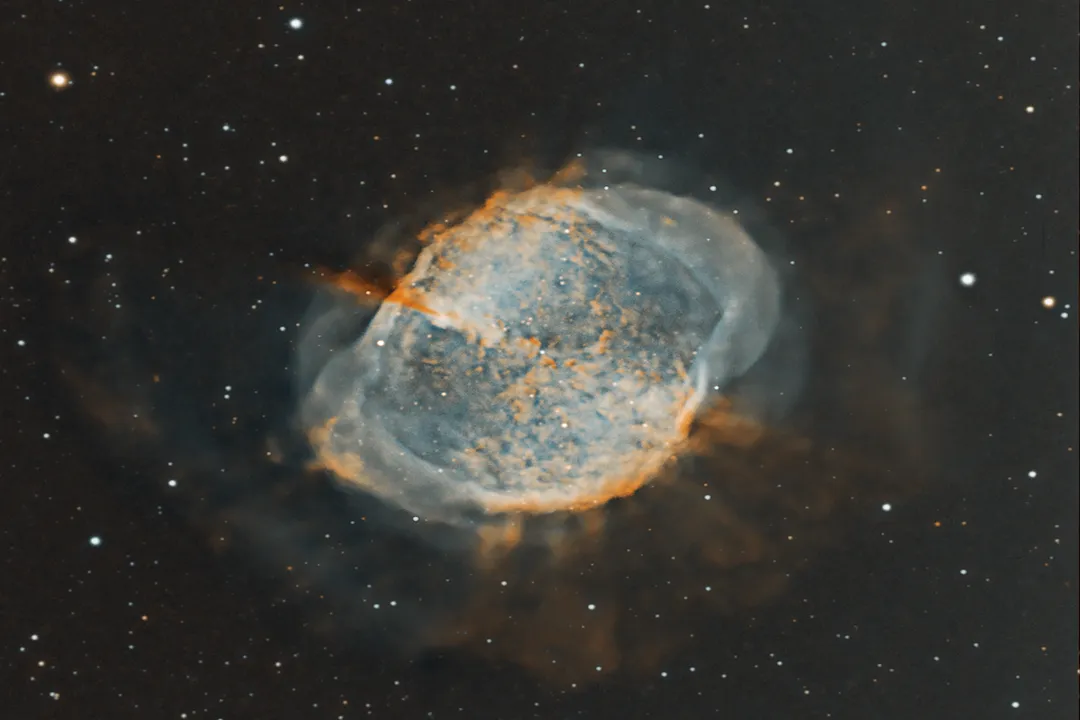
A key feature distinguishing planetary nebulae from other cosmic phenomena, like much larger supernova remnants, is their relative brevity as observable objects. [7] The entire process, from the initial ejection to the point where the gas has expanded too thinly to glow visibly, lasts only about ten thousand to fifty thousand years. [1][7] This ephemeral nature makes them rare sightings, even though astronomers estimate there are likely tens of thousands of them scattered throughout the Milky Way galaxy. [1][7]
Because the glow is entirely dependent on the ionizing radiation from the central white dwarf, the nebula's visibility is inextricably linked to the star's thermal state. [7] As the white dwarf slowly cools over millions of years—a process that occurs on a timescale vastly longer than the nebula's lifetime—the UV emission will eventually drop below the energy threshold required to keep the surrounding gas excited. At that point, the nebula will cease to glow, becoming an invisible, cold shell expanding into the interstellar medium.
# Viewing Objects
Today, these objects are prime targets for advanced telescopes, providing insight into stellar physics that cannot be replicated in laboratories. [2] Observatories and space telescopes dedicate significant time to studying them because they represent a key stage in stellar evolution for most stars in the galaxy. [2][4] The light from these nebulae, which can be seen across our galaxy and even in nearby galaxies, helps astronomers understand the chemical enrichment of the cosmos, as these ejected layers contain heavier elements synthesized during the star's life. [7] Famous examples often studied include the Ring Nebula and the Helix Nebula, each offering distinct visual characteristics derived from their unique formation paths. [4] While the raw light requires significant integration time to capture in detail, their distinct colors and shapes make them aesthetically appealing targets for both professional and amateur astronomers alike. [5][6]
#Videos
What Are Planetary Nebulae And How Are They Classified?
Related Questions
#Citations
Planetary nebula - Wikipedia
Planetary Nebulas - Center for Astrophysics | Harvard & Smithsonian
Planetary Nebulae
Hubble's Nebulae - NASA Science
What Are Planetary Nebulae And How Are They Classified?
Planetary nebula guide | BBC Sky at Night Magazine
Planetary Nebula Definition, Features & Facts - Lesson - Study.com
Planetary nebula | Definition, Temperature, Size, & Facts | Britannica
What is a planetary nebula? - Cool Cosmos - Caltech