Is a nebula a cloud?
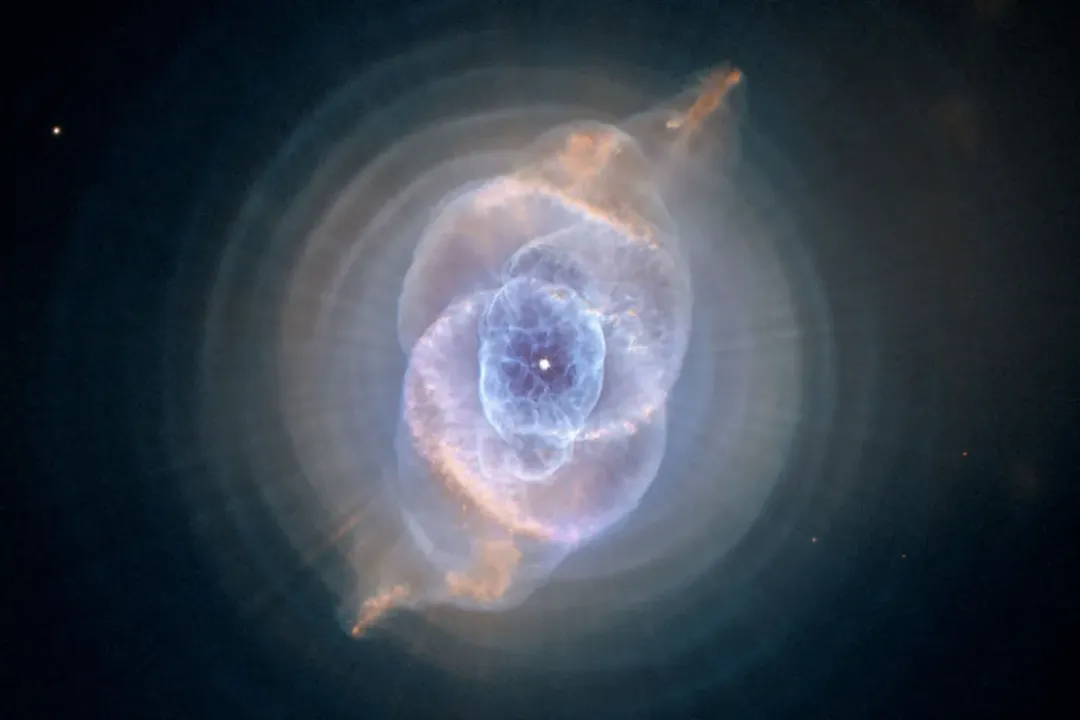
The common term used to describe the majestic, glowing structures scattered across the night sky—nebulae—stems directly from the Latin word for mist or cloud. [1][5] For centuries, as early astronomers observed these faint, amorphous patches through telescopes, "nebula" was an appropriate description, suggesting something faint, cloudy, and indistinct. [5] However, stepping into modern astronomy reveals a critical distinction: while the term cloud serves as a useful conceptual shorthand, a nebula is fundamentally different from the water-vapor clouds that drift through Earth’s atmosphere. In essence, a nebula is a cloud of interstellar matter, but the contents and scale beggar comparison to anything we experience locally. [2][3][6][7]
# Cloud Origin
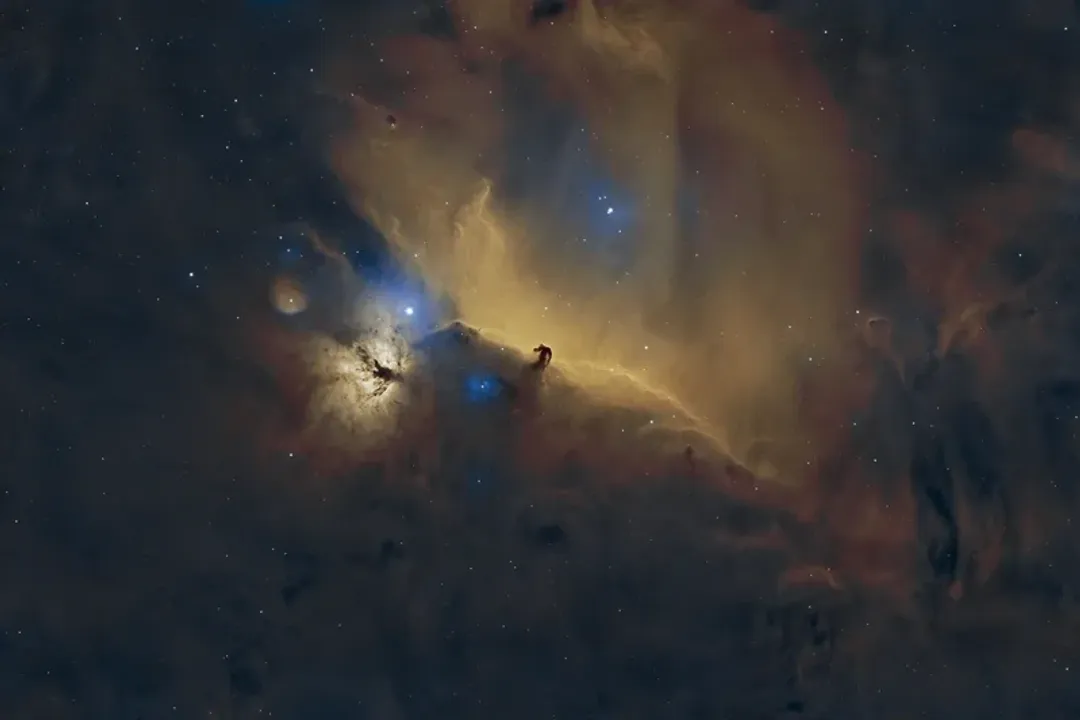
The historical naming convention makes perfect sense when considering early observations. [5] Before advanced instrumentation, objects like the Orion Nebula appeared as fuzzy, cloud-like patches of light. [5] Astronomers like William Herschel in the late 18th century used this term for any extended, nebulous patch of light in the sky, including those that turned out to be distant galaxies—which were later correctly identified as separate star systems. [1] Today, the scientific definition is precise: a nebula is an interstellar cloud of dust, hydrogen, helium, and other ionized gases. [1][2][7][8] They are the nurseries where new stars are born or the remnants left behind after stars have lived their lives. [1][7]
# Cosmic Stuffing
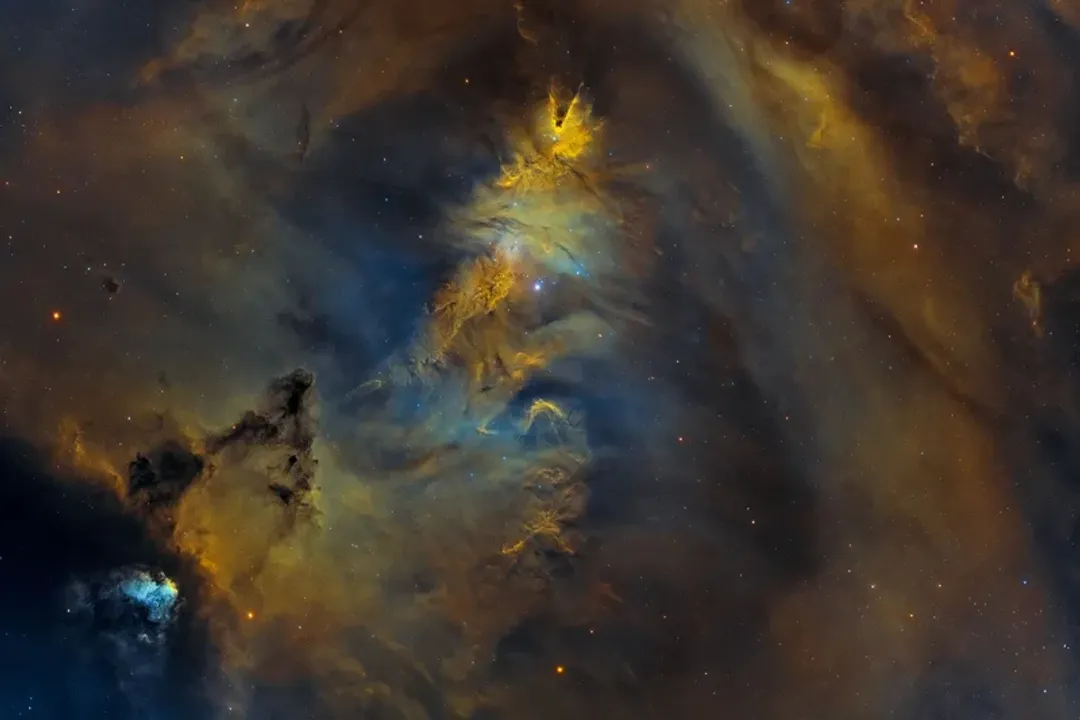
The composition is where the terrestrial cloud analogy begins to break down dramatically. An Earth cloud, regardless of its altitude, is primarily composed of water droplets or ice crystals suspended in the air. [3] A nebula, by contrast, is almost entirely made up of space. [4]
Nebulae are defined by their incredibly low density, which is why the term "cloud" is so inadequate from a physical perspective. While the sources confirm they are composed of gas and dust, [2][7] it is gas in the most rarefied state imaginable. [4] To grasp this difference, consider a thought experiment: if you could somehow scoop up a volume of space the size of Earth's atmosphere and compare it to the same volume within a typical nebula, the density contrast would be astounding. A vacuum chamber on Earth, which we consider nearly empty, is far denser than the average molecular cloud in the interstellar medium. [4] The stuff that is there—mostly hydrogen and helium atoms, alongside microscopic dust grains made of silicates and carbon compounds—is spread so thinly that the space between particles is immense. [2][7] This extreme diffusion means that light has an easier time passing through, making the object appear "cloudy" or diffuse from a distance. [4]
It is this diffuse cloud of gas and dust that dictates how we perceive them, but the material itself is the building block of stars, not simply condensed water vapor. [7]
# Diverse Forms
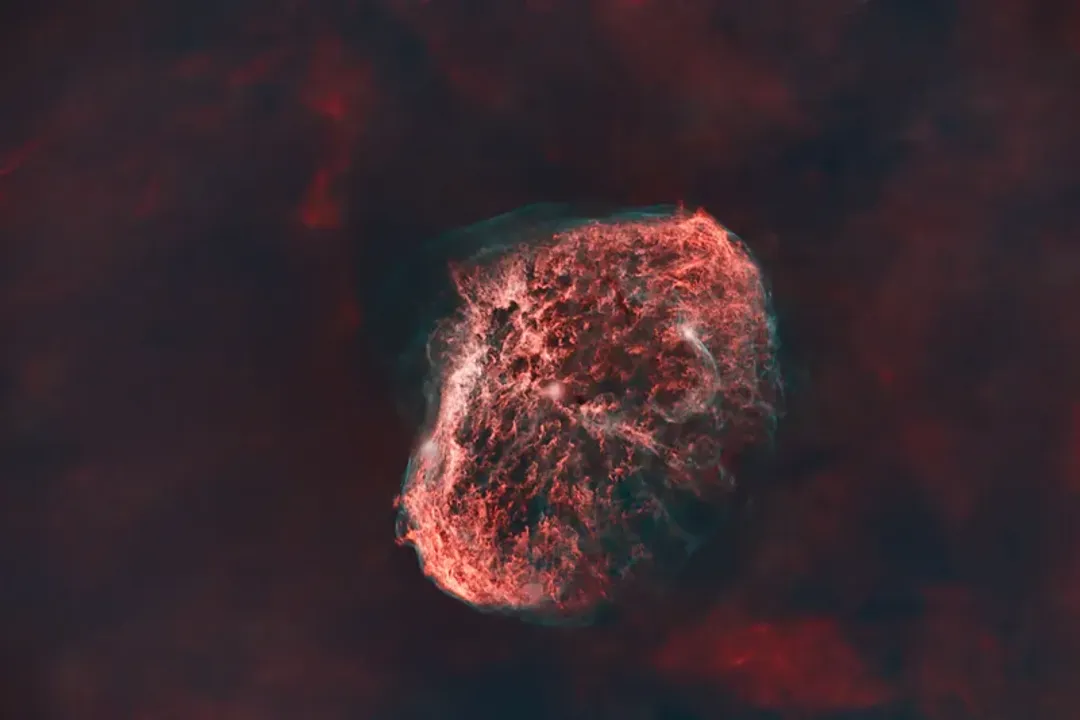
The word "nebula" encompasses an entire category of astronomical objects, not a single uniform entity, which adds complexity to the simple "cloud" label. [1][7] Astronomers classify them based on how they interact with light, which directly relates to their function in the cosmos. [7]
Different types of nebulae include:
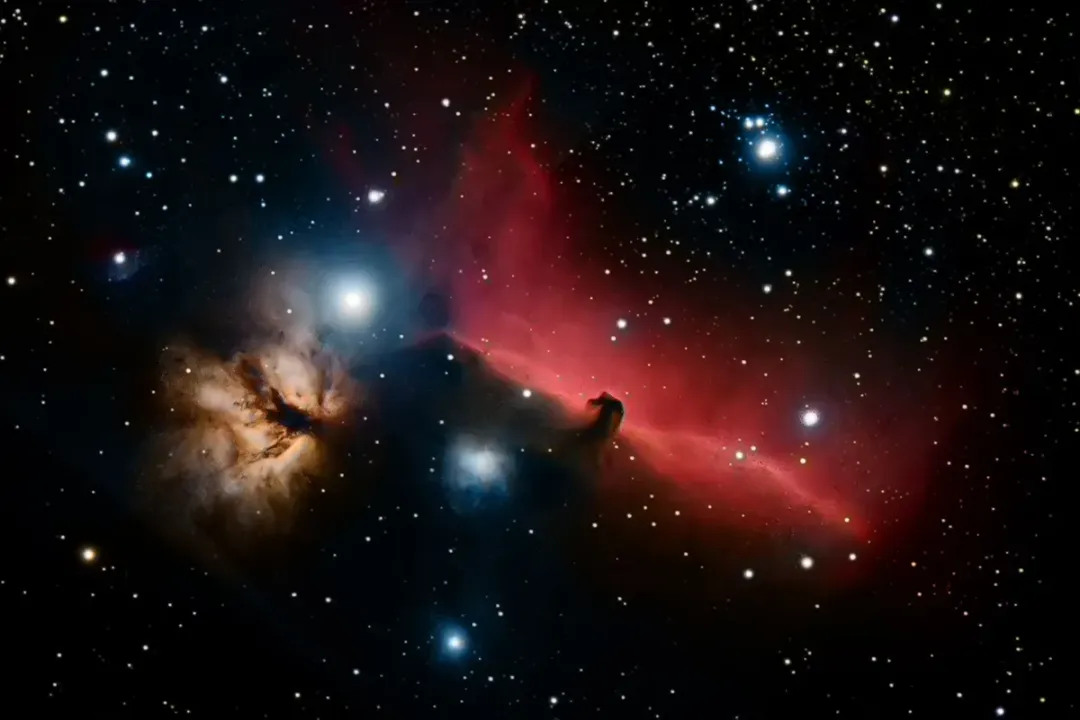
- Emission Nebulae: These are the vibrant, often reddish structures we frequently see in photographs. [1] They glow because the intense ultraviolet radiation from nearby, hot, young stars strips electrons from the hydrogen atoms in the gas—a process called ionization. [7] When these electrons later recombine with the hydrogen nuclei, they emit light, causing the cloud to shine brightly. [7]
- Reflection Nebulae: Unlike emission nebulae that create their own light, reflection nebulae simply scatter light from nearby stars. [7] They often appear blue because the finer dust particles scatter blue light more efficiently than red light, mirroring the way our own atmosphere scatters sunlight. [1][7]
- Dark Nebulae: These are perhaps the closest analogue to Earth's dark, opaque storm clouds. [2] They are dense clouds of dust and cold gas that block the light from stars or brighter nebulae lying behind them. [1][7] They are visible only because they obscure objects further away. [7]
- Planetary Nebulae: Despite the name, these have nothing to do with planets. [1] They are the shells of gas ejected by a dying star, specifically a star like our Sun as it enters its final stages. [1][7]
- Supernova Remnants: These are the expanding gaseous remnants following the catastrophic explosion of a massive star. [7] They contain heavier elements forged during the star's life and the explosion itself. [1]
When we look at an image from the Hubble Space Telescope, we are seeing structures that are physically and chemically unrelated to atmospheric moisture, yet share the visual characteristic of being vast, shapeless concentrations of material. [5]
# Stellar Lifecycle
Understanding a nebula’s role reveals why this composition matters so much: nebulae are central to galactic evolution. [7] They are not static features; they are dynamic regions of creation and destruction. [1][7]
A key insight for any stargazer is recognizing that the color of an emission nebula often reveals its dominant element. For instance, the strong reddish-pink hue common in star-forming regions like the Lagoon Nebula or the Eagle Nebula is almost always the signature of excited hydrogen gas. [1] This predominance of hydrogen gas—the universe's most abundant element—reinforces the idea that these are the raw ingredients for new solar systems, not just scattered debris. [2]
It’s fascinating to note how the term "cloud" can be misapplied based on scale. While a nebula can span hundreds of light-years, containing enough material to form thousands of stars, its perceived density is a function of distance. [4] If we could bring a small cubic meter of the Great Orion Nebula down to the surface of Earth, we would find almost nothing in it—far less than the best vacuum we can create in a laboratory. Yet, because the total mass is distributed over such an enormous volume, it becomes visible across the vastness of interstellar space. [4] This creates a perceptual paradox: the "cloud" is simultaneously enormous and almost entirely empty. [4]
# Context and Scale
To appreciate the "cloud" metaphor fully, one must consider the incredible distances involved. A typical nebula is far larger than any feature in our solar system or even our immediate stellar neighborhood. [1] For comparison, the entire solar system is relatively insignificant in size compared to the scale of these interstellar clouds. [7]
The sheer volume of space occupied by these structures helps explain why they are sometimes referred to as nebulae, even though they are not physical, condensed masses like terrestrial clouds. They are merely concentrations of matter that are significantly denser than the near-perfect vacuum that makes up the rest of the interstellar medium (ISM). [4] When observing the remnants of a massive star, like the Veil Nebula, we are witnessing material expanding outwards at thousands of kilometers per second, yet it remains diffuse enough to be categorized as a cloud structure, albeit one that is billions of years in the making or ongoing. [7]
For someone interested in capturing these sights, the challenge is not just pointing the telescope at a bright spot, but understanding that you are viewing regions where the material density fluctuates wildly. [2] Dark nebulae present one problem—blocking light—while emission nebulae present another—requiring sufficient excitation energy from nearby massive stars to make their rarefied gas glow visibly. [7] This dependency on external energy sources is another key difference from Earth clouds, which interact with local sunlight or atmospheric conditions, not the high-energy radiation of stars millions of times brighter than our own Sun. [7]
# Final Assessment
So, is a nebula a cloud? The most accurate answer is that it is a celestial gas and dust cloud. [2][3] If "cloud" means a large, diffuse collection of material occupying a vast region of space, then yes, the term fits. [5] If "cloud" means a structure composed of condensed water vapor suspended in an atmosphere, then no, it is completely different. [3] Nebulae are the fundamental, visible components of the interstellar medium, representing either the building blocks of future stars or the spectacular evidence of stellar demise. [1][7] Their visibility comes from the delicate balance between their slight material concentration and the immense light-years they span, making them the universe's most beautiful, thinly spread vapor trails. [4]
Related Questions
#Citations
Nebula - Wikipedia
What is a nebula? Cosmic clouds and how to see them
What is a nebula? - Cool Cosmos - Caltech
What causes a nebula - a very diffuse cloud of Hydrogen to ... - Reddit
Nebula - ESA/Hubble
What Is A Nebula? - Slooh
Nebula: Definition, location and variants - Space
Space Place in a Snap: What Is a Nebula? - NASA+
What are key facts about nebulae in space? - Facebook