What elements are being fused in a nebula?
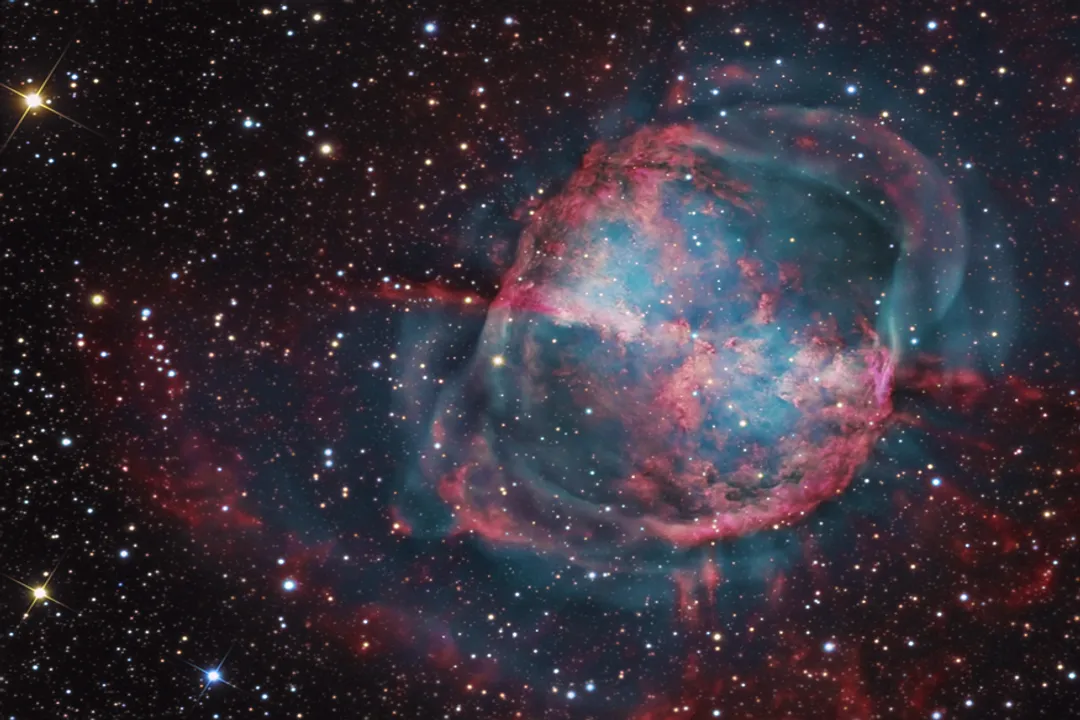
The gigantic, glowing clouds of gas and dust scattered across the cosmos are often viewed as the origin point for everything—the raw material from which stars, planets, and even life itself arises. These immense clouds, known in their dense state as nebulae, start with a rather simple composition. They are overwhelmingly composed of the lightest elements: hydrogen and helium. [4] Yet, when we look at a stunning planetary nebula—a vast, illuminated shell of material—we see evidence of much more complex chemistry. The elements that make up the breathtaking colors in these structures were not created within the diffuse gas itself, but rather were forged in the intense, fiery crucibles of stars that lived and died within that nebula’s vicinity. [6][4]
# Stellar Nurseries
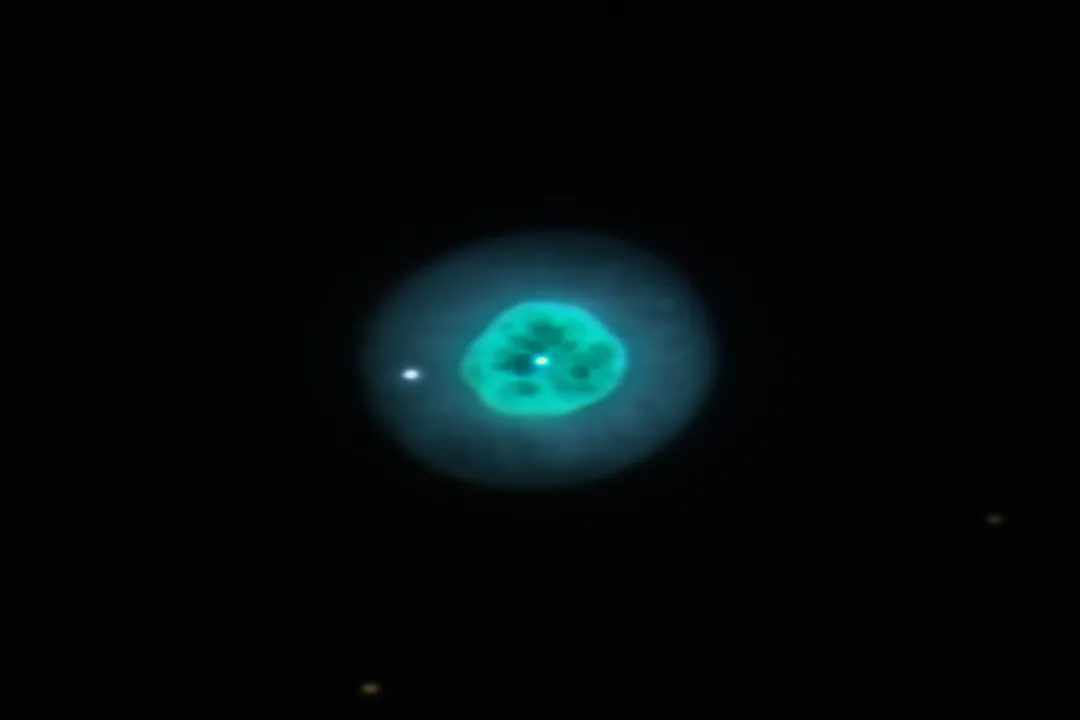
A nebula, whether a sprawling molecular cloud or the remnant of a star's death, is fundamentally a repository of gas and dust. In the initial stages, when gravity begins to gather this material to form new suns, the cloud is dominated by the universe’s primordial ingredients. For the cloud that eventually gave birth to our Sun, for instance, about $98%$ to $99%$ of its mass was hydrogen and helium. [3] The crucial remainder—that $1%$ to $2%$—contained all the heavier ingredients: the carbon, oxygen, silicon, magnesium, and iron that would eventually form the terrestrial worlds and everything on them. [3]
Before a star truly ignites, the collapsing clump of material is called a protostar. [4][2] Gravity relentlessly pulls this matter inward, and the resulting friction heats the core. [4] This accumulation of energy is vital, but it is not yet full-fledged nuclear fusion, the process where elements are fused together. [2] The protostar continues to gather mass, increasing its density and temperature, until a critical threshold is met. Only when the core reaches temperatures around 10 million degrees Kelvin does the primary engine of element creation kick into gear, and the object officially becomes a star, settling onto the main sequence phase. [2][6]
# Hydrogen Burn
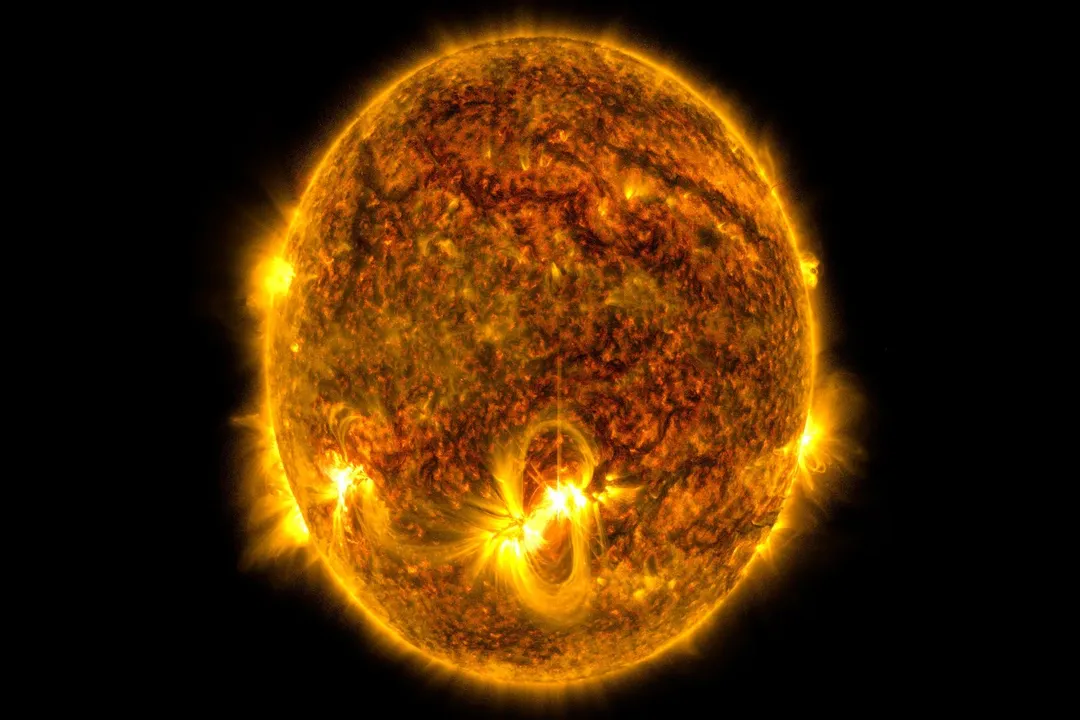
The longest phase of any star’s existence, the main sequence, is defined by the steady conversion of the lightest element into the next one up the periodic table. [6] In the core of a star like our Sun, intense pressure and temperatures force hydrogen nuclei to fuse together, creating helium. [4] This is an ongoing thermonuclear reaction that releases tremendous energy, providing the outward pressure required to counteract the relentless inward crush of gravity—a state known as hydrostatic equilibrium. [6][1] Even on the way to this state, the protostar may fuse the rare isotope deuterium into helium, a process that acts like a stellar thermostat, keeping the core stable around one million degrees until it is hot enough for normal hydrogen fusion to begin. [2]
For stars similar in mass to the Sun, this hydrogen-to-helium conversion is the primary process that sustains them for billions of years. [4] When the hydrogen fuel in the core is finally depleted, the star’s balance is upset. Gravity takes over, compressing the core and raising temperatures until a new fusion process can begin.
# Heavy Elements
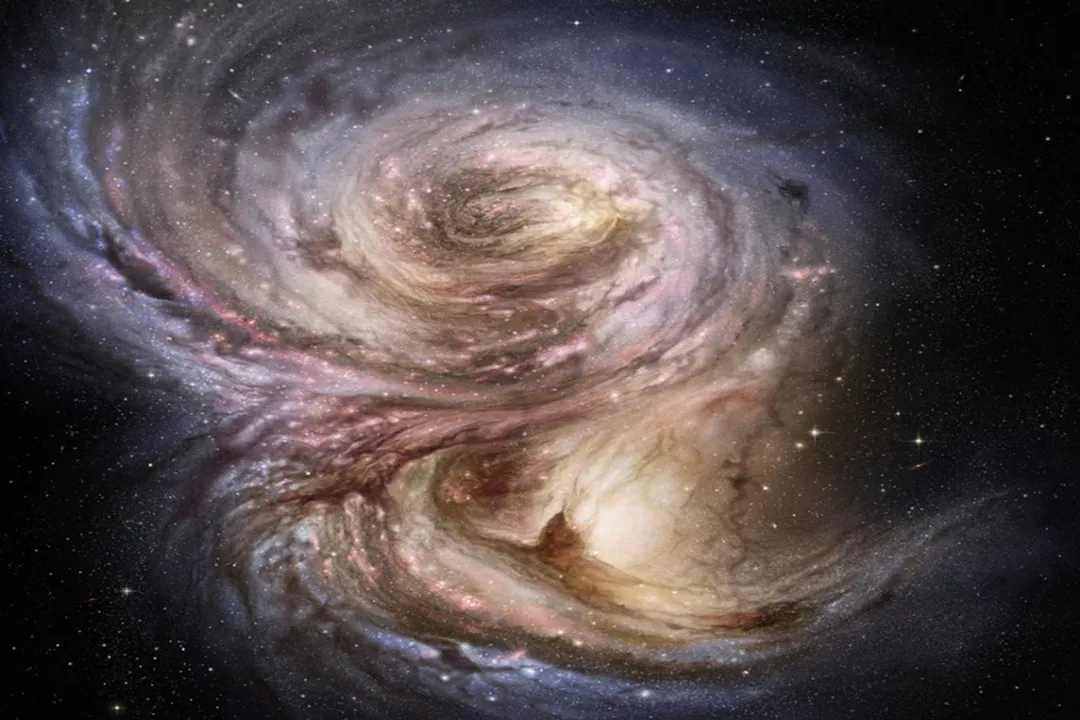
The fate of the elements created next depends entirely on the star’s initial mass. Stars that are not particularly massive, like our Sun, will eventually see their helium cores reach about 100 million K. [4] At this point, helium nuclei begin fusing into carbon and oxygen. [4] This process releases more energy than hydrogen burning, causing the outer layers of the star to expand dramatically, turning it into a Red Giant. [4] For these lower-to-intermediate mass stars, this phase of fusion, followed by the eventual ejection of the outer layers, is where most of the carbon and oxygen within the resulting nebula originates. [3][1]
The story changes drastically for stars significantly more massive than the Sun. These stellar giants have enough gravitational pressure in their cores to continue the fusion chain long after helium is exhausted. [6] They sequentially fuse carbon into heavier elements like neon, and then continue building up the atomic nucleus until they reach the elemental limit: iron. [7][6] Fusing elements all the way up to iron releases energy, sustaining the star against collapse. However, iron is a critical turning point; fusing iron requires energy input rather than releasing it, meaning the star’s furnace shuts down abruptly. [6][1]
This stagnation of energy generation in the iron core leads to catastrophic collapse. In the largest stars, this collapse triggers a shockwave that rebounds outward, resulting in a supernova explosion. [6] It is within the incredible, near-instantaneous energy release of this explosion that elements heavier than iron—such as copper, gold, and uranium—are generated. [7][3]
# Cosmic Recycling
When a low-mass star like the Sun reaches the end of its life, it sheds its expanded outer layers via a strong stellar wind. This expelled material forms an expanding, glowing cloud called a planetary nebula. [4][1] These nebulae are chemically enriched with the heavier elements created during its lifetime, specifically carbon, nitrogen, and oxygen. [3][1] The central hot core, now a white dwarf, emits ultraviolet radiation that illuminates this ejected gas, creating the colorful spectacle we observe. [4][1]
The role of these stellar remnants is fundamental to the chemical progression of the galaxy. Planetary nebulae expel their processed material, or metals as astronomers term them, back into the interstellar medium, enriching the next generation of molecular clouds. [1] This enrichment means that subsequent stars and planetary systems, like our own, form from gas that is already seeded with the byproducts of stellar lives. [4][6]
The material from the massive stars follows a different, more violent path. When they explode as supernovae, they distribute all the elements they forged, including the iron-peak elements and the super-heavy elements created during the blast, back into space. [6][7]
It’s interesting to consider the physical state of the material ejected in these grand events. A typical planetary nebula consists of extremely rarefied gas, often having a density between $100$ to $10,000$ particles per cubic centimeter. [1] To put that scarcity into perspective, the atmosphere surrounding Earth at sea level contains approximately particles per cubic centimeter. [1] Therefore, the gas that illuminates a planetary nebula is, by terrestrial standards, an almost perfect vacuum, yet it contains the atomic blueprints for future complexity. While we often attribute all heavy elements to supernovae, scientific consensus suggests that the heaviest elements—those beyond iron, like gold—are primarily forged during even more energetic events, such as the collision of neutron stars. [7][3]
This means that every element required to build a world—the iron in our blood, the oxygen we breathe, the silicon in rock, and the gold in jewelry—owes its existence to two distinct stellar death throes. Elements up to iron are constructed layer by layer within the stable lives of stars, with solar-mass stars contributing C and O, and massive stars reaching Fe. Elements heavier than iron, however, require the extreme, brief violence of either a supernova or a neutron star merger to be created and ultimately distributed throughout space via nebulae for the next cycle of cosmic assembly. [7][3][6] The nebula itself is the medium, but the elements are fused within the stars born from it.
Related Questions
#Citations
Planetary nebula - Wikipedia
Formation of Planetary Nebulae - Cosmotography
Protostars and Nebulae - ASPIRE
ELI5: If everything comes from nebula gas, how did shining ... - Reddit
Star Basics - NASA Science
Fusion of elements inside heavy stars - Astronomy Stack Exchange
Stellar Evolution - | The Schools' Observatory