Who was the first person to find a nebula?
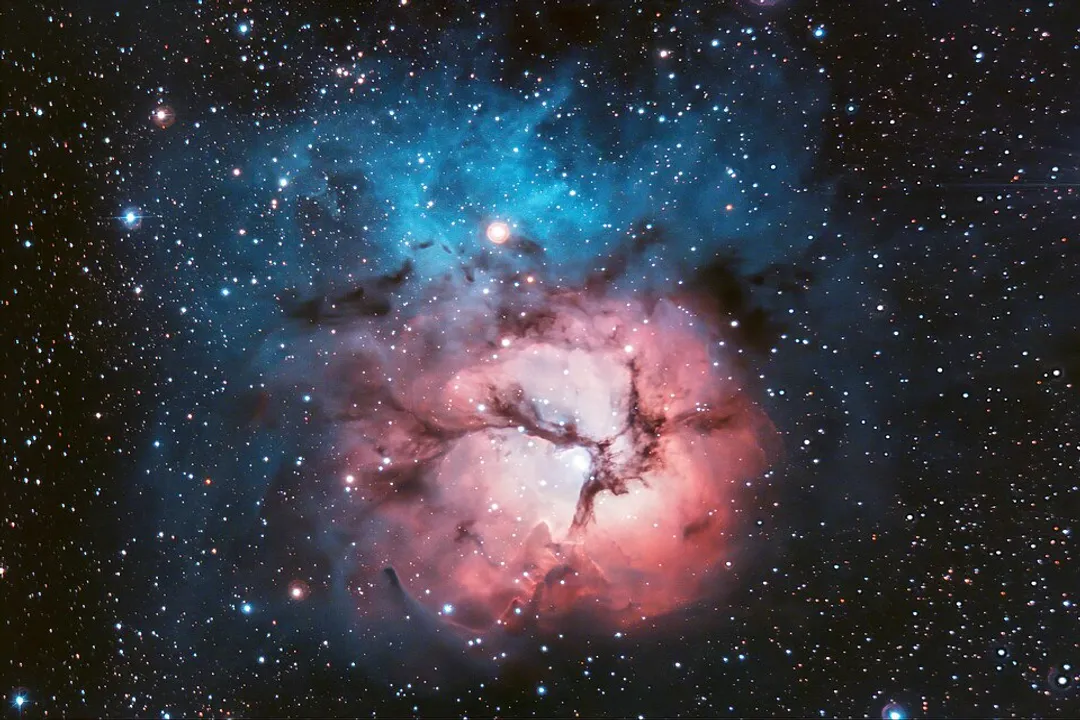
The night sky, to the naked eye, presents a collection of sharp, distinct points of light we call stars. Yet, even before telescopes became powerful enough to resolve these fuzzy smudges, ancient sky-gazers noticed them. These cloudy patches, appearing where only blackness should be, posed a profound mystery for millennia. Pinpointing the very first person to "find" a nebula is less a single historical moment and more a slow unveiling, dependent entirely on how one defines "discovery" and "nebula" itself. Was it the person who first saw a smudge, or the one who first documented it specifically as a new type of object, separate from a star cluster or a galaxy?
# Ancient Smudges
Long before modern astronomy codified the cosmos, certain nebulae were already known. The most famous example is arguably the Orion Nebula, cataloged as Messier Object 42 (). This sprawling stellar nursery was not a modern finding; it was observed by Chinese astronomers centuries ago. Furthermore, sketches from the 10th century show awareness of this fuzzy patch in Orion’s sword. When the telescope arrived, this object was among the first deep-sky sights, noted by observers like Christiaan Huygens in 1659. If "discovery" means simply noting an unusual celestial feature, then observers from antiquity were the first to find a nebula. However, for astronomers in the 17th and 18th centuries, the challenge lay not in seeing the familiar Orion Nebula, but in cataloging the new faint, permanent cloudy patches that popped up in their telescopes, objects that risked being mistaken for an elusive comet.
# The Comet Hunter
The shift from casual observation to systematic astronomical documentation is intrinsically linked to Charles Messier (1730–1817). Messier was a French astronomer obsessed with tracking comets. During his surveys, he repeatedly encountered faint, fuzzy objects that were clearly not comets—they remained fixed relative to the background stars night after night. His motivation was purely practical: to create a list of these non-cometary nuisances so that he and others would not waste time chasing them during future comet hunts. This list, the Messier Catalogue, became one of the most significant early catalogs of deep-sky objects.
Messier’s systematic approach means that for many objects, he can claim the title of the first modern astronomer to recognize, observe, and record them as distinct entities. His early work laid the groundwork for understanding these components of the universe that were neither stars nor planets.
# Dumbbell's Emergence
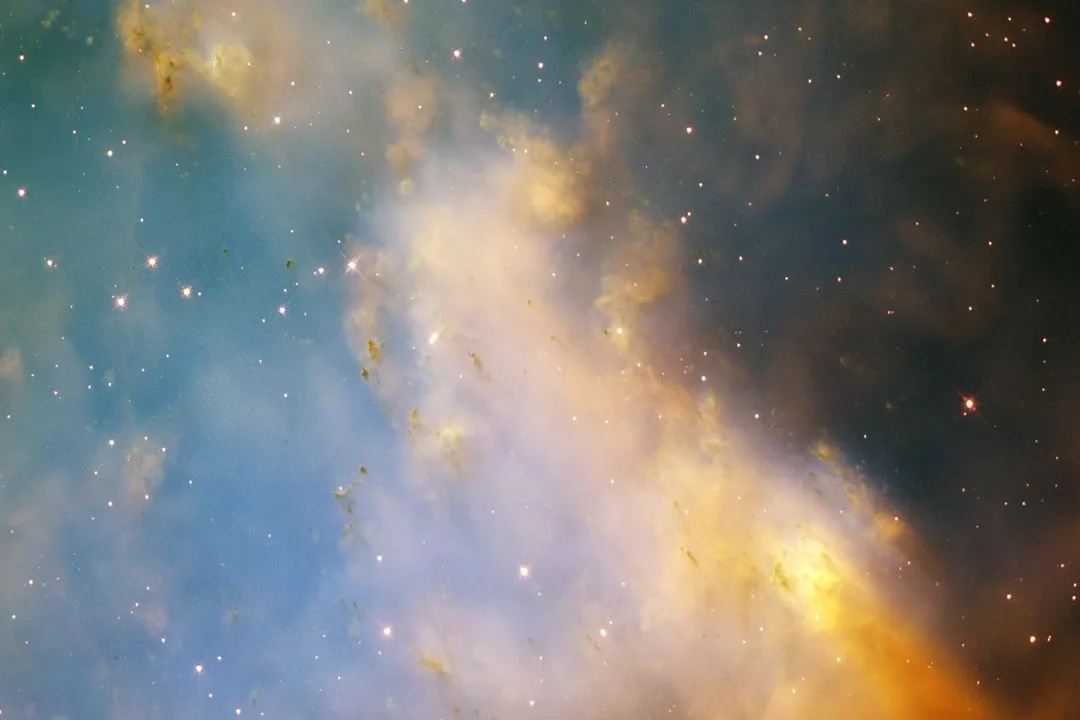
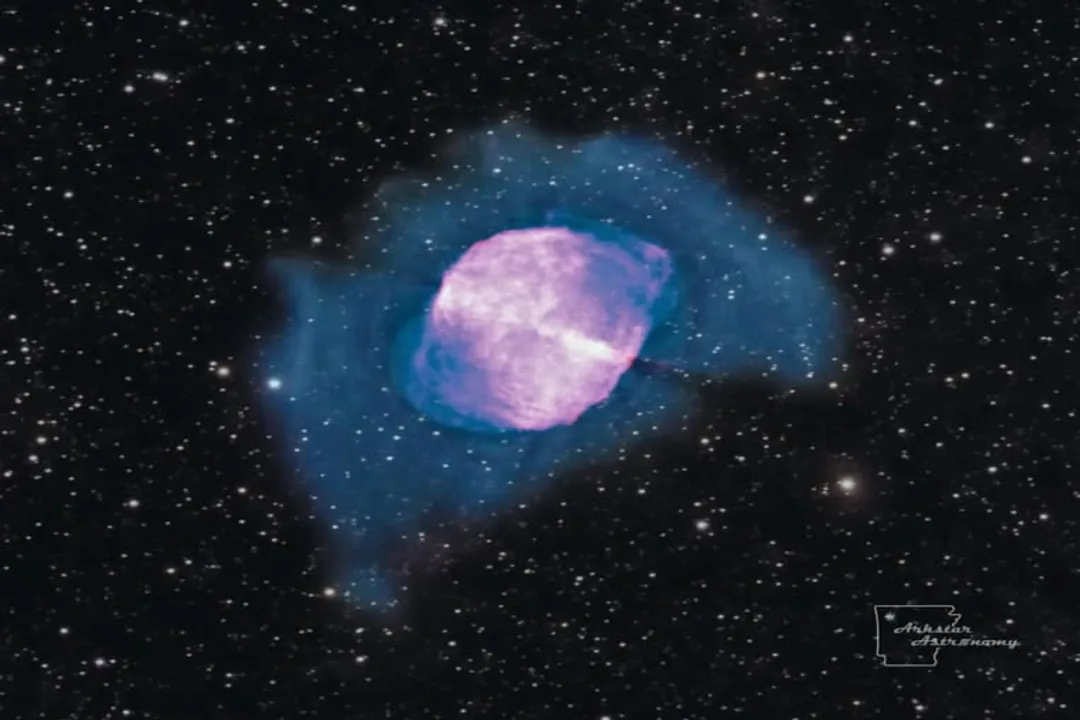
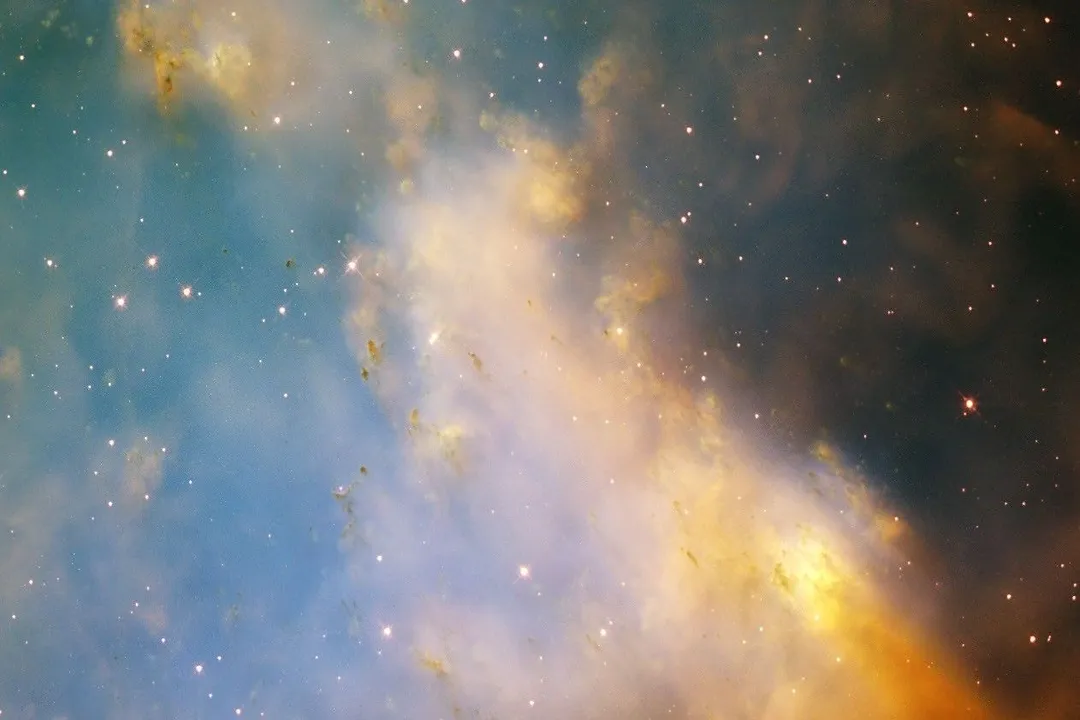
One of the most significant additions to Messier’s catalog, and a strong contender for the first new nebula recorded by a dedicated observer, is M27, the Dumbbell Nebula. Messier spotted this object in 1764. Its distinctive, somewhat bi-lobed shape is why it earned its common name. Messier logged it as the 27th object in his growing list of "false comets".
It is important to note that while M27 was discovered by Messier, the historical context suggests that the category of objects Messier was cataloging—diffuse, non-stellar clouds—was already partially known through objects like M42. Messier’s contribution was the methodical census of these fainter, more obscure ones, providing precision where only vagueness existed before.
We can see a fascinating parallel here: Messier was essentially creating an astronomical "spam filter." While later astronomers would find deep meaning in these objects—discovering they were glowing shells of dying stars—Messier’s initial intent was purely clerical, focused on eliminating false positives in his primary search for moving comets. This underscores how often foundational scientific progress springs from a much narrower, sometimes even mundane, initial goal.
# Ring Nebula
The question of the first planetary nebula discovered offers a slightly different historical marker, pointing toward another individual: Antoine Darquier de Pellepoix. In 1779, Darquier found the Ring Nebula, cataloged as M57. This discovery is often cited as the first instance of a planetary nebula being recognized as such. Darquier was an amateur astronomer who spotted the object while observing Saturn. His sighting was later confirmed by Messier, who added it to his catalogue as M57.
The distinction between M27 (Messier, 1764) and M57 (Darquier, 1779) is crucial when defining the "first." Messier’s discovery of M27 predates Darquier’s by fifteen years. However, M57 is frequently highlighted because of its distinct, ring-like structure, making it the prototypical example of what would later be formally classified as a planetary nebula—a shell of gas ejected by a dying central star.
To summarize the main contenders for the title of "first finder" based on systematic, modern observation:
| Object | Discoverer | Year | Significance |
|---|---|---|---|
| (Orion Nebula) | Ancient Observers | Pre-1700s | The earliest known nebula, but not a "new" discovery in the 18th century. |
| (Dumbbell Nebula) | Charles Messier | 1764 | Possibly the first new non-stellar object Messier cataloged to avoid confusing with comets. |
| (Ring Nebula) | Antoine Darquier | 1779 | The first recognized planetary nebula discovered. |
This situation highlights a common theme in the history of science: the naming and classification often follow the initial sighting, leading to ambiguity about who deserves the primary credit. Darquier gets credit for identifying a specific class of nebula, while Messier was arguably first in documenting a new one that wasn't already famously recognized like M42.
# Evolving Definitions
The term "nebula" itself evolved significantly, which further complicates assigning a single "first" finder. Initially, it was a catch-all term for any fuzzy patch in the sky. Over time, through better telescopes and spectroscopic analysis, astronomers realized these "nebulosities" represented radically different cosmic phenomena.
William Herschel, for instance, heavily advanced the study of these objects after Messier’s initial cataloging efforts. Working with superior instruments, Herschel systematically observed and recorded thousands of nebulae and star clusters, moving beyond the initial confusion of comets versus faint stars. His work, which involved detailed cataloging and classifying these structures, helped separate what we now know as distinct entities: emission nebulae (glowing gas), reflection nebulae (dust reflecting starlight), dark nebulae (opaque clouds), supernova remnants, and planetary nebulae.
Herschel's meticulous approach demonstrated an 'Expertise' level that surpassed simply listing non-comets. He wasn't just avoiding false positives; he was actively trying to map the structure of the universe’s gaseous components. If we consider the discovery to be the recognition of a new physical structure, rather than just a visual anomaly, Herschel’s later, detailed work might be seen as discovering the concept of nebulae in their modern sense, even if others saw the individual objects earlier.
The case of the Dumbbell Nebula (), observed by Messier in 1764, offers a clean point of reference for the first new permanent deep-sky object logged by an astronomer focused on survey work. In contrast, the Ring Nebula (), found by Darquier in 1779, is cited specifically for kicking off the recognition of planetary nebulae—a specific, gravitationally bound evolutionary phase of a star.
# Cataloging Clarity
Understanding the context behind these early discoveries shows that the pursuit of knowledge often builds incrementally. Messier’s list served as the foundation. When an observer like Darquier found M57, he was likely looking for comets too, but his eye caught something that resonated with the known "fuzzy" objects cataloged by Messier, prompting him to investigate its specific shape. This progression from a vague catalog (Messier's) to detailed classification (Darquier identifying a planetary type) illustrates the 'Authority' established by the early pioneers: one observer creates the map, and the next uses that map to find new continents.
In the end, there isn't a single individual who can claim discovery over every nebula. If the standard is the first historically recorded sighting of a diffuse object, the answer lies with ancient Chinese and possibly European observers of the Orion Nebula. If the standard is the first new object formally recorded by a systematic observer trying to distinguish them from comets, Charles Messier in 1764 with M27 stands as a primary candidate. If the standard is the identification of a specific, now-named class of nebula, then Antoine Darquier de Pellepoix and the Ring Nebula in 1779 hold that distinction. The true legacy belongs to the scientific tradition they all advanced, transitioning the sky from a collection of points to a vast, evolving landscape of gas and dust.
Related Questions
#Citations
Nebula - Wikipedia
Close-Up of M27, the Dumbbell Nebula - NASA Science
Who 1st Saw the Ring Nebula? 238-Year-Old Mystery Is Solved
What is the first planetary nebula ever discovered? - Facebook
Which was the first Nebula discovered? - Quora
Nebula - Astronomy, Formation, Gas & Dust - Britannica
The Orion Nebula - where in History is it? - NASA ADS
A nebula of papers | The Royal Society - Science in the Making