Are all nebulae luminous?
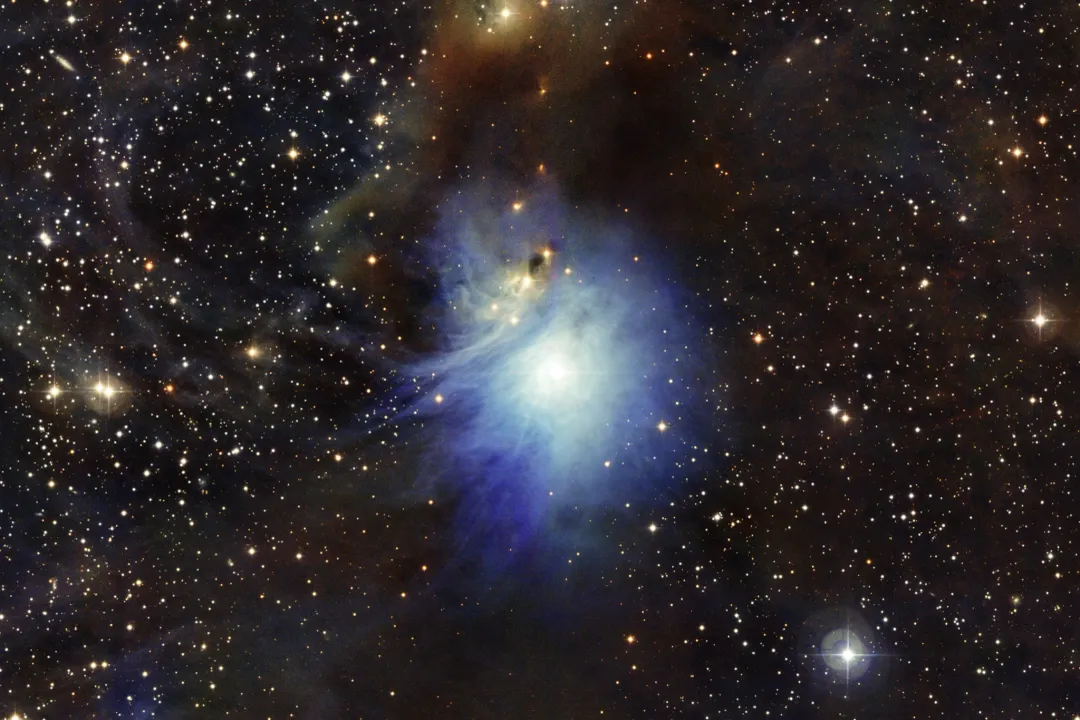
The very concept of a nebula suggests cosmic brilliance, vast clouds painted across the void by stellar fires, yet not every one of these immense interstellar structures actively produces or reflects light in a way the eye—or even most telescopes—can easily detect. [1][3] A nebula, fundamentally, is simply a massive cloud of gas and dust residing in the space between stars, the raw material for future stellar nurseries or the remnants of stellar deaths. [1][5][4] The luminosity, or the apparent brightness, is entirely dependent on what lies within or immediately around that cloud, turning the simple question of visibility into a fascinating study of astrophysics and obscuration. [3]
# Gas Dust
At their most basic, nebulae are composed primarily of hydrogen and helium gas, along with trace amounts of heavier elements and dust grains. [1] These clouds occupy the interstellar medium, varying dramatically in density and temperature. [5] The term itself, derived from the Latin word for "mist" or "cloud," was historically applied to anything fuzzy or indistinct seen through early telescopes, including distant galaxies, before their true nature was understood. [1] Modern astronomy classifies these structures based on how they interact with electromagnetic radiation—specifically, how much light they give off or allow to pass through. [3]
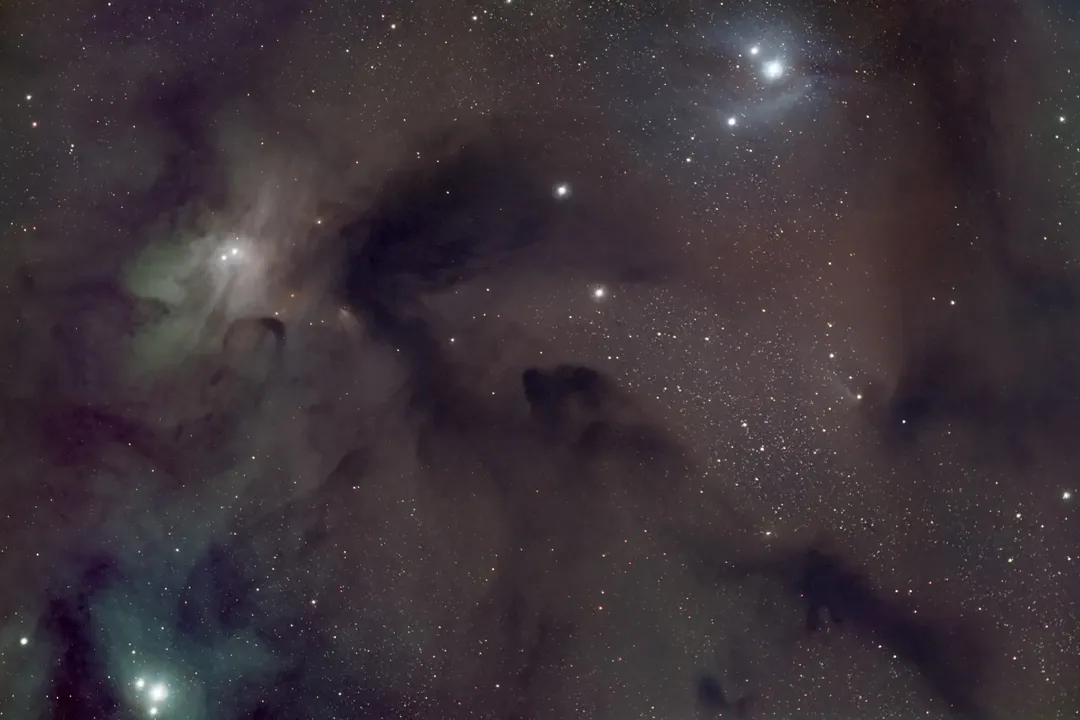
If we consider a typical dark molecular cloud, the density might be high enough that the entire structure blocks the light from stars located behind it, rendering the cloud itself invisible against the black background of space. [1] Contrast this with a diffuse, low-density emission nebula, where the sparse particles might glow faintly but are difficult to resolve without specialized long-exposure imaging. [8]
A key distinction arises from composition. The dust component, though making up only about one percent of the mass, is crucial for opacity and scattering. [1] In regions where the dust content is substantial relative to the gas—and especially where there is no nearby, energetic star—the cloud becomes a cosmic silhouette rather than a beacon. [3]
# Emitting Light
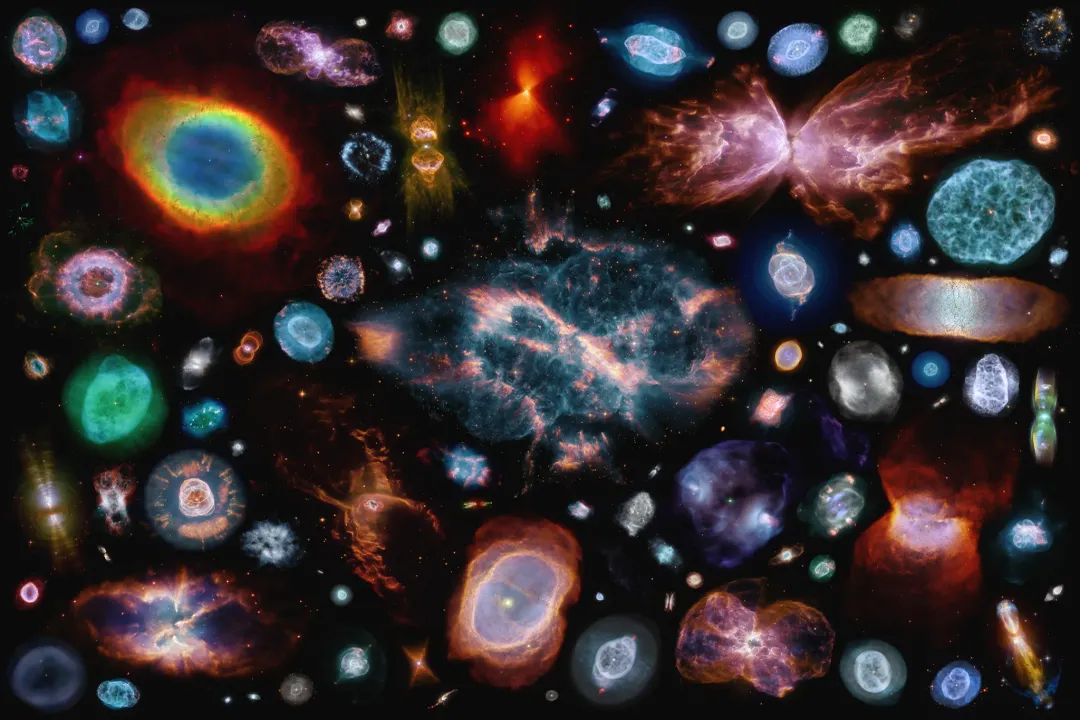
When we think of the classic, colorful nebulae, we are usually observing one of two luminous categories: emission nebulae or reflection nebulae. [5][7]
# Emission Nebulae
These nebulae are luminous because they glow from within. They are typically found near hot, young, massive stars, such as O or B type stars. [3][5] These stars emit intense ultraviolet radiation, which has enough energy to strip electrons from the surrounding hydrogen gas atoms—a process called ionization. [3] When the electrons later recombine with the hydrogen nuclei, they cascade down to lower energy levels, emitting photons at specific wavelengths. This process is most famous for producing the characteristic deep red glow associated with ionized hydrogen, often seen in star-forming regions. [3][5] This light production mechanism means that if the exciting star were to disappear, the glow would rapidly fade over time. [4]
# Reflection Nebulae
Reflection nebulae achieve luminosity through a different, more passive process: scattering. [7] Unlike emission nebulae, these clouds are not energized enough to ionize the gas, nor are they dense enough to block light entirely. Instead, they contain fine dust particles that effectively scatter the visible light emitted by nearby stars that are not hot enough to cause significant ionization. [7][5]
The scattering process is governed by principles similar to why our own sky is blue—shorter wavelengths (blue light) are scattered more efficiently than longer wavelengths (red light). [7] Consequently, reflection nebulae often appear distinctly blue, a phenomenon evident in regions like the nebulosity surrounding the Pleiades star cluster. [5][7]
Here is a brief comparison summarizing how the interaction with nearby starlight determines the appearance of the luminous types:
| Nebula Type | Primary Mechanism | Typical Appearance | Exciting Star Requirement |
|---|---|---|---|
| Emission | Ionization and Recombination | Red/Pink (H-alpha) | Very hot, high UV output (O/B type) [3] |
| Reflection | Scattering of Starlight | Blue or White | Nearby, but not necessarily extremely hot |
| Dark | Absorption/Obscuration | Invisible silhouette | None required; relies on background source |
# Opaque Structures
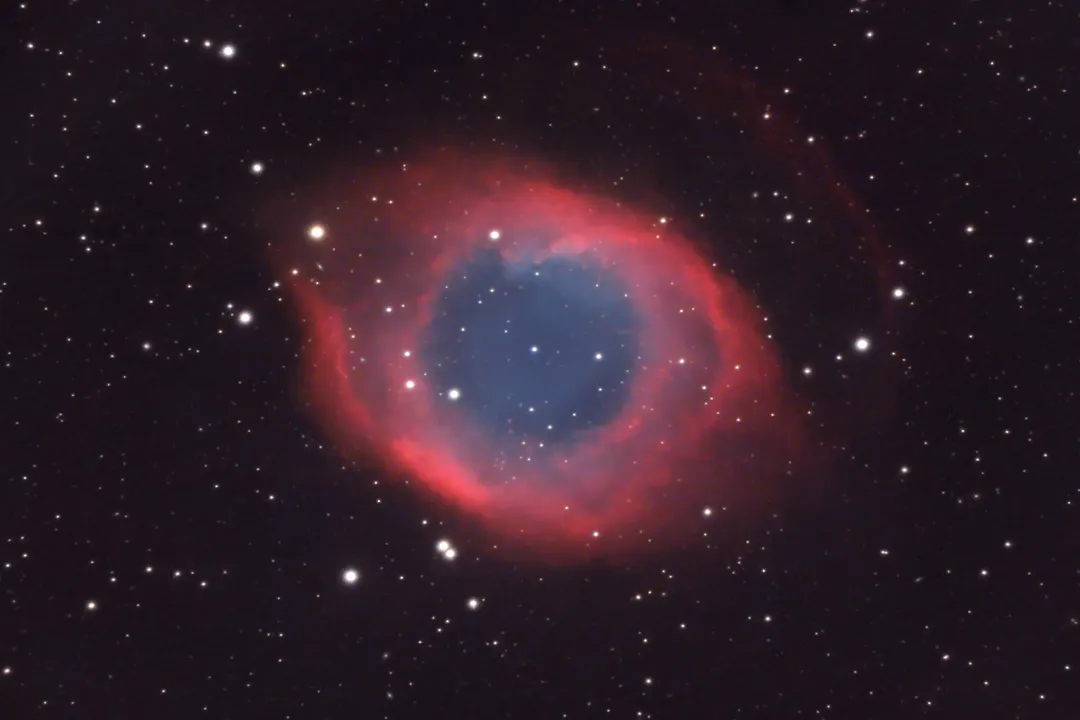
The crucial counterpoint to luminous clouds lies with the dark nebulae. [1] These are regions of dense interstellar dust and molecular gas that are so opaque they effectively hide whatever lies behind them. [3] They do not emit their own visible light because they lack intense nearby ionizing sources, nor can they reflect light effectively because the dust concentration is too high and the light sources are either too far away or entirely blocked. [1]
A good example of an opaque structure is the Horsehead Nebula, which is not the nebula itself that is shaped like a horse's head, but rather a dark cloud of dust silhouetted against a brighter, glowing emission nebula (IC 434) behind it. [3]
One might observe that in a large, dark cloud complex, the ratio of dust to gas necessary to create total visual extinction must be quite high relative to a reflection nebula. While emission and reflection clouds can exist in relative isolation or near hot stars, the most massive dark clouds often represent the densest, coldest reservoirs of matter—the stellar nurseries where collapse is just beginning, long before the internal pressure heats up enough to start producing light. [5] These structures are not luminous in visible light, but they are extremely important because they do radiate strongly in the radio and microwave portions of the spectrum due to the presence of cold molecules, making them observable to radio telescopes. [1]
# Nebula Types
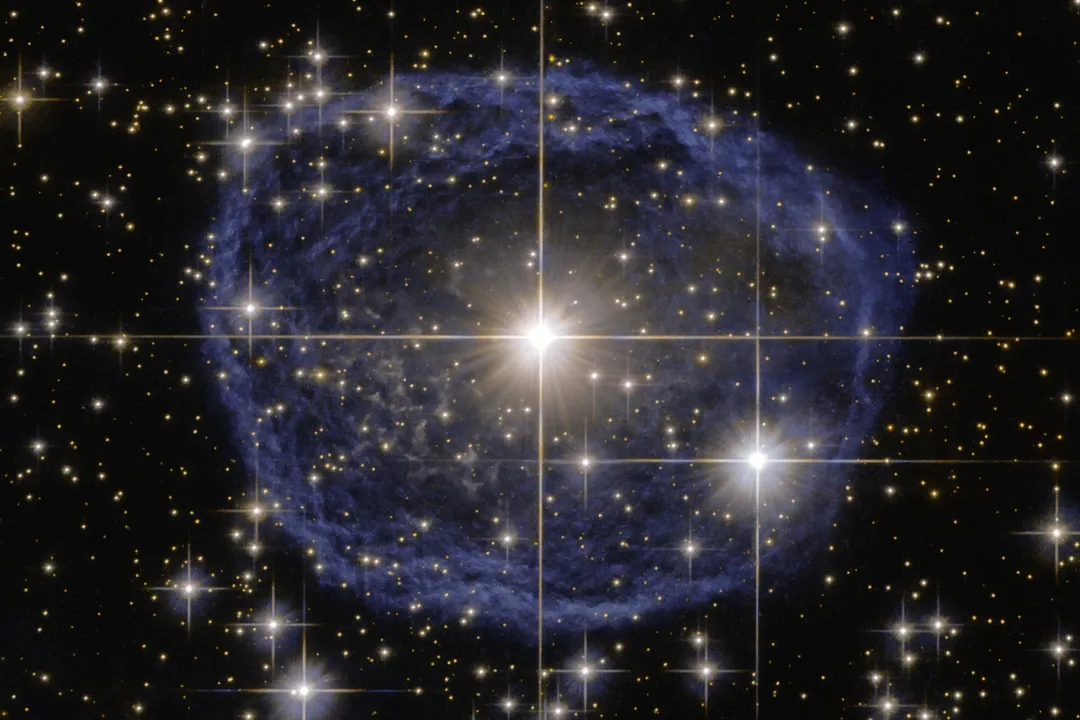
To definitively answer whether all nebulae are luminous, one must review the full classification, which includes structures defined by stellar evolution rather than simple light interaction. [5]
- Planetary Nebulae: These are shells of gas ejected by aging, dying stars, often appearing round or shell-like, though the name is a historical misnomer. [1][5] They are almost always highly luminous, glowing brightly due to the intense ultraviolet radiation from the hot white dwarf star left at the center. [3]
- Supernova Remnants: The expanding blast wave from a massive star’s explosion. These can be luminous through thermal emission, emission from shock-heated gas, or by accelerating particles to produce synchrotron radiation. [5]
- Dark Nebulae: As discussed, these are defined by their lack of visible luminosity due to obscuration. [1]
Therefore, based on the existence of dark nebulae, the answer is unequivocally no; not all nebulae are luminous in the visible spectrum. [3]
# Contrast
The difference between a highly luminous emission nebula and a dark nebula highlights a fascinating concept in observation. When studying a region of the sky, the luminous nebulae stand out because they are essentially self-illuminating or brightly lit backdrops. [7] A dark nebula, however, requires a contrasting background to reveal its presence. [3] If one were to view a patch of sky containing a dark cloud where no background stars or luminous gas existed, the cloud would simply be invisible, blending perfectly with the surrounding vacuum. It is the edge of the dark cloud against the light—whether a star field or another glowing region—that defines its shape and allows us to measure its extent. [8] This reliance on background illumination means that the detection of a dark nebula is often an artifact of its location relative to an already luminous part of the sky, offering a perspective shift for the observer: sometimes, what you can't see defines the structure more clearly than what you can. [2]
This principle can be applied practically when attempting to image nebulae. For an emission nebula, the exposure time is often set to capture the faint H-alpha signal without saturating the brighter central star. For a dark nebula, however, the goal is entirely different; the exposure must be long enough to reveal the faint light of the distant stars behind the dust lane, letting the dust appear as a void cutting across that captured stellar light. [8] This means that even when searching for the "unlit" structures, the observer is always dependent on the light originating from somewhere else in the universe. Early astronomical catalogs, such as those referenced in historical papers, often focused heavily on bright, easily observable objects, meaning the fainter, darker structures took much longer to fully map out. [6]
Ultimately, luminosity in a nebula is a variable property, determined by the presence of energetic excitation sources or nearby illumination, rather than a mandatory characteristic of an interstellar cloud of gas and dust. [1][5]
#Videos
Nebulae: Crash Course Astronomy #36 - YouTube
Related Questions
#Citations
Nebula - Wikipedia
Eli5: so i just learned that nebula is just a lit up piles of gas, how ...
What are all the different types of nebula in astronomy? - Medium
Nebulae: Crash Course Astronomy #36 - YouTube
10 Things You Need to Know About Nebulae | High Point Scientific
What are the nebulae?
Reflection nebula - Sun.org
What is a Nebula…Besides a Foggy Thing in Space
Nebulae: What Are They And Where Do They Come From?