Why are nebulae visible?
Nebulae, those sprawling, ethereal clouds scattered across the cosmos, capture the imagination because they are visible at all. If space is largely a vacuum, why do these massive clouds of gas and dust, often light-years across, stand out against the blackness? The answer lies entirely in how they interact with light, which is determined by what they are made of and what lies nearby. They are not stars themselves, nor are they solid objects; they are nurseries, graveyards, and resting places for the raw materials of the universe, and their visibility boils down to three primary mechanisms: they glow, they reflect, or they block. [1][7][8]
# Cloud Composition
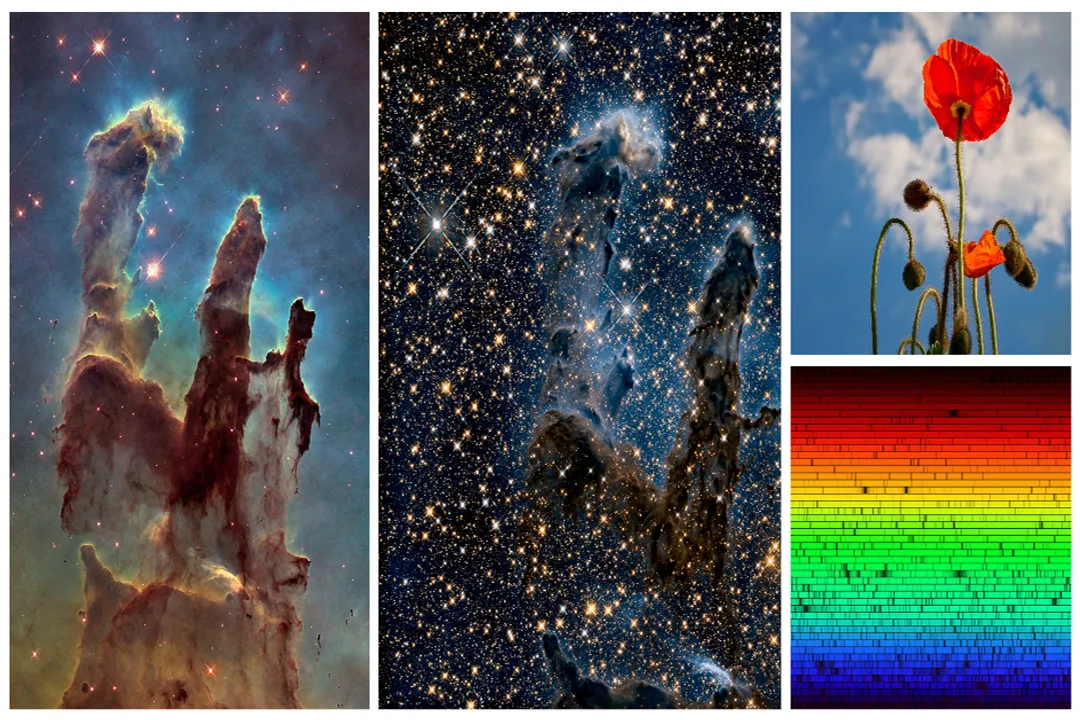
To understand why we see these structures, we must first know what they are. At their most fundamental, nebulae, which is the Latin word for a cloud, are vast interstellar clouds composed primarily of gas—mostly hydrogen and helium—and cosmic dust. [7][8] These clouds can be incredibly sparse compared to the densest air we breathe, but their sheer scale means they contain enormous amounts of mass. [6] The visibility shifts dramatically depending on whether the cloud is dominated by gas or by dust, and whether it happens to be near a source of powerful light. [1][9] The general classifications used by astronomers—emission, reflection, and dark—directly map onto these physical interactions with light. [1][5][7]
# Gas Glow
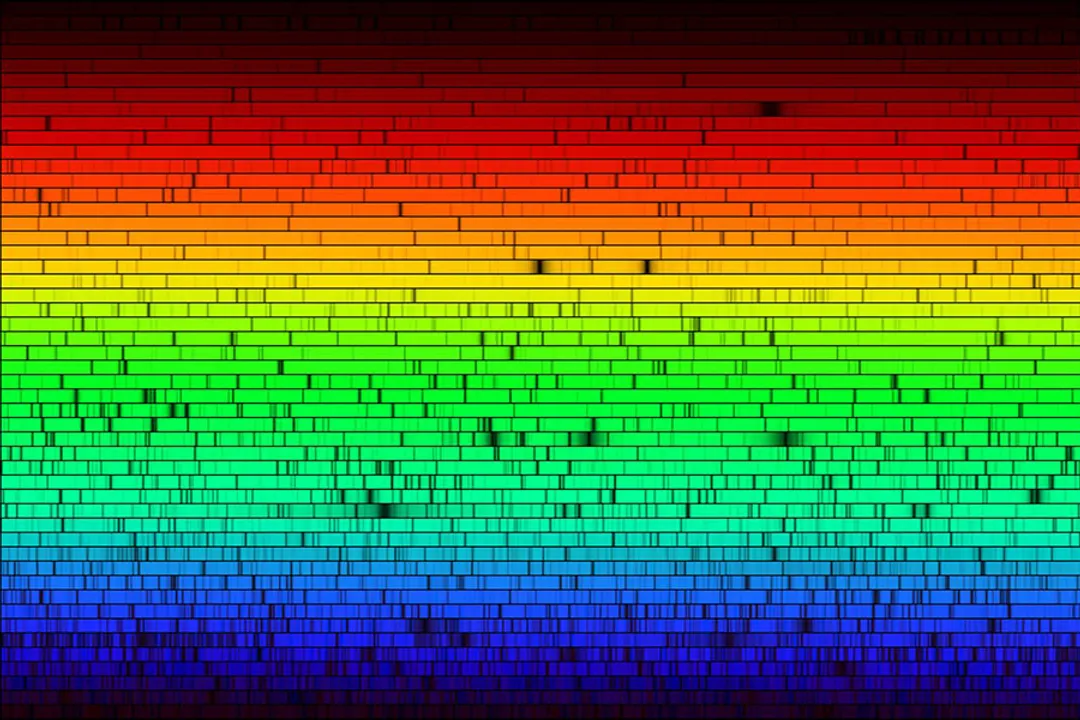
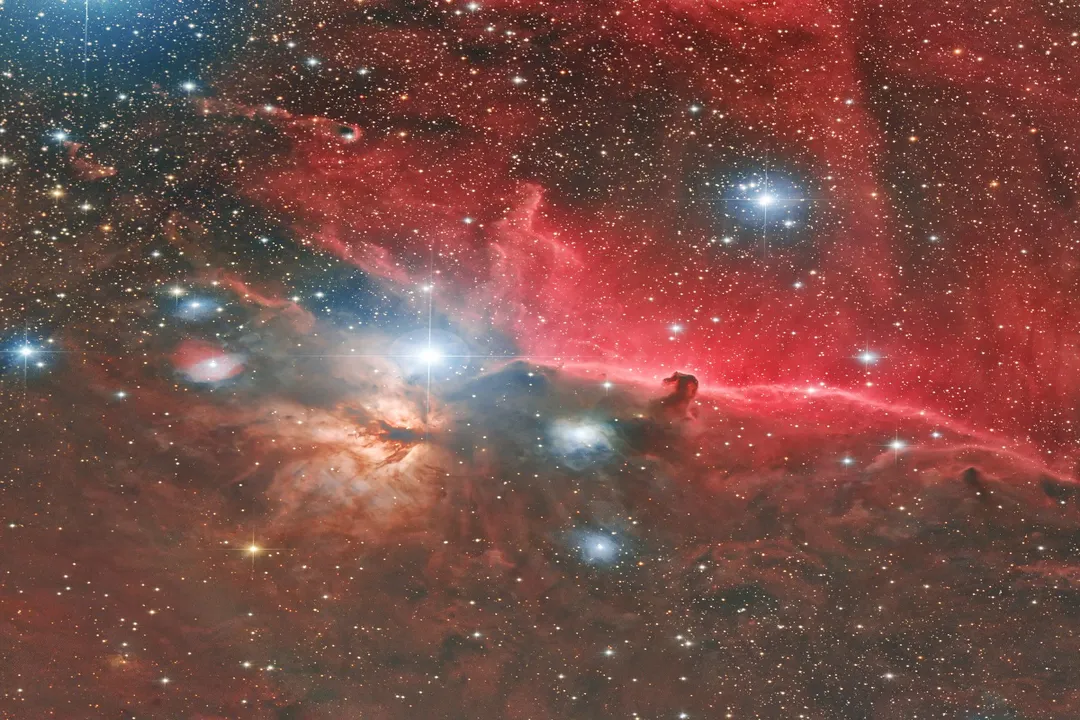
One major way a nebula becomes visible is through emission, where the cloud produces its own light. [5][8] This usually occurs when the nebula is situated near intensely hot, young, massive stars. [1] These stars emit prodigious amounts of high-energy ultraviolet radiation. [1] When this energetic radiation strikes the atoms within the surrounding gas cloud, it strips electrons from the atoms, a process called ionization. [1] The gas becomes an ionized plasma. As the freed electrons eventually recombine with the atomic nuclei, they release energy in the form of light at specific wavelengths, causing the entire region to glow. [1][5]
For instance, the most famous examples, like the Orion Nebula, often glow with a characteristic reddish hue. This color is due to the emission from ionized hydrogen atoms, which is one of the most abundant elements in these stellar nurseries. [5][8] The specific color we perceive from any emission nebula depends on the elemental composition of the gas and the temperature of the exciting star, making them chemical fingerprints of star-forming regions. [5]
# Starlight Scatter
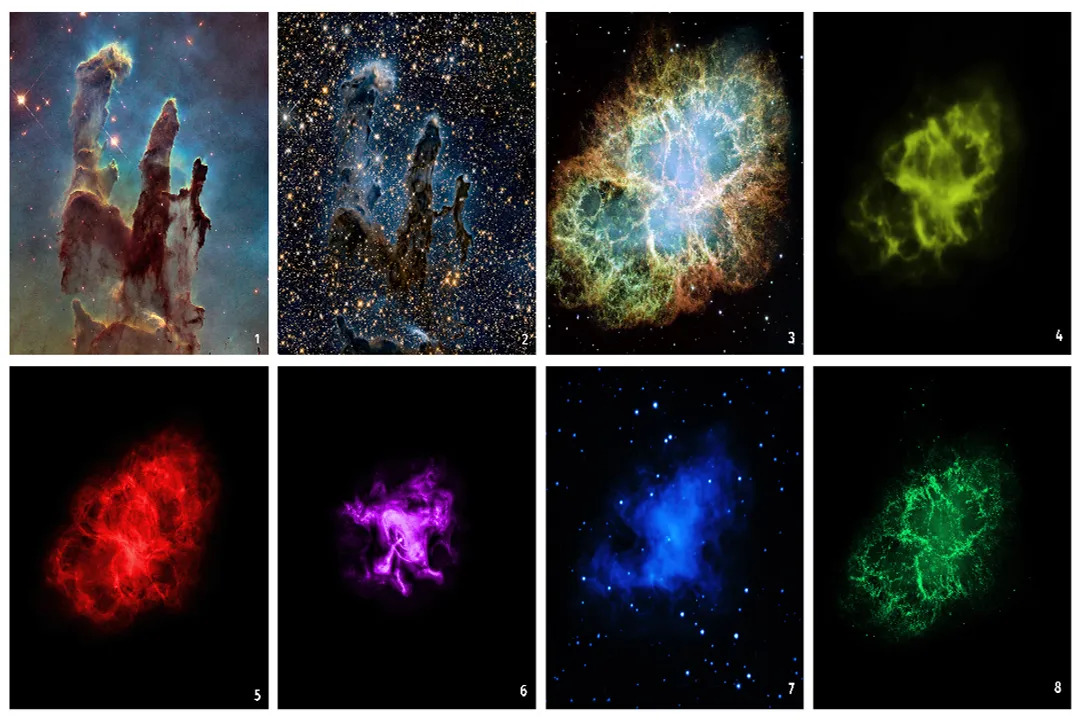
The second way a nebula shines involves reflection, which is less about the cloud creating light and more about it acting like a gigantic, cosmic mirror. [5][8] Reflection nebulae are typically composed mostly of fine dust particles rather than being dominated by glowing gas. [1] If one of these dust clouds is near a star that is hot enough to be bright, but not hot enough to ionize the gas, the starlight encounters the dust grains and is scattered in all directions. [1][2]
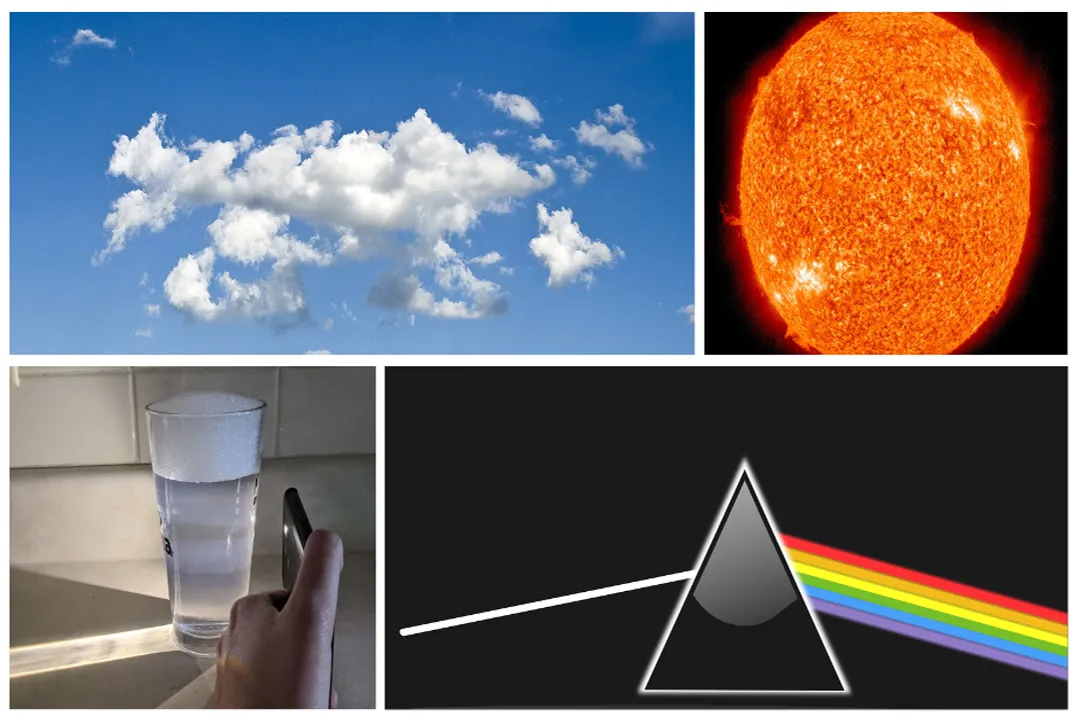
This scattering process preferentially redirects shorter wavelengths of light—the blue end of the spectrum—more effectively than longer, redder wavelengths, much like how Earth's atmosphere makes our sky blue. [2] Consequently, reflection nebulae often appear distinctly blue to observers or telescopes. [1] An interesting comparison arises here: while an emission nebula lights up because the gas itself is excited to glow, a reflection nebula’s visibility relies entirely on the proximity and brightness of an external, non-ionizing star. [5] A massive, ancient, cool star sitting right next to a dust cloud would illuminate it poorly, whereas a comparatively smaller, but extremely hot and bright young star nearby can make even a relatively thin layer of dust glow intensely in scattered blue light.
# Dark Contrast
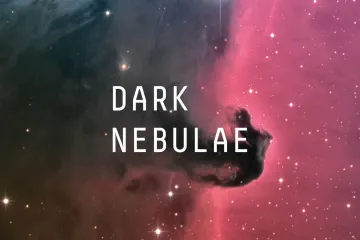
The third primary method for seeing a nebula is by observing what isn't there—or rather, what light isn't getting through. [8] These are known as dark nebulae. [1] These clouds are so dense, or contain so much opaque dust, that they effectively block the visible light originating from stars or brighter nebulae situated directly behind them. [1][8]
Dark nebulae do not emit light, nor do they reflect light back toward us; they reveal themselves through silhouette. [8] The Coalsack Nebula, for example, is famous because it appears as a dark patch against the bright backdrop of the Milky Way galaxy. [1] You are seeing a lack of light superimposed on a background of light, which makes the dust cloud stand out clearly through contrast. [1] If we could move an observer far outside the plane of the galaxy, a dark nebula viewed against the emptiness of deep space might become almost invisible, highlighting that its visibility is context-dependent. [6]
# Stellar Remnants
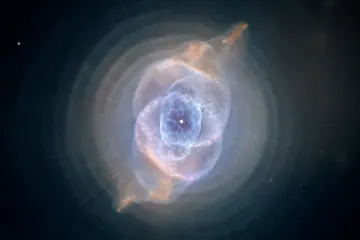
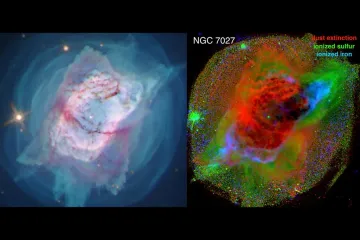
Planetary nebulae represent a special, albeit temporary, class where the mechanism of visibility is both emission and illumination from a specific source: a dying star. [4] Despite the name, they have nothing to do with planets. [4] They form when a star similar to our Sun reaches the end of its life and sheds its outer layers of gas into space. [4] The remaining core collapses into a hot, small white dwarf star. [4]
This exposed white dwarf is incredibly hot, sometimes exceeding one hundred thousand degrees Celsius, and it emits powerful ultraviolet radiation. [4] This radiation then illuminates the ejected shell of gas that the star previously cast off, causing the expanding material to glow brightly. [4] Thus, the visibility of a planetary nebula relies on the very short phase where the star’s remnant core is hot enough to excite the surrounding expelled material before it fades into the interstellar medium. [4]
# Apparent Brightness Factors
Considering these visibility mechanisms, an interesting complexity arises when comparing what we see with our eyes versus what cameras capture. Visually, a nebula must be bright enough for the human eye’s rods and cones to register the light. Many nebulae, even when nearby, are so diffuse that the light is spread out too thinly for direct visual confirmation beyond perhaps perceiving a faint smudge. [6] This is especially true for faint emission nebulae or vast, low-density reflection areas.
If we consider two nebulae: Nebula A, a relatively small but incredibly dense dust cloud situated right next to a bright star, causing intense reflection; and Nebula B, a vastly larger, lower-density hydrogen cloud being excited by a distant cluster of young stars. Nebula A might be visually striking due to the concentrated reflection, even though its total mass is less. Nebula B, while containing far more total gas, might appear much fainter because the light from the ionizing stars has to travel farther, or the gas is too spread out to concentrate enough photons toward our eyes. [6] The perceived brightness is a factor of the illumination source's intensity, the distance to the nebula, the concentration of the light-interacting material (dust or gas), and the efficiency of the interaction (emission vs. scattering). [6]
# Imaging and Observation
The distinction between visual observation and long-exposure astrophotography highlights a practical difference in how we perceive nebulae. For faint emission nebulae, the light is generated by atomic transitions, which often fall into very specific, narrow spectral lines. Amateur astronomers using specialized narrow-band filters can isolate this specific light signature, allowing a camera to gather photons over many hours, revealing vibrant structure that the human eye simply cannot perceive in real-time. [5] The eye cannot integrate light over minutes or hours like a sensor can.
Conversely, reflection nebulae often benefit from broadband imaging that captures the reflected starlight, which is generally continuous across the visible spectrum. [1] However, even here, the slight color bias toward blue is much easier to quantify and enhance in a digital image than it is to confidently discern with the naked eye under dark skies. [2] For example, attempting to visually identify the subtle blue tint of the Merope Nebula near the Pleiades star cluster is extremely difficult; it usually requires long-exposure photography to capture that signature scattered light reliably. [1] This means that much of our modern, colorful understanding of these clouds comes from data collection techniques rather than direct, instantaneous sight.
# Seeing Through Clouds
Even when a nebula is visible, it is important to remember that they are not opaque walls; they are highly transparent on average. For example, viewing a planetary nebula, which is comprised of gas ejected by a dying star, allows us to clearly see the stellar remnant at its center. [3] While the shell of gas is dense enough to absorb and re-emit the star’s high-energy photons near the center, the outer layers are tenuous enough that the light from the central object passes through without being completely obscured. [3] The visibility of the nebula itself depends on the light emitted from those layers, while the central star remains visible through the surrounding, thinner gas. This demonstrates that 'visibility' is not a binary property; it is a spectrum dependent on the specific electromagnetic frequency interacting with the specific density structure of the cloud at a specific distance. [3][6]
# Stellar Nurseries and Graveyards
Ultimately, the visibility of nebulae connects directly to the life cycle of stars. Emission nebulae are the visible signs of active stellar birth, glowing with the energy required to ignite fusion. [1][8] Dark nebulae are the raw material—the cold, dense pockets of gas and dust yet to collapse into stars. [1] Planetary nebulae are the beautiful, glowing remnants marking the quiet death of average stars, briefly illuminating their surroundings before dissipating. [4] Each visible nebula, whether glowing red, shining blue, or appearing as a dark void, is a temporary, luminous signpost marking a fundamental stage in cosmic evolution. [1][7]
Related Questions
#Citations
Decoding Nebulae - NASA Science
Eli5: so i just learned that nebula is just a lit up piles of gas, how ...
Why can space telescopes see through a planetary nebula?
Planetary Nebulas - Center for Astrophysics | Harvard & Smithsonian
Lighting Up the Universe - Bell Museum
How do nebulae appear in space? How does light from stars escape ...
Nebula - ESA/Hubble
Physics 162H Honors Project: Nebulae - Northern Illinois University
10 Things You Need to Know About Nebulae | High Point Scientific