Where will the Geminids meteor shower be visible?
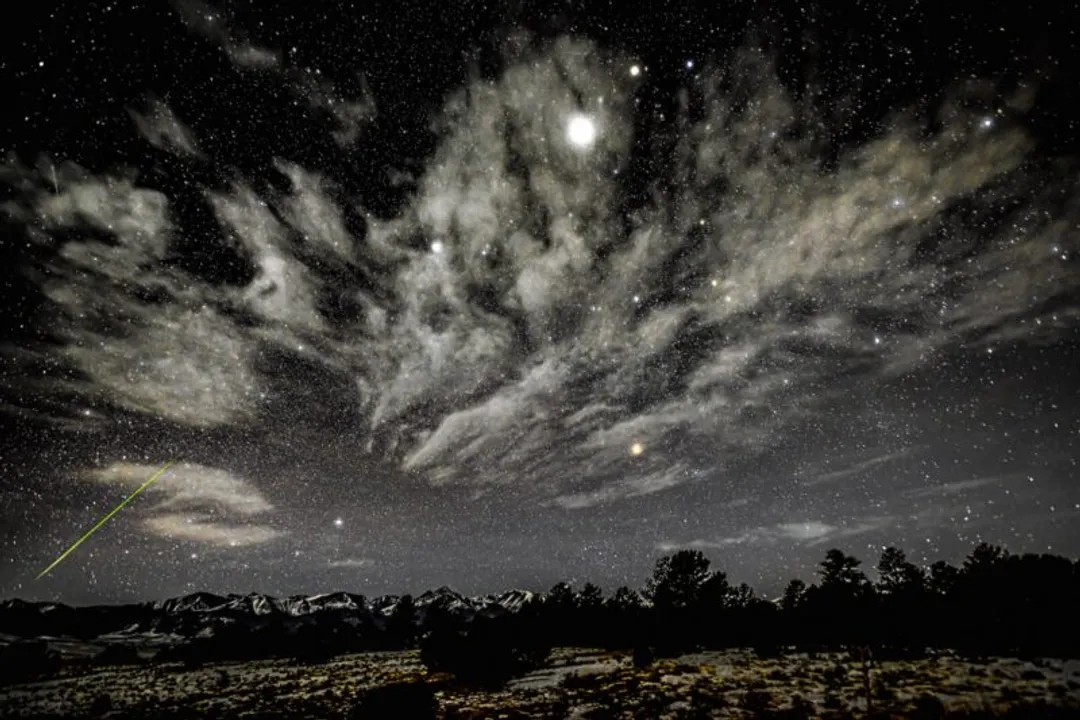
The Geminids meteor shower, often hailed as one of the most reliable and active annual celestial events, offers skywatchers a spectacular mid-December show. [1][2] This shower originates not from a comet, as is common, but from the debris trail of the asteroid 3200 Phaethon. [2] When Earth sweeps through this dusty path, those tiny particles burn up high in our atmosphere, creating the streaks of light we call meteors. [7] Understanding where and when to look is key to catching this display, as visibility depends on the shower's radiant point, the time of night, and, crucially, local atmospheric conditions. [2][3]
# Peak Activity

Meteor showers are best viewed when Earth passes through the densest part of the debris stream, which corresponds to the peak activity period. [1] While the Geminids are active over several weeks, the narrow window of maximum activity is when the highest number of meteors per hour can be anticipated. [4]
For the 2025 event, the peak is anticipated to occur around December 14. [3] The highest activity is generally expected after midnight and into the pre-dawn hours, continuing until sunrise. [2] This timing is fundamental because it positions the observer on the leading edge of Earth's path relative to the dust stream, maximizing the impact rate. [1] For observers worldwide, the duration of the peak itself is relatively short, often producing the best results within a few hours surrounding the maximum predicted time. [4]
# Radiant Position
The apparent origin point of any meteor shower is called the radiant, named after the constellation from which the meteors seem to stream. [1] For the Geminids, the radiant lies within the constellation Gemini. [1][4] When the radiant is high in the sky, more meteors are visible because the radiant point acts like the tip of a cone; the closer it is to the zenith (directly overhead), the more meteors passing through the stream are visible from any direction. [5]
The radiant doesn't rise until later in the evening, which is why late-night or pre-dawn viewing is recommended. [2] In the Northern Hemisphere, as the night progresses, Gemini climbs higher, increasing the expected hourly rate. [2] While the meteors appear to originate from Gemini, they can actually appear anywhere in the sky, so looking directly at the radiant is not required; in fact, looking slightly away may allow you to catch more of the fainter streaks. [5][7]
# Global Reach
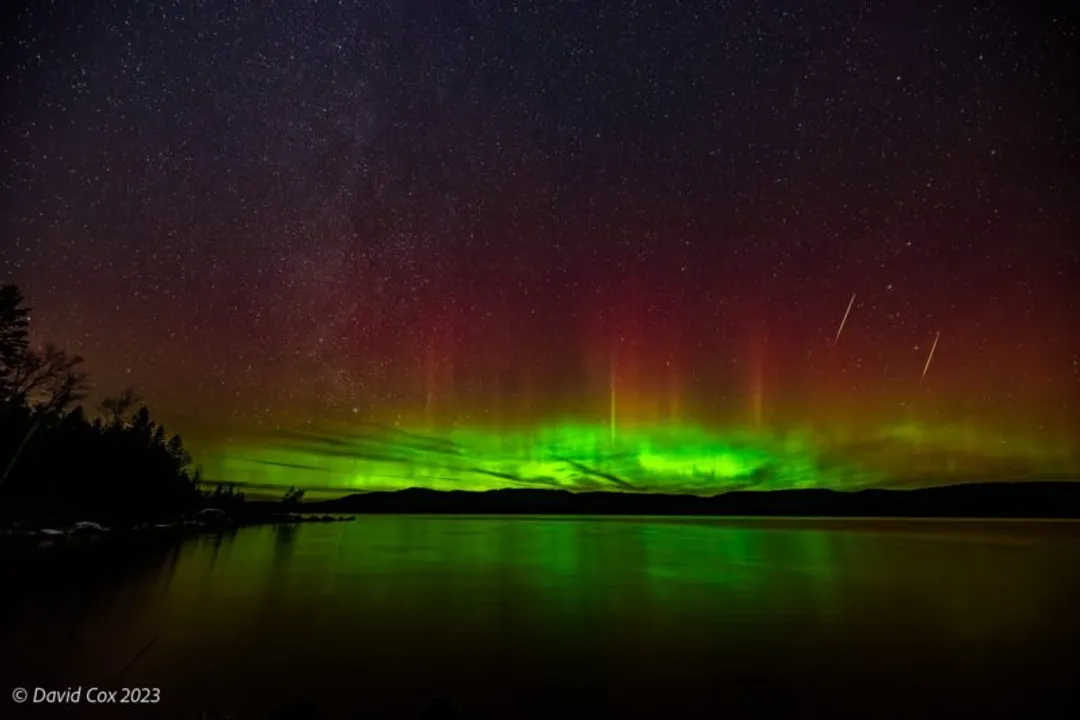
A common question is whether one hemisphere has an advantage over the other for viewing meteor showers. The Geminids are visible globally, making them accessible to skygazers across both the Northern and Southern Hemispheres. [2] However, the altitude of the radiant in Gemini significantly affects the viewing experience depending on your latitude. [8]
Since Gemini is a northern constellation, observers in the Northern Hemisphere generally see the radiant higher in the sky for longer periods during the prime viewing hours of the late night and early morning. [2] This higher altitude translates into a better chance of seeing the maximum potential number of meteors, which is often quoted as the Zenithal Hourly Rate (ZHR). [4] Viewers in the Southern Hemisphere will also see the shower, but the radiant may remain lower on the horizon, potentially reducing the observed count due to atmospheric interference and obstruction. [2]
For observers in places like the United Kingdom, the radiant doesn't become well-placed until after midnight, with optimal viewing generally occurring between midnight and sunrise. [8] In the Americas, visibility spans from North to South America, with observers noting that the best viewing often begins after the radiant has cleared the horizon. [2] Considering the Earth’s rotation, anyone who can see the constellation Gemini will witness the shower, but the best rates will favor those where Gemini is highest aloft. [2]
# Moon Impact
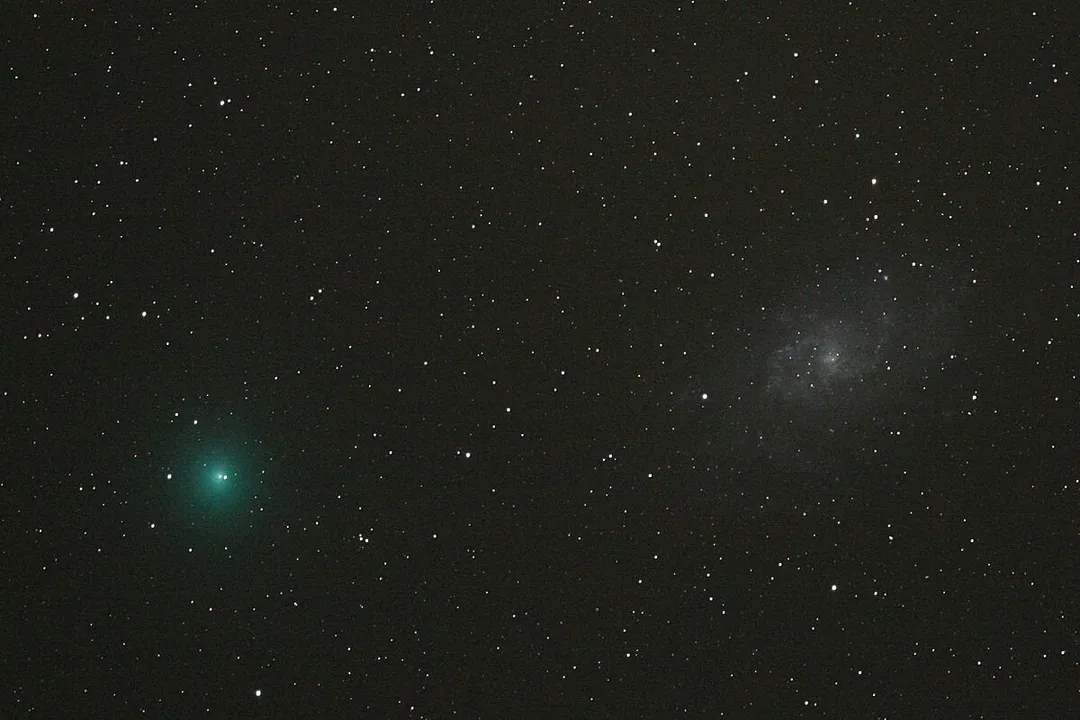
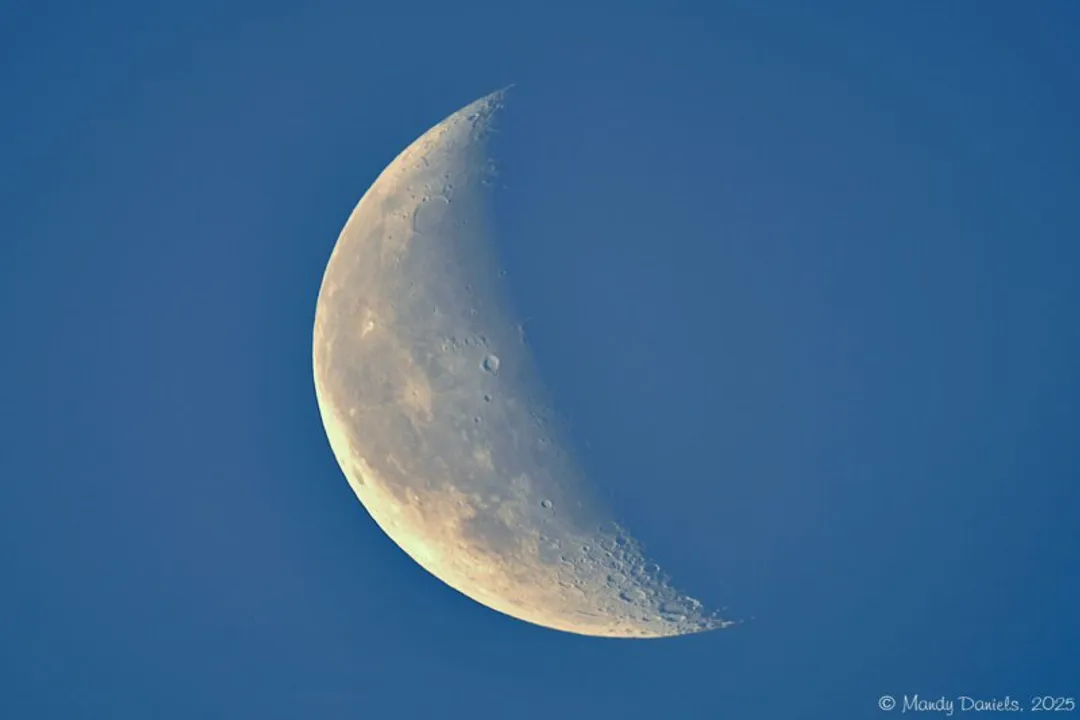
Perhaps the most significant factor, aside from clear skies, determining visibility is the phase of the Moon. [2][3] Moonlight acts as natural light pollution, washing out the fainter meteors and drastically reducing the number you can actually count, even if the shower is strong. [7]
For the 2025 event, the Moon's phase is a critical piece of information for planning. [3] If the Moon is full or near-full during the peak, the event will be significantly muted. [2] Conversely, if the Moon is new or only a thin crescent, visibility improves dramatically, allowing even moderately faint meteors to be seen. [3] If the Moon sets early in the evening, the hours between moonset and sunrise offer the best dark-sky conditions, regardless of the peak count, because the sky is completely dark. [5] When the Moon is bright, you might only see the brightest fireballs, while under dark skies, you could potentially see meteors down to magnitude +6 or fainter. [7]
If you are planning a viewing trip, calculate the local moonset time relative to the peak viewing window (1 AM to 4 AM local time). If the Moon is setting before 11 PM, the entire prime viewing window benefits from dark skies, making it a superior year for the Geminids compared to a year where the Moon rises at 1 AM during peak activity.
# Viewing Setup
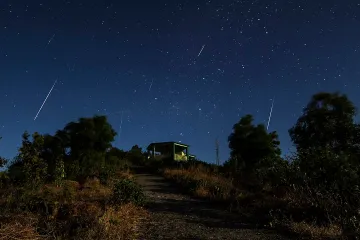
Seeing the Geminids requires minimal equipment but maximum patience and darkness. [7] Unlike deep-sky objects that require telescopes, meteor showers are best viewed with the naked eye. [7]
# Dark Location
The fundamental requirement for seeing any meteor shower well is escaping artificial light. [5] Light pollution severely limits what you can observe. [7] The fainter the sky background, the more meteors you will record. Aim to get as far away from city lights as possible. [5] Even a backyard can be too bright if you live near streetlights or neighbors' houses; driving out to a rural area or a designated dark-sky location is ideal. [7]
# Orientation
Once you are at a dark location, you do not need to point your telescope or binoculars toward Gemini. [5] The best technique is to recline comfortably and look up toward the general expanse of the sky, perhaps about 45 degrees away from the radiant point. [5][7] This wide-field view allows you to catch meteors before they enter the denser part of the atmosphere near the radiant, which often appear shorter and brighter, and also capture the longer streaks radiating from the main point. [1] Finding a comfortable position, such as using a reclining chair or lying on a blanket, is essential, as stargazing often involves long periods of looking up. [5]
# Preparation Checklist
A successful night under the stars involves a few simple preparations:
- Dark Adaptation: Allow your eyes at least 20 to 30 minutes to fully adjust to the darkness before judging the sky's true quality. [7] Avoid looking at white lights, including your phone screen, during this time. [5]
- Warmth: The Geminids peak in mid-December, meaning overnight temperatures will be cold, especially in the prime pre-dawn hours. [3] Dress in layers, bring warm drinks, and have blankets or sleeping bags ready. [5]
- Patience: Meteor activity can wax and wane. Watching for an hour straight without seeing many meteors can be discouraging, but activity often picks up in the next hour block. [4]
A common mistake is assuming that because the radiant is in Gemini, one must face east. Since meteors blaze across the entire sky, facing south (if in the Northern Hemisphere) or simply finding a comfortable direction that allows a broad view of the overhead sky is far more effective than rigidly pointing toward the constellation.
# Meteor Counts
The Geminids are famous for their potential ZHR, which sources sometimes place around 120 meteors per hour under perfect, dark-sky conditions. [4] However, this number is a theoretical maximum achieved only when the radiant is directly overhead (zenith) and the sky is perfectly black. [4][7]
Real-world rates are almost always lower. If you are viewing from a suburban area, your observed count might be closer to 20-30 meteors per hour, even during the peak. [5] If you are in a light-polluted area, the count will be significantly lower still. [7]
The ZHR is a useful metric for comparing one shower's potential against another, but for practical viewing, it is best to temper expectations based on local conditions. [4] For instance, the activity might be strong enough on a dark night that you see one or two bright meteors every few minutes, which is still a wonderful experience. [2] The Geminids are also known for producing numerous bright meteors, sometimes referred to as fireballs, even if the overall count is suppressed by poor conditions. [1]
| Viewing Condition | Estimated Observable Rate (per hour) | Key Impact Factor |
|---|---|---|
| Perfect Dark Sky (ZHR Max) | Up to 120 | Radiant Altitude, Moon Absent [4] |
| Rural/Suburban Fringe | 40 – 60 | Moderate light pollution |
| Bright Suburban Area | 10 – 25 | Significant light scatter [5] |
| City Center | Fewer than 5 | Overwhelming artificial light [7] |
This table illustrates how the environment directly dictates the experience relative to the theoretical potential. [4][7] While you cannot change the date or the radiant's position, managing light pollution is the single most effective way to maximize your Geminid observation. [5]
Related Questions
#Citations
Geminid meteor shower 2025 — When, where and how to see it
Geminid meteor shower peaks December 13-14 - EarthSky
Viewing the Geminid Meteor Shower in 2025
Geminids Meteor Shower 2025 - Time and Date
How to see the Geminids? : r/Astronomy - Reddit
Best viewing places for geminid meteor shower tonight? - Facebook
The Ursid meteor shower 2025: How to watch | The Planetary Society
Geminid meteor shower 2025: when and where to see it in the UK