What is a Geminids meteor?
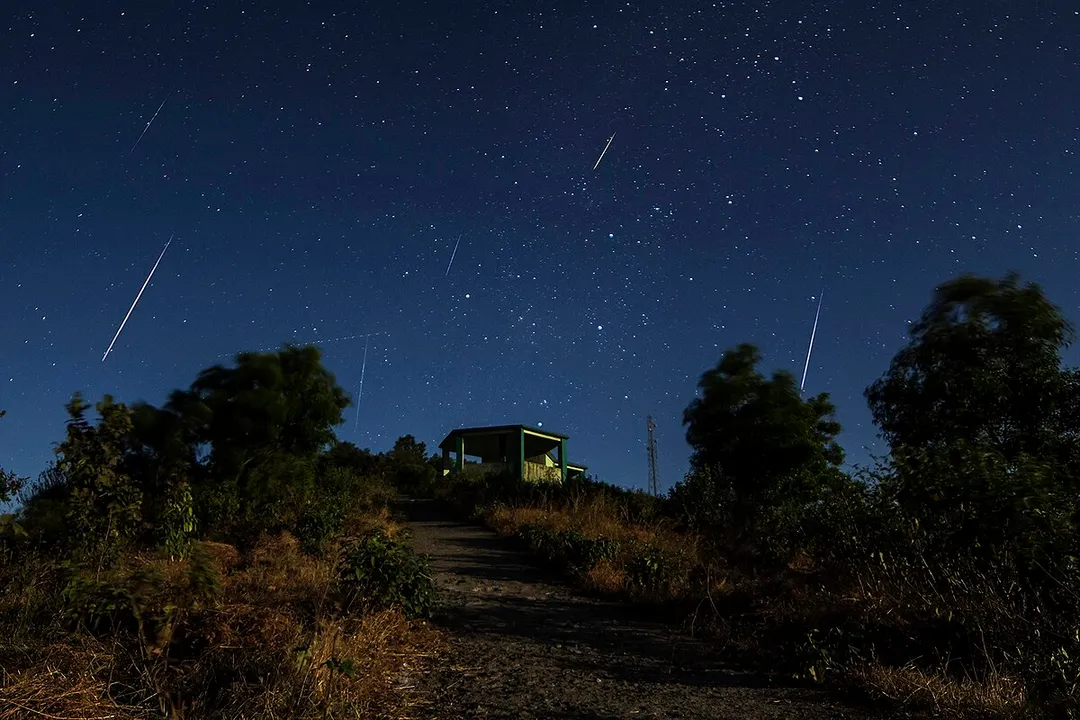
The Geminids meteor shower stands out as a spectacular celestial event, often ranked by observers as one of, if not the best, annual displays of "shooting stars". [9] This annual light show typically reaches its maximum activity in the middle of December, often around the 13th or 14th. [2][3] What makes this particular shower truly distinct in the astronomical calendar is not just its reliability or brightness, but the very nature of what causes it. Unlike most well-known meteor showers, which originate from the dusty, icy trails left behind by passing comets, the Geminids owe their existence to an asteroid. [1][5]
# Asteroid Origin
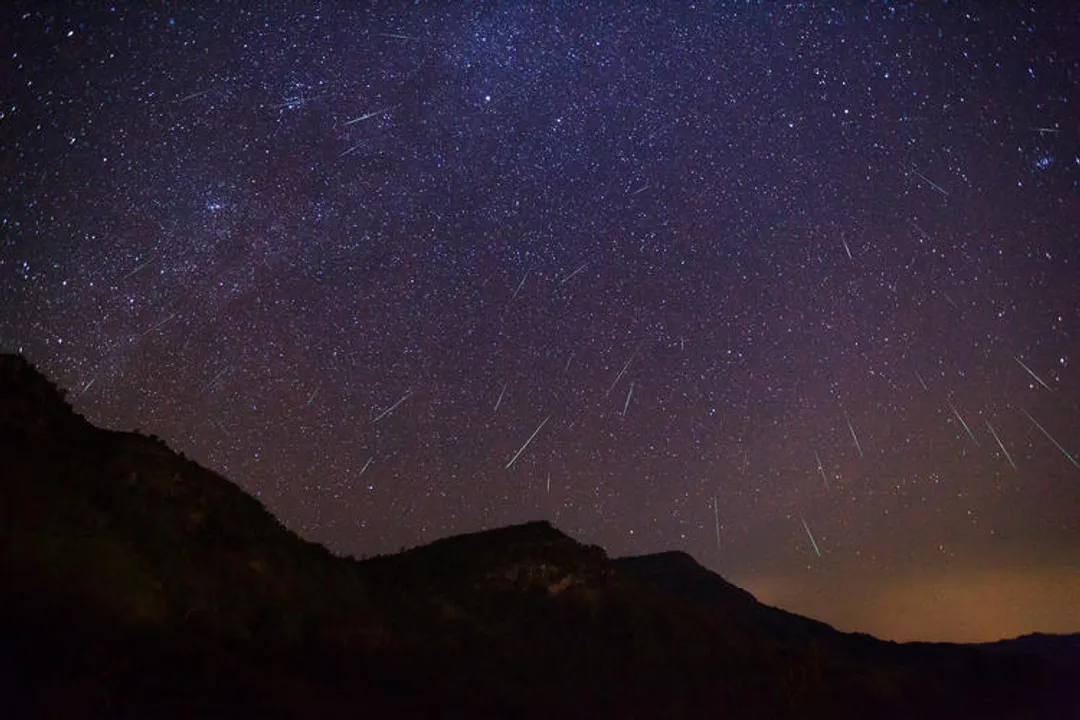
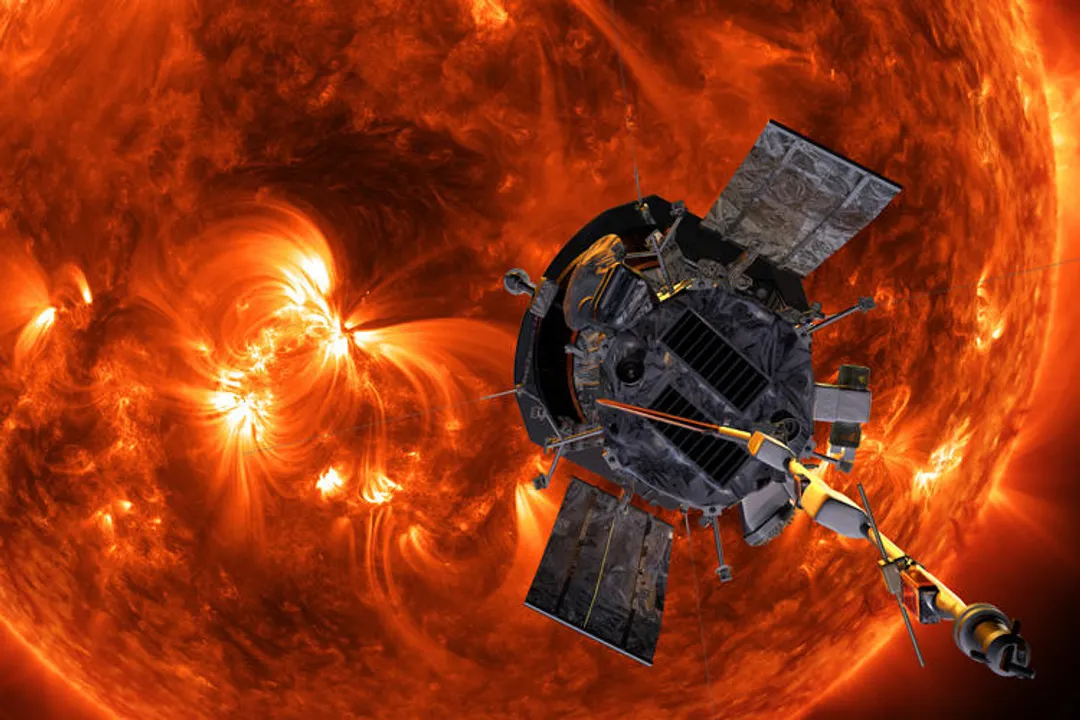
The source material for the Geminids is the near-Earth object designated 3200 Phaethon. [1][5] This identification of an asteroid as the parent body is what grants the Geminids their special status among meteor events. [5][6] For many years, this unusual origin puzzled researchers because comets are the typical culprits for such predictable debris streams. [5] Phaethon, however, behaves more like a rocky body than a standard ice ball that vents dust as it nears the Sun. [5] This discovery essentially demystified the shower's unusual characteristics. [5] Scientists have determined that Phaethon sheds particles as it orbits, leaving behind a trail of debris that Earth plows through annually. [1][2] The very composition of this debris, derived from a parent body that is essentially a rock, often results in meteors that behave differently than those from cometary dust trails. [5]
# Meteor Streaks
A meteor, or what appears as a streak of light, occurs when one of these tiny particles—often no bigger than a grain of sand or a small pebble—slams into Earth's upper atmosphere. [2][6] As the particle enters the atmosphere at extremely high speed, friction with the air causes it to heat up intensely and vaporize, creating the brilliant flash we observe. [2] The Geminids are known for producing bright streaks, sometimes even exhibiting a distinct yellow tint. [2] The name of the shower, Geminids, comes from the apparent point in the sky from which these meteors seem to originate, known as the radiant. For this shower, that point lies in the constellation Gemini. [1][3][6] While the radiant is in Gemini, the meteors can appear anywhere across the sky, making an outward gaze in any direction beneficial. [3]
# Peak Viewing
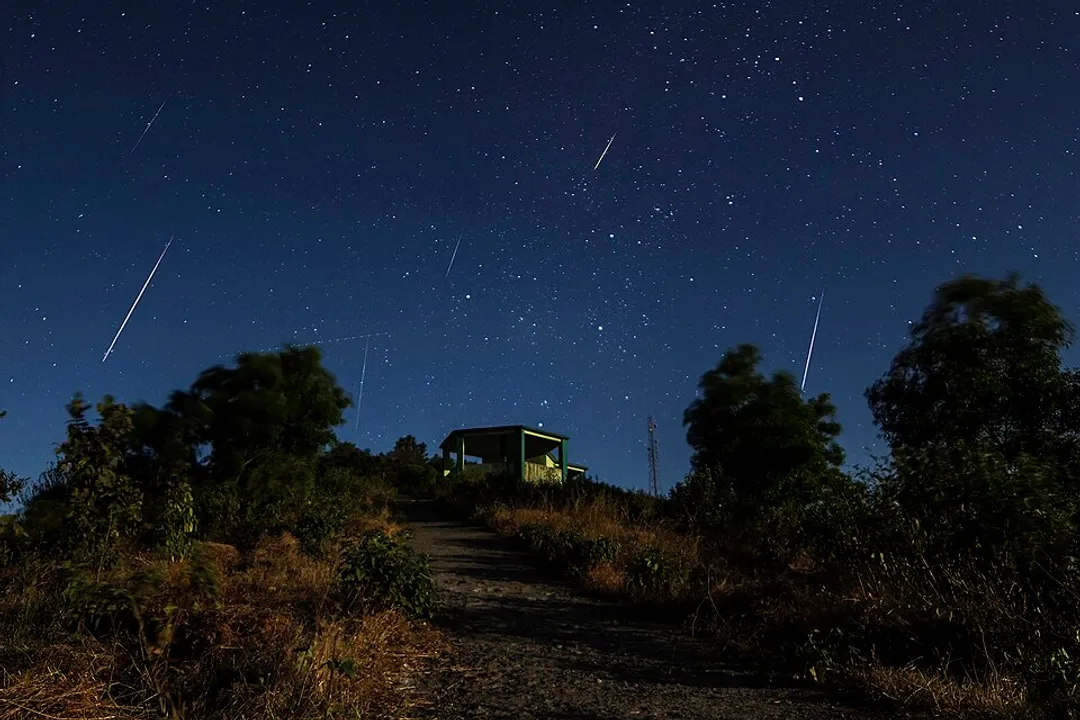
To get the most out of the Geminids, timing and location are everything. [6][7] The peak viewing window often lasts for a couple of days, but the highest rates usually occur overnight around mid-December. [3] Astronomers often cite a Zenithal Hourly Rate (ZHR) that can reach 120 or more meteors per hour under perfect, dark-sky conditions. [3][6] The actual time you should be looking up matters significantly. Because the radiant, Gemini, rises in the evening but climbs highest in the sky just before dawn, the best viewing hours are generally between midnight and sunrise. [3][6]
If you live in an area with significant light pollution, a key piece of viewing preparation involves traveling to a dark location. [6][7] Consider how far you need to drive; often, even moving just twenty miles away from city lights can dramatically improve your count. If you plan on viewing from a fixed spot outside the city, try to arrive well before the true peak time, perhaps two hours before sunset, to allow your eyes to fully adjust to the darkness—a process known as dark adaptation. [6] This process can take up to 30 minutes to complete fully, and even brief exposure to a cell phone screen can reset the process, so keeping devices shielded is important. [6]
If you are observing from a location where the radiant (Gemini) is near the horizon early in the night, you might see fewer meteors initially, simply because the Earth hasn't rotated enough to point you directly into the densest part of Phaethon's debris trail yet. Waiting until the radiant is overhead maximizes the chance of catching meteors that are coming in almost head-on relative to your line of sight, offering the best odds for high counts. [3]
# Color Speed
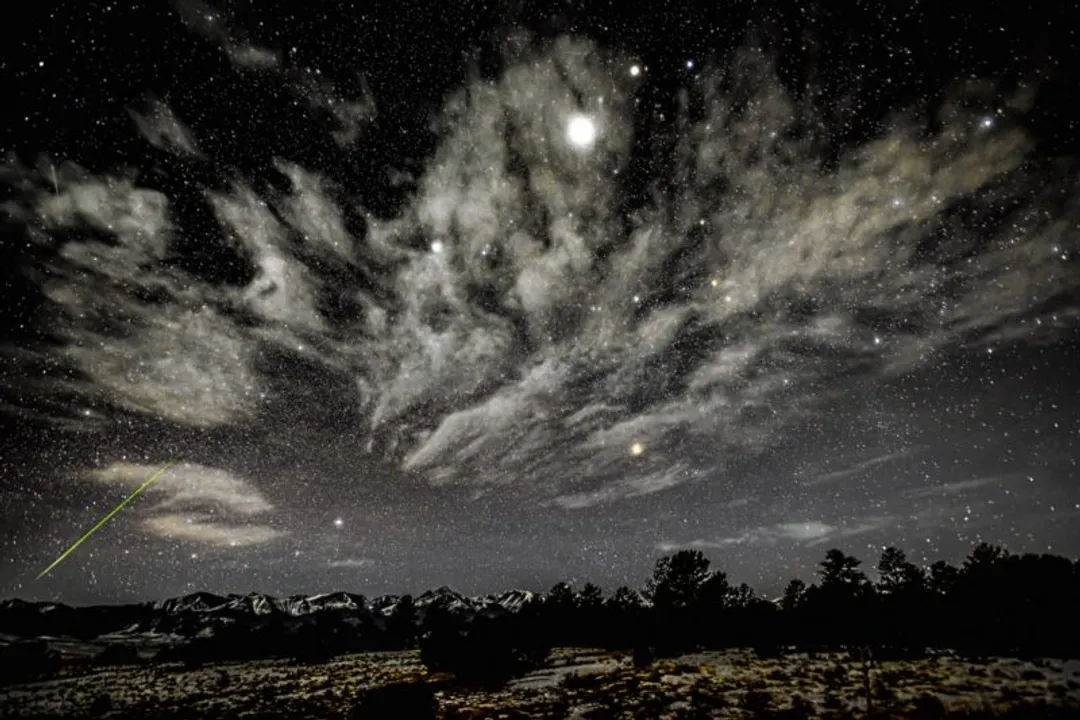
Compared to other showers, the Geminids are often described as being composed of slightly slower-moving particles, though they are still incredibly fast when they hit the atmosphere. [5] The debris stream from Phaethon is generally thought to be denser than the typical comet trail. [5] This density might contribute to the shower’s consistent performance year after year, as the debris field is perhaps more tightly packed rather than spread thinly over a vast orbital distance. [5] The resulting meteors are quite bright, which helps them cut through any remaining atmospheric haze or faint moonlight, making them satisfying to watch. [2] While the color can vary based on the composition of the impacting grain and its entry speed, the Geminid's rocky origin often favors a brighter, sometimes yellow-tinged appearance. [2]
# Shower Uniqueness
The fact that the Geminids originate from an asteroid introduces interesting analytical angles regarding how the debris field is structured. Cometary dust trails are typically dispersed over millions of miles along the comet's orbit, resulting in shower rates that can fluctuate significantly from year to year depending on how Earth encounters different parts of that long trail. [5] Since Phaethon is an asteroid, its debris field might be more concentrated, leading to a more predictable and consistently strong shower year after year, provided Earth crosses a similar path. [5]
When planning your viewing session, remember that the radiant's location determines the direction from which the meteors appear to emerge, but the sheer number of visible meteors is determined by how much debris you are moving through. If you sit facing away from the radiant, you will still see many meteors; they will simply appear to streak upward toward the radiant, rather than away from it. [3] This orientation is sometimes better for catching fainter meteors that would otherwise be obscured by your own head or shoulders when looking directly upward at the radiant itself. Therefore, angling your viewing position slightly off-radiant, while still ensuring the radiant is high in the sky, is a subtle technique that might increase the total number of visible streaks you record during the peak hours. [3] Furthermore, because the debris is thought to be denser, a sustained, focused watch over several hours during the peak night offers a high probability of steady performance, which is less guaranteed with showers whose dust trails are more diffuse. [5]
#Videos
Everything to know about the Geminid Meteor Shower | In the News
Related Questions
#Citations
Geminids - Wikipedia
Geminids - NASA Science
Geminid meteor shower peaks December 13-14 - EarthSky
Geminid meteors streak under green sky photo of the day for Dec ...
Researchers demystify the unusual origin of the Geminids meteor ...
Viewing the Geminid Meteor Shower in 2025
Geminid meteor shower 2025: when and where to see it in the UK
Everything to know about the Geminid Meteor Shower | In the News
GEMINID METEOR SHOWER: Considered by many to be one of (if ...