What is a meteor that hits the ground called?
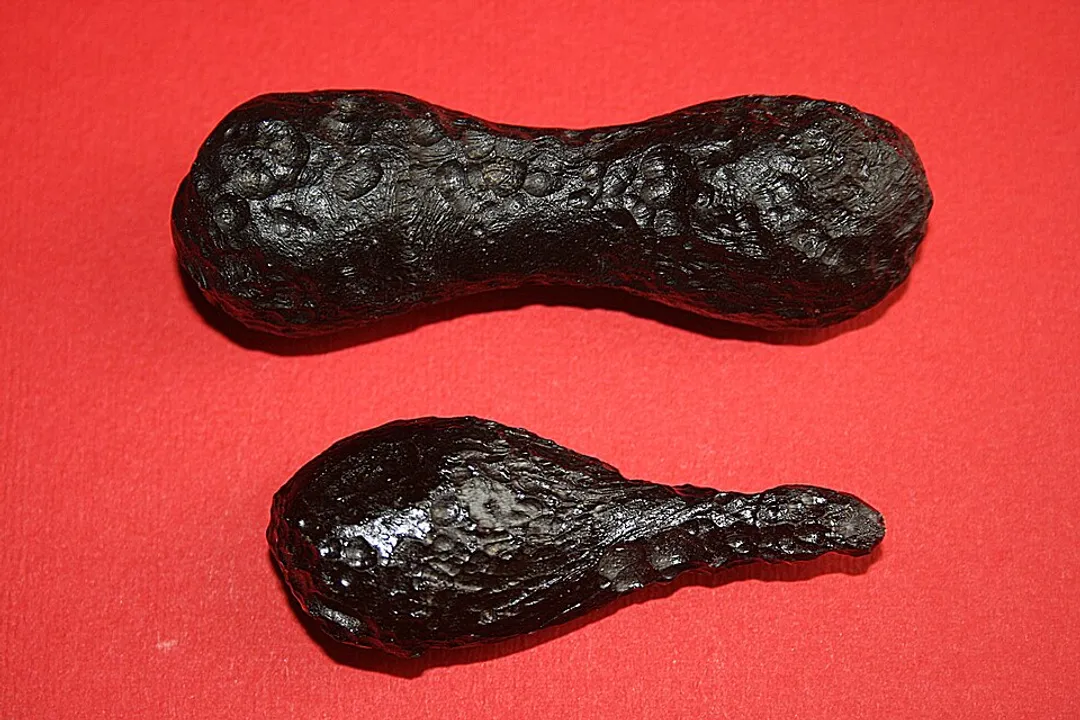
The journey from a speck of cosmic dust adrift in space to a rock resting in your hand on Earth involves a fascinating, three-part classification system. The common term people often use for a space object that survives entry and lands on our planet is the specific name given to that terrestrial remnant: a meteorite. [2][4][7] To truly understand what a meteorite is, however, one must first trace its lineage backward through the vacuum of space and the fiery trial of atmospheric entry. [1][5]
# Space Debris
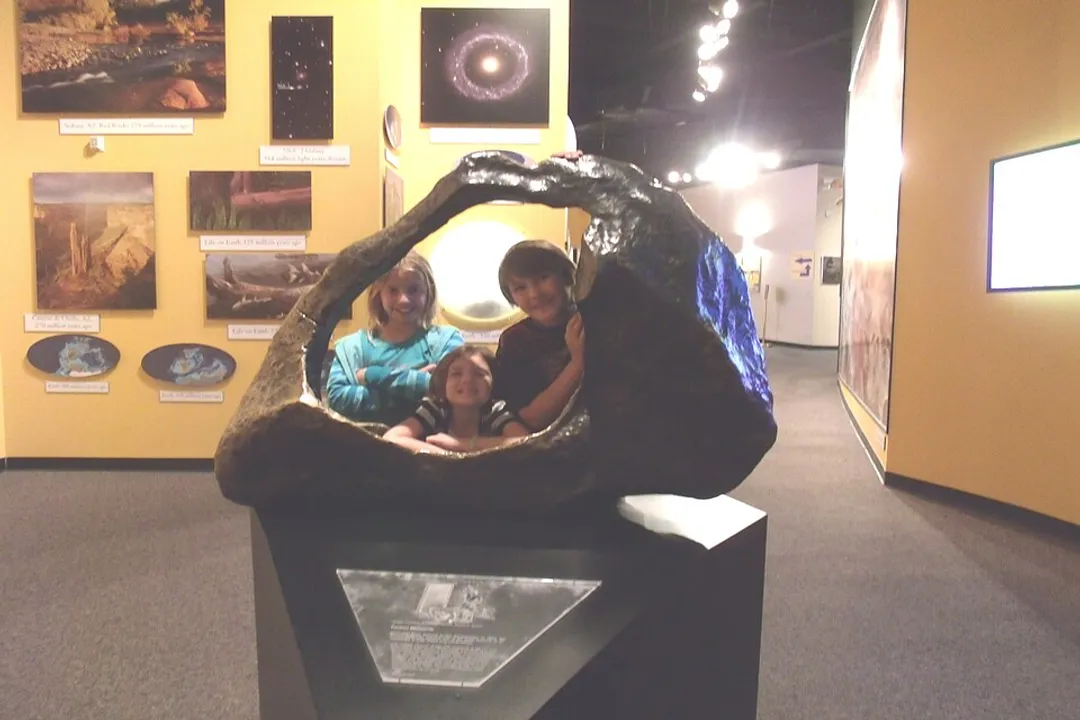
Before anything can streak across our sky or impact the ground, it exists as a meteoroid. [1][6][8] A meteoroid is essentially a small piece of rock or metal orbiting the Sun. [1][6] The sheer variety in size is vast; they can range from particles as tiny as a grain of sand or dust up to objects roughly one meter across. [1][5] If an object is larger than about one meter, it typically graduates to being classified as an asteroid. [1][5] The line between a large meteoroid and a small asteroid can sometimes be fluid, but the primary distinction lies in where the object is located and its general size envelope. [2][5]
These space-faring remnants have different origins, which also helps define their composition. Many meteoroids are fragments chipped off larger bodies, such as asteroids, through collisions out in the main asteroid belt or elsewhere in the Solar System. [2][5] Others originate from the debris trails left behind by comets. [2] While asteroids are predominantly rocky or metallic, comets are icy bodies that, when they approach the Sun, sublimate their ice, creating that characteristic glowing coma and tail. [2] Debris shed by these icy wanderers can easily become the meteoroids that eventually pose an intersection course with Earth. [2]
When considering the sheer volume of space material constantly zipping through the solar system, it becomes clear that the vast majority of these initial bodies—the meteoroids—will never interact with Earth in a significant way. [1] Even among those that do approach, most are extremely small, disintegrating harmlessly far above the surface. [5] The ones that make it through the atmosphere, the ones we can actually hold, are therefore a very select fraction of the original population of space rocks. [5]
# Fiery Passage

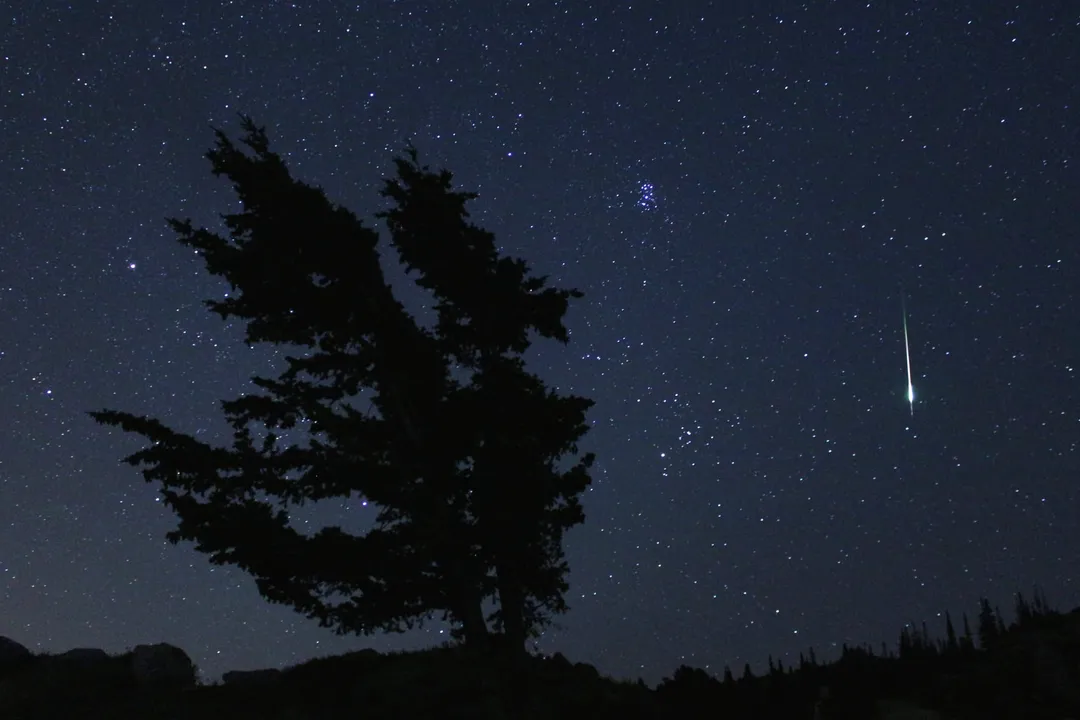
The dramatic light show we associate with space rocks is technically called a meteor. [2][6][7][8] This term describes the visible phenomenon, not the object itself. [7] A meteor occurs when a meteoroid enters the Earth's atmosphere at high speed—often tens of thousands of miles per hour. [5][6] The immense friction generated by pushing through the air causes the meteoroid, or the air around it, to heat up intensely, creating that bright streak of light across the sky. [5][6][7] This is commonly referred to as a "shooting star," although it has nothing to do with actual stars. [6]
Most meteors are caused by meteoroids smaller than a baseball. [5] Because of the intense heat generated during atmospheric deceleration, the majority of meteoroids are completely vaporized long before they ever reach the ground. [5][6] The brightness of the meteor depends on the size, speed, and composition of the incoming object. [5] A particularly bright meteor, one that outshines Venus, is often called a fireball. [5] If a fireball is powerful enough to be seen over a very wide area, it might be further classified as a bolide, sometimes accompanied by an audible explosion. [5] Analyzing where a fireball appears to originate in the sky, or where it seems to have landed, can be a crucial first step for recovery teams searching for actual meteorites. [5]
One interesting aspect to consider when observing meteors is that the speed we perceive is heavily influenced by the Earth's own orbital velocity. [8] If Earth is running into the debris cloud head-on, the relative speeds—and thus the observed brightness and heat generated—will be much greater than if the Earth is overtaking the debris stream, making for a less energetic encounter. This means that two meteoroids of identical size and composition could produce drastically different visual events depending purely on the geometry of the collision course.
# Ground Survivor
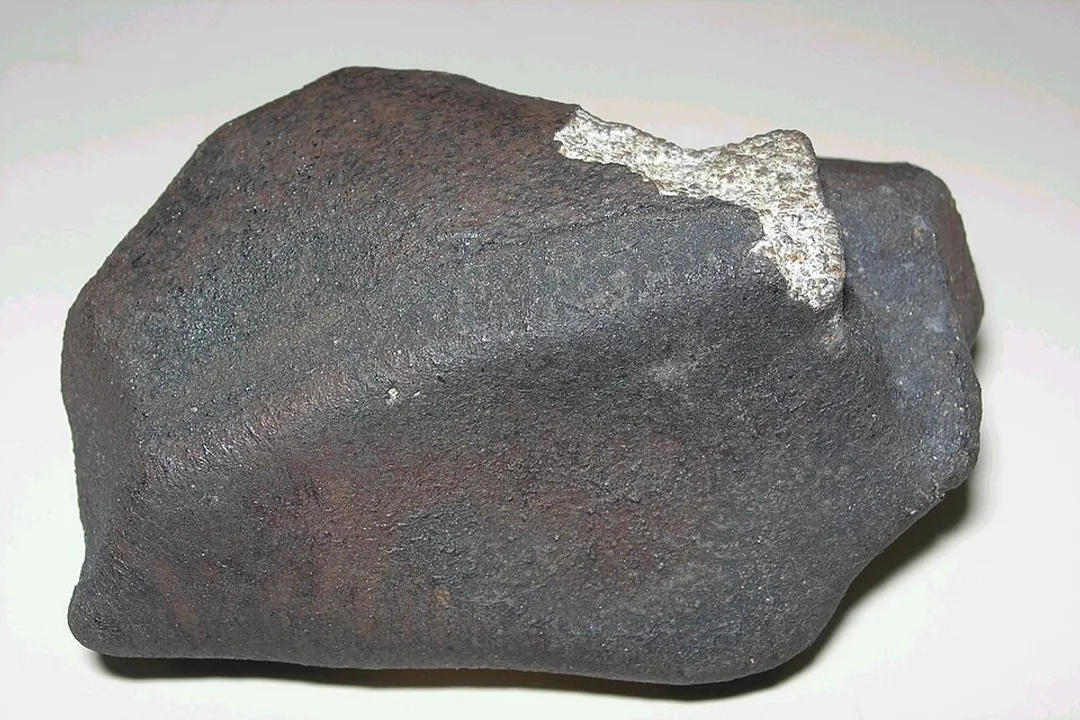
When a meteoroid is large or dense enough to survive the scorching descent through the atmosphere without being totally consumed by ablation, the remaining piece that lands on the Earth’s surface is officially termed a meteorite. [3][4][7][9] These objects are truly tangible messengers from the early Solar System, offering scientists direct physical samples of the material that formed the planets billions of years ago. [5] Because they have spent their entire existence floating in the near-vacuum of space, they are remarkably pristine samples, largely untouched by terrestrial geological processes, except for the time they spend on the ground after impact. [5]
Meteorites are extremely valuable scientifically precisely because they provide direct evidence of the composition of asteroids and other early solar system bodies. [5] Analyzing their internal structure, mineralogy, and isotopic makeup can reveal details about the conditions in the solar nebula from which everything formed. [5]
The impact event itself can vary wildly. Most meteorites—the vast majority—arrive having slowed down significantly, often landing with a relatively gentle thud after their fiery drama. [5] Only the very largest objects, which have insufficient time to decelerate fully, create massive impact craters and significant devastation. [5] For instance, the Chicxulub impactor that ended the reign of the dinosaurs was an asteroid, not just a small meteoroid, demonstrating the scale difference between impactors. [2]
# Compositional Groups
Meteorites are broadly divided into three main categories based on their bulk composition. [3][7] Understanding these groups is key to appreciating the variety of space rocks that reach us:
# Stony Varieties
The most common type of meteorite found on Earth is the stony meteorite. [5] These are primarily composed of silicate minerals, similar to common rocks found on our planet. [3][5] Within this group, the most significant sub-class is the chondrites. [5] Chondrites are considered the most primitive meteorites, meaning they have not experienced melting or differentiation since they formed in the early solar nebula. [5] They often contain small, spherical inclusions called chondrules, which are relict beads of melted material from that ancient time. [5]
# Iron Specimens
As the name suggests, iron meteorites are predominantly made of an iron-nickel alloy. [3][7] These represent the cores of ancient, differentiated planetesimals—bodies that were once large enough to develop internal layers, much like Earth. [5] When cut, polished, and etched with a weak acid, many iron meteorites display beautiful geometric patterns known as Widmanstätten patterns, which are clear indicators of their slow cooling deep inside their parent bodies over millions of years. [5]
# Mixed Finds
The rarest of the naturally occurring meteorites are the stony-iron meteorites. [3][7] These contain a roughly equal mix of silicate rock material and the iron-nickel alloy. [3] The two most famous types of stony-irons are pallasites and mesosiderites. [5] Pallasites are visually striking, featuring beautiful, translucent olivine crystals embedded within the metal matrix, suggesting they formed near the boundary between the core and mantle of their parent body. [5]
| Meteorite Type | Primary Composition | Relative Rarity (on Earth) | Parent Body Insight |
|---|---|---|---|
| Stony | Silicates (rock-forming minerals) | Most common find | Early, undifferentiated nebula material (chondrites) |
| Iron | Iron-Nickel alloy | Less common | Differentiated planetesimal cores |
| Stony-Iron | Equal mix of silicates and iron-nickel | Rarest | Core-mantle boundaries of differentiated bodies |
| [3][5][7] |
# Recovery Challenges
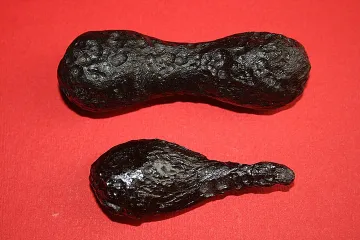
Identifying a true meteorite among the numerous terrestrial rocks that can resemble them—often called "meteor-wrongs"—is a skill that takes practice and a bit of scientific know-how. [9] A terrestrial rock that has spent time rolling in a riverbed, for example, might develop a smooth, dark fusion crust similar to what a meteorite acquires during atmospheric entry, leading to confusion. [9]
True meteorites often possess a few telltale characteristics resulting from their journey. The fusion crust, the dark, glassy exterior, forms when the outer layer melts during atmospheric flight. [5][9] Furthermore, because they traveled through space, they often exhibit regmaglypts, which look like thumbprints pressed into soft clay, caused by ablation forces during their descent. [5][9] Iron meteorites and stony meteorites with high iron content will also be significantly denser than most Earth rocks, and they will readily attract a magnet. [5][9] Scientists often look for interior features, such as the presence of metal when the rock is cut, or the microscopic textures like chondrules or Widmanstätten patterns. [5]
A practical tip for anyone finding a dark, heavy rock in a desert or Antarctic region—where meteorites are often found because the dark rocks contrast against the white ice or light sand—is to check its density relative to common local stones. [9] If it feels surprisingly heavy for its size, a magnet test is the next easy step. However, remember that terrestrial iron-rich rocks can also be magnetic, and some rare, non-magnetic stony meteorites exist, meaning definitive identification often requires professional examination. [9] For example, a rock that is chemically similar to basalt found on Earth will never be a genuine meteorite unless it can be proven to have an extraterrestrial origin, as meteorites arriving today are simply remnants of asteroid/comet material, not fresh samples of Earth's crust. [9]
Related Questions
#Citations
Meteoroid - Wikipedia
Asteroids vs comets vs meteorites/meteoroids/meteors
Meteors and Meteorites: Facts - NASA Science
What's the difference between a meteor, meteoroid, and meteorite?
Meteorites: Messengers From Outer Space
Meteoroid - National Geographic Education
Scientists Say: Asteroid, meteor and meteorite
Meteors | Some Meteorite Information | Washington University in St ...
Meteorites and meteor-wrongs - Natural History Museum