What are the biggest structured things in space called?
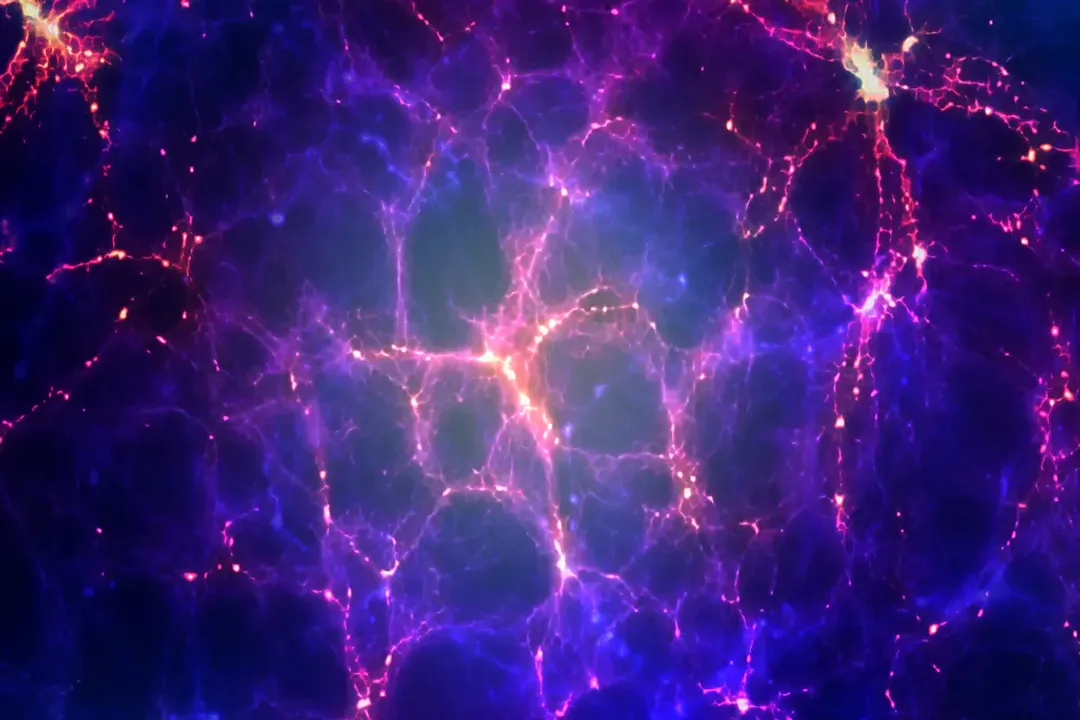
When we look up at the night sky, it seems like the stars and galaxies are scattered randomly, a beautiful, chaotic spray across the blackness. However, the cosmos is far from random; matter organizes itself into incredibly vast, structured formations that dwarf even our own Milky Way galaxy. These gargantuan arrangements of gas, dark matter, and hundreds of thousands of galaxies are what astronomers mean when they talk about the largest structures in existence. It is a hierarchy of organization, moving from small collections of neighbors up to incomprehensibly long cosmic threads that stretch across billions of light-years.
# Building Blocks
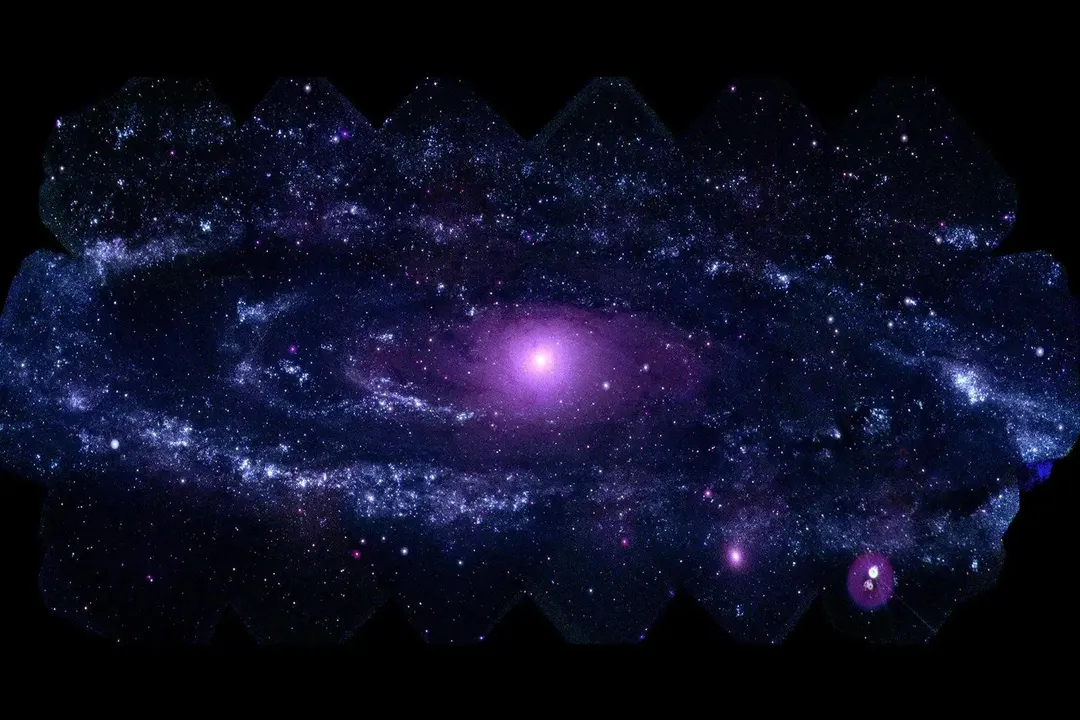
The smallest recognizable "structures" are built from the most basic components: individual galaxies. Our own Milky Way, a respectable structure spanning about $100,000$ light-years, is not alone. Galaxies typically gather into galaxy groups, which are collections bound by gravity, usually containing fewer than a hundred members. The Milky Way is part of the Local Group, alongside about $50$ other galaxies, including the famous Andromeda galaxy.
Stepping up in scale, these groups merge into galaxy clusters, which are substantially more massive, hosting hundreds to thousands of galaxies. The Coma cluster, for instance, contains over a thousand galaxies and spans more than $20$ million light-years. These clusters are not just islands of stars; they are also filled with superheated gas, often reaching temperatures of tens of millions of degrees, and possess a massive component of invisible dark matter.
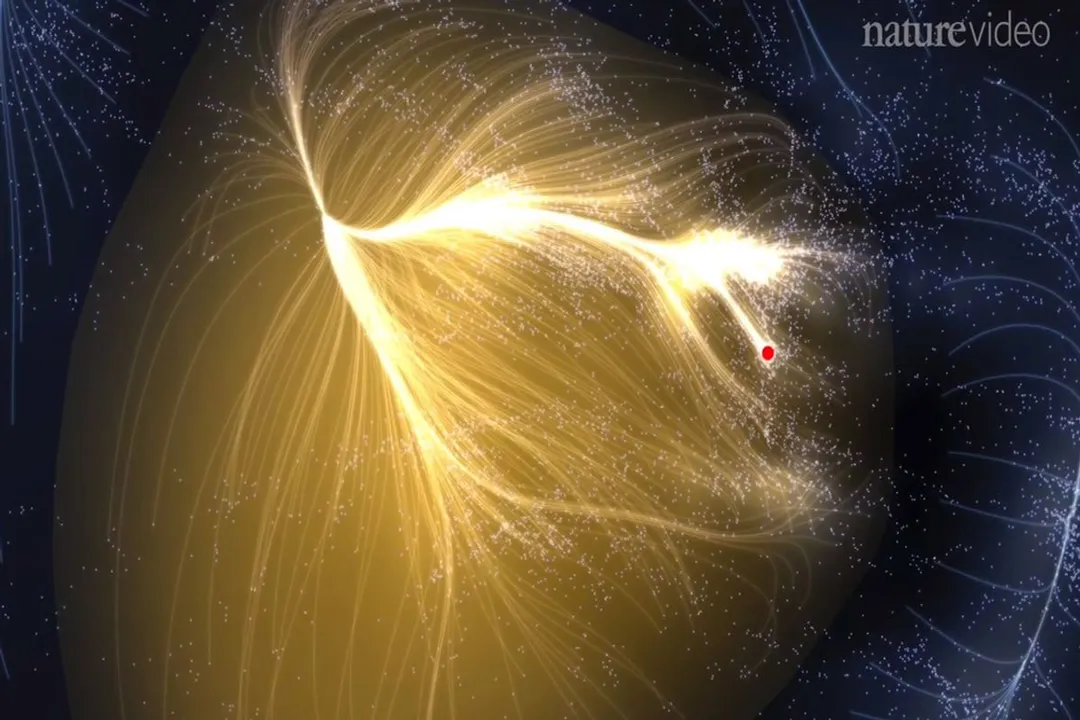
Beyond clusters lie superclusters, which are gargantuan assemblages of galaxy groups, clusters, and individual galaxies. Unlike the smaller groupings, superclusters are often not gravitationally bound to one another, meaning they are more like loose associations than tight-knit structures. Our own Local Group is merely an outer edge dweller in the vast Laniakea Supercluster, which measures roughly $520$ million light-years across. While Laniakea gives us a sense of our cosmic address, it pales in comparison to the truly largest formations.
The gas and plasma that exist between these major structures are also important, though difficult to detect. This intergalactic medium is extremely thin, containing only about one atom per cubic foot, yet it is hot, often reaching millions of degrees, and is mostly composed of the primordial hydrogen and helium left over from the Big Bang, mixed with heavier elements ejected by ancient stars and supernovae.
# Cosmic Scaffolding
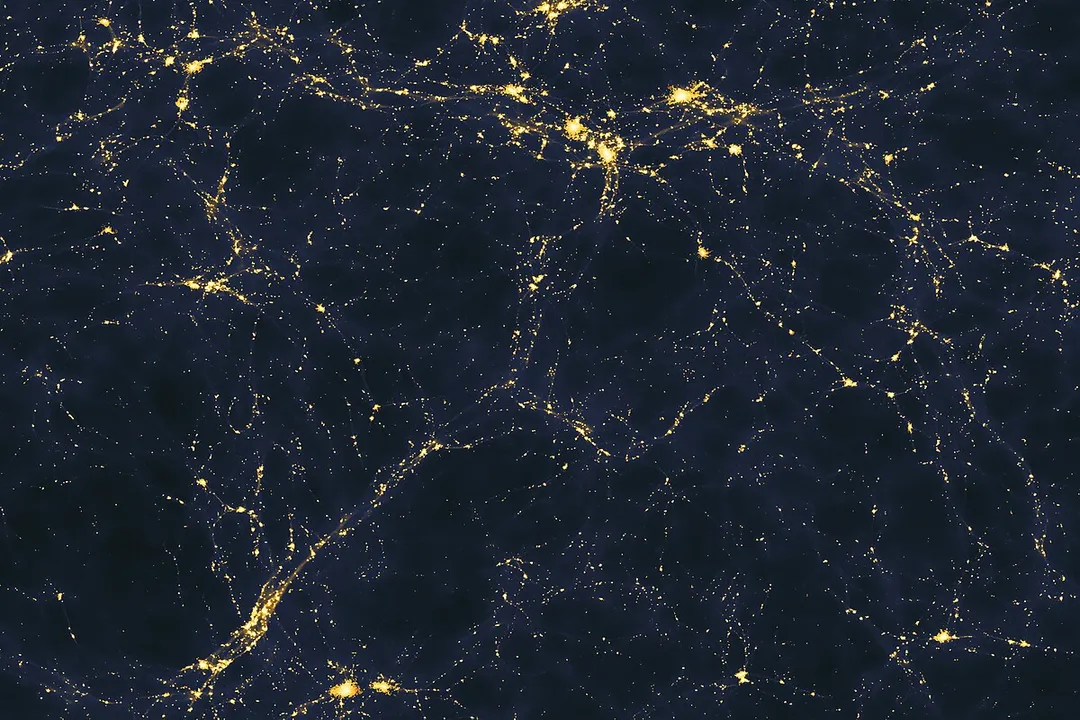
When you map out the locations of these superclusters, a startling pattern emerges: they do not fill space evenly. Instead, they trace out a vast, interconnected network known as the Cosmic Web. This web consists of threadlike structures, or galactic filaments, where the concentrations of matter are highest, often stretching for hundreds of millions of light-years. Where these filaments intersect, the great knots of galaxy clusters and superclusters form. Between these strands lie immense voids—regions of space nearly empty of galaxies.
The idea of the web is that gravitational attraction pulled the universe’s initial, slightly uneven distribution of matter together over cosmic time, creating this scaffolding structure. When multiple superclusters align along these threads, they form galactic walls or sheets, which are the largest structures whose limits are generally defined by observing light from galaxies within them.
One of the most famous examples of these walls is the Sloan Great Wall (SGW), identified in $2003$ through data from the Sloan Digital Sky Survey. This immense feature spans about $1.4$ billion light-years and was, for a time, the undisputed record holder for the largest known structure. Its size immediately raised questions about the cosmological principle—the idea that the universe should look statistically uniform when viewed at a very large scale. A structure spanning over a billion light-years seems quite non-uniform, leading to debates that continue today about the precise limits of homogeneity. Furthermore, in $2020$, the South Pole Wall was identified, a feature comparable in length at about $1.37$ billion light-years, located much closer to us than the SGW.
Consider the sheer scale of these walls: the Milky Way, with its hundreds of billions of stars, is merely a speck within one of the tens of thousands of galaxies that might inhabit a structure like the Sloan Great Wall, which is itself $14,000$ times longer than our galaxy is wide. If you could travel along the Sloan Great Wall at the speed of light, it would still take you $1.4$ billion years to cross it.
# Superlative Contenders
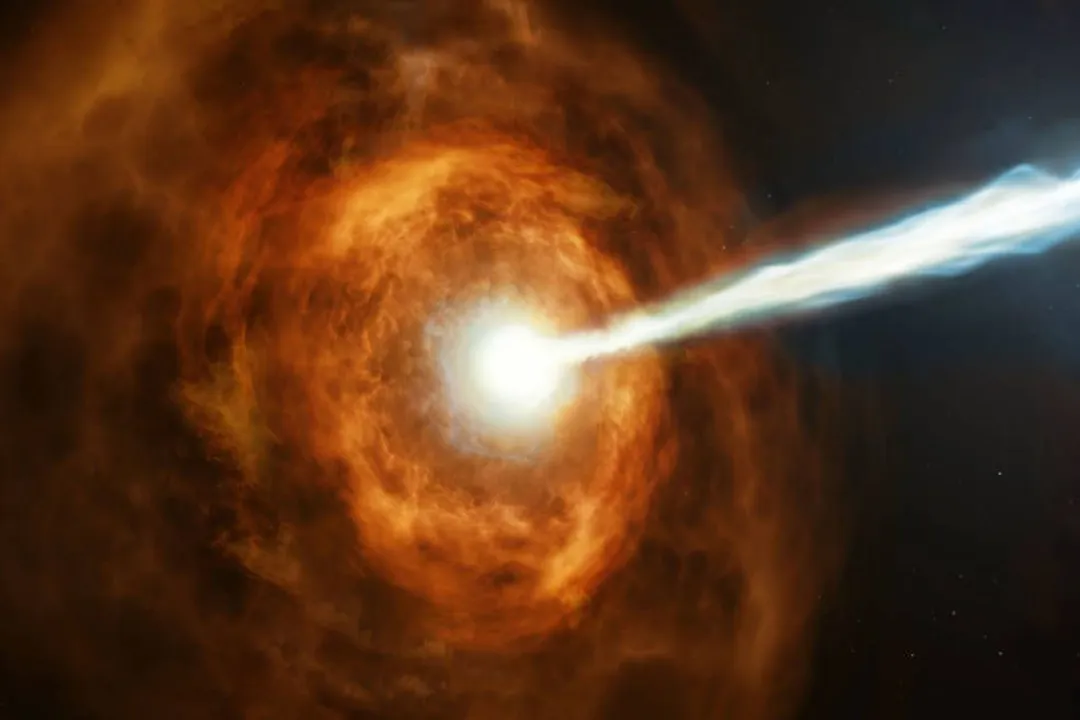
The race for the title of "biggest structure" is constantly being updated, often by looking at data in new ways, such as mapping the sky using the light from distant, energetic events like Gamma-Ray Bursts (GRBs). These energetic explosions are believed to originate from massive stars that die in dense regions, making GRBs excellent tracers for underlying large-scale mass concentrations.
The most frequently cited record-holder, discovered in $2013$ by mapping GRBs, is the Hercules–Corona Borealis Great Wall (H-CB GW). This structure is staggering, estimated to be up to $10$ billion light-years across. To put this in context, the entire observable universe is only about $13.8$ billion years old, meaning this structure spans a substantial fraction of the age of the universe in just one dimension. Even those who discovered it have expressed doubts, acknowledging it pushes the limits of what current cosmological models suggest should exist. Some subsequent analysis has suggested its existence is questionable, possibly a statistical artifact in complicated data, yet the original proponents stand by their findings that it represents a genuine clustering of mass.
More recently, studies using different techniques—specifically an X-ray satellite and a "friends-of-friends" algorithm to trace galaxy clusters—have identified a new, confirmed contender: Quipu. Named after the ancient Incan method of recording information using knotted strings, Quipu is described as a giant superstructure of galaxy clusters stretching about $1.3$ billion light-years long—slightly longer than the Sloan Great Wall. Quipu is characterized by a main strand with many smaller strands branching off, suggesting a highly organized filamentary structure. Its mass is estimated at $200$ quadrillion times the mass of the Sun. Quipu, alongside four other newly identified superstructures (including the Serpens-Corona Borealis and Hercules superclusters), collectively appears to account for a significant percentage of the matter and galaxies within the known volume of the universe being surveyed.
It is fascinating to note the difference in discovery methods: the H-CB GW relies on the distribution of transient events (GRBs), while Quipu relies on the physical positions of confirmed galaxy clusters within a specific redshift range. This highlights a subtle challenge in cosmology: what defines a single, connected structure? Is it a line of GRB sources, or a gravitationally inferred grouping of clusters?
When considering these immense scales, it becomes critical to understand that these "structures" are rarely single, solid objects in the way we think of a planet or a star. They are collections of matter, separated by the vast, nearly empty intergalactic medium, yet held together or arranged by the large-scale geometry of the universe’s dark matter scaffolding. The largest solid objects are things like stars (e.g., the hypergiant UY Scuti, which dwarfs our Sun in volume but is only about $30$ times more massive) or the extremely dense event horizons of supermassive black holes, which are tiny by comparison in linear size, even if their mass is enormous.
If we strictly define "structure" as a single, continuous object with no significant empty space between its parts—a definition that rules out filaments and walls—then the largest objects are likely the supermassive black holes found at the center of galaxies. The event horizon of a supermassive black hole scales linearly with its mass; a black hole $10$ billion times the mass of our Sun could have an event horizon radius extending past the orbit of Pluto, reaching about $100$ Astronomical Units (AU). While vastly larger than a star, this object is still infinitesimally small compared to the $1.3$ billion light-years of the Quipu structure.
This distinction between density-bound objects (like black holes) and gravitationally-arranged structures (like walls) is where much of the terminology gets complicated. The structures we are discussing—the walls and filaments—are not necessarily bound by gravity in the same way a cluster is; the expansion of the universe means that some of their constituent galaxies might eventually drift apart from one another. They are currently considered physical entities deserving study due to their characteristic arrangement at a specific point in cosmic history.
One intriguing analysis of the current hierarchy involves realizing that these structures, no matter how large, appear to be approaching a theoretical maximum size. Cosmological estimates suggest that structures larger than about $1.2$ billion light-years might be incompatible with the standard cosmological principle—though the existence of structures at that scale, like the SGW, already challenges this. If the Quipu ($1.3$ billion light-years) or the H-CB GW ($10$ billion light-years) truly represent single, coherent structures, it forces an update to our understanding of the early universe's distribution of matter and how quickly structures could grow via gravitational collapse.
For someone trying to visualize this cosmic geography, it helps to remember the relative differences. Think of the Milky Way as a single city. A galaxy cluster is a sprawling megalopolis encompassing thousands of such cities. A supercluster is a loosely connected network of several megalopolises. Finally, a galactic wall or superstructure like Quipu is a vast, interconnected chain of these networks stretching for distances that require billions of years for light to traverse. If we view the entire observable universe as a loaf of bread being baked, these massive structures are the dense streaks of flour and raisins distributed unevenly throughout the dough, while the voids are the air pockets. The constant discovery of structures like Quipu tells us that our cosmic map is still far from complete, suggesting that larger, as-yet-unseen structures likely exist in the more distant regions of the observable cosmos. The search, therefore, is not just about finding the largest thing, but understanding the largest patterns that govern how all matter clumps together over time.
#Videos
Astronomers Spotted the Biggest Thing Ever Discovered in Space
Related Questions
#Citations
List of largest cosmic structures - Wikipedia
Large Scale Structures - NASA Science
What is the largest single structure discovered in the universe?
What is the biggest thing in the universe? - Space
Astronomers Spotted the Biggest Thing Ever Discovered in Space
An Enormous, Branching String of Galaxy Clusters Is the Largest ...