Are supernovas the brightest thing in the universe?
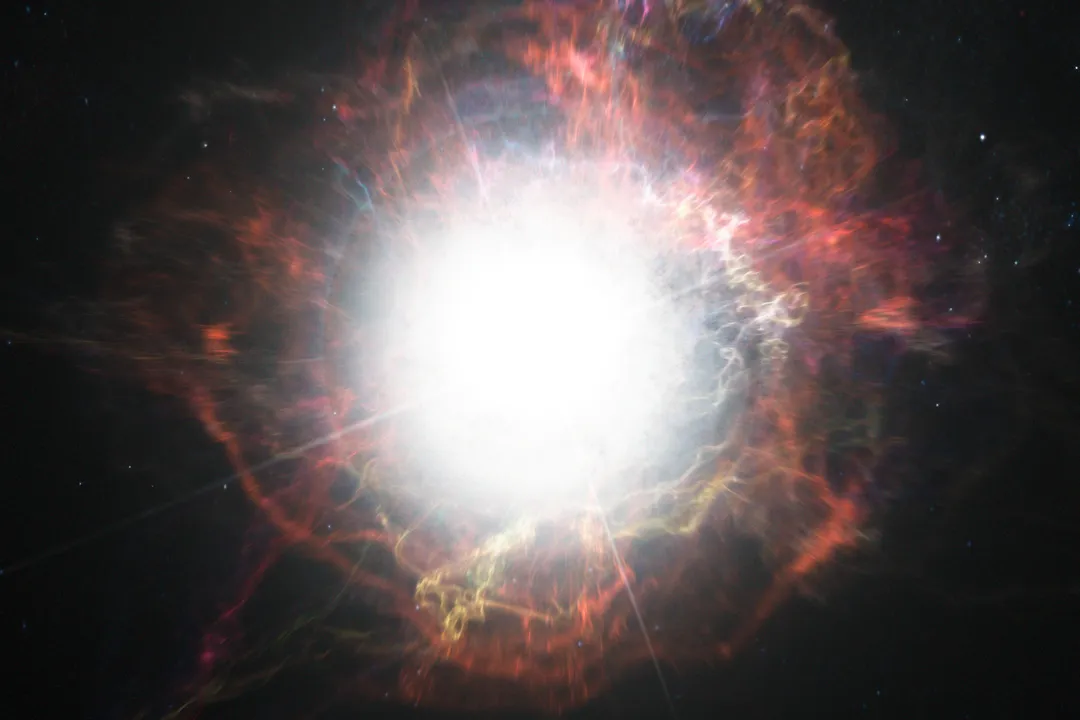
The sudden illumination of a dying star represents one of the most profound light shows the universe can produce. For a brief period, the explosion rips through the cosmos, momentarily overpowering everything nearby with an unimaginable burst of energy and light. [4][9] This stellar catastrophe, known as a supernova, is so energetic that it momentarily outshines the combined output of the billions of stars residing in the entire galaxy that hosts it. [3][8] To truly grasp the scale of this event, one must look past the everyday glow of stars and into the realm where stellar death unleashes its full fury.
# Stellar Demise
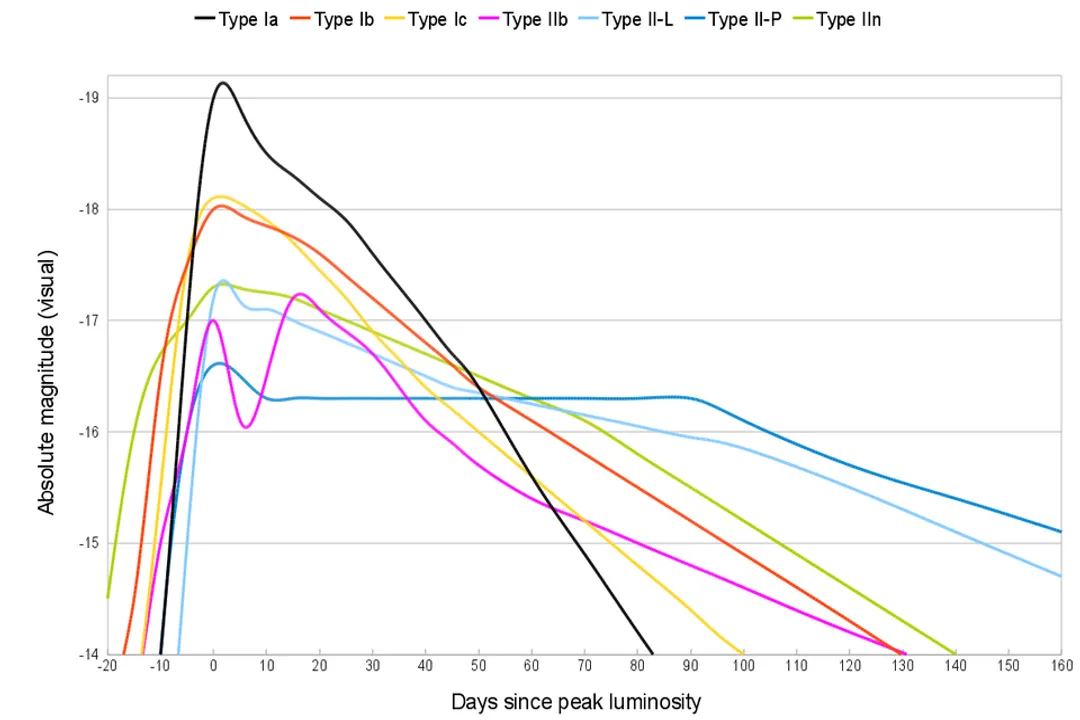
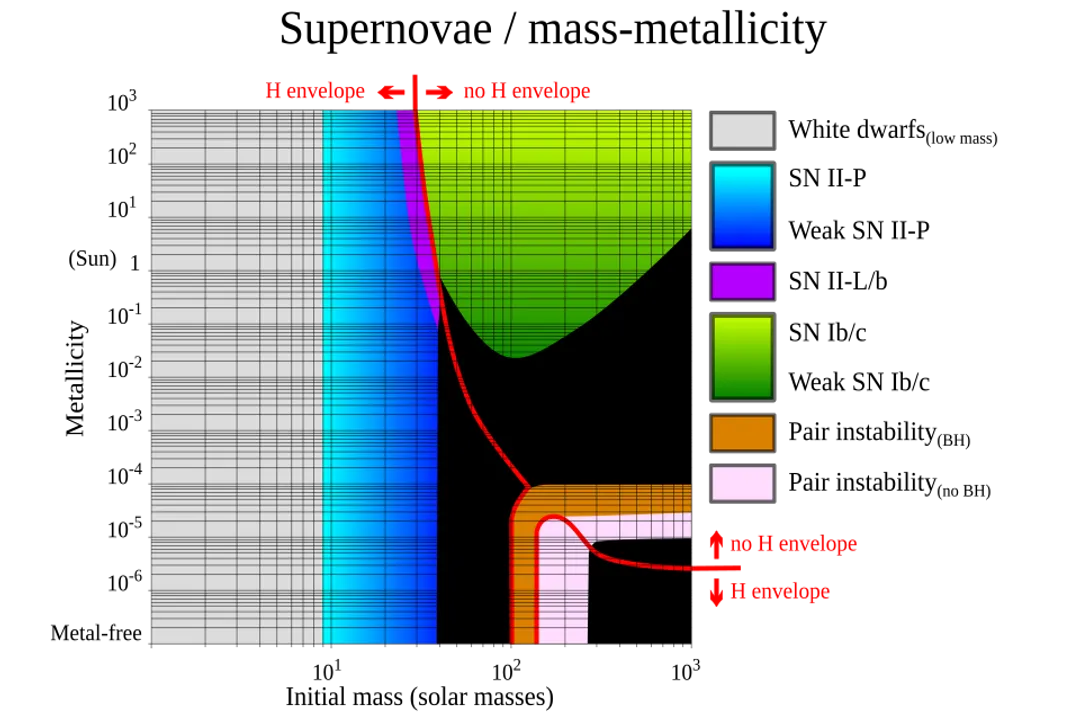
A supernova marks the final, violent end for certain types of stars. [1] The mechanism driving this explosion dictates the kind of light we see. Broadly, astronomers classify these events into categories, though the most fundamental division is between core-collapse supernovae and thermonuclear supernovae. [1]
Core-collapse supernovae occur when a massive star, typically much more massive than our Sun, exhausts its nuclear fuel. [1][9] Once fusion ceases in the core, gravity wins the long battle, causing the core to rapidly collapse in on itself. This implosion rebounds violently, sending a shockwave outward that blows the star's outer layers into space at incredible speeds. [1][3]
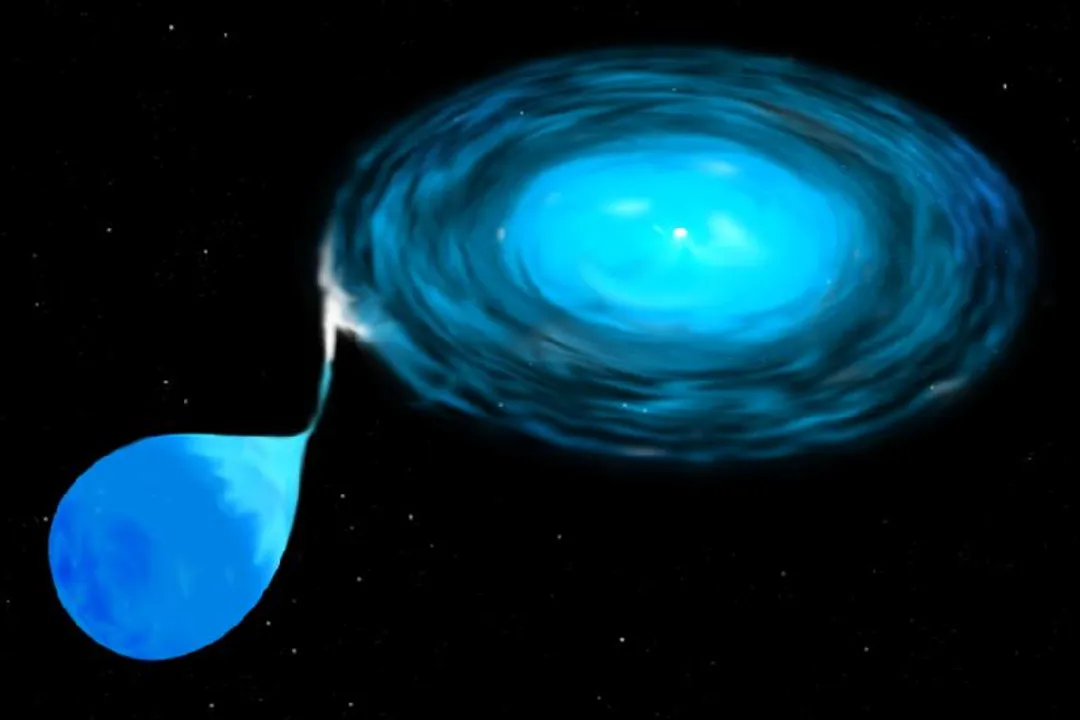
The other primary category involves stars like white dwarfs in binary systems. If a white dwarf siphons too much material from its companion star, it can exceed a critical mass threshold known as the Chandrasekhar limit. [1] This over-accumulation triggers runaway thermonuclear fusion throughout the star, resulting in its complete disintegration in what is termed a Type Ia supernova. [1] These explosions are remarkable because they are thought to occur with a fairly consistent peak absolute magnitude, a characteristic that makes them invaluable tools for cosmologists. [1]
# Magnitude Scale
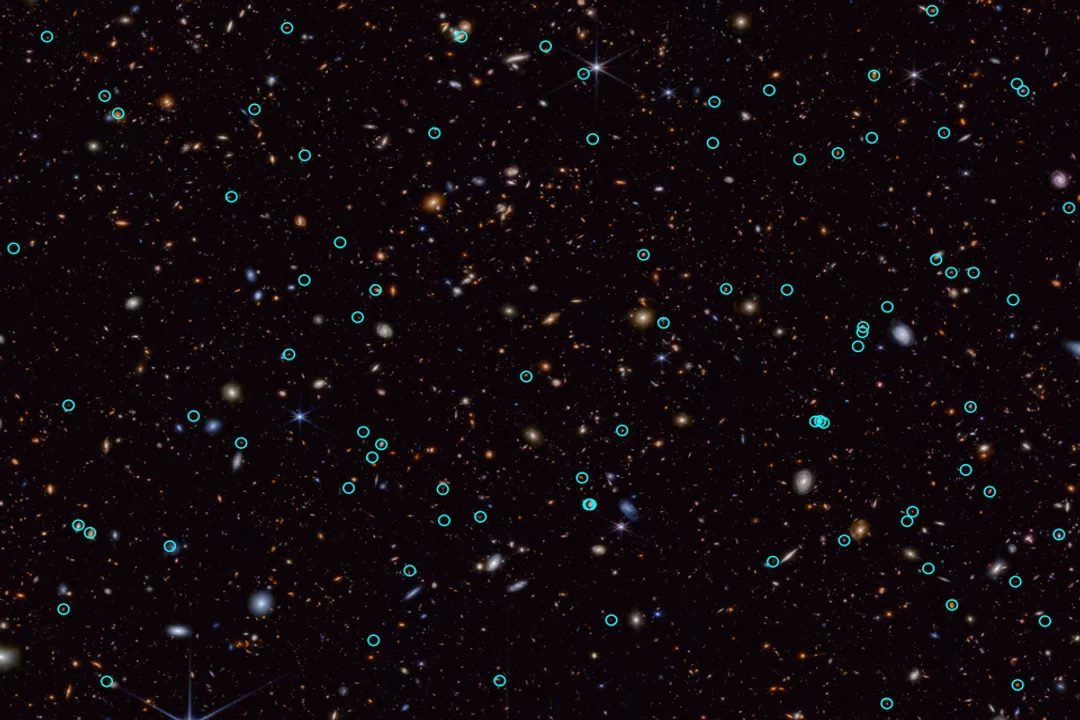
The brightness of celestial objects is often measured using the magnitude scale, where lower (or more negative) numbers indicate greater luminosity as seen from Earth, although the total intrinsic output is what defines the true cosmic rankings. [2] When a supernova peaks, its apparent brightness can increase by a factor of approximately ten billion compared to the star it used to be. [4]
Consider the sheer volume of light produced. Our own Milky Way galaxy contains between 100 billion and 400 billion stars. [8] A typical, nearby supernova can briefly outshine all of those stars combined. [8] This overwhelming temporary brilliance means that for a few weeks or months, a single exploding star can outshine an entire galaxy containing hundreds of billions of suns. [3][4] This temporarily elevated luminosity makes even distant supernovae visible across vast cosmic distances. [4]
To put this relative output into perspective, even accounting for the sheer number of stars, the peak power of a stellar explosion is in a league of its own for stellar events.
| Object Category | Typical Brightness Reference | Relative Peak Output |
|---|---|---|
| Our Sun | Baseline reference | 1 |
| Milky Way Galaxy (Total) | Billions of stars | Extremely High (but steady) |
| Standard Supernova | Outshines host galaxy | Billions of times Sun's output |
| Superluminous Supernova | Extreme outlier | Tens or hundreds of times standard SN |
The energy released during the explosion of a Type II supernova—the core-collapse variety—can approach Joules. [9] Much of this energy escapes not as visible light, but as neutrinos, yet the visible component remains staggering. [9]
# Extreme Luminosity
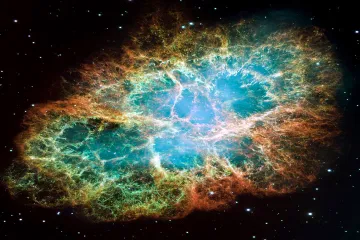
While all supernovae are incredibly bright, some push the boundaries of stellar physics, leading to events categorized as superluminous supernovae (SLSN). [5] These are events that achieve peak luminosities significantly greater than standard supernovae, sometimes reaching 10 to 100 times brighter than the average Type Ia or core-collapse explosion. [5]
One such event, designated SN 2015bh, was observed and confirmed to be exceptionally luminous, pushing against the limits of what current models predict for stellar explosions. [6] Such extreme events challenge our understanding of the physics that govern the final moments of massive stars, suggesting mechanisms beyond simple core collapse or standard thermonuclear runaway might be at play, perhaps involving magnetars or pair-instability mechanisms in the very largest stars. [5][6] Discoveries like this force astrophysicists to re-examine the underlying physics taught in introductory texts, confirming that nature often holds surprises even in well-understood processes. [6]
When we talk about the "brightest thing," we often look for the object with the highest peak observable luminosity. A standard supernova is tremendously bright, but the SLSNe are the current record-holders among stellar explosions. [5]
# Cosmic Brightness Hierarchy
The question of whether a supernova is the brightest thing in the universe requires looking beyond stellar explosions to other phenomena that might shine longer or brighter, even if they are powered by more complex, long-lived processes. [7] A supernova’s glory is fleeting, lasting weeks or months before fading back to obscurity. [4]
In contrast, objects like quasars—the intensely luminous centers of active galaxies, powered by supermassive black holes actively accreting matter—can maintain extraordinary brightness for millions of years. [7] While a single supernova might briefly outshine its entire galaxy, the total integrated light output of a powerful quasar over its active lifetime dwarfs the total energy released by any single supernova event. [7]
Another contender for sheer instantaneous power is the Gamma-Ray Burst (GRB). [2] Long GRBs are thought to be associated with the collapse of very massive stars (hypernovae), which are intrinsically linked to core-collapse supernovae. [1] These bursts unleash a focused beam of gamma rays so intense that, if directed precisely at Earth, they can be detected across the observable universe. [2] While the visible light from the associated supernova might be less luminous than the GRB’s initial gamma-ray flash, the GRB represents an event of higher total instantaneous electromagnetic energy across its entire spectrum, particularly in the high-energy bands. [2]
This comparison highlights a critical distinction: Supernovae are the brightest stellar events observable across cosmic distances, often rivaling the visible light of their host galaxies. [3][8] However, objects powered by accretion onto black holes, like quasars, or the focused jets of GRBs, represent higher orders of magnitude in sustained or initial power release across the entire electromagnetic spectrum. [2][7]
# Longevity Versus Peak
The difference in duration between these phenomena is key to their ranking. A supernova is a spectacular, albeit brief, flash. [4] It is an event characterized by incredibly rapid rise and fall in brightness. [9] This temporary nature is precisely what allows astronomers to isolate and study the physics of the dying star itself, free from the constant background light of its host galaxy. [4]
Thinking about the total energy budget, one can observe that while the Sun emits a stable stream of light, a supernova dumps an immense amount of energy into space in a matter of months. [9] If one were to calculate the total energy released by the steady light output of the entire Milky Way over a year versus the total energy from a single SLSN over its observable lifetime, the comparison might narrow slightly, but the sustained output of quasars remains unparalleled. [7]
It is interesting to consider that the consistency of Type Ia supernovae, despite their incredible brightness, is what makes them so useful for measuring cosmic distances. If every Type Ia reached the same peak luminosity, they serve as "standard candles." The fact that the brightest observed events, the SLSNe, are so variable ($10$ to $100$ times brighter than the standard) means they are currently treated as outliers that require specialized study rather than routine distance markers. [5][6] This variability proves that stellar death isn't a single fixed process, but a spectrum of extreme outcomes driven by initial stellar mass and environment. [1]
# Impact and Measurement
The ability to detect a supernova from billions of light-years away is not just a testament to its power, but a demonstration of the sensitivity of modern astronomical instruments. [4] When astronomers see a Type Ia supernova exploding far out in the universe, the observed brightness tells them how far away it is, because they expect it to hit a specific intrinsic brightness target. [1] This technique was essential in the discovery that the expansion of the universe is accelerating. [1]
In essence, the supernova stands as the universe's most brilliant, yet temporary, stellar beacon. While other cosmic engines—like supermassive black holes powering quasars—produce a brighter, more continuous glow over vast timescales, the sheer, instantaneous punch delivered by a collapsing or detonating star makes the supernova a unique and formidable object in the cosmos. [2][7] For astronomers focusing on stellar evolution and local galaxy dynamics, the supernova is the ultimate signpost of cosmic change.
Related Questions
#Citations
Supernova - Wikipedia
How bright is the brightest thing in the universe compared to ... - Reddit
What Is a Supernova? | NASA Space Place – NASA Science for Kids
Supernova - ESA/Hubble
How Bright Can Supernovae Get? - AAS Nova
The Brightest Supernova Ever Observed Tests the Limits of Physics
What is the brightest thing in the universe? - Quora
Astronomers detect a supernova brighter than all the Milky Way's ...
Supernovae Background