What is the largest structure in our universe?
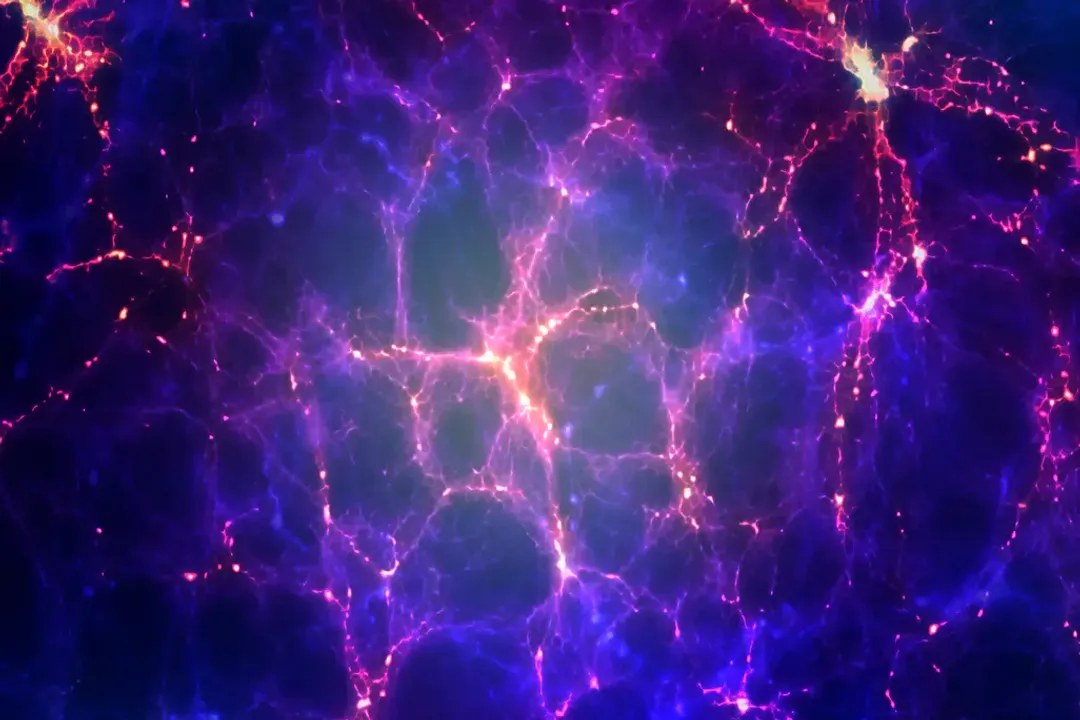
The sheer scale of the cosmos often defies easy comprehension, yet astronomers continually push the boundaries of what we can observe, defining structures so immense they challenge our intuitive understanding of space. While we may once have thought of galaxy clusters or superclusters as the ceiling of cosmic architecture, recent discoveries, largely driven by the observation of distant, energetic events, have revealed entities that dwarf everything previously cataloged. The current understanding points toward a gargantuan network, traced through the echoes of stellar death, holding the title for the largest known structure in the observable universe.
# Measuring Size
Determining the size of anything beyond our solar system is an exercise in precision and historical context. When discussing cosmic structures, the unit of measurement is almost always the light-year, or more commonly, megaparsecs (one megaparsec equals about $3.26$ million light-years). [1] What we are looking for is not a single object like a star or a planet, but rather a vast aggregation of matter—filaments, sheets, and walls of galaxies and dark matter—that clump together through gravity. [7] These are the largest known concentrations of matter that appear non-randomly distributed across the universe. [1]
Historically, candidates for the largest structures were identified by mapping visible galaxies. The Sloan Great Wall, for instance, stretches over $1.37$ billion light-years and was, for a time, the benchmark for extreme size. [1] However, these visible surveys are inherently limited by the distance light has had time to travel to reach us, and they might miss the fainter, more diffuse structures that bind the universe together. The breakthrough in identifying the absolute largest structure came from looking for something far more energetic and ancient than the average galaxy.
# The Quipu
The structure currently recognized as the largest single structure observed is named Quipu. [2][3] This name, inspired by the knotted strings used by the Inca for record-keeping, aptly describes its appearance: a vast, filamentary collection of galaxy filaments and proto-superclusters. [2][3] The Quipu is estimated to span an incredible distance, potentially exceeding 10 billion light-years. [2][3] To put that into perspective, the observable universe itself is only about $93$ billion light-years across in diameter. If one were to traverse the Quipu, it would take light $10$ billion years to cross it, meaning we are seeing the structure as it existed when the universe was only about $3$ to $4$ billion years old—a mere fraction of its current age. [2] This scale is so significant that it raises questions about how such a coherent structure could have formed so early in cosmic history. [9]
The sheer size of the Quipu means it is not a conventional supercluster but rather a collection or configuration of many superclusters, woven together into a massive, extended entity. [8] It represents an extreme overdensity within the general pattern of the Cosmic Web. [7]
# Gamma Bursts
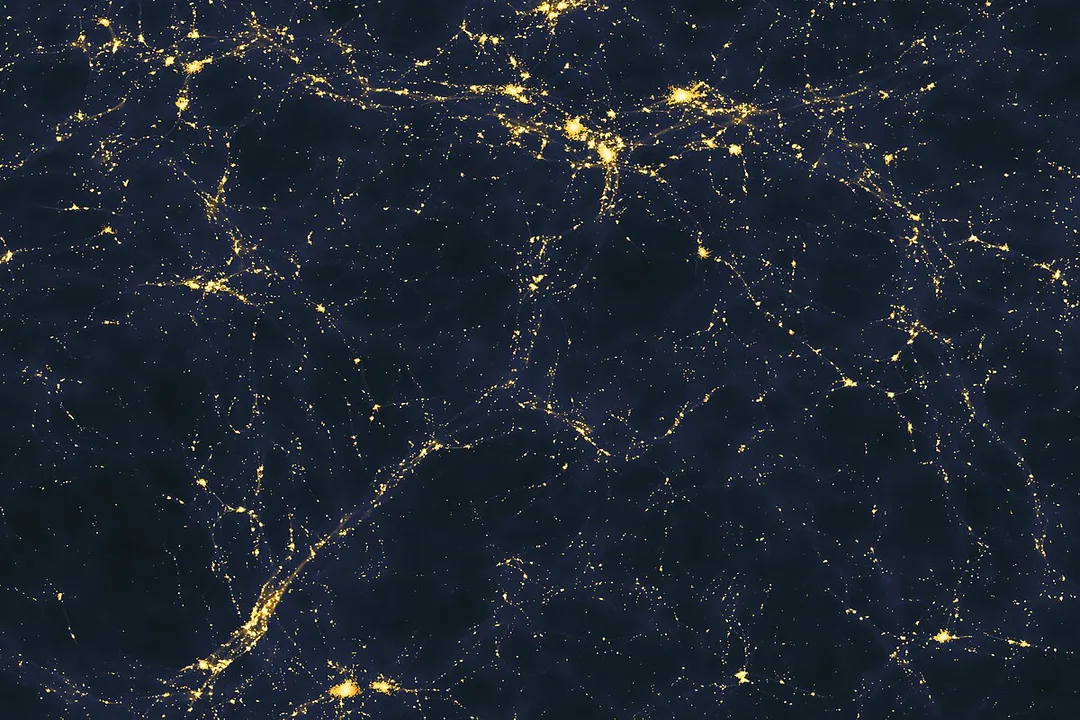
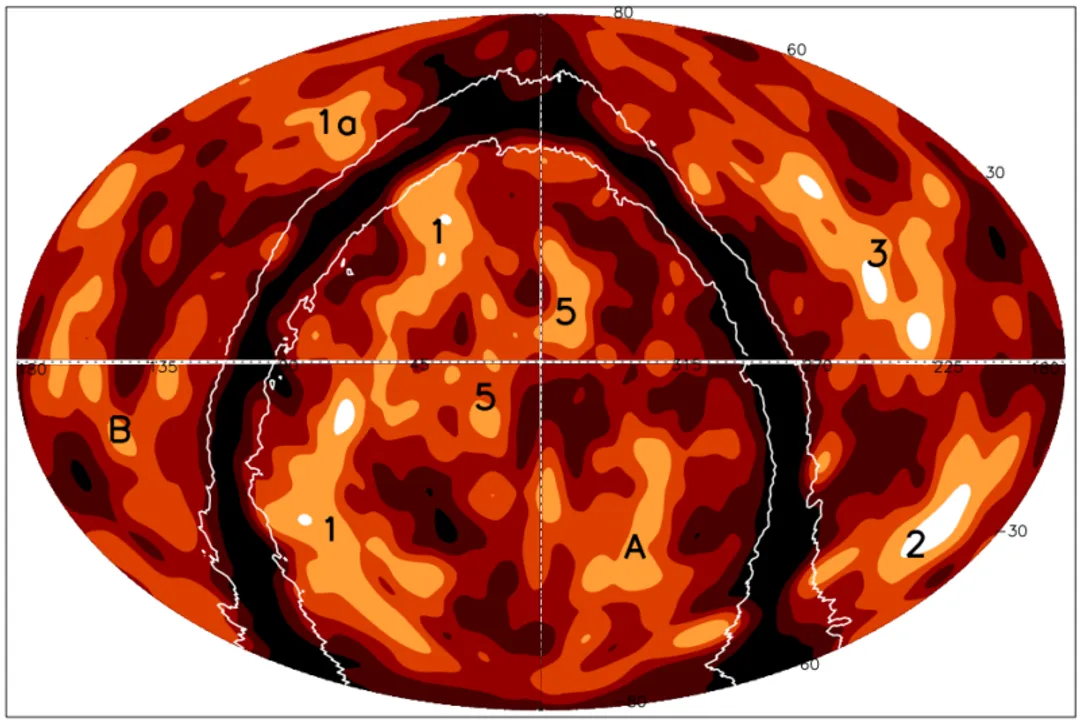
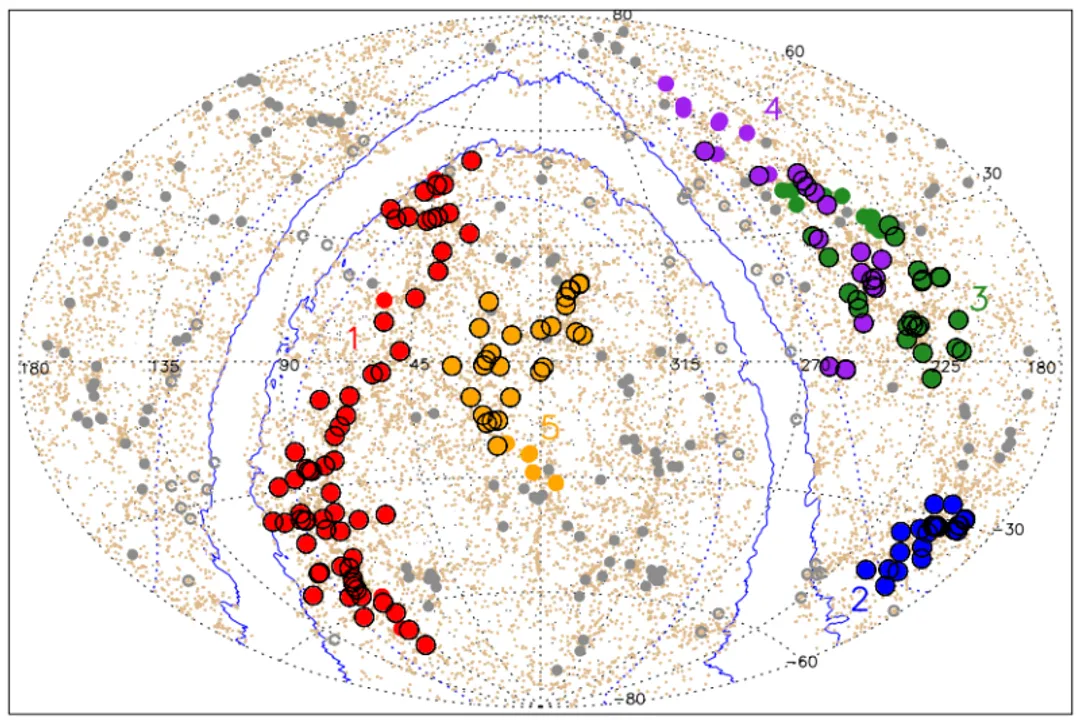
The ability to map something as immense as the Quipu stems from a different kind of astronomical marker than the visible light of galaxies. The Quipu was identified through the study of Gamma-Ray Bursts (GRBs). [2][3] GRBs are the most luminous electromagnetic events known to occur in the universe, typically marking the collapse of massive stars into black holes or the merging of neutron stars. [2] They are so bright that they can be detected across cosmological distances, acting as beacons that illuminate the large-scale distribution of matter, even in the distant, early universe. [2][3]
Astronomers mapped the locations of many GRBs and found that they were not distributed randomly. Instead, they clustered along the paths of filaments and walls that constitute the Quipu structure. [2][3] This method provides a way to map the underlying scaffolding of the cosmos that might otherwise remain invisible or too faint to detect through traditional galaxy surveys alone. [7]
It is important to note that while the Quipu is the leading candidate based on GRB tracing, the scientific community acknowledges that its exact nature is still under scrutiny, with some debate remaining about the precise interpretation of the data and whether it truly represents a single, contiguous structure or a statistical alignment of massive features. [9]
# Previous Giants
Before the Quipu's characteristics were fully appreciated, other monumental structures held the record, and they remain critical milestones in understanding cosmic organization. [1]
The Hercules-Corona Borealis Great Wall (HCBBW) is often cited in older literature as a record holder, reported to be around $10$ billion light-years across, much like the Quipu. [1] However, the Quipu, traced through GRBs, appears to be a more coherent, filamentary structure, whereas the HCBBW was identified through the distribution of specific types of GRBs and may represent a different physical manifestation of large-scale grouping. [1][9]
Another significant structure is the Laniakea Supercluster, which is where our own Milky Way galaxy resides. [10] While Laniakea is enormous—spanning hundreds of millions of light-years and containing tens of thousands of galaxies—it is merely a local feature when compared to the scale of the Quipu or the HCBBW. [7] Thinking about our home helps anchor the scale: Laniakea contains our entire local group of galaxies, yet it is dwarfed by the structures traced across billions of light-years of space. [10]
| Structure Name | Approximate Size (Light-Years) | Detection Method | Key Feature |
|---|---|---|---|
| Quipu | $>10$ Billion | Gamma-Ray Bursts (GRBs) | Filamentary proto-supercluster network |
| Hercules-Corona Borealis Great Wall | Billion | GRBs | Massive overdensity of matter |
| Sloan Great Wall | $1.37$ Billion | Galaxy Surveys | Massive sheet of galaxies |
| Laniakea Supercluster | Million | Galaxy Velocities | Our local cosmic neighborhood |
# Structure Meaning
The existence of structures measuring several billion light-years forces a confrontation with the Cosmological Principle, a foundational idea in modern cosmology which suggests that on the largest scales, the universe is statistically homogeneous (the same everywhere) and isotropic (the same in every direction). [7] A single, organized structure spanning $10$ billion light-years pushes the limit of what we expect to see under this principle. [9] If the universe truly conforms to homogeneity, there should be a scale above which such large, continuous structures become statistically improbable. The Quipu appears to be right at that boundary, testing the assumptions we use to model the universe's evolution from the Big Bang to the present day.
If the structure traced by the GRBs is confirmed as a single, gravitationally bound entity, it implies that the initial density fluctuations in the very early universe were significantly larger or more organized than standard models predict, requiring a re-evaluation of the initial conditions that seeded galaxy formation. [9] We are, in essence, seeing the remnants of the very first large-scale gravitational contracts, frozen in time by the light they emitted billions of years ago. Observing such immense features gives researchers a direct measure of the universe's structure when it was far less mature, offering an irreplaceable snapshot of cosmic evolution in its infancy. [2]
#Videos
Astronomers Just Found the Biggest Thing in the Universe So Far.
Related Questions
#Citations
List of largest cosmic structures - Wikipedia
Astronomers discover 'Quipu', the single largest structure in the ...
Meet Quipu, largest known structure in the universe - EarthSky
Gamma-ray bursts reveal largest structure in the universe is bigger ...
Astronomers Just Found the Biggest Thing in the Universe So Far.
Largest structure in the universe discovered - Facebook
Large Scale Structures - NASA Science
An Enormous, Branching String of Galaxy Clusters Is the Largest ...
Gamma-ray bursts reveal largest structure in the universe is ... - Space
What is the largest structure that contains Earth?