What do Hubble's cameras observe in the universe?
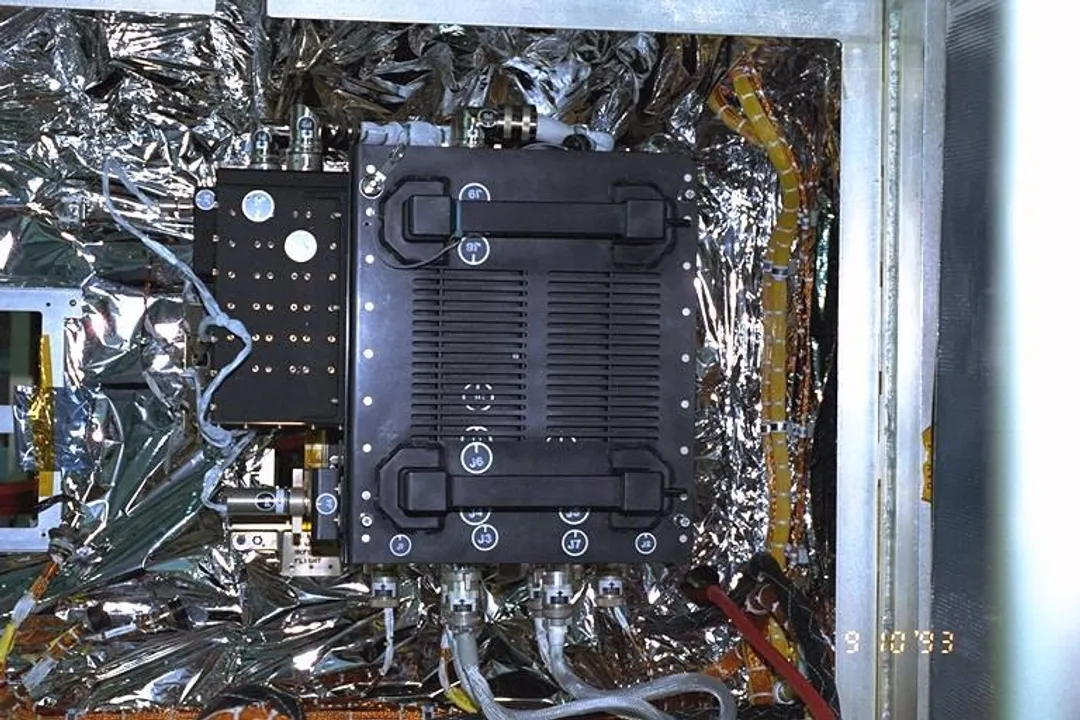
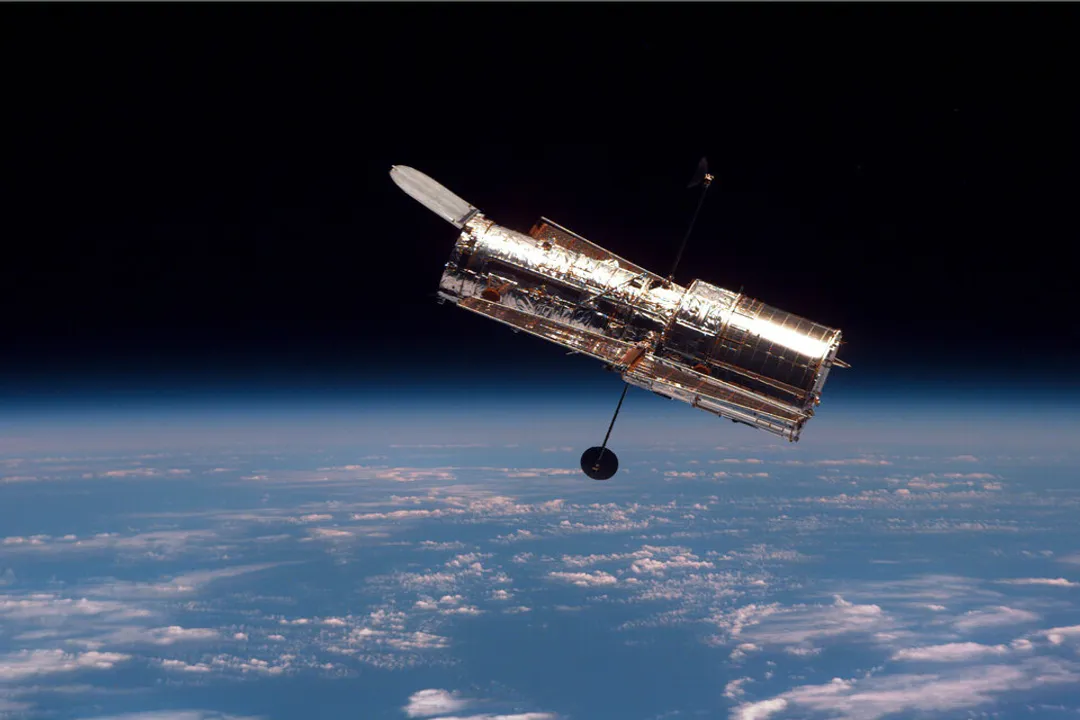
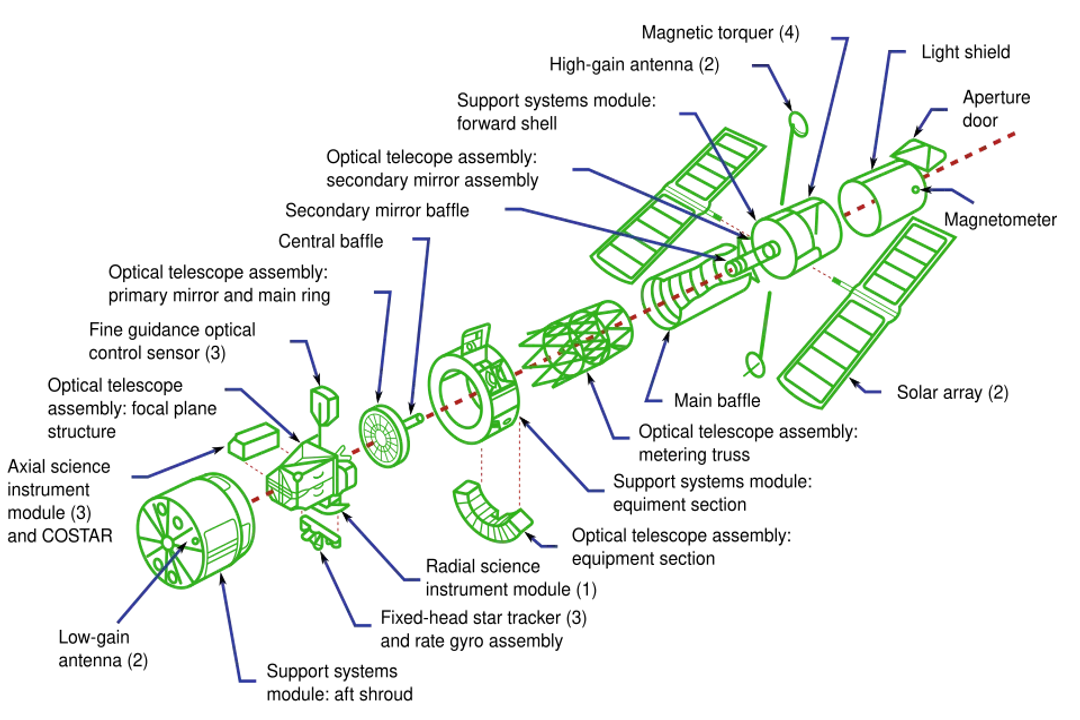
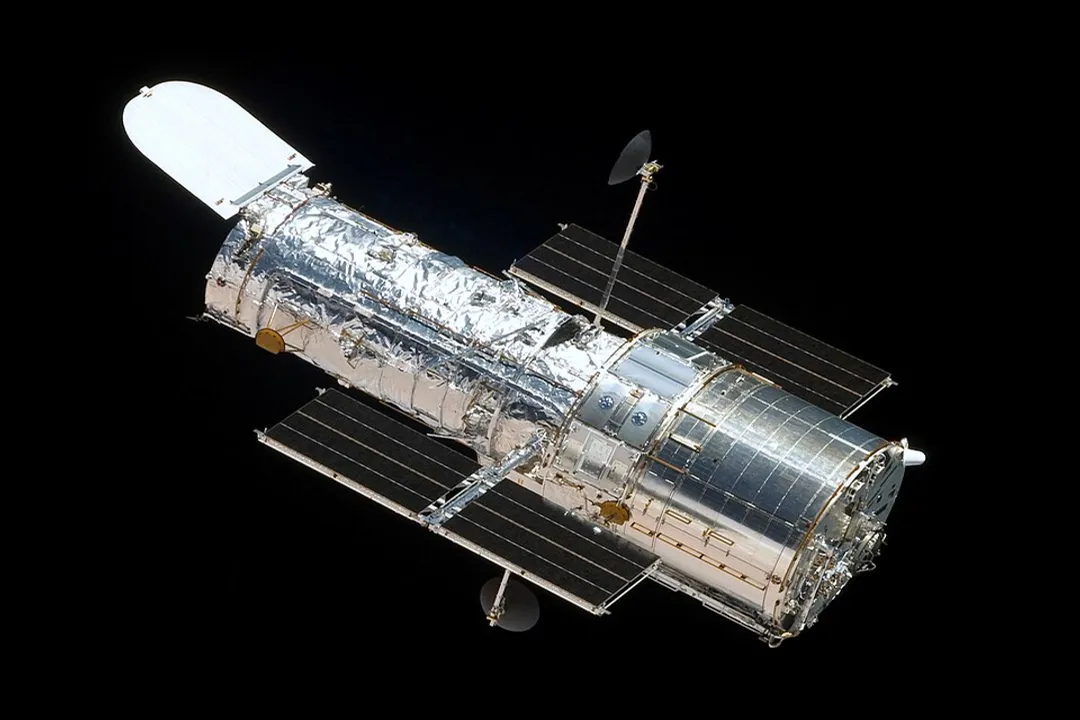
The initial spark that allows the Hubble Space Telescope (HST) to peer into the cosmos is its unique location. Launched aboard the Space Shuttle Discovery on April 24, 1990, Hubble orbits high above Earth’s atmosphere, a critical advantage that fundamentally dictates the quality and depth of its observations. [1][5][6] The atmosphere, while protecting life on the surface, aggressively absorbs or distorts electromagnetic radiation, particularly in the ultraviolet and infrared parts of the spectrum. [6] By operating in this clear, dark environment, Hubble bypasses these terrestrial limitations, allowing its 2.4-meter primary mirror to gather light with unprecedented clarity. [1]
# Wavelength Reach
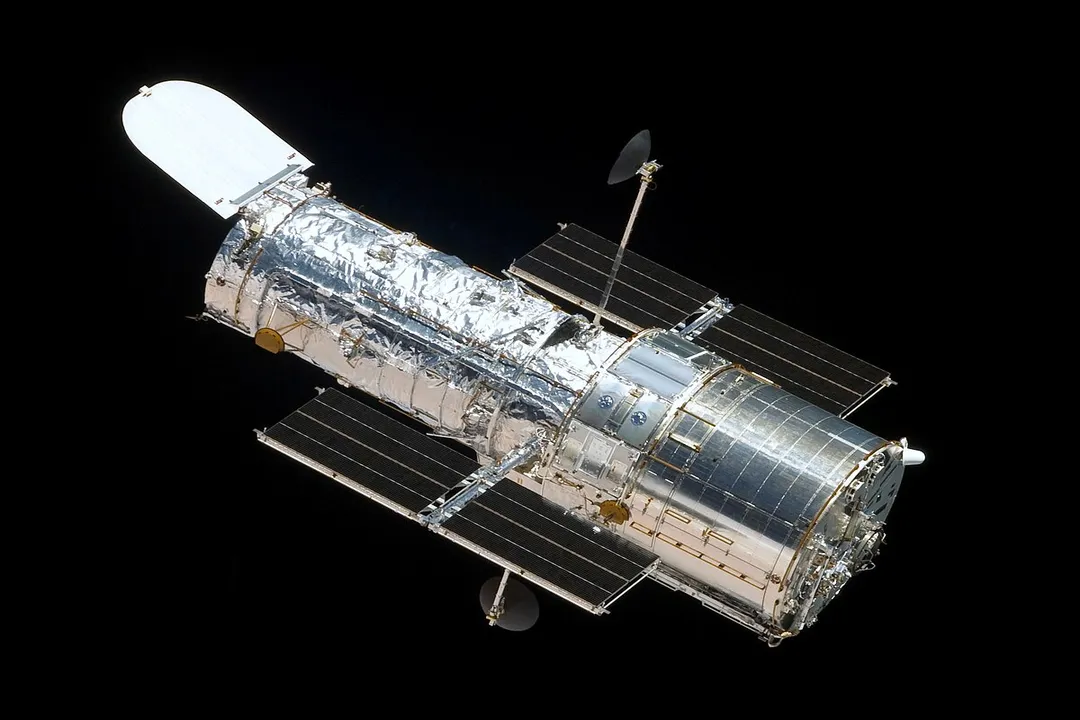
Hubble is not a single-purpose eye; rather, it functions as an observatory equipped with multiple sophisticated instruments that capture different forms of light. [1] What the cameras actually observe is determined by which detector is active. The telescope is designed to capture light across a broad range: the ultraviolet (UV), the visible spectrum (the light we see), and the near-infrared (NIR). [9] This multi-wavelength capability is crucial because different astronomical phenomena emit light most strongly at different wavelengths. For instance, very hot, young stars or energetic gas clouds often radiate intensely in the UV, which is largely blocked from ground-based telescopes. [6] Conversely, the light from the very first galaxies, stretched by the expansion of the universe over billions of years (a process called redshift), shifts into the infrared range, requiring Hubble's NIR sensitivity to detect them clearly. [9]
The primary tools responsible for imaging have evolved over time through servicing missions, but instruments like the Wide Field Camera 3 (WFC3) and the Advanced Camera for Surveys (ACS) have been pivotal in producing Hubble's most famous imagery. [1] These instruments take raw data—measurements of light intensity at various points—which are later processed on Earth to create the stunning, often color-coded, images that the public sees. [9]
# Galactic Archaeology
Perhaps the most profound observations Hubble has made involve looking backward in time toward the universe's infancy. This is achieved through the "Deep Field" observations, where Hubble stares at seemingly empty patches of sky for incredibly long durations—sometimes spanning hundreds of hours. [2]
The resulting images, such as the Hubble Deep Field and its successor, the Ultra Deep Field, reveal thousands upon thousands of galaxies in a tiny sliver of the sky—a region smaller than a grain of sand held at arm's length. [2] What Hubble observes here are galaxies in their infancy, some only a few hundred million years after the Big Bang. [2] Because light travels at a finite speed, the image we see is a record of what that galaxy looked like billions of years ago. To put this into perspective, if you were to track the light from the faintest objects in the Ultra Deep Field, that light began its voyage toward Hubble when the Sun hadn't even fully formed yet, giving us a direct, though ancient, view of cosmic structure formation. [2] This ability to chronologically map galaxy evolution provides tangible evidence for how initial concentrations of matter grew into the grand structures we see today. [8]
# Cosmic Magnifiers
Hubble often needs assistance to see the most distant or faint objects, and nature provides this help in the form of gravitational lensing. [3] According to Einstein's theory of general relativity, massive objects warp the fabric of spacetime around them. When light from a very distant galaxy passes by a massive foreground object, like a huge galaxy cluster, that cluster's gravity bends the light rays, acting exactly like a giant, natural magnifying glass. [3]
Hubble’s cameras are positioned to take advantage of these distortions. The lensing effect can magnify the distant background object by factors of 10, 20, or even more, revealing details in galaxies that would otherwise be completely invisible even to Hubble's advanced optics. [3] These observations allow astronomers to study the structure and composition of some of the earliest galaxies, using the foreground cluster as a powerful, naturally occurring telescope booster. [3] The images often show arcs or multiple distorted images of the same background source, clear signatures of this gravitational effect being employed for deeper observation. [3]
# Diverse Scientific Targets
While the deep universe captures the most headlines, Hubble’s cameras observe a huge array of cosmic phenomena across various scales. [5]
# Planetary Studies
Closer to home, Hubble remains an active planet-watcher within our own solar system. [5] Its superior resolution, unhindered by the blurring effects of Earth’s atmosphere, allows it to study planetary atmospheres, track weather patterns, and observe features on planets like Jupiter, Saturn, Uranus, and Neptune in detail that ground-based instruments cannot match. [5] It has successfully monitored the dramatic entry of space probes and observed transient events like major impacts, such as the Comet Shoemaker-Levy 9 collision with Jupiter. [8]
# Star Lifecycle
Hubble provides a clear look into the birth and death of stars. [5] It observes dense clouds of gas and dust—stellar nurseries—where new stars are forming, penetrating the obscuring material to see the nascent stars within. [5] At the other end of the spectrum, the cameras capture the complex structures of planetary nebulae, the remnants of sun-like stars shedding their outer layers, and the violent, energetic explosions of supernovae in distant galaxies, which help scientists determine the universe's expansion rate. [8]
# Operational Reality and Output
The sheer volume of data collected by Hubble necessitates rigorous management and processing, a task handled by the Space Telescope Science Institute (STScI). [4] It is important to recognize that the beautiful, full-color images are the product of significant data processing, not always what the camera sees directly. [9] A single camera exposure might only capture light intensity across one or two very narrow color bands. Astronomers then assign visible colors (like red, green, or blue) to different filtered observations—perhaps one filter captures primarily blue light, another captures red light, and a third captures light slightly into the infrared range—and then combine these monochromatic images into a final, visually rich composite. [9] This technique allows us to map specific chemical signatures or temperatures across objects that would otherwise appear dim or indistinct to the human eye. [9]
Thinking about the data pipeline—from the photon hitting the mirror to the final processed image—it becomes clear that the telescope observes not just astronomical objects, but also time itself. Because the time taken for an observation session can range from mere minutes to several days, the resulting image represents a cumulative history of light accumulation. For a Deep Field exposure, the final image is a mosaic of billions of individual photons collected over hundreds of hours, representing a span of cosmic time vastly greater than the time it took for the light to cross the telescope aperture. [2] This operational reality underscores that what Hubble observes is fundamentally a time-integrated measure of radiation, which requires expert calibration and artistic interpretation by scientists to translate into the recognizable cosmic vistas we study. [4][9] The telescope's success is thus as much about its instruments and ground support as it is about its placement in orbit. [5]
#Videos
How Does Hubble Take Images Of The Universe? - YouTube
Related Questions
#Citations
Hubble Space Telescope - Wikipedia
The Hubble Deep Fields
Hubble's Gravitational Lenses - NASA Science
Hubble Space Telescope | STScI
ESA - Hubble overview - European Space Agency
Hubble Space Telescope
How Does Hubble Take Images Of The Universe? - YouTube
Chapter: 3 The Impact of Hubble: Past and Future
How are Hubble Space Telescope images made?