Why did Hubble have problems with observing at first?
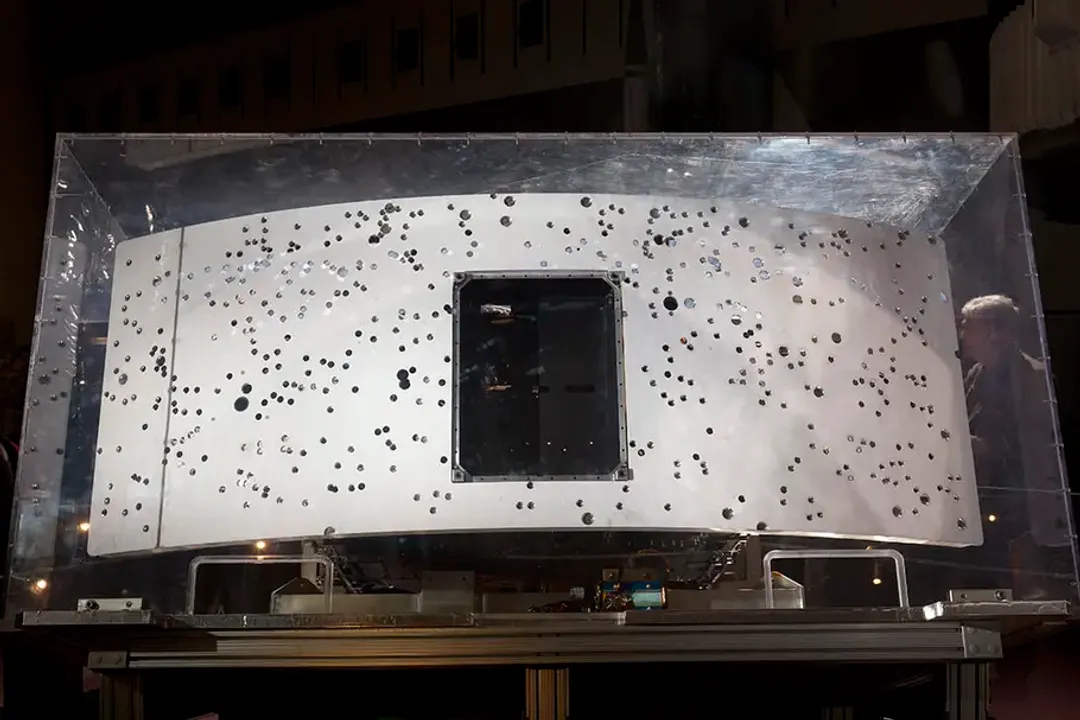
The initial operational period of the Hubble Space Telescope, launched in April 1990, was less a triumphant moment for astronomy and more an exercise in public relations damage control. After years of development delays, budget overruns, and public anticipation, the world’s most advanced observatory was finally in orbit, only to deliver images that were consistently, frustratingly, blurry. [2][4] The expected crystal-clear views of distant galaxies and nebulae were instead marred by fuzzy blobs, suggesting a profound flaw in a machine designed for unprecedented sharpness. This unexpected optical deficit immediately cast a shadow over the multi-billion dollar project, forcing scientists and engineers into an intense diagnostic phase to pinpoint the source of the failure. [2]
# The Aberration
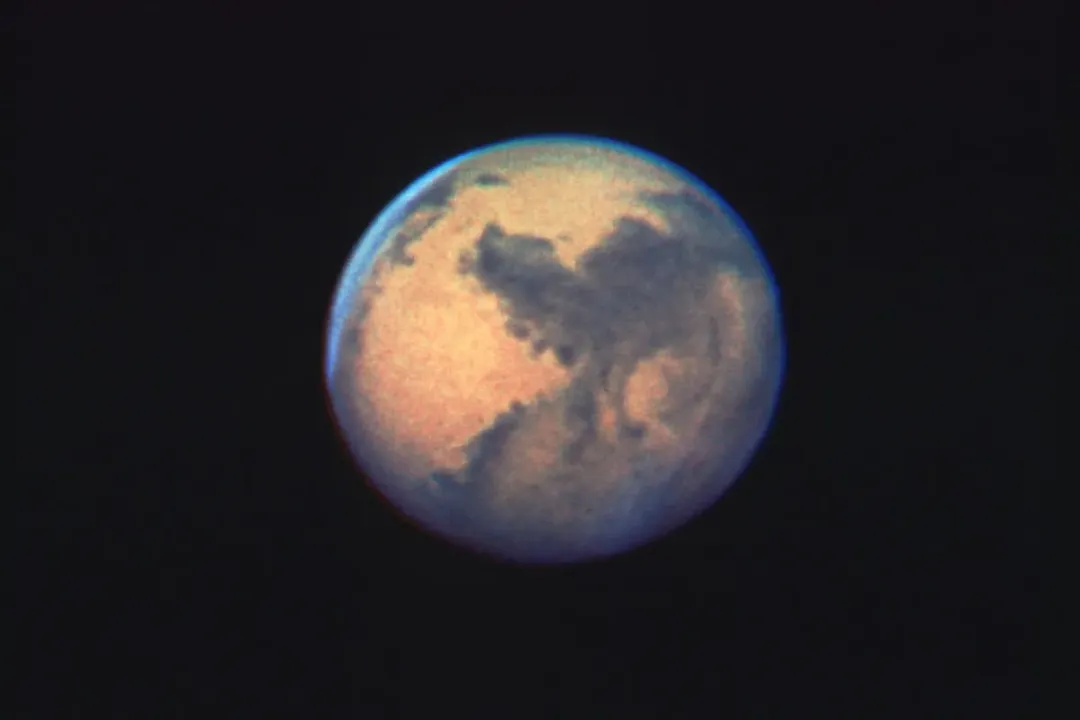
The problem was precisely identified as spherical aberration. [1][4][5] In simple terms, the light entering the massive 2.4-meter primary mirror was not being focused onto a single, sharp point, as it should have been. [1] Instead, light rays hitting the edge of the mirror focused at a different point than those hitting the center. [4] This meant that no matter where the scientists focused the instruments, the resulting image would always be out of focus because the light simply refused to converge correctly. [1]
The degree of this imperfection, though minuscule by everyday standards, was catastrophic for the precise requirements of deep-space observation. The finished mirror was supposed to have a perfect parabolic curve, but instead, it was slightly too flat at the edges. [1] Engineers later determined that the surface departed from the perfect shape by approximately 2.2 microns—a deviation roughly equivalent to one-fiftieth the thickness of a human hair. [1][5] To grasp the severity of this error, consider that a space telescope aiming to resolve details across light-years must perform with tolerances finer than anything commonly built on Earth. The challenge wasn't just building a huge mirror; it was grinding that mirror to a shape accurate to within nanometers over a 2.4-meter span. [7] The failure was one of precision, not scale. [5]
# Manufacturing Error
Tracing the source of the spherical aberration led investigators back to the ground and the laboratory where the primary mirror was constructed by Perkin-Elmer. [1][4] The investigation revealed a failure not in the polishing process itself, but in the equipment used to measure the mirror’s shape during manufacturing. [1][5] This measurement apparatus was called a null corrector. [4][7]
The null corrector, an essential component for testing large, complex curves, was designed to ensure the mirror’s shape matched the required parabolic profile. [7] In this specific case, the instrument was assembled incorrectly. A critical component, a relay lens, was either left out entirely or installed in the wrong position. [1][5] This seemingly small oversight had an enormous consequence: it caused every single measurement taken during the grinding and polishing phases to be systematically incorrect. [6][7] The mirror makers were diligently creating a surface that they believed was perfect, but which was actually flawed by those 2.2 microns. [5] The mirror passed every test given to it because the test equipment itself was compromised. [4] This highlights a crucial lesson in engineering: the accuracy of the measurement tool often dictates the maximum accuracy of the final product. If you build a device to measure nanometer precision, but the device itself is off by a micron, you have no real way of knowing the true state of the product you are testing. [7]
# Testing Failure
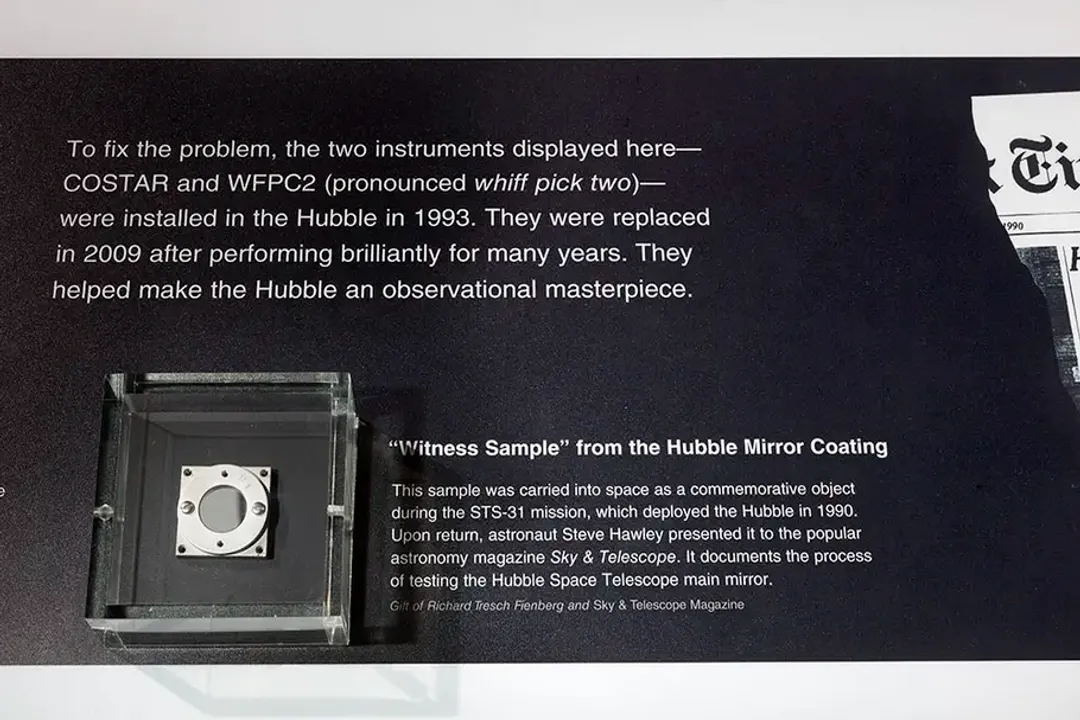
The discovery of the problem was a painstaking process that involved ground-based astronomers analyzing the first set of blurry images sent back after deployment. [2] The initial checks had surprisingly suggested that the telescope was performing as expected, leading to confusion when the first true images arrived. [4] Astronomers used a technique called focal plane imaging to assess the quality of the light path. [9] They compared the images taken with Hubble to simulations of what the images should look like with a perfectly shaped mirror. [4]
Ground-based astronomers, like those at the Space Telescope Science Institute, quickly realized the flaw was systematic and not due to issues with pointing or tracking. [2] An early test used a set of pinholes designed to mimic point sources of light. The resulting images showed clear halos around the central point, a classic signature of spherical aberration. [4] It took nearly three years, from launch in 1990 until the first repair mission in late 1993, for the massive effort to design, build, and schedule the fix, a period often referred to as Hubble’s “techno-turkey” phase. [2] The problem was so severe that some scientists feared it might have permanently crippled the observatory. [3]
# Corrective Optics
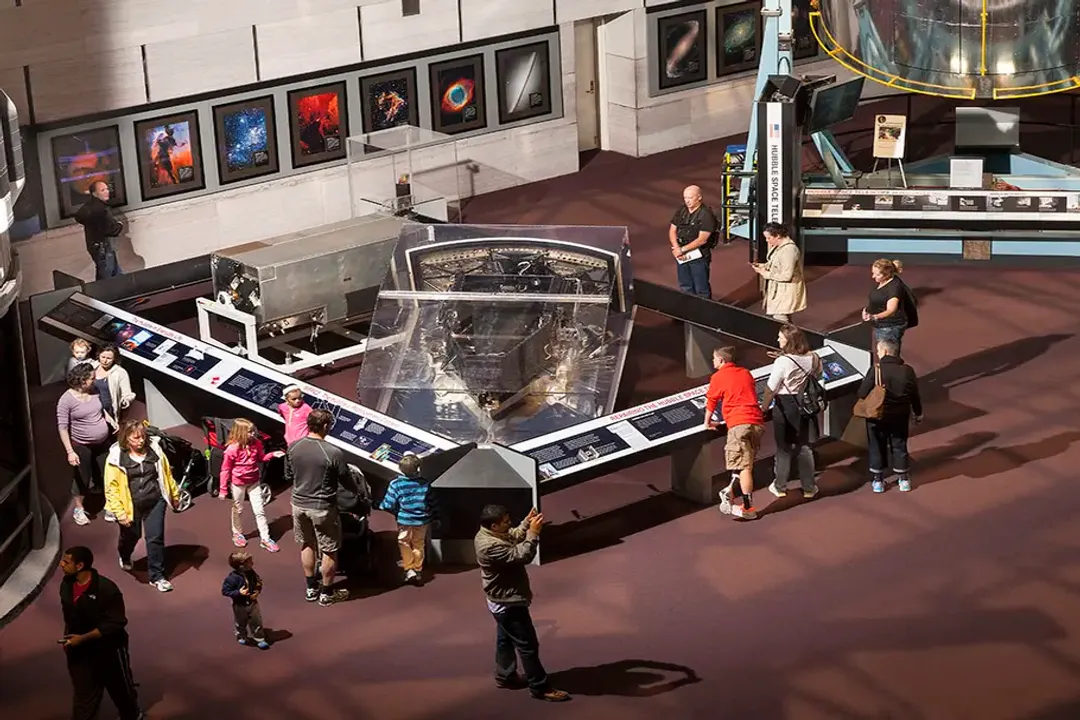
The solution that NASA and its partners devised was both elegant and daring. Since replacing the entire mirror was impossible in orbit, they decided to fit the telescope with corrective optics—essentially, installing an extremely precise set of eyeglasses directly into the telescope's light path. [1][6] The design philosophy behind Hubble, which anticipated the possibility of on-orbit servicing, was what saved the mission. [6]
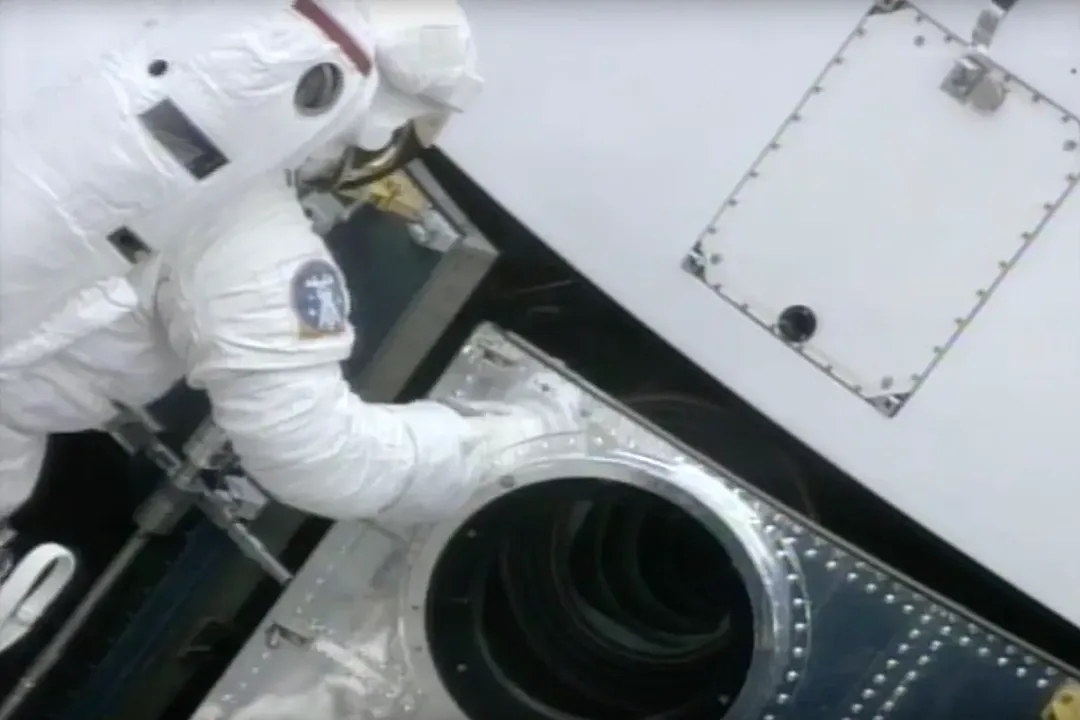
The corrective system centered around two primary components installed during the first Servicing Mission (STS-61) in December 1993. [1][6]
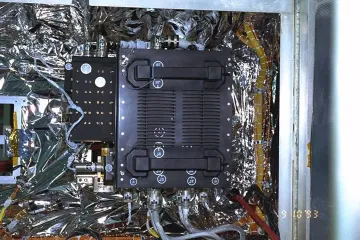
- COSTAR (Corrective Optics Space Telescope Axial Replacement): This instrument was a sophisticated device containing small, precisely figured mirrors designed to counteract the spherical aberration before the light reached the older instruments attached to the telescope's sides. [6] Think of COSTAR as a small optical bench that intercepted the light beam and bent it back into the correct focal point for the attached cameras and spectrographs. [1]
- WFPC2 (Wide Field and Planetary Camera 2): This was an entirely new camera built specifically to replace the original Wide Field and Planetary Camera (WFPC). [1] Crucially, the optical correction for spherical aberration was built directly into the WFPC2's internal optics, meaning it did not need COSTAR to function. [6]
The servicing mission itself was a landmark achievement. Astronauts performed five complex spacewalks to replace instruments and install COSTAR. [6] When the first clear images returned afterward, showing objects in sharp focus for the first time, it represented one of the most dramatic turnarounds in scientific history. [2] The successful repair proved that complex, high-precision optical instruments could be successfully serviced in space, a capability vital for long-term space exploration. [6]
# Mission Impact
The initial failure arguably benefited Hubble in the long run, forcing an early and comprehensive upgrade that may have extended its operational lifespan and scientific returns far beyond what was initially expected. [2][3] Had the mirror been perfect, the first-generation instruments might have been retired simply due to age or technological obsolescence, but the need for the repair necessitated installing newer, more sensitive hardware like the WFPC2 early on. [3]
For instance, the original WFPC was superseded by WFPC2, which was significantly more sensitive and had built-in corrections. This meant that the corrected Hubble was far superior to the telescope that was originally launched in 1990. The entire near-term scientific agenda had to shift from immediate discovery to diagnostics and repair planning, but once operational, the telescope became a more powerful tool than its designers had initially envisioned. [2] A fascinating aspect of this saga is the institutional memory it created. While the initial manufacturing error was traced to a specific testing setup, the successful installation of COSTAR established a precedent for active maintenance. Future missions would likely benefit from building in redundancy and serviceability features from the outset, acknowledging that even the most exacting ground-based quality control cannot entirely eliminate the risk of on-orbit performance issues. [7] This history fundamentally altered how future large space observatories, like the James Webb Space Telescope, were designed, emphasizing extreme pre-flight testing, but also designing deployable components that could potentially be adjusted or replaced later on, even if less frequently than Hubble’s servicing missions allowed. The initial flaw thus served as the most expensive, high-stakes lesson in aerospace engineering imaginable, ultimately securing Hubble's legacy as a functioning scientific powerhouse. [3]
#Videos
FreeSchool Presents: Repairs to the Hubble Telescope - YouTube
Related Questions
#Citations
What was wrong with Hubble's mirror, and how was it fixed?
Techno-turkey: Remembering Hubble's vision troubles, 30 Years On
TIL that after almost 20 years of battling for a Hubble budget ... - Reddit
History: The Spherical Aberration Problem - ESA/Hubble
What was issue with the initial Hubble telescope mirror? - Quora
Repairing Hubble | National Air and Space Museum
[PDF] How Hubble Space Telescope failed
Hubble Space Telescope's troubled beginnings - Facebook
FreeSchool Presents: Repairs to the Hubble Telescope - YouTube