What was wrong with the Hubble Space Telescope when it was first launched?
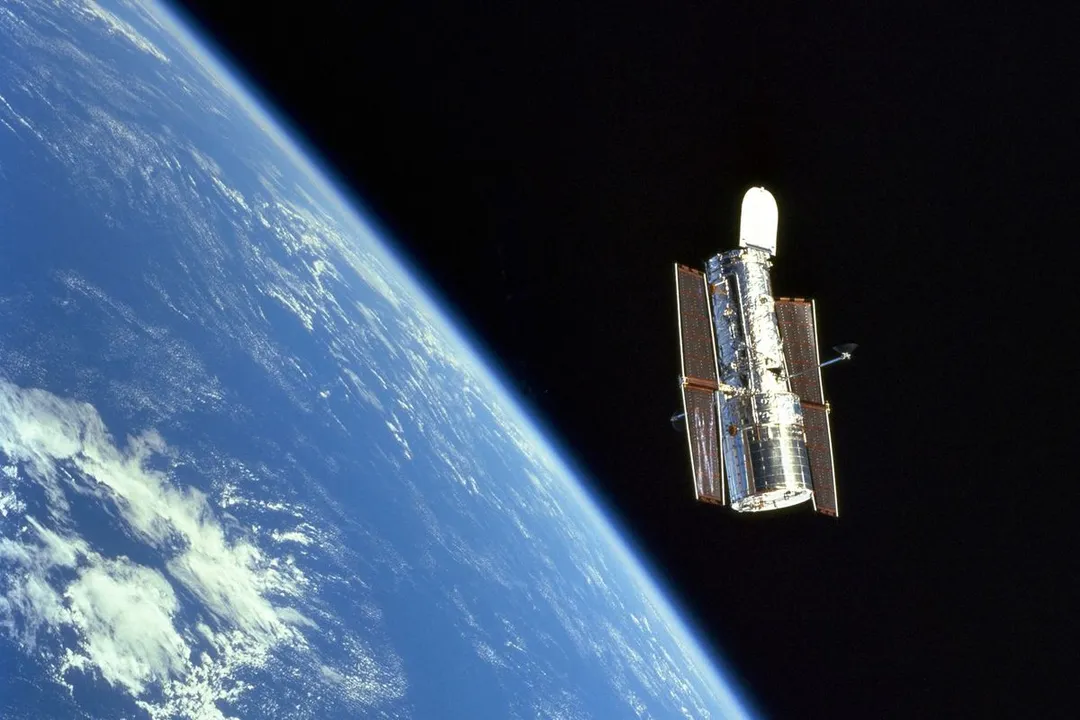
The initial deployment of the Hubble Space Telescope in April 1990 was greeted with immense global anticipation, but that excitement quickly soured when the first images arrived. Instead of the crisp, universe-defining views promised, the telescope delivered results that were frustratingly, undeniably blurry. [2][5][9] For an instrument designed to see farther and clearer than anything before it, this was a catastrophic setback, demanding immediate attention from engineers and scientists alike. [2] The problem wasn't a catastrophic failure in space, but rather a subtle, precise manufacturing error made years earlier on Earth that only became apparent once the telescope was functioning in the vacuum of orbit. [5]
# Mirror Flaw

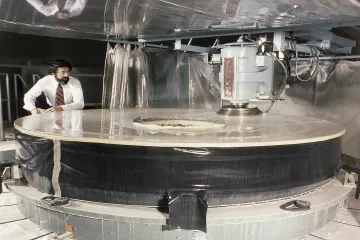
The root of the entire issue lay within Hubble’s heart: its primary mirror. [1][5] This massive, 2.4-meter (7.9-foot) mirror, polished to near-perfect specifications, was intended to gather light with unmatched precision. [1] Unfortunately, the grinding process had left the mirror shaped incorrectly, resulting in a condition known as spherical aberration. [1][2][6]
Spherical aberration occurs when light rays hitting different parts of a curved mirror do not all focus to the exact same point. [1] In Hubble’s case, the light hitting the outer edges of the mirror focused slightly closer to the mirror than the light hitting the center. [6] This difference was infinitesimally small in real-world terms, yet devastating for an instrument requiring nanometer precision. [1][5] The edges of the primary mirror were ground too flat by approximately 2 micrometers—a measurement thinner than a human hair. [1][6] While this error seems insignificant, consider that the required precision was so extreme that a deviation equivalent to just 1/50th the thickness of a human hair was enough to compromise the vision of a billion-dollar observatory. [1][6]
# Testing Error
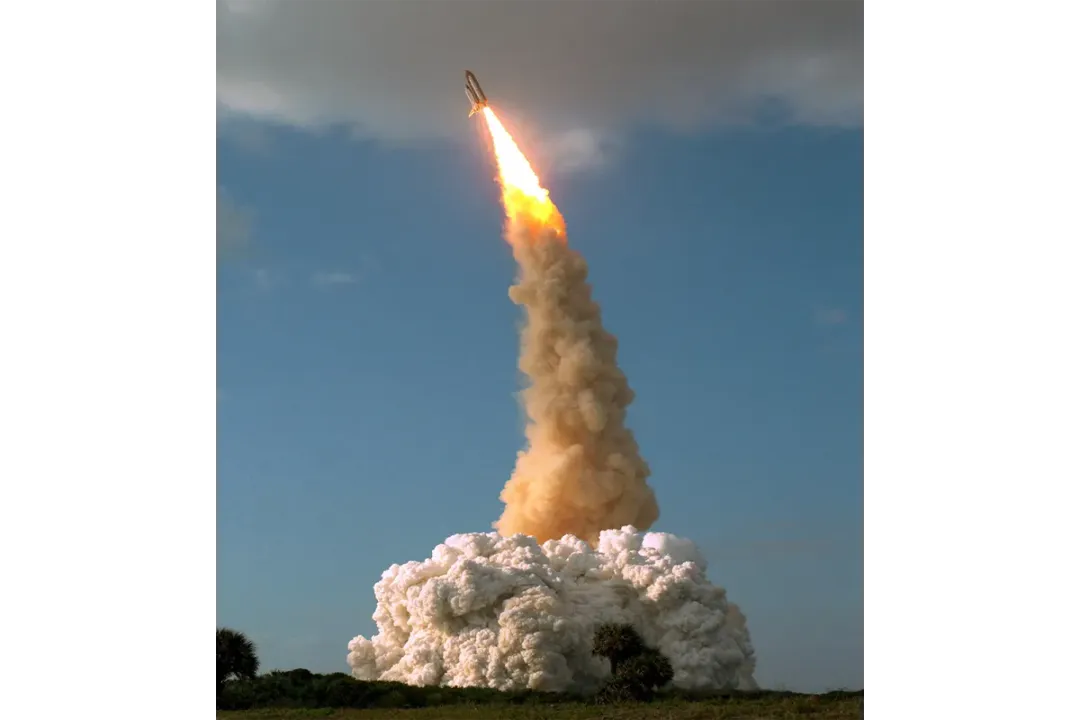
The truly baffling part of the saga was that the flaw had been missed during pre-launch testing on Earth. [2][5] Hubble was rigorously tested before being encased and launched, so how could such a fundamental flaw escape detection? The answer lay not in the mirror itself, but in the equipment used to measure it. [1][2]
The primary testing apparatus used during construction was called a null corrector. [1][2] This device was essential for verifying the exact curvature of the mirror against a known, perfect standard. [1] The problem was that when the null corrector was assembled, a critical component—a small positioning lens—was installed in the wrong location. [2][5] This mistake meant that the measuring instrument was checking the mirror against an incorrect standard, essentially comparing it to a flawed reference point. [2] The mirror passed its tests because the equipment was designed to make the wrong measurement look right. [1][5] It was a failure of assembly regarding the testing apparatus, rather than a failure in the actual grinding process itself, though the two are inextricably linked in the final outcome. [2] This scenario serves as a stark reminder in complex engineering projects that the accuracy of the measurement system is just as vital as the accuracy of the object being measured. If your yardstick is bent, the resulting structure built to that measurement will inevitably suffer, regardless of how carefully the work is executed. [1]
# Image Blurriness
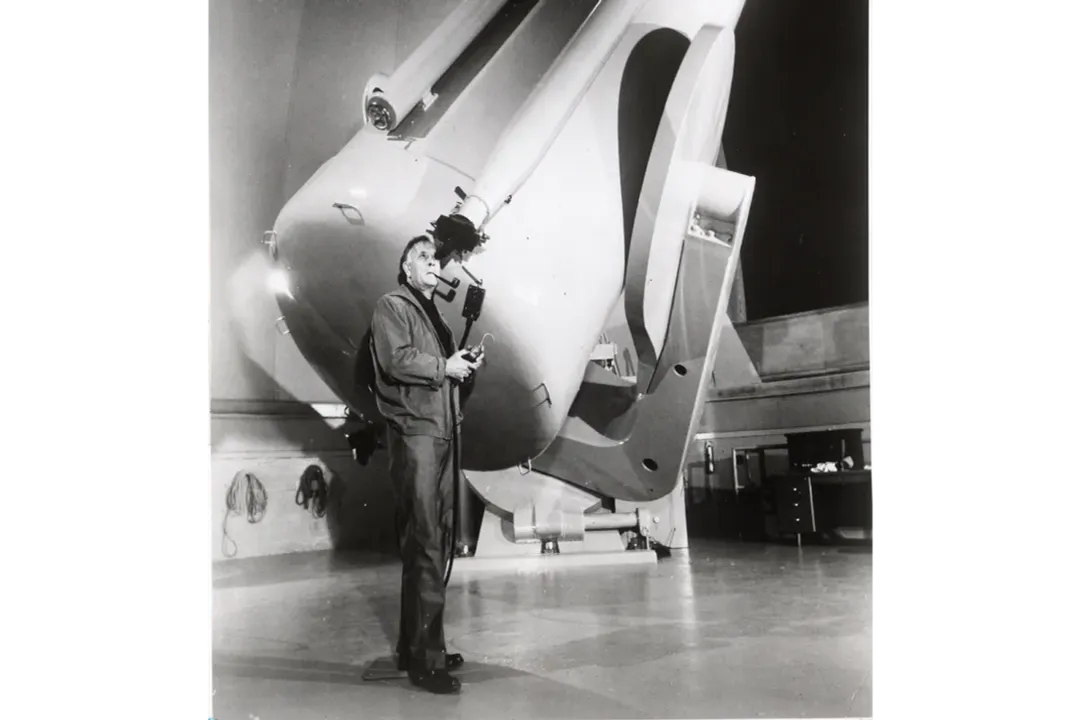
The effect of the spherical aberration was immediately clear in the initial images transmitted back to Earth. [2] The focus was scattered; stars that should have appeared as sharp points of light were instead smeared into fuzzy blobs. [5] The effect was most pronounced when trying to observe faint, distant objects, as the blurred light from those targets became mixed with scattered light from brighter sources. [5]
However, it is important to note that the telescope was not entirely blind or useless immediately upon deployment. [5] Hubble’s instruments could still capture some data, and a few early observations did yield valuable scientific returns. [5][7] The problem was that the precision required for deep-field cosmology and other primary mission goals—the very reason Hubble was built—was unattainable. [5] The images were degraded, perhaps to the level of what ground-based telescopes could achieve, negating the multi-billion dollar investment in orbital placement. [5] Furthermore, instruments designed to capture wide fields of view were hit particularly hard by the aberration. [5]
# Political Battle
Once the scope of the problem was confirmed, a massive effort began to conceive and fund a repair mission. [7] The discovery caused significant embarrassment for NASA and required intense political maneuvering. [7] It took years of battling for funding and political will to approve the first servicing mission, designated SM1. [3][7][9] The idea of sending astronauts thousands of miles up to fix a scientific instrument was unprecedented and carried enormous risk, making the political justification difficult. [7] The mission itself became a testament to human ingenuity and perseverance, succeeding where the initial manufacturing process had failed. [3][5]
# Optical Fix
The solution, which came into effect during the first servicing mission in December 1993, was an ingenious piece of on-the-fly engineering. [3][9] The astronauts didn't replace the primary mirror—that was simply not feasible. [5] Instead, they installed a set of corrective optics designed specifically to counteract the existing flaw. [2][5]
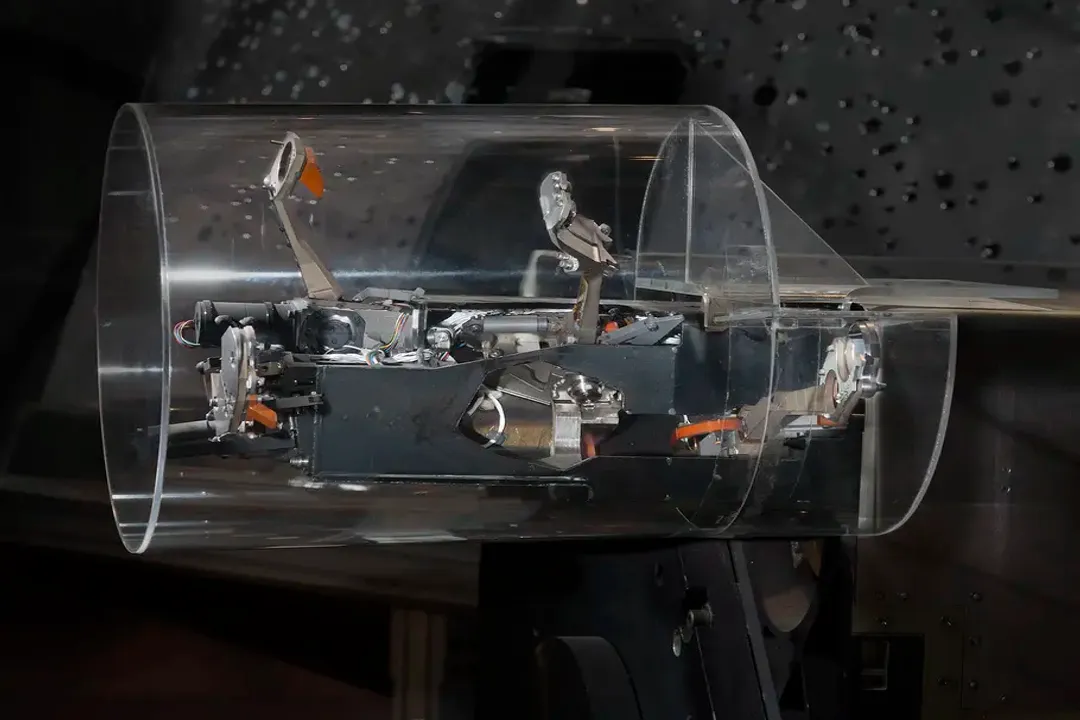
The device installed was called COSTAR, the Corrective Optics Space Telescope Axial Replacement. [1][2][3][5] Conceptually, COSTAR functioned much like a pair of glasses correcting nearsightedness. [1][2] It consisted of five small, precisely shaped corrective mirrors mounted on a rail. [1][5] When starlight entered Hubble, it first struck one of these small corrective mirrors within COSTAR before being directed to the scientific instruments. [2] These corrective mirrors were shaped to perfectly offset the spherical aberration introduced by the main mirror, effectively neutralizing the flaw and restoring the telescope's intended sharp focus. [1][2]
Following the installation of COSTAR, Hubble’s performance dramatically improved, transforming it into the powerhouse observatory that the world now knows. [5][9] While COSTAR corrected the initial instruments, later planned upgrades—such as the Advanced Camera for Surveys (ACS) and the Wide Field Camera 3 (WFC3)—were designed with their own internal corrective optics built in, eventually rendering the external COSTAR system obsolete. [5] In fact, COSTAR itself was removed during a later servicing mission to make room for a newer instrument, marking the final retirement of the physical fix for the initial flaw. [5] This layered approach—first fixing the fundamental optics with COSTAR, then upgrading to inherently corrected instruments—shows how persistent foundational errors in aerospace demands solutions that are both immediate and evolutionary. [5]
Related Questions
#Citations
Hubble's Mirror Flaw - NASA Science
History: The Spherical Aberration Problem - ESA/Hubble
Astronauts Repair the Hubble Space Telescope | Research Starters
Who remembers when Hubble was first launched and the mirror ...
Repairing Hubble | National Air and Space Museum
What was issue with the initial Hubble telescope mirror? - Quora
TIL that after almost 20 years of battling for a Hubble budget ... - Reddit
Hubble Space Telescope: history and facts
The Secret to Hubble's Success | National Geographic