What was the first picture taken with the Hubble telescope?

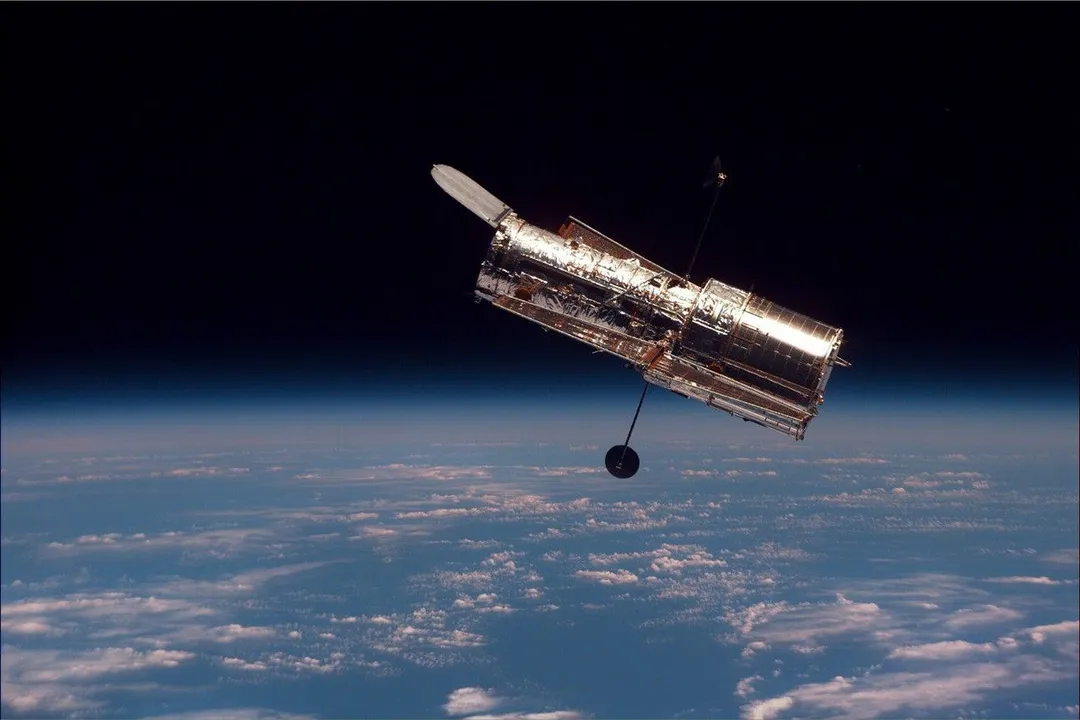
The moment the Hubble Space Telescope settled into its prescribed orbit high above the Earth in the spring of 1990, the world held its breath, awaiting the first glimpse of the universe untainted by the distortion of the atmosphere. This machine, a marvel of engineering launched aboard Space Shuttle Discovery on April 24, 1990, represented decades of work and a dramatic shift in observational astronomy. The anticipation wasn't just for beautiful nebula shots; it was for the absolute verification that the primary mirror, the heart of the observatory, was functioning as intended. The very first snapshot taken by the functioning telescope served as a critical, albeit preliminary, piece of evidence in that verification process.
# First Look

The initial set of images were not grand cosmological portraits intended for magazine covers; they were calibration shots, the celestial equivalent of a photographer checking the focus on a nearby, bright object. The very first photograph captured by Hubble in space was directed toward the star Theta Ursa Majoris. This particular star is part of the Big Dipper, an easily identifiable asterism in the Northern sky. It was chosen because its known brightness and location provided an immediate benchmark against which the telescope’s optics could be tested following deployment.
The timing of this initial exposure is key to understanding its place in the mission timeline. While the launch occurred in late April 1990, the first image—the one intended to confirm optical alignment—was reportedly taken on May 13, 1990. This confirmed that the spacecraft systems were operational and the instruments were receiving data. The mission timeline notes that the first images were taken shortly after the telescope achieved its operational orbit, confirming the readiness of the instruments for more detailed observation.
# Blurry Start
If one were expecting the sharp, vibrant deep-field images that would later define Hubble's legacy, the first picture was, frankly, underwhelming. The image of Theta Ursa Majoris, and indeed the first images generally, were blurry. This lack of perfect focus was not due to a catastrophic failure at that very moment but rather the initial manifestation of the optical flaw that would soon plague the mission. Even in these initial tests, the gathered light did not resolve into the crisp point that scientists expected from a mirror of that precision.
It is important to contextualize this result. The first images serve as a crucial piece of scientific data, even when they indicate a problem. For the engineers and astronomers, seeing that slightly smeared light was more informative than seeing nothing at all. It confirmed where the problem lay—in the light path between the primary mirror and the focal plane—rather than indicating a fundamental failure of the entire system electronics or pointing mechanism. The initial data stream confirmed that while the telescope was working, its vision was imperfect. This initial blur became the opening chapter in one of space history's most dramatic comeback stories.
Imagine being an astronomer in the control room on that day in May 1990. You have spent years, decades even, waiting for this precise moment, watching a multi-billion-dollar instrument circle the globe every 90 minutes. Then, the light comes down from Theta Ursa Majoris, and instead of a needle-sharp star, you see a slightly fuzzy disk. The difference between an expected perfect point and the observed fuzzy disk provided a measurable deviation, a quantifiable error that would guide the entire subsequent effort to correct the telescope's vision.
# Mission Context
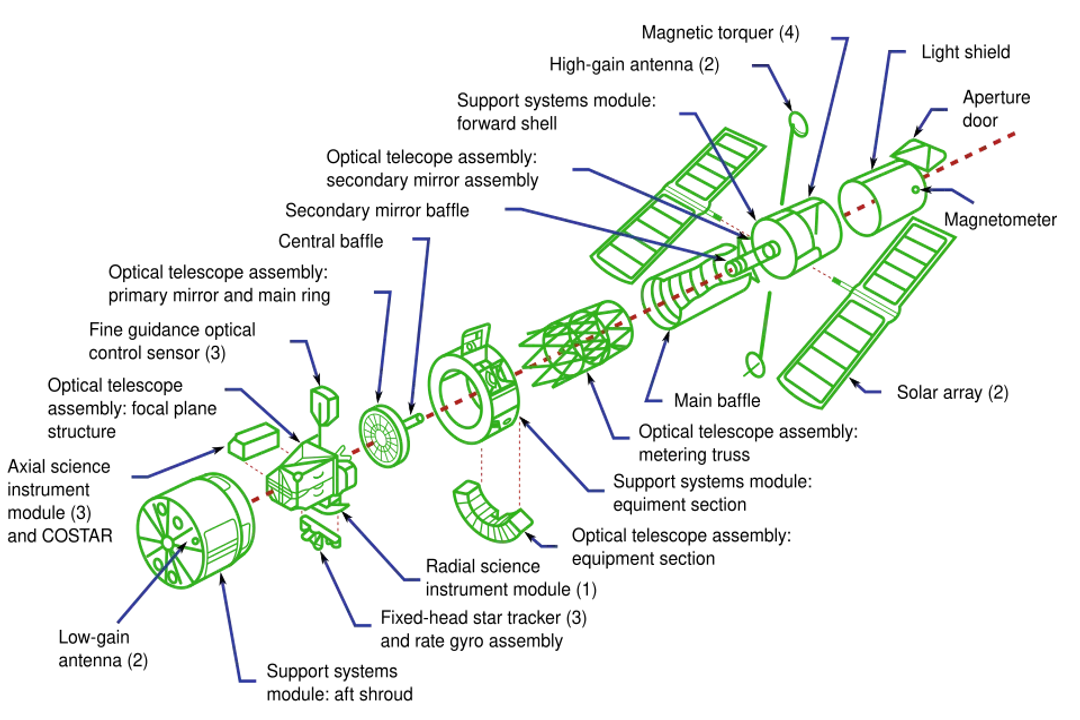
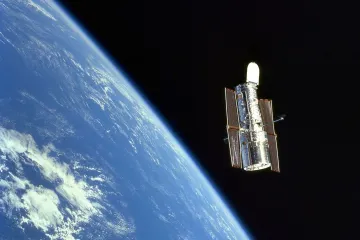
To appreciate the significance of that first, imperfect snapshot, one must step back and consider the scale of the Hubble Space Telescope project itself. Launched in 1990, Hubble was intended to be the world’s premier optical observatory, freed from the turbulence and absorption effects of Earth’s atmosphere. Its primary mirror measures 2.4 meters (7.9 feet) across. The sheer ambition of the project meant that any operational issue would have massive ramifications, both scientifically and financially.
The timeline of Hubble's early life is marked by this tension between excitement and technical difficulty. After the launch and deployment, a period of instrument activation and calibration began. The first image was a direct result of this calibration phase. The fact that the first image was taken relatively quickly—within three weeks of launch—speaks to the pre-planned readiness of the operations teams. They weren't waiting months to turn it on; they were eager to begin confirming basic function immediately.
While Theta Ursa Majoris was the subject of that very first focused observation, subsequent initial images also targeted other bright stars to build a complete picture of the optical system's performance. The collective data from these first star fields was what allowed ground teams to pinpoint the exact nature and magnitude of the mirror's spherical aberration.
A point of comparison often missed is the difference between a 'first light' image and a 'first public' image. The first light image is strictly a diagnostic tool used by engineers, often never shown to the public because it's not pretty or scientifically complete. The immediate aftermath of the first star image revealed a known, but underestimated, problem. Contrast this with the image released on the telescope's first anniversary, which, while still suffering from the flaw, was far more advanced than the initial May 1990 data because iterative alignment software had been applied. The initial image, therefore, holds a unique place as the very first piece of flawed data that still proved the telescope could collect light.
# Diagnostics Through Darkness
The initial images provided empirical proof of what became known as the Hubble Space Telescope's flaw. The primary mirror had been ground to the wrong shape, a subtle error known as spherical aberration, resulting in light rays not converging at a single focal point. This meant that instead of tiny, sharp points of light, the stars appeared spread out.
The discovery process was painstaking. The initial tests showed the expected problem, but the extent of the focusing error was larger than pre-launch simulations had predicted. The engineering expertise required to diagnose this specific error from orbital data, rather than ground-based lab results, is a testament to the team's capability. They weren't just looking at a fuzzy blob; they were measuring the precise diameter of that smear across multiple instruments to calculate the exact geometry required for a corrective lens.
If we view the mission history as a medical chart, the first image was the patient’s initial temperature reading: it confirmed a fever, even if it didn't reveal the full diagnosis. The public relations aspect was undoubtedly a challenge. While the scientific community knew what they were looking at—a problem to be solved—the public perception, fueled by years of hype, was one of disappointment. It took the dedicated effort of the teams to communicate that the camera was working, but the eye was misshapen.
# The Repair Era
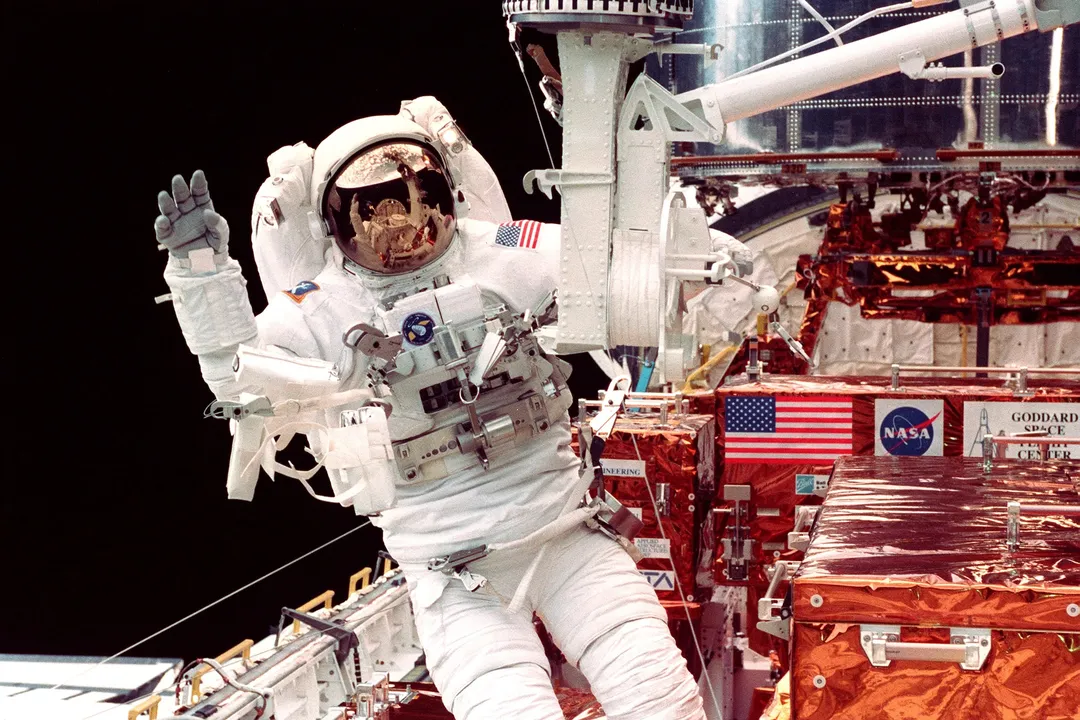
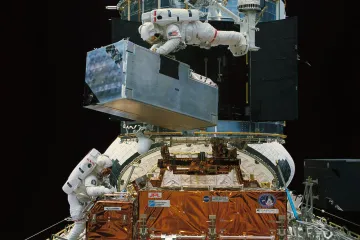
The story of the first image naturally leads to the first servicing mission. The initial data was so compelling regarding the flaw that planning for corrective optics began almost immediately. The corrective measure eventually took the form of instruments designed like corrective eyeglasses for the telescope. The COSTAR (Corrective Optics Space Telescope Axial Replacement) instrument, and later specialized cameras, were designed to compensate for the precise 2.2-micron flaw in the mirror's shape.
The servicing mission, designated STS-61, took place in December 1993, roughly three and a half years after the initial May 1990 test shot. The success of that mission fundamentally redefined Hubble's operational life. It is often forgotten that the first image taken after the successful installation of COSTAR and the new Wide Field and Planetary Camera 2 (WFPC2) was an entirely different class of photograph.
It is interesting to consider the opportunity cost associated with that initial flawed image. While the servicing mission was a spectacular success, the scientific productivity of the telescope was severely curtailed for those three years. If the mirror had been ground correctly to the required tolerance of 1/20th the thickness of a human hair, the scientific output in 1990, 1991, and 1992 would have been exponentially greater. That single, sharp image of Theta Ursa Majoris, which we never got in 1990, represents potentially millions of dollars in lost observation time dedicated to gathering the data necessary to fix the problem instead of using the telescope.
# Beyond the First Frame
The first image, whether of Theta Ursa Majoris or another alignment star, served its scientific purpose: it was the starting gun for the largest in-space repair job ever attempted. It confirmed the scope of the challenge facing NASA and the astronauts who would eventually perform the intricate repairs. The first images demonstrated that the observatory was a functional platform, even if its primary optic was imperfect.
Today, when we look at the iconic images released by Hubble—the Pillars of Creation, deep fields spanning billions of light-years, or stunning planetary nebulae—it is easy to forget that this incredible run of success began with a humble, slightly blurry photograph of a single star. That initial data set, imperfect as it was, remains the factual first mark of the telescope’s operational status in the cosmos. It is a historical artifact proving that even the greatest scientific instruments sometimes need a sharp adjustment before they can show us the sharpest views of the universe. The legacy of Hubble is not just in its clarity, but in the resilience demonstrated from that very first moment in orbit.
#Videos
The First Picture From Hubble Was Heart-Breaking! - YouTube
Related Questions
#Citations
The first image NASA's Hubble telescope took in May 1990 : r/space
Hubble Timeline - NASA Science
The first image from the Hubble Space Telescope was taken. The ...
The Story of Hubble's First Photo—25 Years Later - Time Magazine
Hubble Telescope Opened Its Eyes 25 Years Ago Today (Photo)
Hubble Space Telescope - Wikipedia
The First Picture From Hubble Was Heart-Breaking! - YouTube
The Hubble Telescope's First Space Photo Was Kind Of Blurry