Who is the project manager of the Hubble telescope?
The question of who runs one of the most successful scientific instruments ever built is more complex than simply naming a single person. Managing the Hubble Space Telescope is not a solitary role but a distributed responsibility spread across major institutions, reflecting the sheer scale and longevity of this orbiting observatory. While many roles are crucial, the position of Project Manager itself is often defined by the specific domain of responsibility—be it the physical health of the spacecraft or the scientific output it generates. [1][4]
# Mission Structure
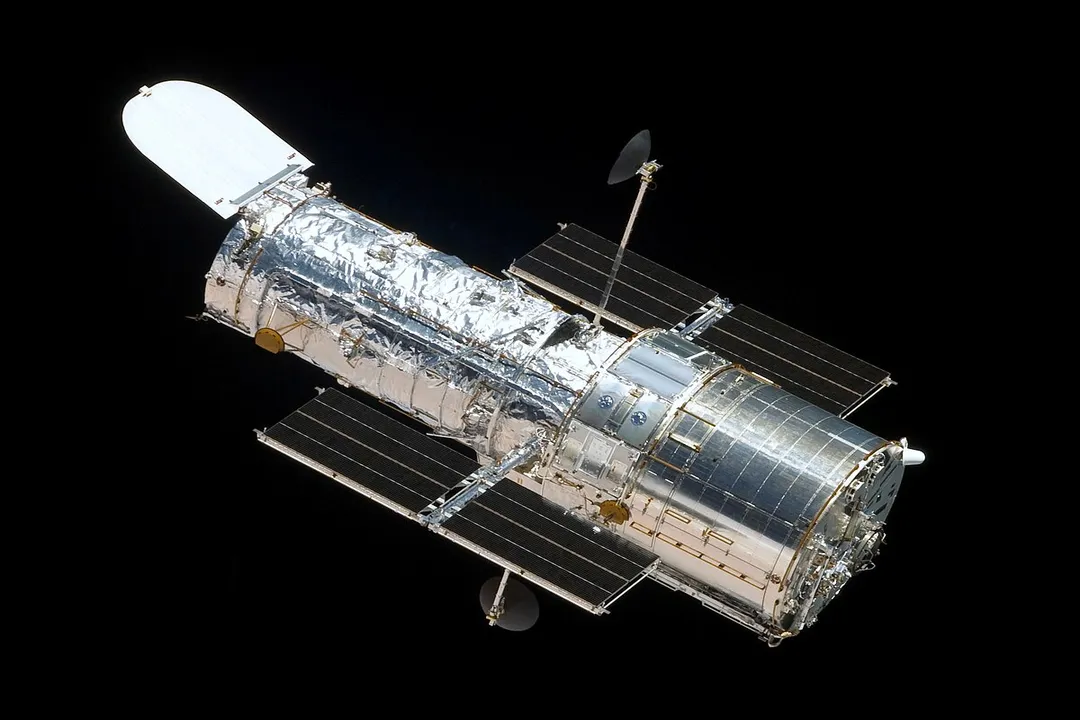
The overarching responsibility for the Hubble Space Telescope mission falls to NASA’s Goddard Space Flight Center (GSFC). [1][4][8] Goddard manages the overall mission, which includes the critical engineering and operational aspects of keeping the spacecraft functional, healthy, and pointed correctly. [1][8] This is mission operations, the mechanical and systemic heartbeat of the telescope.
However, a telescope is only as good as the data it collects, which brings in the second major entity: the Space Telescope Science Institute (STScI). [1][4] Located in Baltimore, Maryland, the STScI is responsible for the science operations. [1][4] This involves everything from receiving the raw data transmitted from space to processing it, archiving it, and allocating observation time to astronomers worldwide. [1] It is the hub of discovery, translating light into knowledge.
This dual structure means that the title "Project Manager" might apply to leadership roles within both GSFC (overseeing the hardware and flight operations) and STScI (overseeing the science program). For an asset that has operated for decades, this division of labor allows for focused expertise in two fundamentally different fields: keeping a complex, aging machine running versus maximizing its scientific return. [4]
# Key Leadership Figures

While the primary Project Manager role at the GSFC level is not explicitly detailed across these sources, a highly visible leader involved in the mission's continued success is James F. Jeletic. [3][6] Jeletic holds the title of Hubble Space Telescope Deputy Project Manager. [3][5][6] His public presence, including speaking engagements about the observatory's work, suggests a significant role in communicating the mission's status and progress to the public and stakeholders. [3][5]
The presence of a named Deputy Project Manager implies a very senior Project Manager is in place leading the overall mission at Goddard, but that specific name does not surface in this particular set of information. Jeletic's role, by definition, supports the primary Project Manager in leading the mission management team. [3][6] In large, decades-long government projects like Hubble, the leadership team must possess an unusual combination of deep technical knowledge and political/programmatic acumen to secure continued funding and support across multiple presidential administrations and congressional cycles. [9]
An interesting point arises when comparing the functional division to traditional management hierarchies. For Hubble, the Mission Operations manager (likely reporting to the Project Manager at GSFC) is effectively managing the "physical asset," while the Science Operations director at STScI is managing the "product delivery." Success requires both managers to be in lockstep, a coordination challenge far exceeding that of a standard terrestrial engineering project. [1][4]

# Operational Realities

Understanding the management team’s day-to-day concerns is best illuminated by the challenges Hubble faces. The telescope relies on complex systems, many of which were designed in the 1980s, necessitating constant vigilance from the GSFC operations team. [8]
A prime example is the ongoing issue with the gyroscopes, which are essential for pointing the telescope accurately. [2][8] When these gyroscopes began to fail, the management team had to make critical decisions about how to proceed. In one instance, when one of the failing gyroscopes forced science operations to pause, NASA confirmed that the remaining functional units were sufficient to keep the telescope operating for years to come. [2][8] This pivot from standard operation to "one-gyro mode" demonstrates the level of engineering expertise and risk assessment required at the mission management level. [8] The team had to decide between a risky repair attempt (which was later undertaken for one unit in a private mission context for another telescope, but Hubble's servicing missions are over) or a highly constrained operational state. [2]
For example, when science operations were halted due to a gyroscope issue, the management team had to rapidly:
- Diagnose the failure using telemetry data sent from orbit. [2]
- Determine if safe-mode operations could be resumed. [2]
- Re-task observation schedules managed by the STScI based on the newly defined operational constraints. [1]
This tight integration of hardware health (Goddard’s domain) and scientific scheduling (STScI’s domain) is the true test of the overall mission management structure. [1]
# Longevity and Expertise
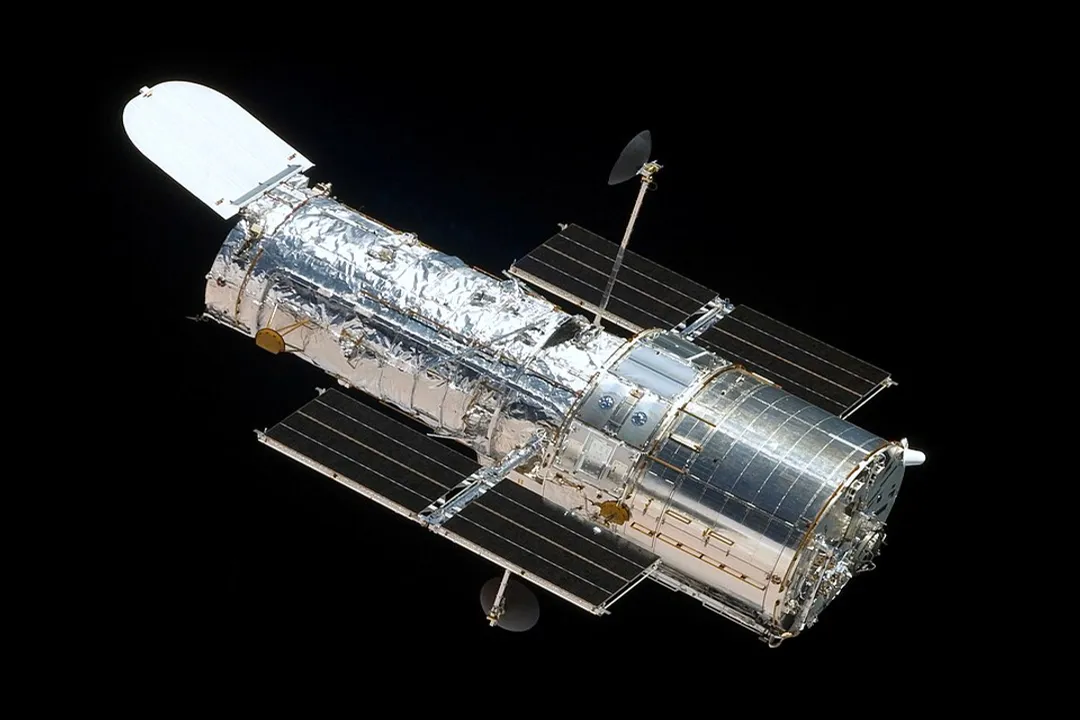
Hubble's enduring presence in the sky, now well over three decades, places unique demands on its management team that few modern projects ever face. The maintenance of expertise becomes a significant asset and risk factor. [4]
When the Servicing Missions were being performed, the management had to interface directly with astronaut crews and shuttle mission planners—a skillset entirely different from routine science operations. [9] Even now, without on-orbit servicing, the GSFC team must maintain the capability to troubleshoot and work around hardware issues using only remote commands, often managing hardware whose original manufacturers may no longer exist or support the specific components. [8]
It is worth noting that many individuals, like Deputy Project Manager Jeletic, have been associated with Hubble for a substantial portion of its life. [3][5] This long tenure provides an institutional memory that is invaluable for diagnosing anomalies that crop up decades after launch.
A key element not always visible to the public is the need to continually refresh simulation environments. While the hardware itself may be legacy, the operational software and ground control systems must be regularly updated to run on modern computing platforms and interface with current network security standards. This constant, behind-the-scenes modernization, overseen by the GSFC management structure, ensures the 1990s-era telescope can still communicate effectively in the 2020s. [1]
The distinction between the two major management centers underscores a core management concept in long-term space science: asset preservation versus asset exploitation. GSFC manages the preservation, ensuring the optics and structure remain viable. STScI manages the exploitation, ensuring the data gathered maximizes scientific discovery within the constraints set by Goddard. Any successful Project Manager in this environment must be an expert negotiator of priorities between these two essential functions. [4]
# The Hidden Work of Continuity
The continuous successful operation of Hubble, even through its challenges, speaks volumes about the stability of the overall program leadership. While the specific Project Manager name may vary or remain internal to NASA for the mission operations lead at GSFC, the effectiveness of the team around individuals like Deputy Project Manager Jeletic is undeniable. [3][6]
Consider the sheer number of observations scheduled: thousands of proposals are reviewed by STScI every cycle, leading to hundreds of hours of viewing time assigned. [1] Coordinating this massive international scientific enterprise while simultaneously navigating gyroscope failures, potential power cycling events, and software patches requires management that is both reactive to immediate crises and proactive in long-term planning. [2][8]
The fact that missions like Jared Isaacman’s private flight have even considered a reboost or servicing concept for Hubble shows that the concept of Hubble's continued usefulness is still actively managed and discussed by those who know its operations intimately—a testament to the enduring planning of its leadership teams. [7] This suggests that even without official Space Shuttle servicing, the mission management actively evaluates future operational possibilities, a high-level strategic task. [7][9]
In summary, while James F. Jeletic serves as a known face and high-ranking official as the Deputy Project Manager, [3][5][6] the true "Project Manager" of the Hubble Space Telescope is a division of authority, anchored at NASA's Goddard Space Flight Center for flight operations and supported by the Space Telescope Science Institute for science execution. [1][4] Their shared, decades-long success is a powerful case study in long-term program stewardship over complex, aging hardware. [4][8]
Related Questions
#Citations
Hubble Team - NASA Science
NASA's Hubble Space Telescope to resume science observations ...
NASA's Incredible Discovery Machine: The Hubble Space ...
Hubble Space Telescope - Wikipedia
Hubble Space Telescope Deputy Project Manager Jeletic Speaks at ...
A billionaire wanted to save the Hubble Telescope - Space
Hubble Space Telescope faces setback, but should keep working for ...
Servicing the Hubble Space Telescope | Video | C-SPAN.org