How many galaxies did the Hubble Deep Field photo show?
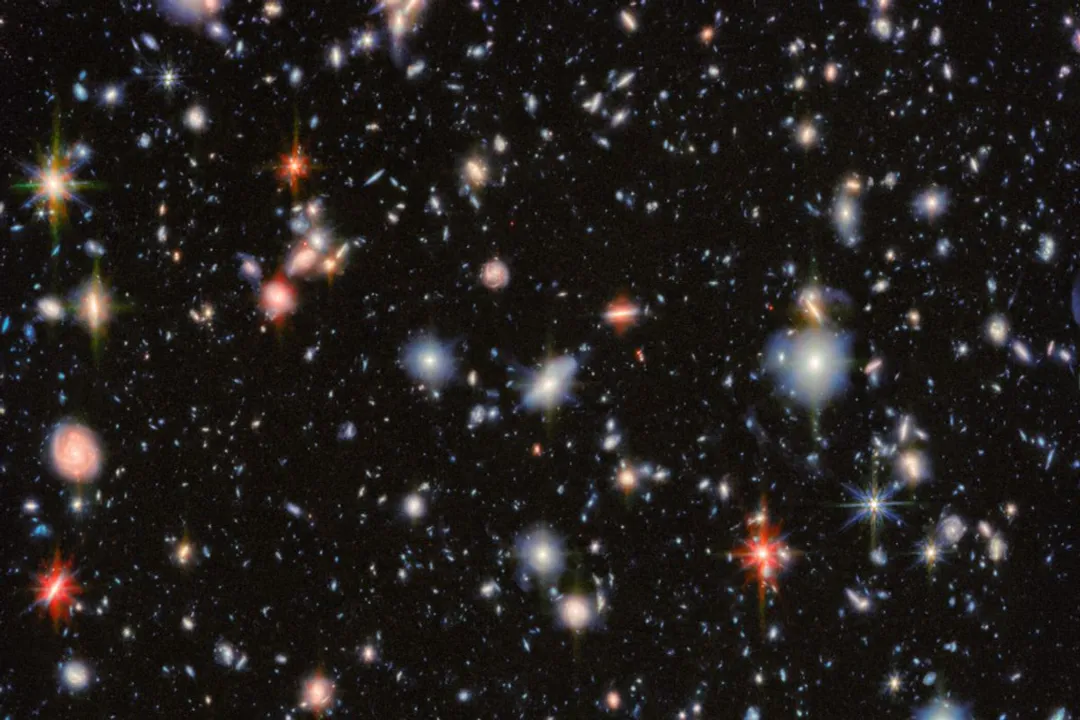
The image, a dark expanse punctuated by countless specks of light, fundamentally changed our perception of the cosmos. When first viewed, the result of the Hubble Deep Field observations presented an overwhelming census of the universe, forcing us to confront the sheer density of galaxies packed into what appears to be empty space. The specific number of galaxies revealed depends slightly on which deep field image one is referencing—the original Hubble Deep Field (HDF) or its successor, the Hubble Ultra Deep Field (HUDF)—but the magnitude of the discovery remains astonishing in either case.
# The First Glimpse HDF
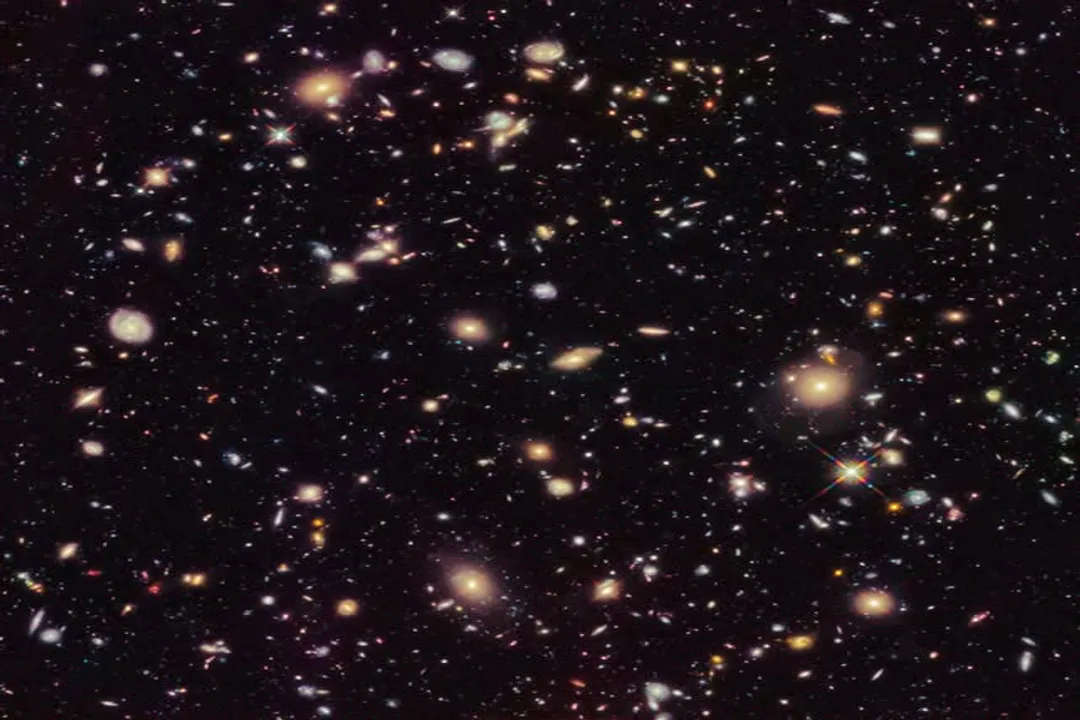
Before the truly famous, deeper image, there was the initial Hubble Deep Field (HDF). This groundbreaking effort was an attempt to stare at a "blank" patch of sky for an extended period, a direct challenge to the notion that vast areas of the universe were truly devoid of structures. The HDF, created after approximately 10 days of exposure time, managed to catalog around 3,000 galaxies. This was a monumental achievement in itself, demonstrating that even the darkest corners held untold numbers of island universes, stretching back billions of years in time. It provided a stunning cross-section of galactic evolution across cosmic time, showing everything from mature spirals to faint, embryonic structures.
# Ultra Deep Field The Immensity
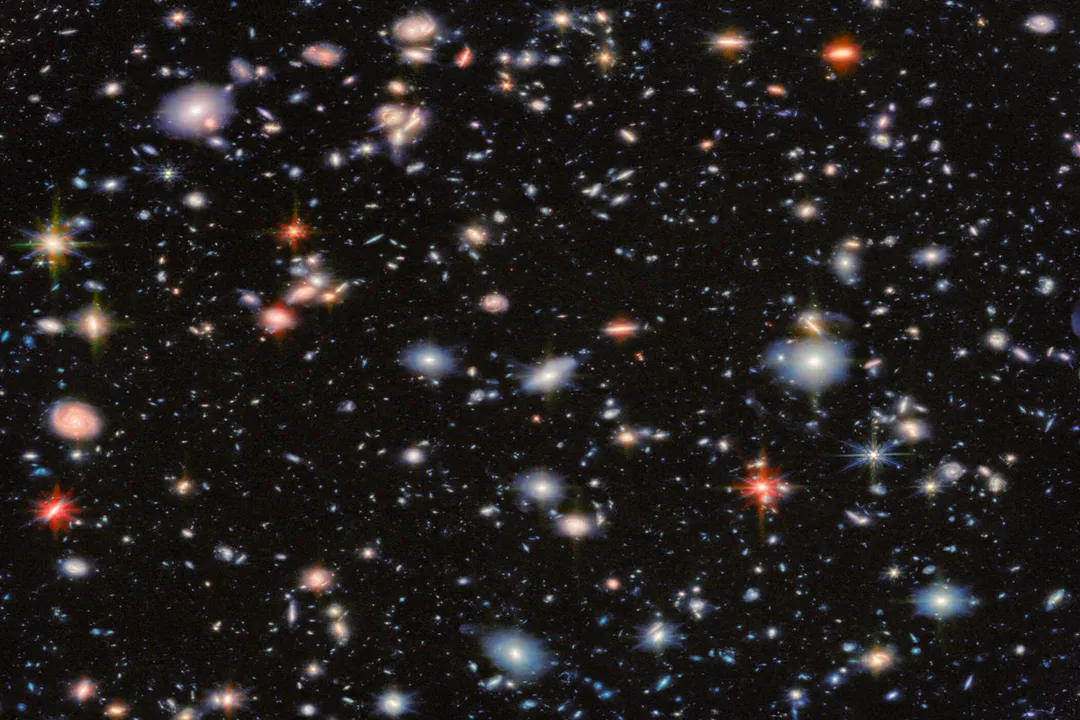
The image that truly captured the world’s imagination, however, was the Hubble Ultra Deep Field (HUDF). This was a deliberate, much deeper dive into the same region of the sky, seeking out even fainter and more distant objects. This longer exposure time allowed astronomers to pull in light that had been traveling for nearly the entire age of the universe. The result of the HUDF is commonly cited as showing approximately 10,000 galaxies. Some analyses even suggest the count leans toward more than 10,000 celestial structures within that frame. Whether the count is precisely 9,900 or slightly over 10,100, the number serves as a powerful marker for the incredible population density of the visible universe.
# Cosmic Real Estate
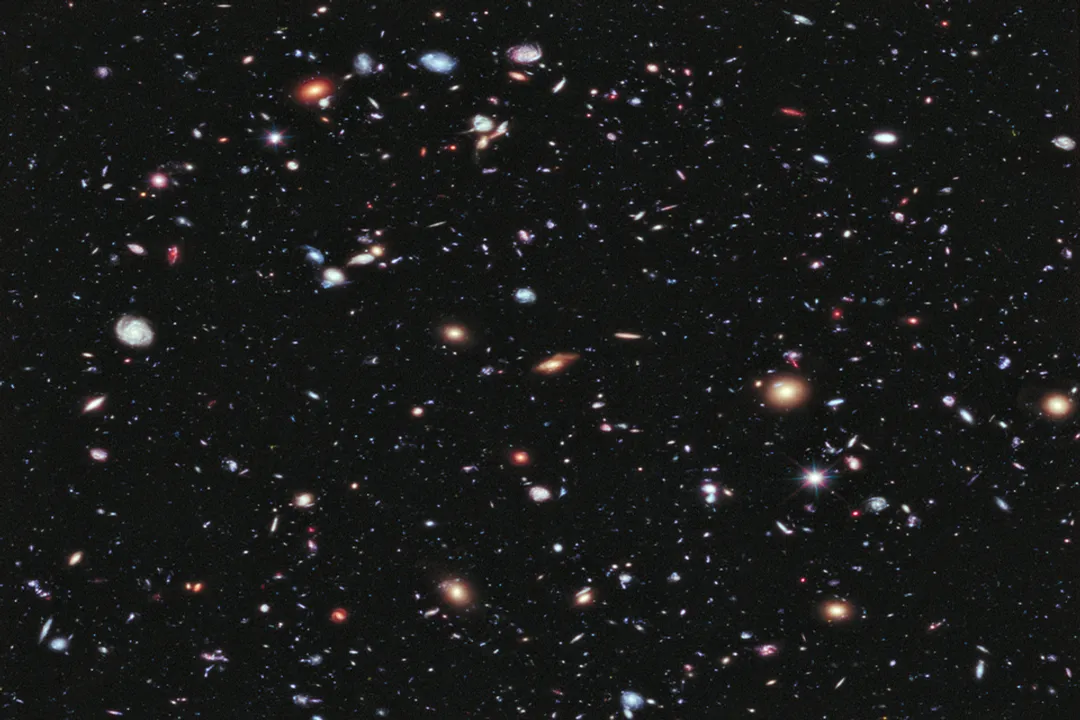
To truly appreciate the significance of finding ten thousand galaxies, one must understand the physical area that Hubble was pointed toward. The HUDF targeted a region of the sky that measured only about one-thirteen-millionth of the total sky area. Imagine looking at a postage stamp held at arm's length; that stamp represents a larger percentage of your total field of view than the HUDF represented of the entire celestial sphere.
To put this extreme concentration into perspective, consider this: If we estimate the total number of galaxies in the observable universe to be around 2 trillion today, and the HUDF shows 10,000 galaxies in of the sky, then on a purely statistical extrapolation—ignoring the fact that galaxy distribution isn't perfectly uniform—that single tiny patch contains about 0.0005% of the entire known galactic population. The realization that such a minuscule, seemingly insignificant void could host such a staggering concentration of light-years-spanning structures underscores the sheer scale of cosmic abundance.
# The Instrument Difference

The leap from the HDF’s 3,000 galaxies to the HUDF’s 10,000 was not just about pointing the telescope longer; it involved significant technical refinement and instrument upgrades. The original HDF was already pushing the limits of Hubble’s capabilities at the time, but the HUDF required more sensitive tools to capture the faintest, reddest light from the earliest epochs. The HUDF was constructed using data gathered by both the Advanced Camera for Surveys (ACS) and the Near Infrared Camera and Multi-Object Spectrometer (NICMOS). These instruments allowed Hubble to peer deeper into the infrared spectrum, which is essential because light from the most distant objects is stretched—or redshifted—out of the visible range by the expansion of the universe.
The successful accumulation of light took nearly 11 days of exposure time, corresponding to approximately 400 separate orbits around Earth. This massive cumulative integration time is what permitted the detection of objects so faint that they would have been entirely invisible in shorter exposures.
# Evolving Discovery Counts
It is also interesting to note that the number of galaxies wasn't immediately set in stone at 10,000 upon the image's first release. When the HUDF results were initially processed and published, the count was often reported as over 2,500 galaxies. As scientists continued to refine their analysis, stacking more data, applying advanced processing techniques, and identifying objects that were barely above the noise floor, this count steadily climbed to the accepted figure of about 10,000. This illustrates a key aspect of deep-sky astronomy: the published number in a major image release often represents only the confirmed or easily discernible objects, with the total population only becoming clear after years of intense scrutiny and collaboration among researchers. A similar effect was seen in later iterations, such as the HUDF 2012 update, which further elaborated on the known population.
This evolving quantification highlights a subtle but important professional distinction: the difference between the image as a piece of art—the initial stunning visual—and the image as a scientific dataset, which yields increasing returns the longer it is studied. A newer iteration of the image, sometimes called the eXtreme Deep Field, often pushes these boundaries even further, although the HUDF remains the gold standard for this particular survey point.
# The Legacy and New Eyes
The Hubble Ultra Deep Field image set a benchmark for astronomical observation that stood for many years. It provided concrete evidence of galaxy evolution, showing a universe teeming with small, chaotic systems that would eventually merge and mature into the grand spirals and ellipticals we see in our local neighborhood. The image itself has been the subject of countless subsequent scientific papers and public awareness campaigns.
The continuing relevance of this specific patch of sky is proven by its selection as a primary target for the next generation of observatories. When the James Webb Space Telescope (JWST) was developed, revisiting the HUDF area became a top priority. JWST's superior infrared capability allows it to see even farther back than Hubble could, probing the universe closer to the Big Bang itself. By observing the same location with Webb, astronomers can now study the very first galaxies that formed, building upon the foundation laid by the HUDF's census of the later, more established populations. The comparison between the two sets of data—Hubble’s view of the universe in its adolescence and Webb’s view of its infancy—offers an unprecedented look at cosmic history from a single celestial coordinate.
Ultimately, the answer to how many galaxies the Hubble Deep Field photo showed is more than just a single number. It’s the story of a progression: from the initial 3,000 shown by the HDF, to the landmark 10,000 revealed by the Ultra Deep Field, all captured by focusing on a patch of sky so small it barely registers against the vastness of the night sky. Each speck confirms that the observable cosmos is far richer and more densely populated than we can readily comprehend from our terrestrial vantage point.
Related Questions
#Citations
Hubble's Deep Fields - NASA Science
Hubble Ultra-Deep Field - Wikipedia
Our #HubbleTopImage is the Hubble Ultra Deep Field 2012! This ...
The Hubble Ultra Deep Field reveals nearly 10000 galaxies ... - Reddit
Webb Revists Hubble's Classic Ultra Deep Field - Universe Today
is called the Hubble Ultra Deep Field. The smallest, reddest galaxies ...
Hubble sees galaxies galore
James Webb Space Telescope revisits a classic Hubble image of ...