What variety of galactic structures did the Hubble Deep Field (HDF) observation reveal in its cross-section of cosmic time?
Answer
Everything from mature spirals to faint, embryonic structures.
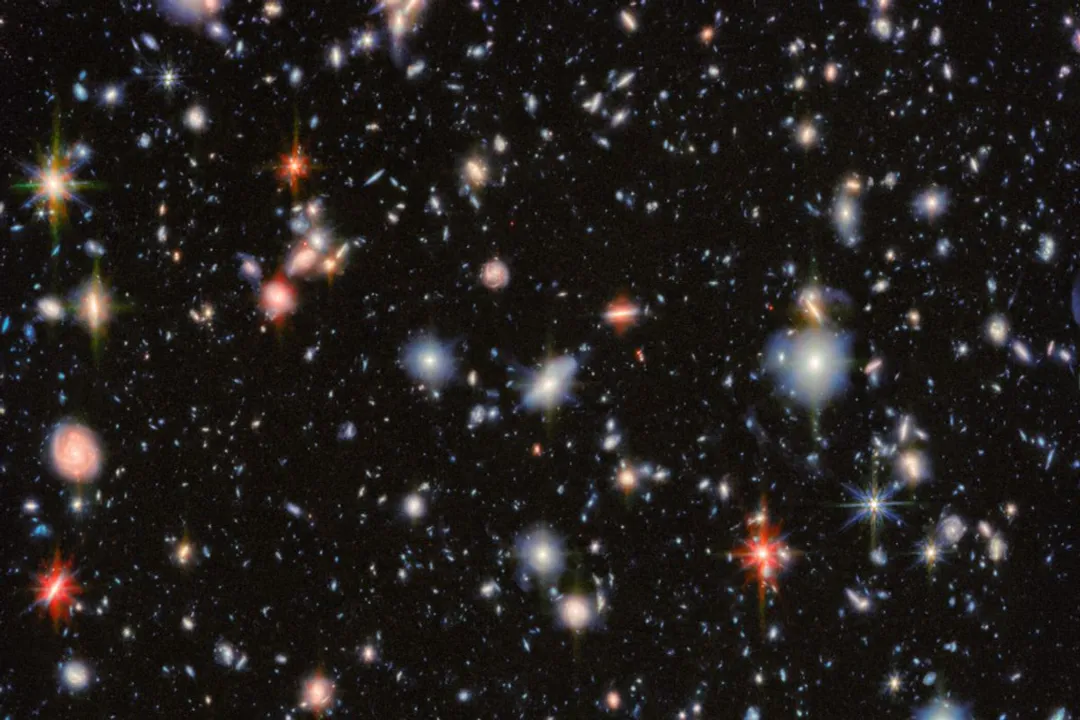
The Hubble Deep Field (HDF), even before the deeper HUDF, provided a stunning cross-section illustrating galactic evolution across cosmic time. This meant the image contained a diverse range of objects, documenting the universe's development. Specifically, the catalog included evidence of both mature, well-established systems, such as spiral galaxies, alongside the very faint, less developed systems described as embryonic structures, thereby capturing snapshots of galaxy formation in various stages.
Related Questions
What was the commonly cited number of galaxies shown by the Hubble Ultra Deep Field (HUDF)?Which instruments were used to construct the Hubble Ultra Deep Field (HUDF) image?How small was the region of the sky targeted by the Hubble Ultra Deep Field (HUDF) relative to the total sky area?What was the initial galaxy count reported when the Hubble Ultra Deep Field (HUDF) results were first published?Approximately how long was the cumulative exposure time required to accumulate the light for the HUDF?What was the approximate number of galaxies cataloged in the initial Hubble Deep Field (HDF) observation?Why were instruments like NICMOS necessary for constructing the HUDF image using Hubble?What next-generation observatory is prioritizing revisiting the HUDF area to build upon Hubble's foundation?How did the HDF compare to the HUDF in terms of initial exposure duration?What variety of galactic structures did the Hubble Deep Field (HDF) observation reveal in its cross-section of cosmic time?