Why do astronomers struggle to detect individual planets in the Andromeda Galaxy?
Answer
Stars are packed too closely together, causing their light to blend
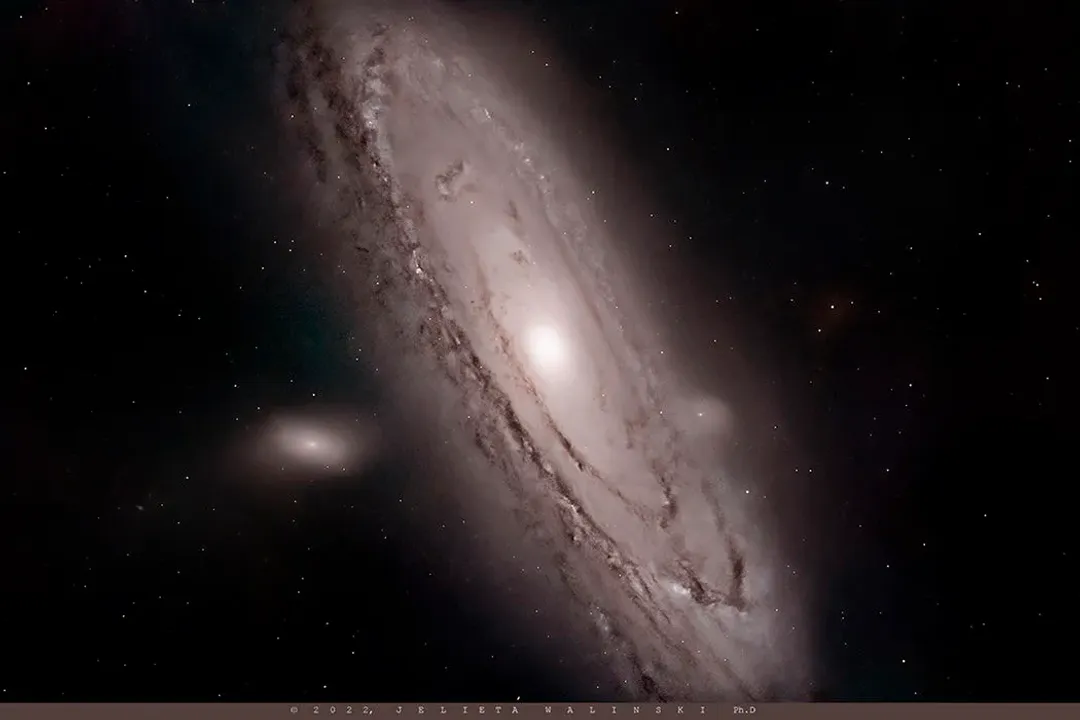
From our perspective on Earth, the stars in the Andromeda Galaxy are so densely packed that their light overlaps, creating a diffuse glow rather than distinct points of light. This clustering prevents telescopes from resolving the tiny, non-luminous light signals or dips in brightness that would indicate the presence of a planet orbiting a specific star.
Related Questions
What is the approximate distance between Earth and the Andromeda Galaxy?Why do astronomers struggle to detect individual planets in the Andromeda Galaxy?Which methods are utilized to detect exoplanets within the Milky Way?How many stars are estimated to exist within the Andromeda Galaxy?What astrophysical structure often forms during the birth of a star and later becomes planets?Which theoretical technique might enable the detection of planets in distant galaxies?Why is it scientifically sound to infer that planets exist in the Andromeda Galaxy?What specific signal are astronomers looking for during a transit event?What is the primary difference regarding confirmed exoplanet numbers between the Milky Way and Andromeda?Which space telescope missions have provided data used to estimate planetary abundance?