How many habitable planets are there in our solar system?

When we gaze up at the night sky from Earth, the question of how many other worlds in our local neighborhood might support life seems immediate. The short, most scientifically agreed-upon answer is singular: Earth. [3] Yet, the term "habitable" is complex, leading researchers to examine various bodies within our solar system—planets, and perhaps more promisingly, moons—for the potential to host life, even if it's just microbial existence beneath icy shells. [3] The search for life elsewhere often shifts focus outward to the thousands of exoplanets discovered, but the familiar terrain of our own Sun’s domain deserves a closer look.
# Defining the Zone
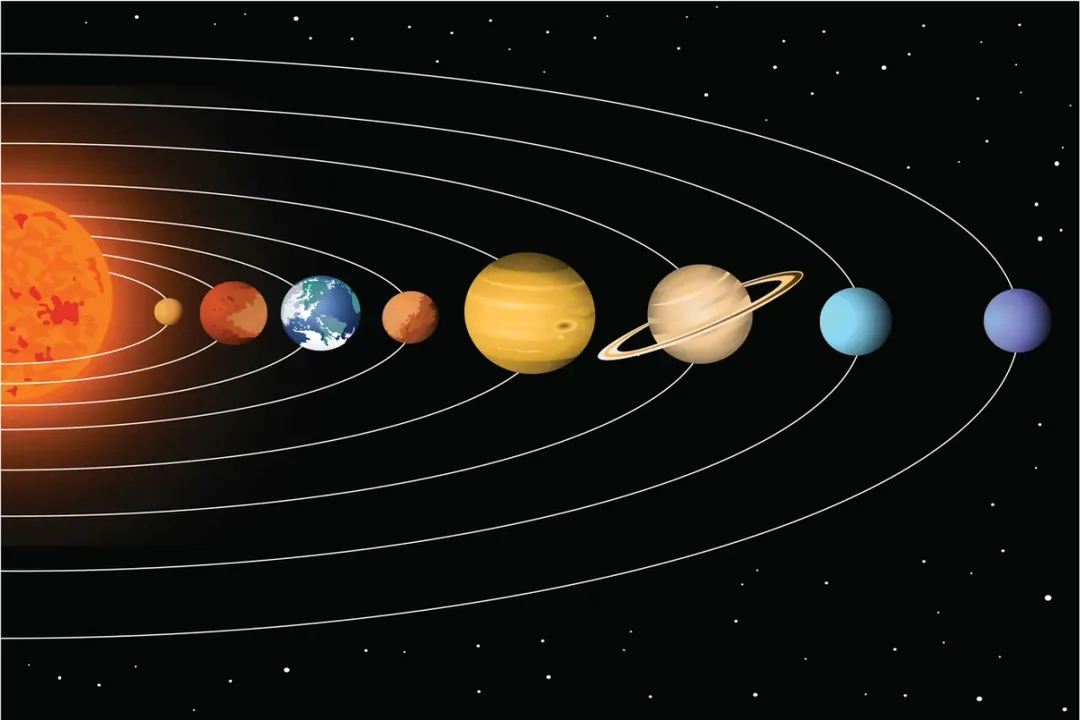
To even begin assessing a world's habitability, scientists first establish conditions necessary for life as we know it. The most fundamental requirement is the presence of liquid water. [7] This criterion immediately brings into focus the concept of the Habitable Zone (HZ), frequently nicknamed the "Goldilocks Zone". [5] This is the orbital range around a star where a planet's surface temperature is neither too hot, causing water to boil away, nor too cold, causing it to freeze permanently. [4][5] For our Sun, this zone dictates the orbital paths for Mercury, Venus, Earth, and Mars. [3]
The Goldilocks Zone isn't a guarantee of habitability; it is merely a starting point. [5] A planet must also possess the right atmospheric conditions to maintain that liquid water on its surface. [7] For example, Venus orbits near the inner edge of the Sun's HZ, but a runaway greenhouse effect has made its surface scorching hot—far too hot for surface liquid water—with temperatures reaching around Fahrenheit ( Celsius). [3] Conversely, Mars, which orbits near the outer edge, is generally too cold, though evidence suggests liquid water did flow on its surface billions of years ago. [3] The zone itself is also dynamic, changing over the lifespan of the host star as the star evolves and changes its luminosity. [4]
# Solar System Candidates

Focusing strictly on the eight recognized planets in our solar system, only one fits the bill for current, surface-level habitability based on liquid water: Earth. [3] However, a full assessment of potential habitability requires looking beyond the traditional definition to environments that might harbor life subsurface.
# Inner Worlds Review
Mercury is too close to the Sun, experiencing extreme temperature swings and lacking a substantial atmosphere to moderate heat. [3] Venus, as mentioned, suffers from overwhelming heat and atmospheric pressure. [3]
Mars presents the most intriguing planetary case outside of Earth. While the average surface temperature is extremely cold (about Fahrenheit or Celsius), the presence of subsurface ice and past evidence of flowing water makes it a major target. [3] If Mars harbors any extant life, it would almost certainly exist underground, sheltered from surface radiation and extreme cold, perhaps near geothermal heat sources. [3]
# Icy Ocean Worlds
The most promising candidates for present-day habitability in our solar system are not planets, but rather moons orbiting the gas giants Jupiter and Saturn. [3] These bodies are far outside the traditional surface Habitable Zone, but they possess internal heat sources—primarily tidal flexing from their massive parent planets—that could maintain vast oceans of liquid water beneath thick ice shells. [3]
- Europa (Jupiter's Moon): Scientific evidence strongly suggests a salty, subsurface ocean beneath its icy crust, potentially containing more water than all of Earth's oceans combined. [3] The interaction of water with a rocky seafloor could provide the necessary chemical energy for life. [3]
- Enceladus (Saturn's Moon): This small moon actively vents plumes of water vapor and ice particles into space from its south pole, confirming a global subsurface ocean. [3] These plumes offer scientists a way to sample the ocean's composition without needing to drill through miles of ice. [3]
While the environments on these moons are vastly different from Earth's surface, the presence of liquid water, necessary elements for life, and an energy source places them high on the list of potentially inhabited worlds within our solar system. [3] For example, the concept of "life as we know it" hinges on liquid water being present, which these icy moons appear to fulfill. [7]
# Exoplanet Statistics
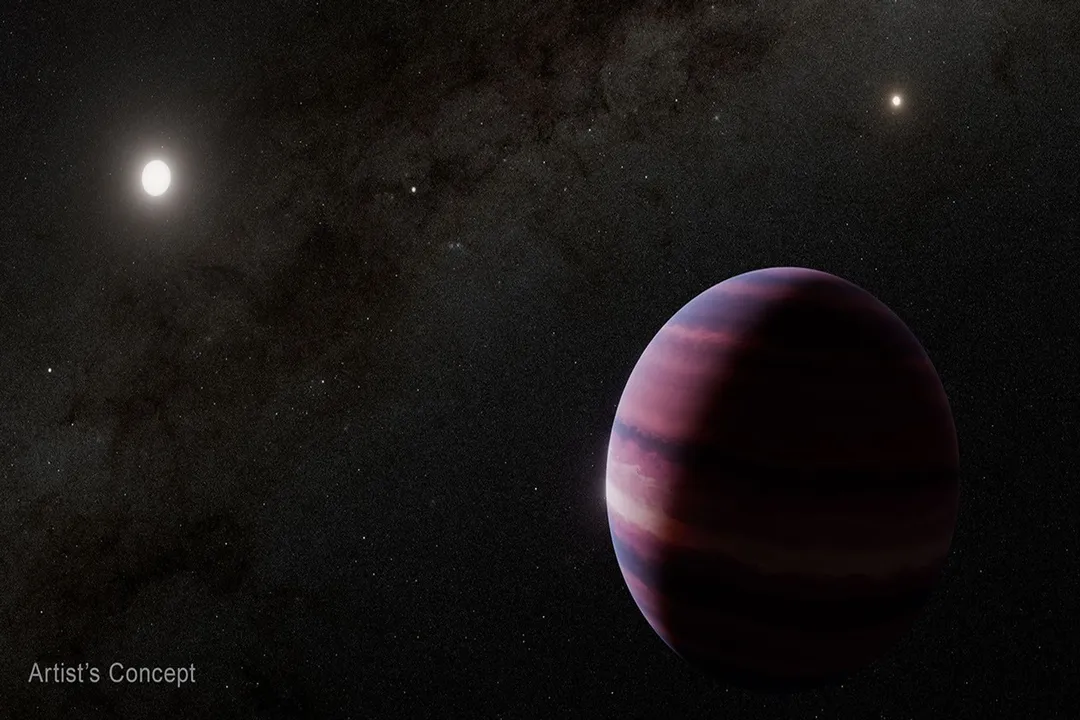
The limited number of compelling candidates in our own solar system (Earth plus a few subsurface oceans) contrasts sharply with the sheer abundance of potential worlds found orbiting other stars—exoplanets. [1][8] These discoveries have fundamentally altered our perspective on planetary formation and the prevalence of habitable zones. [1]
Since the launch of the Kepler Space Telescope, thousands of exoplanets have been confirmed, and many more candidates await confirmation. [9] When astronomers use techniques to estimate how many of these worlds fall within their star’s respective habitable zone, the numbers become staggering. [4] Some analyses suggest that there could be billions of potentially habitable, Earth-sized planets in our Milky Way galaxy alone. [1][8] One study indicated that up to 40% of Sun-like stars might host an Earth-sized planet in the HZ. [8]
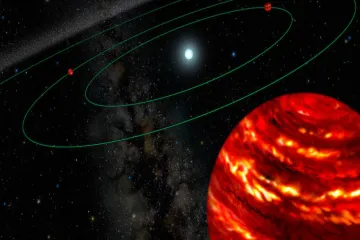
While these estimates are based on modeling and observing the potential for liquid water, they suggest that the universe is likely rich with worlds existing in the Goldilocks band. [1][4] The difference is scale: our solar system has one confirmed habitable world; the galaxy may host billions of potentially habitable ones. [1] A single star, mathematically speaking, can host multiple planets in its habitable zone, though this is less common than single HZ planets. [2]
# Candidate Comparison Table

To clearly illustrate the difference between confirmed habitability and potential habitability within our system, we can organize the primary contenders based on their current state of known habitability:
| Body | Planet/Moon Type | Surface Liquid Water | Subsurface Potential | Current Habitability Rating |
|---|---|---|---|---|
| Earth | Planet | Confirmed | N/A | High (Confirmed Life) [3] |
| Mars | Planet | No (Historical evidence) | Ice confirmed; potential liquid brines [3] | Low (Microbial subsurface only) |
| Venus | Planet | No (Too hot) | Unknown/Unlikely | Negligible [3] |
| Europa | Moon (Jupiter) | No (Under ice) | Confirmed large liquid ocean [3] | Moderate (Subsurface only) |
| Enceladus | Moon (Saturn) | No (Under ice) | Confirmed global liquid ocean [3] | Moderate (Subsurface only) [3] |
# The Definition Challenge
The difficulty in assigning a precise number to "habitable planets" in our solar system boils down to defining the term itself. Is "habitable" synonymous with "inhabited"? Not necessarily. [7] Or does it strictly mean "capable of supporting surface life as we know it now," in which case the count is one? [3]
If we adopt the broader scientific view—a world possessing the necessary ingredients (liquid water, energy source, chemical building blocks)—then the count expands to include Europa and Enceladus, places where life could exist, even if hidden. [3] This is a crucial distinction often lost in simplified discussions: Earth is the only confirmed habitable world; Europa and Enceladus are high-priority targets based on our understanding of astrobiology requirements. [3] Furthermore, even the conditions on Earth are not uniform; a desert or the deep ocean floor are very different "habitable" zones on the same planet. [7]
Consider the possibility of extremophiles—organisms known to thrive in seemingly hostile conditions on Earth, such as deep-sea hydrothermal vents or radioactive environments. [7] If life arose on early Mars or exists in the deep oceans of the icy moons, it would likely be adapted to conditions far more extreme than what we experience daily. [7] This possibility suggests that the criteria for "habitable" should perhaps be looser than simply looking for Earth 2.0. [7] We are currently searching for the potential for life based on what sustains us, but life elsewhere might have very different necessities. [7]
# Looking Ahead
The dedicated study of our immediate solar neighborhood, through missions aimed at Mars, Europa, and Enceladus, serves as a critical training ground for understanding the potential of worlds orbiting distant stars. [1] Every mission that confirms the chemistry or energy sources on an icy moon refines our models for assessing habitability across the galaxy. [1][9] While the answer to "How many habitable planets are there in our solar system?" remains firmly at one confirmed world, the count of potentially life-supporting environments within our system rises to at least three—Earth, and the subsurface oceans of Europa and Enceladus. [3] The difference between a cold rock and a living world might only be a few degrees of internal warmth, driven by tidal forces instead of a parent star. [3]
#Videos
Scientists Discover Planets More Habitable Than Earth - YouTube
Related Questions
#Citations
How Many Habitable Planets are Out There? - SETI Institute
How many habitable planets can one star have? Turns out, about 6.
Planetary habitability in the Solar System - Wikipedia
How Many Habitable Zone Planets Can Orbit a Host Star? | News
Goldilocks Worlds - National Geographic
Scientists Discover Planets More Habitable Than Earth - YouTube
How many planets in our universe could support life? | HowStuffWorks
Surprising number of exoplanets could host life
Exoplanets - NASA Science