What is the most likely planet to be habitable?
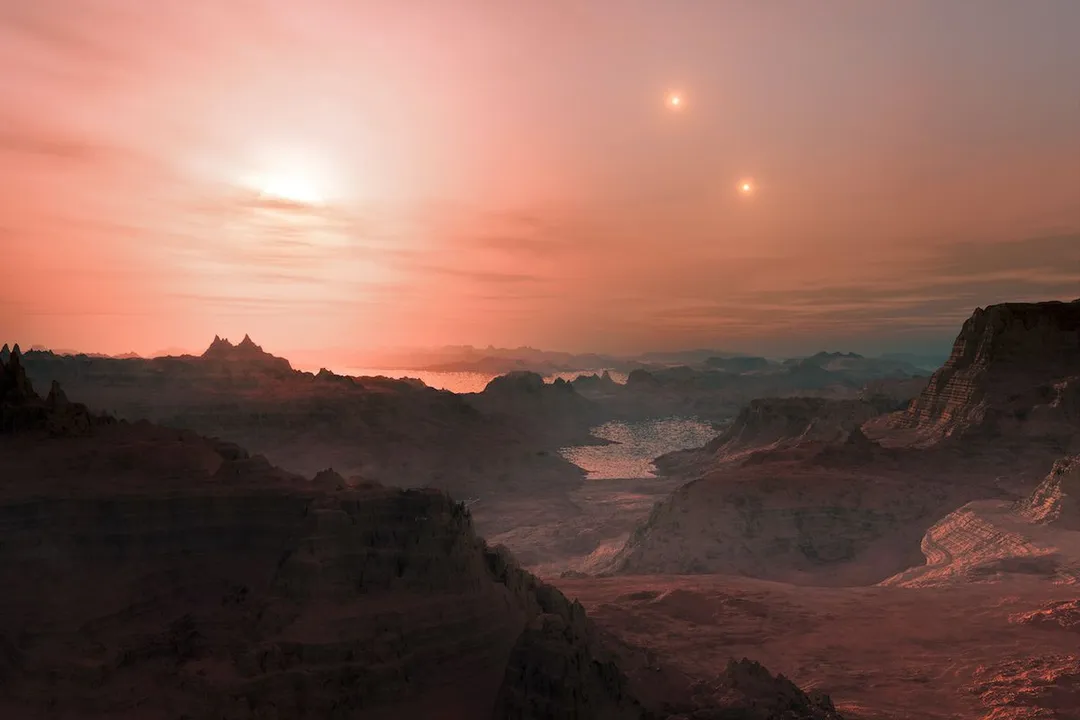
The search for another world capable of supporting life is perhaps the most profound quest in modern astronomy, immediately drawing attention to bodies that mirror the conditions we know sustain us here on Earth. [1] While Earth remains our sole verified oasis, scientific investigation continually uncovers candidates, both within our own cosmic neighborhood and orbiting distant stars, that possess the key ingredients for habitability. This fascination often centers on finding a world where liquid water, a prerequisite for life as we understand it, can exist on the surface. [3]
# Solar System Spots
Focusing close to home first, the search for extraterrestrial life in our solar system often bypasses the rocky planets—Mercury and Venus are too hot, and Mars presents significant challenges—to look toward icy moons with subsurface oceans. [5] These locations offer the possibility of life protected from harsh surface radiation, sustained by tidal heating rather than stellar energy alone. [5]
Europa is a prime candidate among Jupiter's moons. Beneath its thick, icy crust, scientists strongly suspect the existence of a vast saltwater ocean, potentially holding more water than all of Earth's oceans combined. [5] The driving force for keeping this water liquid is the gravitational kneading from Jupiter, which generates internal heat. [5] While direct surface viewing is obscured, the potential for hydrothermal vents on Europa’s seafloor—similar to those on Earth that host unique ecosystems—makes it a compelling target for astrobiologists. [5]
Similarly, Enceladus, a small moon of Saturn, vents plumes of water vapor and ice particles directly into space from its south pole, providing a natural sample of its subsurface ocean. [5] Analysis of these plumes has detected salts and organic molecules, suggesting that the ocean interacts chemically with a rocky core, a process thought essential for the chemical reactions necessary to support life. [5] This plume activity offers a fantastic, relatively easy sampling opportunity compared to drilling through Europa's thicker shell. [5]
Mars, while often thought of as the primary goal, presents a different profile. It once had liquid water flowing on its surface, evidenced by ancient riverbeds and deltas, but today that water is mostly locked away as ice or exists as vapor. [5] The low atmospheric pressure prevents liquid water from remaining stable on the surface for long periods, and the thin atmosphere offers poor protection from cosmic radiation. [5] Life, if it exists there now, would most likely be found beneath the surface, seeking out geothermal heat or residual moisture. [5]
If we compare these solar system options, the challenge shifts from finding water to accessing it. On Mars, the challenge is finding extant subsurface life in a desiccated world; on Europa and Enceladus, the challenge is penetrating miles of ice to reach the established liquid environment. [5] This subsurface environment presents a fascinating dichotomy in the habitability discussion.
One analytical point worth noting is the sheer scale of potential habitability these icy moons represent. While exoplanet searches prioritize surface water within the stellar habitable zone, moons like Europa suggest that internal energy sources can create habitable zones independent of the star's output, significantly expanding the possible number of life-bearing worlds in any given star system. [5]
# Defining Goldilocks
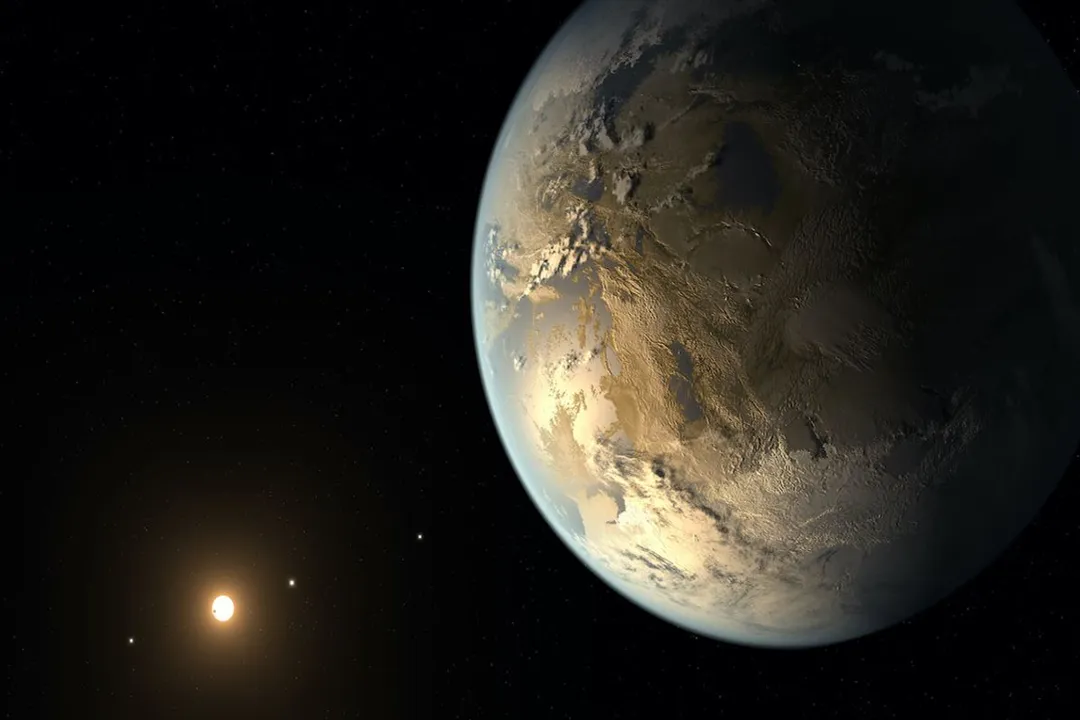
The classic framework for defining a potentially life-supporting world outside our solar system centers on the concept of the Habitable Zone (HZ), often called the Goldilocks Zone. [3] This region around a star is defined as the range of distances where the temperature is just right—not too hot, not too cold—for liquid water to exist on a planet's surface. [3] If a planet orbits too close to its star, water boils away; too far, and it freezes solid. [3]
This distance is directly dependent on the star's size and brightness; a larger, hotter star has a wider and more distant HZ than a smaller, cooler star. [3] NASA's definition relies on the assumption that the planet has an atmosphere that can cycle water, much like Earth's, to maintain a stable surface temperature. [3] However, it is important to remember that being in the HZ does not guarantee habitability; it only guarantees the potential for surface liquid water under specific atmospheric conditions. [3]
# Exoplanet Selections
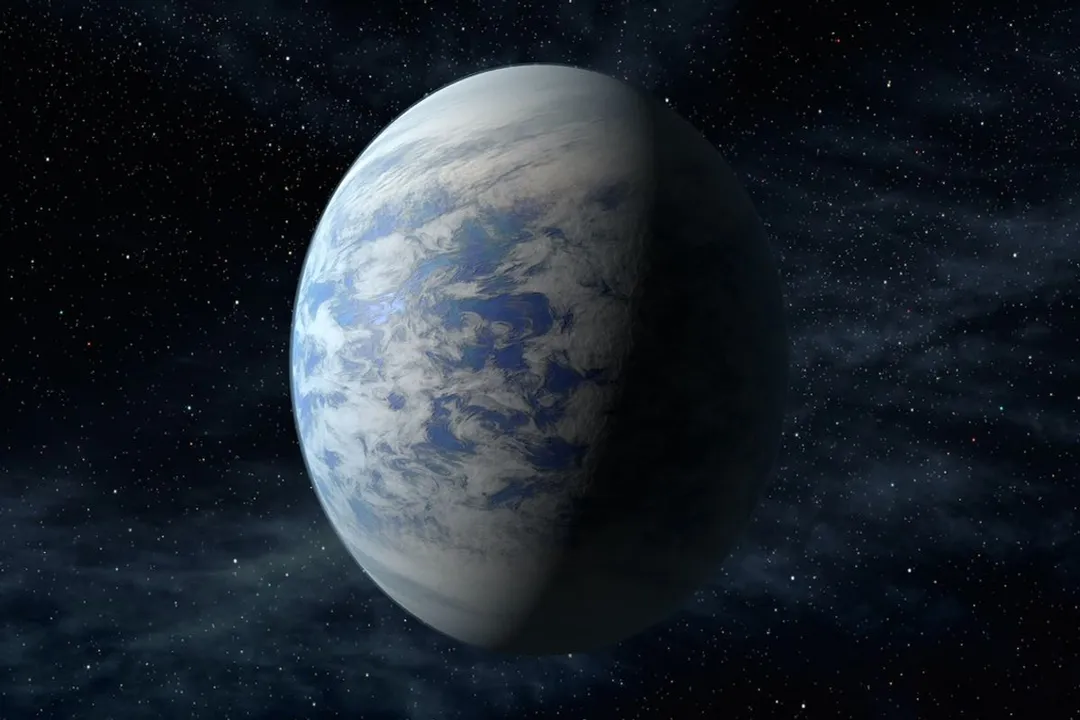
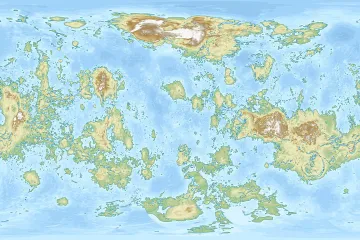
When we look outward at the billions of confirmed exoplanets, astronomers search for worlds whose size and orbital distance place them within their star’s HZ, often referred to as potentially habitable exoplanets. [2]
Kepler-186f stands out as one of the earliest discovered Earth-sized planets residing squarely in the habitable zone of its star, an M-dwarf. [4] While it orbits an M-dwarf, which are smaller and cooler than our Sun, Kepler-186f receives about one-third the energy Earth gets from the Sun, meaning its surface temperatures are likely much cooler, perhaps similar to a perpetual twilight on Earth. [4] Its size suggests it is likely a rocky world. [4]
Another frequently mentioned candidate is Proxima Centauri b. This world orbits the closest star to our Sun, Proxima Centauri, at a distance that places it within the HZ. [4] However, its star is an M-dwarf prone to powerful flares, which could strip away the planet’s atmosphere or bombard the surface with deadly radiation. [4] Whether Proxima b has retained a protective atmosphere is a major open question concerning its habitability. [4]
The TRAPPIST-1 system is notable because it hosts multiple terrestrial-sized planets orbiting within the star's habitable zone. [4] These planets are tidally locked, meaning one side perpetually faces the star while the other is in darkness, creating extreme temperature variations across the surface. [4] Life might only be possible in the "terminator zone"—the twilight ring between the hot and cold sides. [4]
We can organize some of these key exoplanet candidates based on their general traits:
| Planet Candidate | Host Star Type | Size Relative to Earth | Primary Habitability Factor | Primary Concern | |
|---|---|---|---|---|---|
| Kepler-186f | M-Dwarf | Earth-sized | Located in HZ | Lower stellar energy, cooler climate | |
| Proxima b | M-Dwarf | ~1.27 Earth masses | Located in HZ | Host star flaring/radiation | |
| TRAPPIST-1e, f, g | Ultracool Dwarf | Terrestrial | Multiple planets in HZ | Tidal locking, strong stellar activity |
# Factors Beyond Distance
Being in the HZ is merely the entry ticket to the habitability contest. [3] A world must also possess key attributes to maintain that potential. The presence and composition of an atmosphere are critical; a thick atmosphere can trap heat, allowing a planet to remain warm enough for liquid water even if it orbits slightly outside the conservative HZ boundary. [3] Conversely, a runaway greenhouse effect, like on Venus, can render a planet scorching hot even if it is within the zone. [3]
The classification of a planet as "Earth-like" often hinges on being near Earth's size and mass, suggesting a rocky composition. [4] However, this term can be misleading. For instance, a planet slightly larger than Earth, often termed a "Super-Earth," might be better suited for retaining a thick, life-sustaining atmosphere over geological timescales than a smaller world. [4]
A subtle but important distinction arises when evaluating worlds like the TRAPPIST-1 planets versus a hypothetical 'Earth 2.0' orbiting a Sun-like star. The ultracool M-dwarf hosts (like TRAPPIST-1) emit far more infrared radiation. A planet in their HZ must orbit incredibly close—often closer than Mercury is to our Sun—leading to guaranteed tidal locking. [4] This means that the atmospheric circulation patterns, wind speeds, and day/night heat distribution would be fundamentally different from Earth's, implying that life there would need to adapt to permanent daylight/nightside conditions, a challenge not faced by terrestrial candidates orbiting G-type stars like ours.
Furthermore, plate tectonics, driven by internal heat, is believed to be crucial for long-term climate stability on Earth through the carbon-silicate cycle, which regulates atmospheric CO2 levels. [1] Whether smaller, tidally locked planets can sustain the necessary internal dynamo for plate tectonics remains an open question for many of these top exoplanet picks. [1]
# The Search Continues
The scientific consensus suggests that while Mars is the most promising place in our immediate solar system for finding past or subsurface microbial life, the exoplanets in the Habitable Zones of other stars offer the best hope for finding current, thriving surface ecosystems. [1][5] The sheer number of potentially habitable exoplanets identified—the Wikipedia list alone contains many dozens of confirmed candidates [2]—dwarfs the handful of viable solar system bodies.
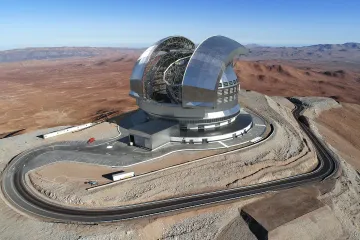
The most likely planet to be habitable, therefore, is not a single, known world but rather a statistical probability waiting to be confirmed. It must reside in the HZ, possess enough mass to hold onto an atmosphere, have the right chemical building blocks, and—crucially—have avoided catastrophic events like runaway greenhouse warming or atmospheric stripping by stellar flares. [3][4] The identification of a planet like Kepler-186f confirms that Earth-sized worlds exist in the right orbital spot, but confirmation of actual habitability requires detecting biosignatures in their atmospheres, a capability that is only now beginning to develop with next-generation telescopes. [4] The journey from "potentially habitable" to "inhabited" is long, requiring patience and continuous technological advancement.
#Videos
Discovery of the Most Exciting Habitable Planet Near the Solar System
There are no known habitable exoplanets - YouTube
Related Questions
#Citations
Which planet (except Earth) is the most habitable, regardless of ...
List of potentially habitable exoplanets - Wikipedia
The Habitable Zone - NASA Science
The 10 most Earth-like exoplanets - Space
Discovery of the Most Exciting Habitable Planet Near the Solar System
The most habitable planet in the Universe is NOT Earth! - Facebook
6 Exoplanets in our Universe That Could Support Life Other Than ...
The best places to search for life in our Solar System