Is Venus the most habitable planet?
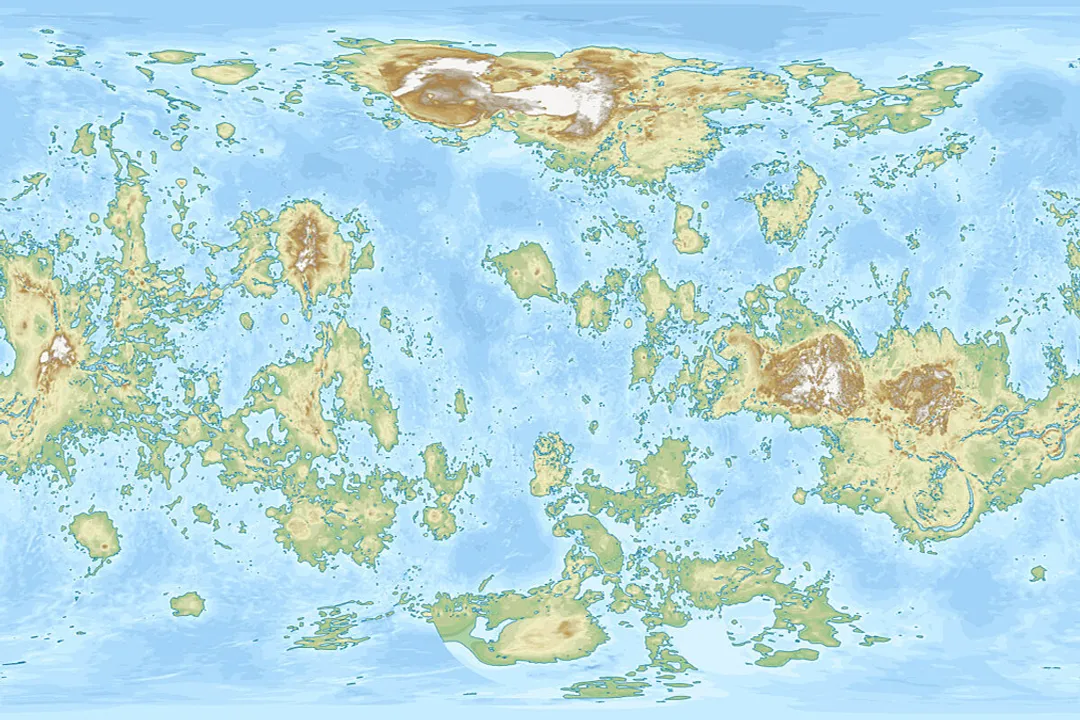
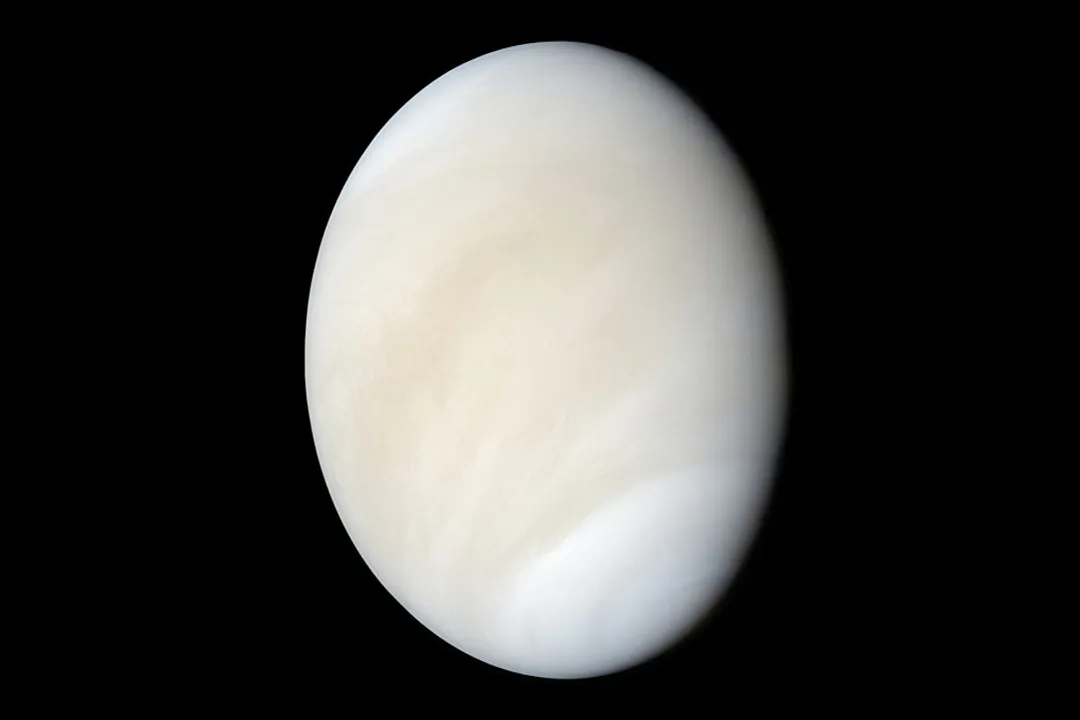
Venus is often imagined as Earth's evil twin, a scorching world where surface temperatures can melt lead and the atmosphere is a crushing, corrosive blanket of carbon dioxide. [3][5] Yet, the question of whether Venus was ever habitable, or perhaps still harbors life in its cooler upper layers, keeps planetary scientists deeply engaged. While Mars frequently captures the public imagination as the most likely place to find extraterrestrial biology in our solar system, Venus presents a far more complex and, in some ways, tantalizing alternative. [7] The debate isn't about the hellish surface, which is utterly inhospitable, but rather about the planet's deep history and the narrow, strange niches that might exist today. [2][4] To consider Venus the "most habitable" requires setting aside the surface conditions entirely and focusing on specific historical eras or atmospheric altitudes, making the comparison inherently conditional. [7]
# Orbital Zone
# Habitable Placement
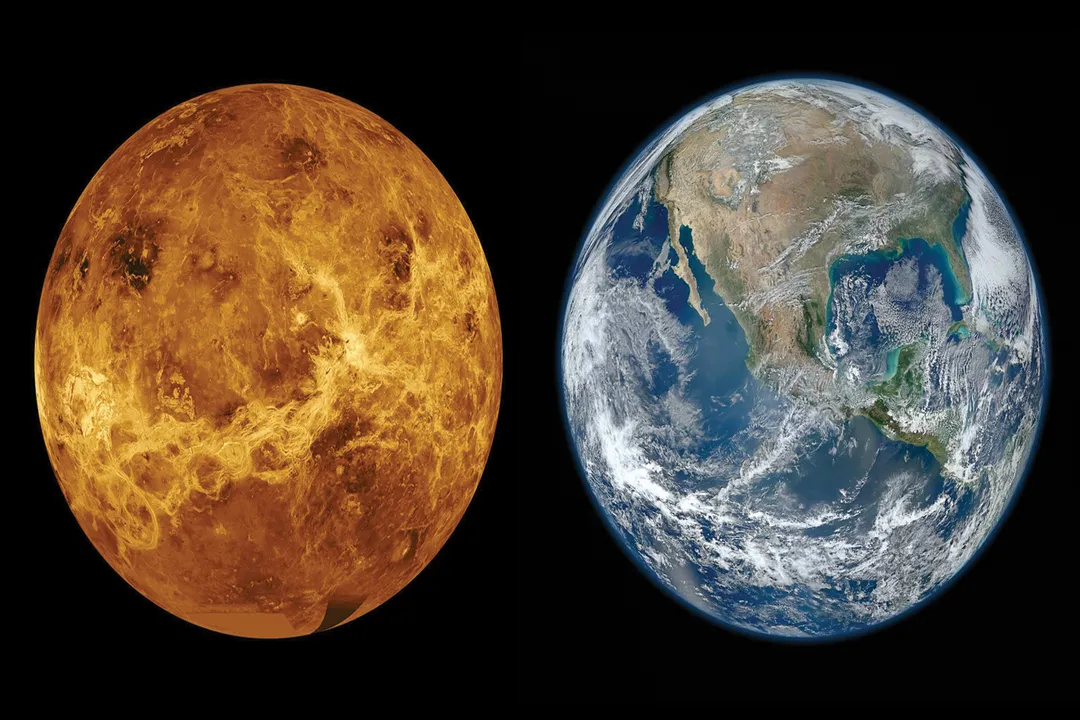
The definition of habitability often begins with the Habitable Zone (HZ), sometimes casually called the "Goldilocks Zone," where a planet could theoretically maintain liquid water on its surface given the right atmospheric pressure. [6] Venus orbits closer to the Sun than Earth, placing it firmly inside the classically defined HZ for our Sun currently. [6] This proximity, however, is precisely what led to its runaway greenhouse effect and current state. [3]
While Venus is within the HZ, its surface temperature, hovering around (), is far too hot for liquid water to exist. [3] This illustrates a crucial point: orbital distance alone does not guarantee habitability; atmospheric composition and dynamics play an equally, if not more, important role. [5] Mars, conversely, orbits outside the current HZ, meaning even with an Earth-like atmosphere, its surface water would likely freeze without significant warming. [7] Therefore, if judging solely by current surface potential for liquid water, Mars is currently closer to the HZ edge than Venus, even though Venus's interior environment is clearly hostile. [7]
# Ancient Climate Models
NASA climate modeling from the Goddard Institute for Space Studies (GISS) has offered compelling scenarios suggesting that Venus might have enjoyed long periods of surface habitability in the distant past. [5] These models explored what would have happened if Venus had accumulated water vapor like Earth, suggesting that for up to two billion years, the planet could have maintained oceans and a mild climate. [5] This potential ancient habitability hinges on several factors, including the initial amount of water present and the evolution of its carbon cycle. [5] The GISS models imply a transition: a potentially long, temperate beginning followed by a catastrophic shift to its present state. [5]
This optimistic view of an ancient Venus, capable of supporting liquid water, presents a stark contrast to the planet's current profile and highlights the fundamental challenge in assessing its overall habitability—we are comparing billions of years of history with the present moment. [1]
# Water Surface Contradictions
However, recent research directly challenges the notion that Venus sustained liquid water on its surface for extended periods. [8] A study from the University of Cambridge suggests that even if Venus started with similar amounts of water to Earth, the Sun’s increasing luminosity over time would have guaranteed a transition to a runaway greenhouse effect much faster than previously assumed. [8] This research indicates that Venus likely lost its water early on, possibly vaporizing into space, long before the point where life as we know it could have taken hold on the surface for a meaningful duration. [1][8] The modeling suggests that the conditions for sustained habitability—where liquid water persists—were significantly shorter than the billions of years suggested by the more optimistic simulations. [8] This casts a considerable shadow over any argument for Venus as a prime candidate based on its deep past. [1]
# Atmospheric Niches
# The Cloud Layer
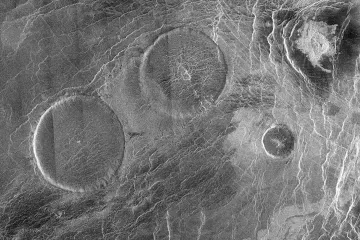
If we dismiss the surface, the only realistic location for potential habitability on modern Venus is in the upper atmosphere, specifically within the thick cloud layers. [2][4] The conditions here are dramatically different from the surface below. [2] At an altitude of roughly 50 to 65 kilometers (about 31 to 40 miles) above the surface, the temperature drops to a more clement range, sometimes between and ( to ), which is compatible with Earth-like life. [2][4]
Furthermore, the atmospheric pressure at this altitude is close to Earth's sea-level pressure, about 1 bar. [2] This convergence of moderate temperature and pressure within the cloud deck is what defines the narrow atmospheric "habitable zone" of Venus. [2]
# Acidity Barriers
This aerial haven comes with a major caveat: extreme acidity. [4] The clouds are primarily composed of concentrated sulfuric acid droplets. [4] While life forms on Earth exist in highly acidic environments, such as near volcanic vents, the concentration of sulfuric acid on Venus far exceeds what most known terrestrial extremophiles can tolerate. [3][4] Any hypothetical aerial life would need an unprecedented mechanism to protect its cellular structures from this pervasive corrosive agent. [4] The presence of unexpected chemical markers, like phosphine gas detected and later debated, sometimes suggests chemical processes beyond simple geology, fueling speculation about biological activity, even if the environment itself seems prohibitive. [4]
# Comparative Analysis
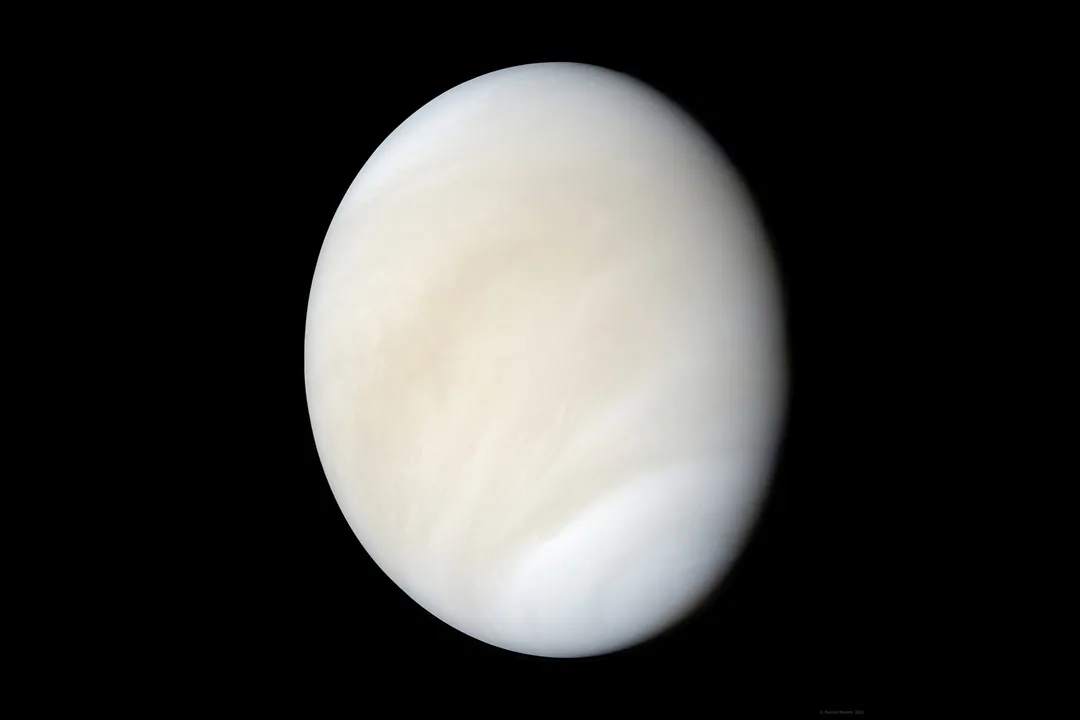
# Pressure Versus Heat
When assessing Venus's atmosphere versus Mars's surface, we see a clear trade-off between pressure and temperature extremes. [7]
| Location | Approximate Temperature | Approximate Pressure (Earth = 1 bar) | Primary Difficulty |
|---|---|---|---|
| Venus Surface | Extreme Heat & Pressure | ||
| Venus Clouds () | to | Extreme Acidity () | |
| Mars Surface | (Average) | Extreme Cold & Near Vacuum |
This comparison highlights that Venus offers a pressure environment similar to Earth's surface high in its atmosphere, whereas Mars offers a temperature environment slightly more amenable to liquid water (though too cold currently) but with a near-vacuum pressure that requires a full pressure suit just to keep water liquid. [7] In this specific context—a small band of tolerable pressure and temperature—Venus's atmosphere is technically the most Earth-like environment in the solar system today, excluding Earth itself. [2]
# Dynamic Energy Flow
One fascinating aspect of discussing Venusian habitability, even in the clouds, is considering the energy source for any potential life. [3] On Earth, life often taps into geothermal or solar energy gradients. In the Venusian cloud layer, while sunlight penetrates somewhat, the dominant physical feature is the massive, continuous atmospheric circulation, moving air masses rapidly. [2] Life would need to anchor itself, perhaps within the liquid droplets themselves, or adapt to be constantly suspended while efficiently harvesting energy from either the sparse sunlight or chemical reactions occurring within the sulfuric acid cloud matrix. [4] The sheer dynamic energy of the atmosphere might prevent stable ecological niches from forming over long timescales, even if the bulk conditions seem right for a moment. [9] The very mechanism required for survival—neutralizing or completely excluding concentrated sulfuric acid—represents a massive biochemical hurdle that is orders of magnitude harder than what Martian subsurface extremophiles might face regarding cold or radiation. [4]
# Engineering Verification
The recognition of this narrow atmospheric band suggests a direct, actionable path for future missions, though it is technologically daunting. To confirm life, or even to search for the building blocks, a probe must survive descent through the crushing lower atmosphere, function precisely in the acidic cloud layer, and ideally be capable of remaining aloft or being retrieved. [4] Current technology makes long-duration, in situ analysis extremely difficult due to the corrosive nature of the environment, requiring specialized materials science far beyond standard spacecraft construction. Developing materials that can resist concentrated sulfuric acid for months at the precise temperature and pressure point where water vapor might also be available—a key component for life—is arguably a greater engineering challenge than landing on Mars's dry plains. [4] This difficulty is an important factor in why Venus is not currently considered the most habitable planet; the technology barrier to verification is immense. [7]
# Past Stability Scale
A critical difference between Venus and Mars lies in long-term planetary stability. While Venus's past habitability may have been fleeting according to the Cambridge study, [8] its current massive atmosphere ensures thermal inertia. Mars, conversely, is highly susceptible to changes in solar output or orbital dynamics due to its thin atmosphere, making its past habitability inherently more vulnerable to collapse or freezing. [7] If Venus did have a temperate period, it was sustained by a much larger atmospheric reservoir than Mars ever likely possessed. When Venus's climate did break down, it broke down catastrophically, but the sheer mass of its atmosphere suggests that if a habitable window opened, it might have done so with grander, more substantial oceans than those that might have briefly existed on Mars. [5] The scale of past events on Venus, even if short-lived, dwarfs the potential historical water bodies on the Red Planet. [5]
# Conclusion
Deciding if Venus is the most habitable planet depends entirely on the criteria applied. If habitability means the potential for surface liquid water in the deep past, then the models suggesting billions of years of temperate conditions put ancient Venus ahead of ancient Mars, although recent findings temper this view significantly. [1][5][8] If habitability means the current presence of Earth-like temperature and pressure conditions, then the altitude atmospheric layer on Venus is the leading candidate, surpassing Mars's surface conditions in terms of pressure compatibility, despite the deadly acidity. [2][7] Mars wins on temperature proximity to freezing and chemical familiarity (no sulfuric acid clouds), but loses on atmospheric pressure necessary to hold liquid water. [7]
Ultimately, Venus is a planet of stark contrasts: a historical possibility for oceans versus a present-day atmospheric anomaly. It forces us to expand our definition of habitability beyond the surface. While Mars is the familiar goal for finding past microbial life, Venus offers a unique, if extremely challenging, contemporary biological niche high above its fiery plains. [4] The search continues, driven by the very real, albeit narrow, potential hiding within the sulfuric veil. [4]
#Videos
Venus Could Have Supported Life For Billions Of Years ... - YouTube
Related Questions
#Citations
Was Venus ever habitable? New UChicago study casts doubt
Is there a habitable region in Venus's atmosphere? : r/askscience
Was Venus the First Habitable World of our Solar System? - PMC - NIH
Life on Venus: Your Questions Answered | The Planetary Society
NASA Climate Modeling Suggests Venus May Have Been Habitable
Is Venus in our sun's habitable zone? - Astronomy Stack Exchange
Researchers deal a blow to theory that Venus once had liquid water ...
Is Venus technically more habitable than Mars? - Quora
Venus Could Have Supported Life For Billions Of Years ... - YouTube