Is Mercury or Venus more habitable?
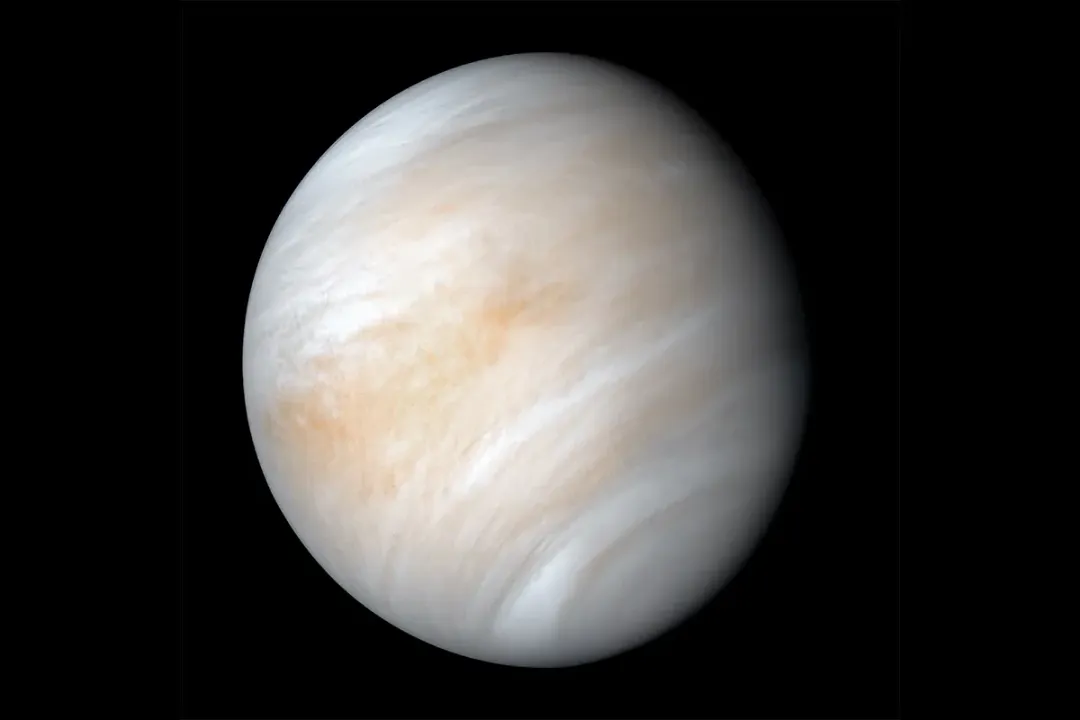
The comparison between Mercury and Venus regarding habitability often pits one extreme environment against another, both orbiting closer to the Sun than our familiar Earth. When considering which of these two inner worlds offers even a sliver of potential for sustaining life, or for future human outposts, the answer requires a deep dive into their vastly different, yet equally hostile, surface conditions. While neither planet currently resembles the temperate conditions necessary for terrestrial life as we know it, their specific challenges present unique obstacles and, perhaps, faint possibilities. [8][9]
# Surface Extremes
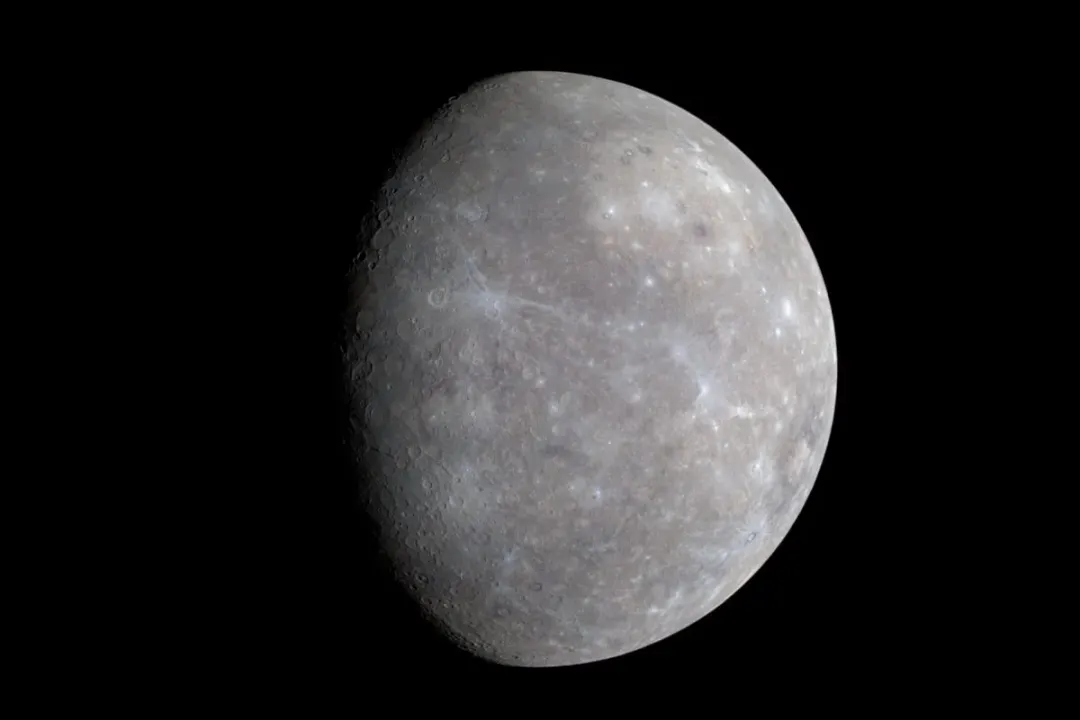
Mercury, the closest planet to the Sun, presents a classic dichotomy of temperature extremes due to its slow rotation and near-total lack of an atmosphere. [3] A day on Mercury lasts a long time, leading to scorching daytime temperatures that can soar to about 800 degrees Fahrenheit. [3] This intense solar exposure bakes the surface material. Conversely, during the long night, the absence of an atmosphere to trap heat causes temperatures to plummet dramatically, reaching frigid lows near $-290$ degrees Fahrenheit. [3] This massive, nearly 1100-degree swing between day and night makes any sustained surface presence almost impossible without extreme engineering countermeasures. [3] Furthermore, Mercury is the smallest of the terrestrial planets. [3]
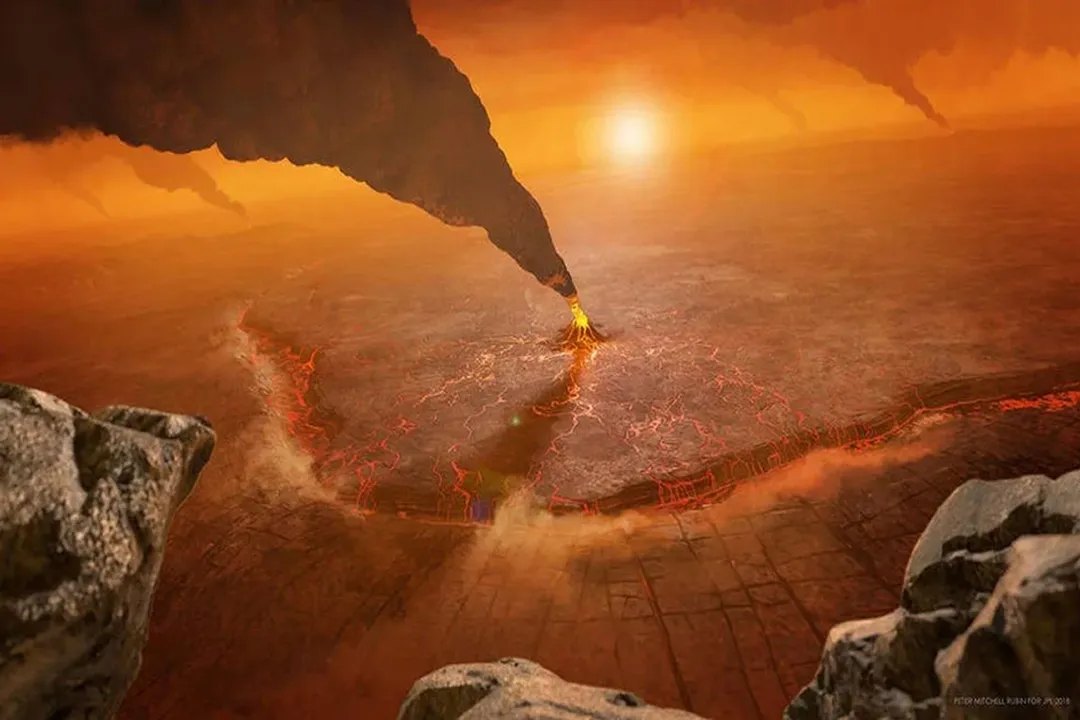
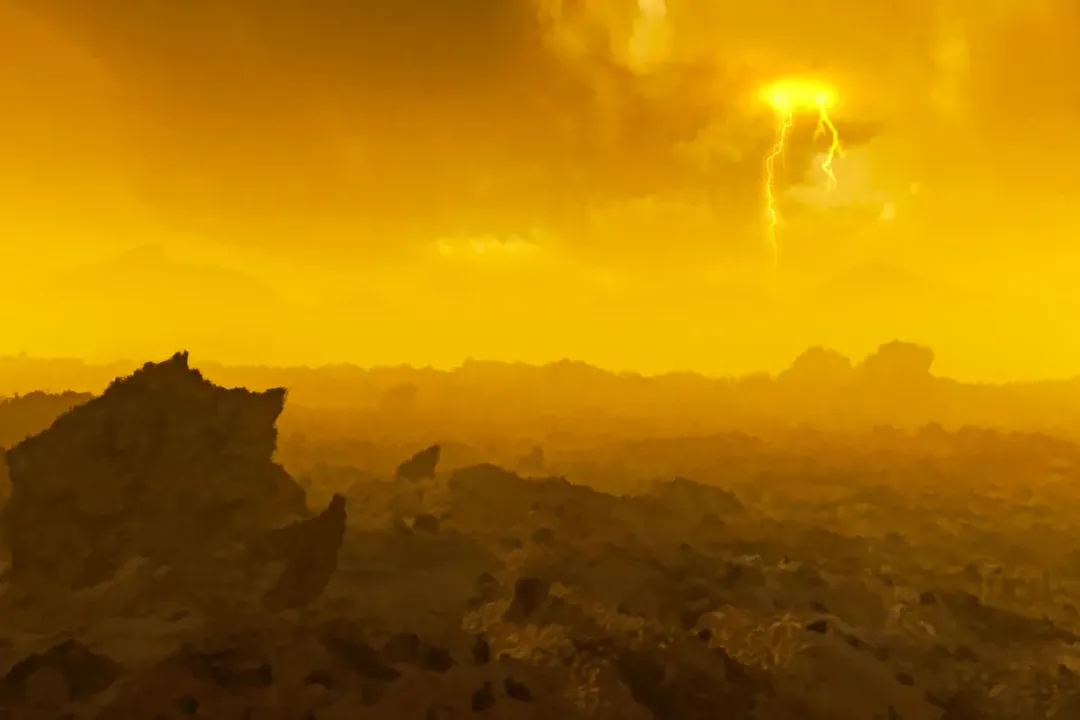
Venus, orbiting just beyond Mercury, is notoriously known as the Solar System's hottest planet, a title it holds despite not being the closest to the Sun. [4][7] Its surface temperature averages around 900 degrees Fahrenheit, which is hot enough to melt lead. [4][7] The culprit for this intense heat is its extraordinarily thick atmosphere, composed primarily of carbon dioxide, which creates a runaway greenhouse effect. [4][7] This atmosphere is also incredibly dense, exerting a crushing surface pressure about 90 times greater than Earth's sea-level pressure. [4][7] Imagine the weight of being almost a kilometer underwater on Earth; that is the constant pressure bearing down on the Venusian surface. [4] This oppressive heat and pressure make the surface utterly inimitable for current technology designed for human survival. [7]
# Atmospheric Contrast
The atmospheric profiles of Mercury and Venus represent fundamental differences in planetary science, heavily dictating their respective habitability prospects. Mercury effectively has no atmosphere, possessing only a thin exosphere composed of atoms blasted off its surface by solar wind and micrometeoroid impacts. [3] While this means no greenhouse effect to trap heat, it also means no protection from radiation or an insulating blanket against the cold of space during its long night. [3]
Venus, on the other hand, is defined by its overwhelming atmosphere. [4][7] Its rotation is also peculiar; it spins very slowly in the opposite direction (retrograde) compared to most other planets. [2] The sheer density of the carbon dioxide blanket traps solar energy so efficiently that surface conditions are relentlessly hot, regardless of whether the sun is directly overhead or not, effectively leveling the day-night temperature differences that plague Mercury. [4][7]
If we frame habitability around the concept of the Sun's Habitable Zone—the region where liquid water could exist on a planet’s surface under the right atmospheric conditions—both Mercury and Venus reside within this zone. [8] Earth sits comfortably in the middle of it, while Mars sits just outside. [8] The issue for both inner planets is that they failed to develop the stable, mild atmospheres required to maintain that liquid water; Mercury lost its atmosphere, and Venus developed an oven-like one. [1][9]
# Comparing Challenges
When assessing which planet is "more habitable," one must decide which set of hostile conditions presents a more manageable engineering challenge for an advanced civilization.
For Mercury, the primary issue is thermal management on a massive scale, coupled with intense solar radiation exposure and the lack of any atmospheric buffer. [3] Any structure or habitat would need to manage a temperature range exceeding 1000 degrees Fahrenheit across its surface simultaneously, perhaps by being built into deep lava tubes or by perpetually residing in permanently shadowed craters near the poles where traces of water ice might exist. [3] This reliance on subsurface or permanently shadowed regions suggests a very limited, highly constrained potential habitat footprint.
For Venus, the challenge is structural integrity against crushing pressure, coupled with extreme ambient heat and corrosive clouds. [4][7] Building a durable structure to withstand $90$ times Earth's pressure while keeping internal temperatures manageable at $900$ degrees Fahrenheit is an immense material science hurdle. [4]
Considering the data, a fascinating thought experiment emerges regarding engineering: it might be easier to insulate against extreme heat and radiation (Mercury's challenge) than it is to build structures that resist crushing pressure and maintain a stable internal environment against such overwhelming external force (Venus's primary surface challenge). [4][7] A habitat on Mercury is fighting to stay cool on one side and warm on the other; a habitat on Venus's surface is fighting to not be instantly compressed and incinerated. [3][4]
# Altitude Opportunities
While the surfaces of both planets are profoundly inhospitable, the discussion surrounding Venus sometimes includes a more intriguing prospect than anything currently proposed for Mercury’s surface: atmospheric habitats. [6][7]
In the Venusian atmosphere, approximately 50 kilometers (about 30 miles) above the surface, conditions become surprisingly Earth-like when compared to the hellscape below. [6][7] At this altitude, the atmospheric pressure drops to about one Earth atmosphere, and temperatures are estimated to be in the range of to Celsius (roughly to Fahrenheit). [6][7] This temperate layer exists high above the dense, hot lower atmosphere.
This concept suggests that if one could design an aerostat—a buoyant platform or airship—that could float in this band, the pressure challenge is solved, and the thermal challenge is reduced to managing Earth-like ambient temperatures rather than incinerating ones. [6] The remaining major hurdles would be dealing with the highly corrosive nature of the clouds, which are rich in sulfuric acid, and maintaining the necessary lift in a dense carbon dioxide atmosphere. [7] This cloud-top possibility gives Venus a conceptual niche for "habitability" that Mercury, trapped between deep cold and scorching heat on its bare surface, simply does not appear to possess based on current knowledge. [3][7]
If we look at the total volume of space where life might be sustained, even theoretically, Venus offers a multi-mile-thick atmospheric layer with manageable temperature and pressure, whereas Mercury's potential is restricted to small, shadowed surface points or very deep subsurface exploration. [3][6] Therefore, in a purely comparative sense regarding potential for in-situ habitation, the upper atmosphere of Venus presents a more complex but potentially richer target than Mercury's utterly desolate surface. [7]
# Orbital Dynamics and Time
The rotational periods also influence the feasibility of any long-term mission or habitat design. Mercury's rotation period is about 59 Earth days, leading to an extremely long solar day. [3] For a surface base on Mercury, a single solar day-night cycle would take roughly 176 Earth days. [3] This demands power systems capable of surviving a nearly 88-Earth-day night, relying solely on stored energy or nuclear power. [3]
Venus rotates extremely slowly in the opposite direction, with a single Venus day lasting about 243 Earth days—longer than its year (225 Earth days). [2] While the surface is uniformly hot, this long rotation period means that if a surface outpost could survive the pressure and heat, the local "day" would be extremely drawn out, complicating solar power capture if one were trying to, say, power atmospheric scrubbing equipment or subsurface drilling operations. [4] In the atmosphere, however, the winds move much faster than the planet rotates, meaning a floating habitat could experience a more rapid day/night transition relative to the ground below, which could aid in dissipating accumulated heat or managing power needs across a full cycle. [2]
It is worthwhile to note the similarity in orbital distance that leads to such different outcomes. Both planets receive significantly more direct solar energy than Earth, yet Mercury's proximity results in thermal whiplash, whereas Venus's thick blanket converts that energy into inescapable, uniform heat. [4][8] This illustrates that atmospheric retention is arguably a more critical factor for surface habitability than simply being within the theoretical Habitable Zone. [8] A planet can be in the perfect zone and still be rendered uninhabitable by the wrong atmospheric chemistry or lack thereof. [1]
# Engineering Trade-offs
For a mission aiming for minimal necessary technology modification relative to Earth's capabilities, the comparison remains stark. Surface exploration of Mercury demands extreme thermal shielding to handle the F differential. [3] Surface exploration of Venus requires materials science breakthroughs to resist crushing pressures and highly acidic conditions. [4]
Imagine trying to build a research station. On Mercury, you might succeed by sinking deep underground where temperatures stabilize, using the planetary crust as your insulation against the surface swings. [3] On Venus, sinking underground means dealing with potentially hotter, denser materials and still needing to manage pressure, though some deep subsurface geological features might offer cooler, lower-pressure pockets, depending on crustal density and heat flow—a factor not explicitly detailed in the summaries but implied by the immense surface pressure. [4]
However, the Venusian cloud-top habitat bypasses the surface problem entirely by exploiting the narrow band of moderate conditions. [6] If one could engineer a factory that synthesizes the necessary lighter-than-air gases for buoyancy using atmospheric components (like managing a hydrogen-filled blimp in Earth's atmosphere), the primary long-term threat becomes atmospheric corrosion over decades, not instant crushing or incineration. [7] In a purely hypothetical engineering trade-off, solving the pressure and heat problem once for a stationary surface base on Venus seems an order of magnitude more challenging than managing the extreme thermal gradient of a Mercury surface base, provided the base on Mercury can afford massive radiators and energy storage. [3][4] This suggests that, against expectation, the surface of Mercury might be technically easier to approach than the surface of Venus, though Venus’s atmosphere offers a unique, potentially more sustainable alternative habitat volume. [6]
Ultimately, while neither planet mirrors Earth, the search for life or even permanent human presence shifts the focus dramatically. Mercury offers a cold, dark refuge near its poles, or a brutally hot daytime surface, constrained by vacuum-like conditions. [3] Venus offers a potentially habitable atmospheric layer tens of kilometers up, floating above a pressurized, molten-hot world. [7] The very different chemical and physical properties of these two worlds ensure that the roadmap for exploring or colonizing one would bear almost no resemblance to the roadmap for the other. [3][4]
Related Questions
#Citations
Could Mercury ever be habitable like Venus or Mars (meaning we ...
Eli5: Venus is the second planet from The Sun, Mercury is first. Why ...
Mercury: Facts - NASA Science
Venus is the hottest planet, even though Mercury is closer to the Sun ...
Life on Venus - Wikipedia
Creating a habitable planet that recieves the same amount of ...
Life on Venus: Your Questions Answered | The Planetary Society
Habitable Zone - Background Info - AstroCappella
Ep. 626: Terrestrial Planets — Mercury, Venus, Earth, and Mars