Can Mercury be made habitable?
Mercury, the closest planet to our Sun, presents an image of scorching desolation, a world baked under relentless solar radiation. Yet, even in this extreme environment, recent scientific investigations suggest that the question of habitability might not be entirely settled, shifting focus from the baked surface to the shadowed poles and even deeper underground. The planet orbits the Sun in a mere 88 Earth days and rotates very slowly, resulting in extreme temperature differentials, swinging from about () during the day to a frigid () at night. [4][5] For any human enterprise, these surface conditions alone present an almost insurmountable barrier to conventional settlement. [3]
# Surface Extremes
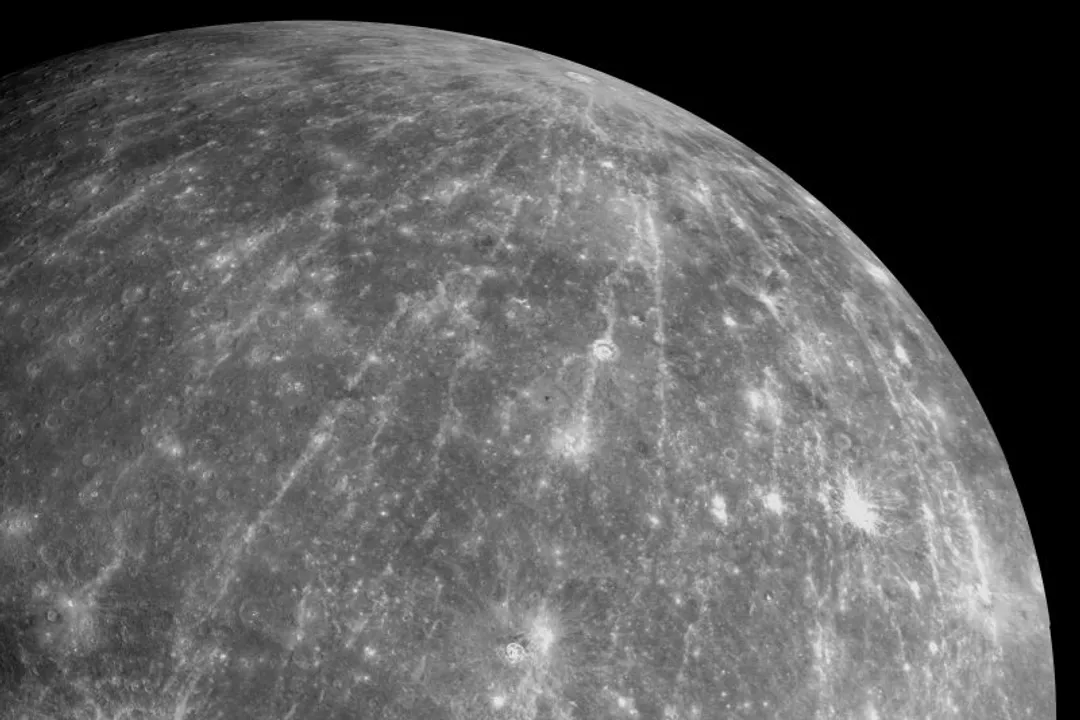
The surface environment is hostile primarily due to the combination of intense heat and the near-total lack of an atmosphere capable of retaining heat or protecting against radiation. [5] Mercury’s atmosphere is incredibly thin, officially called an exosphere, composed of atoms blasted off the surface by solar wind and micrometeorites. [4] Because the planet rotates only three times for every two orbits around the Sun (a $3:2$ spin-orbit resonance), its day is incredibly long relative to its year, exacerbating the thermal shock between day and night cycles. [5] While the planet is small, which might imply lower gravity for easier ascent, its tight proximity to the Sun makes simply shielding inhabitants from incoming energy the foremost challenge. [7] Attempting to build structures on the surface would require materials capable of handling massive thermal expansion and contraction cycles over the long Mercurian day, a feat of engineering that goes far beyond current capabilities for large-scale colonization. [5]
# Polar Ice Pockets
The only areas on the surface that offer any reprieve from the constant heat are the floors of deep craters near the poles. [2] Due to the planet’s small axial tilt, certain deep craters have regions that never receive direct sunlight, creating permanently shadowed regions (PSRs). [5] These PSRs act as extremely effective cold traps, maintaining temperatures low enough for water ice—and potentially other frozen volatiles—to survive for eons. [2][4] For any long-term presence, whether robotic or crewed, this water ice represents the single most valuable accessible resource for life support and propellant production. [2] This discovery shifts the initial focus of human presence away from terraforming the entire globe and towards establishing small, highly protected outposts anchored to these icy deposits. [2]
# Subsurface Water Potential
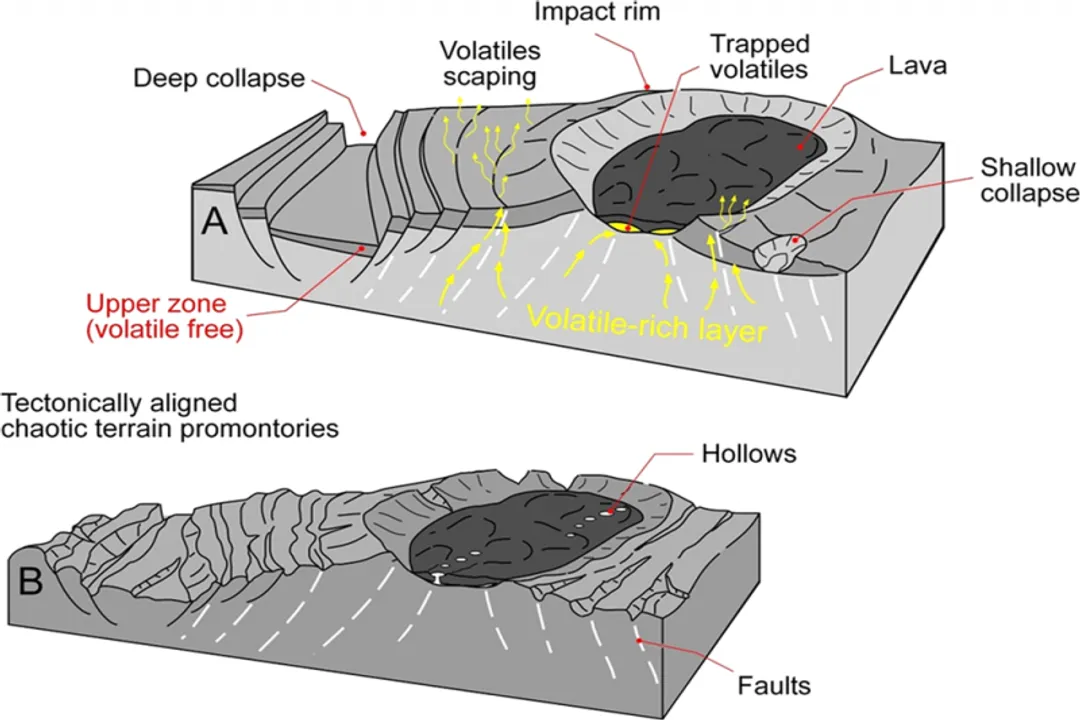
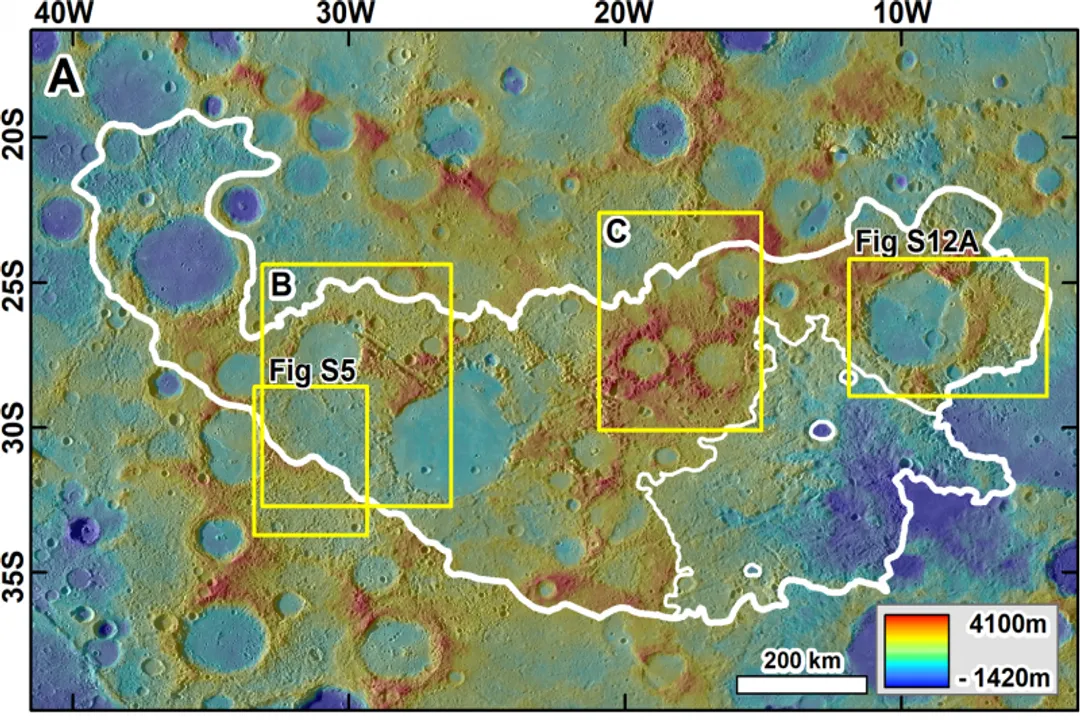
Perhaps the most intriguing data recovered by the MESSENGER mission concerns structures far beneath the surface. [6] Scientists observed areas of chaotic terrain, characterized by jumbled blocks and depressions, which appear consistent with the collapse of the surface layer over receding or solidifying material below. [6][8] The leading hypothesis suggests this terrain was formed by the freezing and expansion of ancient, salty liquid water or brine situated deep beneath the crust. [6][8] If this interpretation holds, it implies that Mercury once harbored substantial subsurface liquid reservoirs, potentially offering a window into a period when conditions might have been temporarily stable enough for microbial life to arise or persist. [6]
This possibility of ancient subsurface liquid brine changes the discussion from merely surviving on Mercury to understanding its geological past as a place that could have supported habitability, albeit temporarily and deep below the radiation-blasted exterior. [8] If liquid water existed underground, it would have been insulated from the surface temperature swings, potentially allowing for a more stable thermal regime that could sustain life for a longer duration than any surface water could. [3] The key question then becomes whether any of that subsurface environment remains active or holds extant, deep-biosphere life. [9]
We can analyze the engineering trade-off involved here: maintaining a thick atmosphere on a small, close-orbiting world like Mercury would be incredibly difficult. The low mass means lower gravity, making it harder to hold onto lighter atmospheric gases against the relentless pressure of solar stripping. [7] This physical reality suggests that any long-term, self-sustaining habitat is far more likely to be built underground or under thick radiation shielding, functionally replicating the natural protection afforded by the crust that might have preserved the ancient brines. [6] The effort to artificially pressurize and warm the entire globe might be an inefficient use of resources compared to focusing on sealed, subterranean habitats where the basic thermal and pressure requirements are already partially met by the planet itself.
# Construction Strategies
Given the extreme surface conditions, any permanent human installation would need to employ advanced shielding techniques. [5] Early exploration would almost certainly center around utilizing the near-constant cold of the PSRs for resource extraction and habitat staging. [2] For larger settlements, the only viable path involves moving the infrastructure underground. [6] This would require massive tunneling operations, potentially exploiting subsurface lava tubes if they exist and are large enough, or drilling into the crust itself. [9]
To make an underground habitat comfortable, engineers would have to contend with the internal heat flow, which, while generally lower than Earth's, would still need management, especially if the base is deep enough to access any remaining liquid layers. [6] Furthermore, unlike Mars, where surface pressure is low but present, Mercury lacks a significant gaseous envelope to assist in passive shielding or atmospheric pressure support for habitats, meaning underground structures must be entirely self-contained pressure vessels, even when buried deep. [5] This level of containment demands near-perfect material science and redundancy checks to guard against catastrophic failure from pressure loss or seismic activity associated with subsurface shifts. [6]
# Creating an Atmosphere
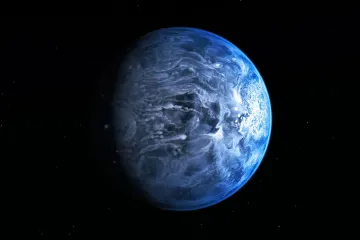
The concept of truly making Mercury habitable—terraforming it—is vastly more challenging than for Mars, mainly due to its distance from the Sun, which dictates the necessary energy input. [5][7] To raise the global temperature significantly, one would need to either deploy massive orbital mirrors to focus sunlight onto the night side, or introduce large quantities of extremely potent greenhouse gases, which seems counterproductive given the existing heat problem. [7]
If an atmosphere were somehow generated or imported, the next issue is retention. The solar wind bombards Mercury intensely. [4] Without a significant intrinsic magnetic field comparable to Earth's to deflect this particle stream—and Mercury’s field is surprisingly weak for its size—any introduced atmosphere would be stripped away relatively quickly over geological timescales. [4] This reinforces the idea that habitation will remain in situ and heavily shielded, rather than creating a breathable, Earth-like shell around the planet. [9] Settling Mercury will likely mean living in sealed caves or domes designed to handle immense internal pressure and temperature gradients, rather than walking outside under an artificially blue sky. [5] The focus must remain on creating small, self-sustaining biospheres utilizing local materials like polar ice, rather than planetary engineering. [2]
Related Questions
#Citations
How Can Humans Live on Mercury? « There would be tangible ...
Was Mercury once habitable? - EarthSky
Life on Mercury - Universe Today
Mercury: Facts - NASA Science
Could Mercury ever be habitable like Venus or Mars (meaning we ...
Subsurface Mercury: Window to ancient, possibly habitable, volatile ...
Would it be possible for Mercury sized planets in the habitable zone ...
Mercury may have a 'potentially habitable' region below its surface ...
Is mercury a viable colonization option for Mars? - Facebook