What could explain why volatile elements are so abundant on mercury today?
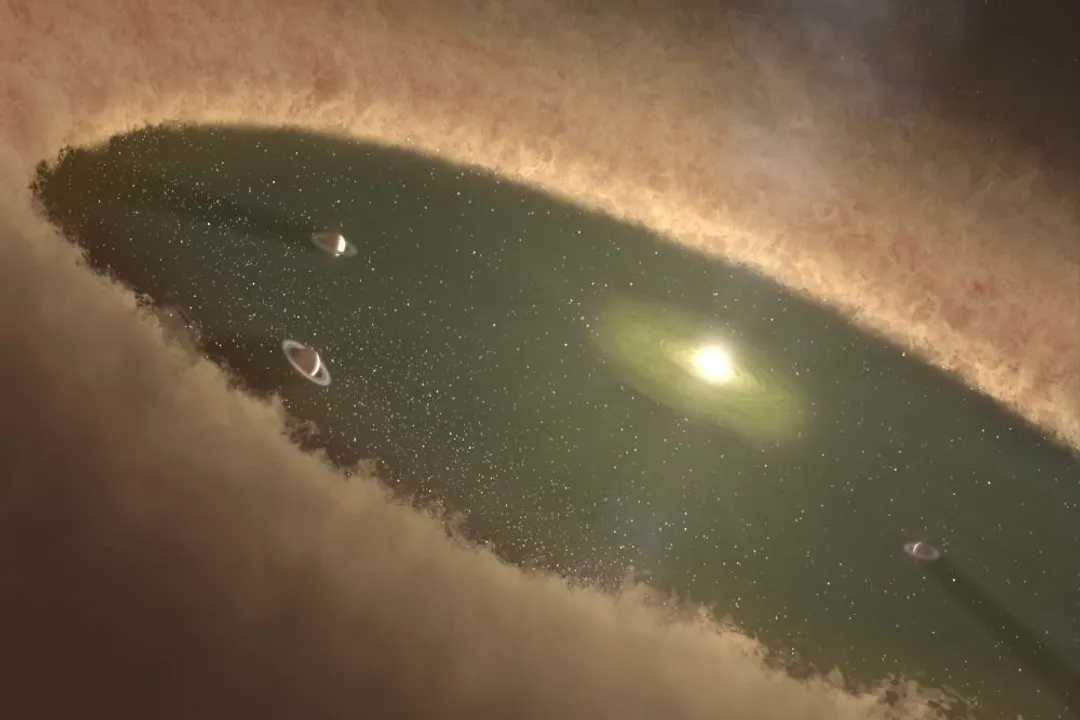
The scorching proximity of Mercury to the Sun suggests it should be a dry, barren rock, stripped of any lighter, more easily vaporized materials. Yet, observations from missions like MESSENGER have painted a different, far more puzzling picture: Mercury harbors significant amounts of volatile elements, materials that should have boiled away eons ago. [2] This abundance presents a profound challenge to our standard models of planetary formation, particularly for the innermost world.
# Volatile Detection
When scientists talk about volatile elements in planetary science, they are referring to materials that condense, or solidify, at relatively low temperatures. [2] On Mercury, which bakes under intense solar radiation, finding elements with low condensation temperatures—like sulfur, potassium, and chlorine—is highly unexpected. [2] The MESSENGER mission provided direct spectroscopic evidence confirming that these elements are present in surprisingly high quantities on the planet's surface and crust. [2] For instance, potassium is an alkali metal with a low boiling point, and its presence suggests that the processes forming Mercury did not achieve the high-temperature environment previously assumed for the innermost solar nebula region. [2]
The detection of chlorine is equally significant. Chlorine is a highly volatile element that readily escapes a planetary body. Its presence, alongside sulfur and potassium, forces a re-evaluation of how Mercury acquired its bulk composition. [2] This discovery moved Mercury from being a purely refractory body (made only of high-temperature materials) to one that clearly incorporated materials that formed in cooler regions of the early solar system, or materials that were protected from the heat during formation. [2]
# Subsurface Signatures
The evidence for volatiles isn't just in the chemistry of the surface dust; it's visible in the landscape itself. One of the most distinctive geological features on Mercury is the presence of hollows. [1] These shallow, often irregular depressions are thought to be direct evidence of ongoing volatile processes. [1]
The prevailing theory suggests that these hollows form when volatile materials buried beneath the surface—perhaps sulfur-bearing compounds or even water ice in permanently shadowed craters, though the latter is less relevant to the bulk abundance question—sublime or transition directly into a gas. [1] This process creates subsurface voids, and when the overlying crust collapses into these empty spaces, the characteristic hollows are created. [1] The fact that these features are observed today, actively shaping the landscape, implies that substantial reservoirs of these volatile compounds remain beneath the surface, surviving the high temperatures. [1]
Consider the implication of this persistent sublimation. If the high-temperature differentiation models for Mercury were perfectly accurate, surface volatiles should have been completely driven off long ago, or at least sequestered so deeply that modern activity is negligible. [1] The active nature of hollow formation suggests a significant, long-lived volatile budget sequestered within the planet's structure, not merely a trace contamination from later impacts. [1]
# Formation Theories
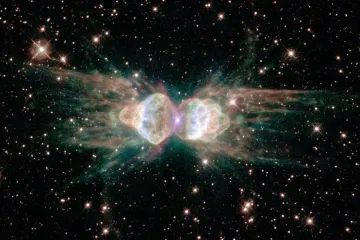
The abundance of volatiles close to the Sun forces planetary scientists to consider alternative formation scenarios for Mercury, moving away from the classic high-temperature condensation model. [3] One major debate revolves around when Mercury accreted its material. [3]
# Late Accretion
If Mercury formed relatively late in the solar system’s history, it might have incorporated materials that had already migrated inward from the cooler, outer regions of the solar nebula where volatiles were abundant. [8] This "late veneer" concept suggests that volatile-rich asteroids or comets delivered this material after the initial, high-heat phase of the inner solar system had passed. [8] This addresses the presence of water as well, noting that Mercury might hold clues about how water arrived at inner planets like Earth. [8]
# In Situ Mixing
Another possibility involves the original solar nebula material near the Sun. If the material that formed Mercury was not uniformly superheated, or if the planet formed from a mixture of very hot refractory materials and cooler, volatile-rich materials that mixed efficiently, it could explain the final composition. [2] Some analyses suggest that the high abundance of volatile elements like potassium implies that the starting material for Mercury was not overwhelmingly hot, perhaps reaching temperatures only high enough to vaporize the most volatile components (like sodium) but not necessarily those with slightly higher condensation temperatures, like sulfur and chlorine. [2] The detection of chlorine, for example, suggests condensation occurred below about 1100 Kelvin. [2]
An interesting point arises when comparing the presumed formation environment to what we see. If Mercury formed in situ from the standard solar nebula disk material present at 0.3 to 0.4 Astronomical Units (AU), its composition should be severely depleted in volatiles due to the intense solar radiation. The observed composition strongly suggests either the planet formed further out and migrated inward, or that the local disk material was chemically mixed or zoned in a way that contradicts the simplest high-temperature evaporation models. [9] This leads to a useful conceptual comparison:
| Element Type | Expected Abundance Near Sun (High Temp) | Observed Abundance on Mercury | Implication |
|---|---|---|---|
| Refractory (e.g., Aluminum, Titanium) | High | High | Consistent with an inner planet [2] |
| Highly Volatile (e.g., Sodium) | Low/Depleted | Low/Depleted | Suggests some heating/loss occurred [2] |
| Moderately Volatile (e.g., Potassium, Sulfur, Chlorine) | Very Low | Significantly Present | Challenges simple high-heat formation models [2] |
This table illustrates that Mercury isn't completely volatile-depleted; it's specifically enriched in elements that condense at intermediate temperatures, which complicates the simple "baked clean" narrative. [2]
# Crustal Sequestration
One way to reconcile the high internal heat required to melt and differentiate Mercury's large iron core with the retention of volatiles is through sequestration—burying them quickly and deeply. [9] If the initial impact or accretion phase was extremely energetic, causing massive magma oceans, the volatiles might have partitioned into the magma ocean itself. [9] As the surface rapidly cooled and solidified, forming the crust, these volatile-rich melts could have been trapped beneath the newly formed, low-volatile surface layers. [9]
This process would effectively create a protective shield. The surface rocks, formed from the hotter, more refractory outer layers of the magma ocean, appear depleted. However, the interior, and potentially the upper mantle/deep crust from which the hollows are currently releasing gas, retains the original volatile budget. [1][9] The material that forms the hollows, therefore, represents the composition of the planet before or during the most intense volatile-loss events, sealed away from the solar wind and radiation. [1]
The presence of a significant amount of potassium (K) in the low-density silicate portion of the planet suggests that the mantle itself is more enriched in these elements than predicted for a body formed purely from evaporated solar nebula material. [2] This supports the idea that the source material itself contained substantial volatiles that were simply incorporated, rather than lost to space during accretion. [2]
# Implications for Science
Understanding how Mercury retained these volatile elements is not just an academic curiosity; it provides critical constraints on the entire process of inner solar system formation. [3] If Mercury, the closest planet, has such a large volatile inventory, it suggests that the initial conditions of the solar nebula were either more chemically complex, or the mechanisms of planetary accretion were more efficient at preserving these elements near the Sun than previously modeled. [3][8]
For instance, the discovery suggests that mechanisms like very rapid accretion—where the planet builds up so fast that volatiles don't have time to escape the gravitational pull before they are buried—might have been more important for the terrestrial planets than previously thought. [9] Furthermore, the investigation into Mercury’s composition helps calibrate the volatile content estimates for other, more distant bodies, by providing a data point right at the inner edge of where we expect to find them. [3]
The continuing study of Mercury's surface geology, especially the distribution and characteristics of its hollows, serves as a dynamic laboratory for observing how volatiles behave under extreme conditions today. [1] Every time a new hollow is mapped or its structure analyzed, it offers a fresh look at the preserved, ancient chemistry of the inner solar system locked just beneath the sun-scorched surface. [1] This makes the seemingly empty, pockmarked plains of Mercury one of the best archives we have for the building blocks of the terrestrial worlds.
Related Questions
#Citations
The mysterious origins of Mercury's hollows might answer bigger ...
Mercury's ethereal sculptors: Volatile elements close to the Sun
Early MESSENGER science results: Mercury is its own planet, not ...
Mercury's Hidden Past: Revealing a Volatile-dominated Layer ...
Mercury's core is massive, making up 85% of its volume - Facebook
Volatility of mercury and related volatile metals at magmatic ...
ocean of mercury on another planet? : r/scifi - Reddit
How did the Earth get its water? The answer might be found on ...
Detection of lithium in the exosphere of Mercury - Nature