Could nuclear power be used for space travel?
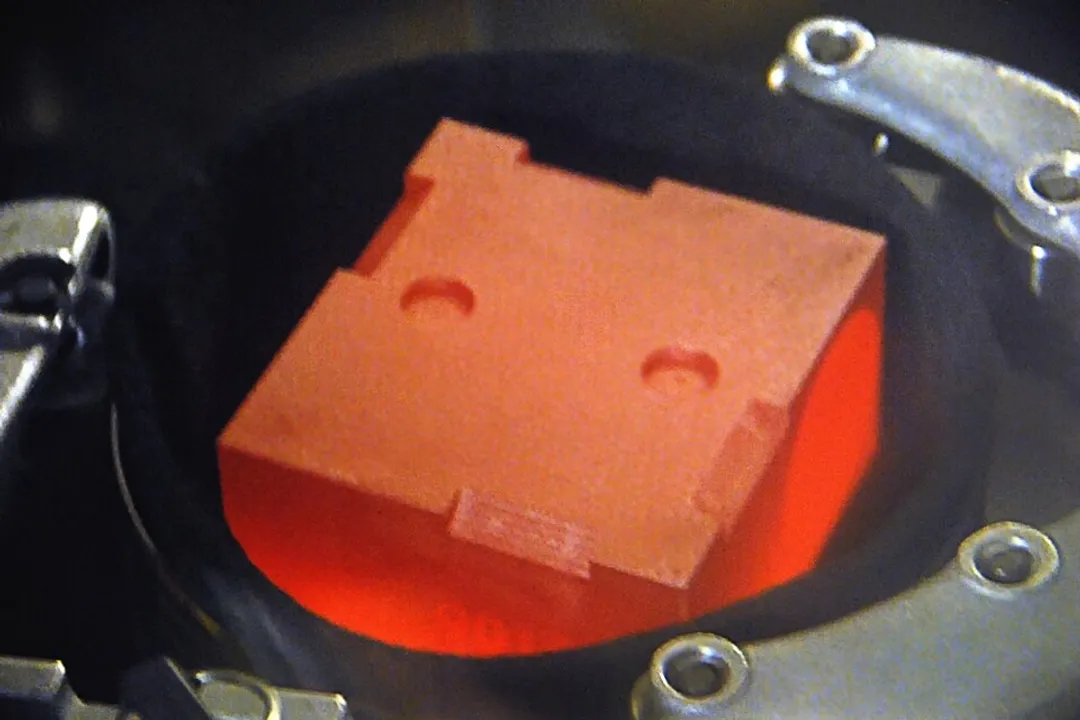
The idea of harnessing the massive energy density locked within the atom to propel spacecraft through the cosmos is not a recent dream; it's a long-standing engineering pursuit that continues to attract serious attention from space agencies worldwide. While most of our interplanetary forays still rely on the brute-force efficiency of chemical rockets, the promise of nuclear power offers a pathway to dramatically reduce travel times to Mars and enable missions to the outer solar system that are currently impractical due to duration and payload limitations. [4][7] The application of nuclear technology in space generally splits into two main categories: using fission for direct propulsion and using radioactive decay for onboard electrical power. [2][3]
# Propulsion Systems
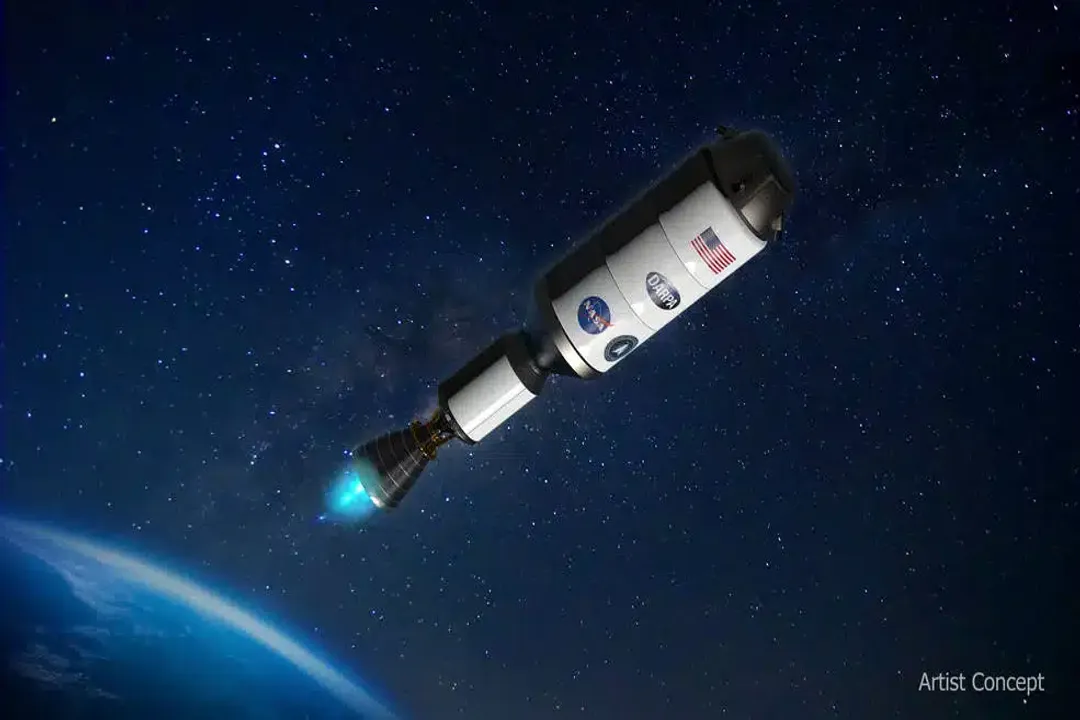
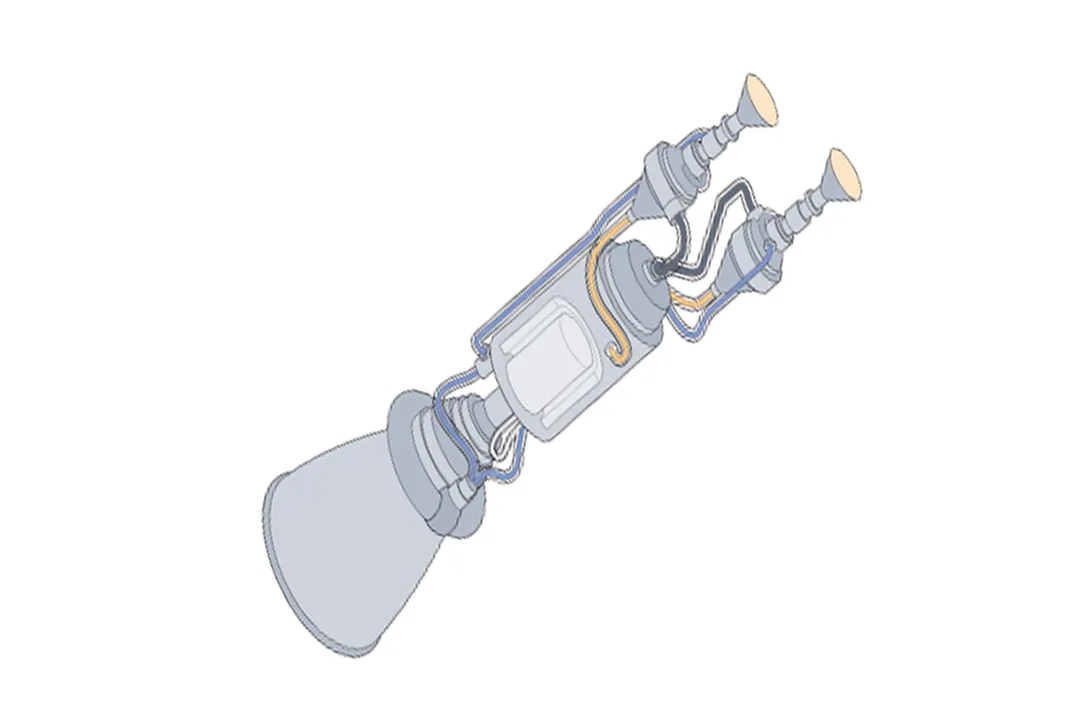
The most transformative nuclear application for deep space travel centers on Nuclear Thermal Propulsion (NTP). [6][8] Unlike conventional rockets that burn a fuel and an oxidizer to produce hot exhaust gases, NTP uses a nuclear reactor to generate intense heat. [5] In a typical NTP design, a solid-core reactor heats a working fluid, such as liquid hydrogen, to extremely high temperatures—sometimes over 2,500 Kelvin—before venting it through a nozzle to generate thrust. [5][8] This process is fundamentally different from chemical propulsion because the energy source (the reactor) is separate from the propellant mass itself. [8]
This separation is what grants NTP its primary advantage: vastly superior efficiency. The key metric here is specific impulse (), which measures how effectively a rocket uses propellant. Chemical rockets, even the most advanced ones, typically top out around 450 seconds of . [6] Nuclear thermal systems, by contrast, can achieve values around 800 to 1,000 seconds, effectively doubling the range or speed achievable for the same amount of propellant mass launched from Earth. [5][6] This is a monumental shift for crewed missions. For instance, reducing the transit time to Mars from perhaps nine months down to four or five months could significantly lower astronaut radiation exposure and minimize logistical burdens related to life support mass. [4]
Another nuclear technology, Nuclear Electric Propulsion (NEP), also exists, though it functions differently. NEP systems use a nuclear reactor to generate electrical power, which then feeds high-efficiency electric thrusters, like ion engines. [3] While these electric thrusters are incredibly fuel-efficient (offering very high values, sometimes exceeding 10,000 seconds), their thrust levels are extremely low, making them unsuitable for rapid planetary departure maneuvers. They excel at long, steady acceleration over months or years, ideal for robotic probes venturing far out into the Solar System. [3][4]
# Power Generation
For nearly every deep-space probe launched since the 1960s, the reliable workhorse has been the Radioisotope Thermoelectric Generator (RTG). [2][3] RTGs are not used for propulsion; they are power sources. They rely on the natural, continuous decay heat generated by a radioactive isotope, most often Plutonium-238 (). [2] This heat is converted directly into electricity via thermocouples, providing steady power for years, independent of sunlight. [2]
RTGs have powered historic missions like Voyager, Cassini, and rovers on Mars like Curiosity. Because they rely on decay rather than fission, they avoid the complexity and public concern associated with launching an operational reactor core. However, even RTGs are subject to debate. While they have operated safely for decades, the manufacturing and handling of the necessary radioactive materials, particularly , require stringent safety protocols, and the supply of this specific isotope is a persistent challenge for NASA. [9]
# Historical Context and Modern Resurgence

Nuclear propulsion is not purely theoretical. In the mid-20th century, the United States ran the NERVA (Nuclear Engine for Rocket Vehicle Application) program and its predecessor, Project Rover, which successfully tested operational nuclear thermal engines on the ground. [6] These early efforts demonstrated the core physics of heating hydrogen propellant using a nuclear reactor, achieving thrust levels comparable to large chemical engines and proving the technology was feasible within the engineering capabilities of the time. [6] However, due to shifting budgetary priorities, concerns over costs, and the focus shifting toward the Space Shuttle program, these ground-breaking projects were ultimately halted. [6]
Today, there is a clear recognition that achieving sustained human presence beyond low Earth orbit—especially Mars—demands the specific performance characteristics that nuclear systems provide. [7] NASA is actively reinvesting in this area. For example, programs like the Demonstration Rocket for Agile Cislunar Operations (DRACO) aim to mature and demonstrate NTP technology in space, signaling a concerted effort to bring this capability online within the next decade. [6]
# Engineering and Testing Hurdles

While the physics of NTP are proven from ground tests decades ago, moving from a ground test stand to a flight-ready system involves significant engineering maturation. [1][8] A major challenge for reactor-based systems is materials science—ensuring the reactor core and fuel elements can withstand the extreme thermal cycling and high temperatures required for efficient operation without degrading or failing. [5]
Furthermore, the issue of shielding is paramount, especially for crewed missions. The reactor produces significant radiation, which must be shielded to protect the crew compartment and sensitive electronics located relatively close to the engine system. [1] Designing effective shielding that blocks harmful radiation without adding prohibitive launch mass is a tricky balancing act. Engineers must optimize the shielding mass to be just enough to keep radiation levels within acceptable occupational limits, which are often far stricter for human flight than for robotic missions. [1]
Another critical consideration when discussing nuclear power in space is the mission profile itself. Chemical rockets are launched and then fired once or twice in space. A fission-based system, whether for NEP or NTP, requires its reactor to be active for extended periods. This demands thorough pre-flight testing and validation to ensure operational integrity. It's one thing to operate a fission system safely in deep space millions of miles from Earth, but a catastrophic failure during launch or ascent on Earth presents a fundamentally different set of risks. [9]
# Safety Perception and Risk Mitigation
The public discussion around nuclear power in space often defaults to the potential dangers of launching radioactive materials, a concern understandable given the high-stakes environment of a rocket launch. [9] It is necessary to differentiate between the types of nuclear material and their deployment phases.
RTGs, using , are already in use. These systems are designed so that the fuel block remains intact even in the event of a launch explosion, ensuring that the plutonium remains contained and dispersed over a wide area rather than being concentrated, minimizing local hazard. [9] The safety architecture for these power sources is well-established over many successful missions.
NTP, however, involves launching a fission reactor. Proponents argue that the system is designed to remain subcritical (non-operational) during launch and ascent. [8] The reactor would only be brought to critical status once the spacecraft is safely clear of the Earth's atmosphere and on its intended trajectory toward deep space. [1][8] This design philosophy aims to eliminate the risk of a nuclear excursion or atmospheric release during the most hazardous phase of the flight—the launch from Earth's surface. If a problem occurred before reaching orbit, the propellant (like hydrogen) would likely vent, and the reactor would remain cold and inert, posing no nuclear threat. [8]
It is interesting to note the contrast in mission risk tolerance: we accept the risk of launching massive quantities of highly flammable, explosive chemical propellants with catastrophic potential, but the potential for a nuclear event, however well-mitigated, often faces higher scrutiny. [9] This difference in perception, rather than purely objective risk assessment, shapes regulatory and funding decisions. While the potential energy output is orders of magnitude greater, the probability and consequence profiles for launch accidents are what drive policy discussions around reactor deployment. [9]
# Future Architectures
The introduction of high-thrust, high- NTP fundamentally changes how we plan deep-space architecture. For chemical rockets, the tyranny of the rocket equation forces spacecraft designers to choose between carrying a lot of payload or carrying a lot of fuel for a faster trip; you cannot easily have both for significant distances. [6] With NTP, the mission designers gain flexibility. If a crewed Mars transit takes 120 days instead of 270 days, the mass needed for life support, radiation shielding, and consumables drops significantly. [4] This mass saving can then be redirected toward scientific instruments, habitat mass, or, more practically, a larger margin for error. [1]
Considering the established performance gap, it is almost inevitable that any near-term, crewed mission scenario involving extended stays on Mars or visits to the Jovian moons will heavily rely on this technology. The constraints on mission duration for human health become the deciding factor, rather than just the engineering feasibility of the rocket itself. [4]
For now, the immediate focus remains on testing the core components. Engineers are working on reliable reactor designs that can operate under space conditions and demonstrating the technology safely in cislunar space as a critical precursor to interplanetary transit. This gradual, step-by-step approach—maturing the technology in near-Earth space before committing to a Mars trajectory—is the pragmatic pathway to realizing the massive performance gains nuclear power promises for our expansion into the solar system. [6][7]
Related Questions
#Citations
ELI5: why is nuclear power not used for space travel/ space ships
Space Nuclear Propulsion - NASA
Nuclear power in space - Wikipedia
The use of nuclear power in deep space exploration
Nuclear & Space: Nuclear Thermal Propulsion - X-energy
Nuclear Taking Us Faster & Farther into Space
Nuclear Systems for Space Exploration | IAEA
6 Things You Should Know About Nuclear Thermal Propulsion
Is using nuclear materials for space travel dangerous, genius, or a ...