Can China use the International Space Station?
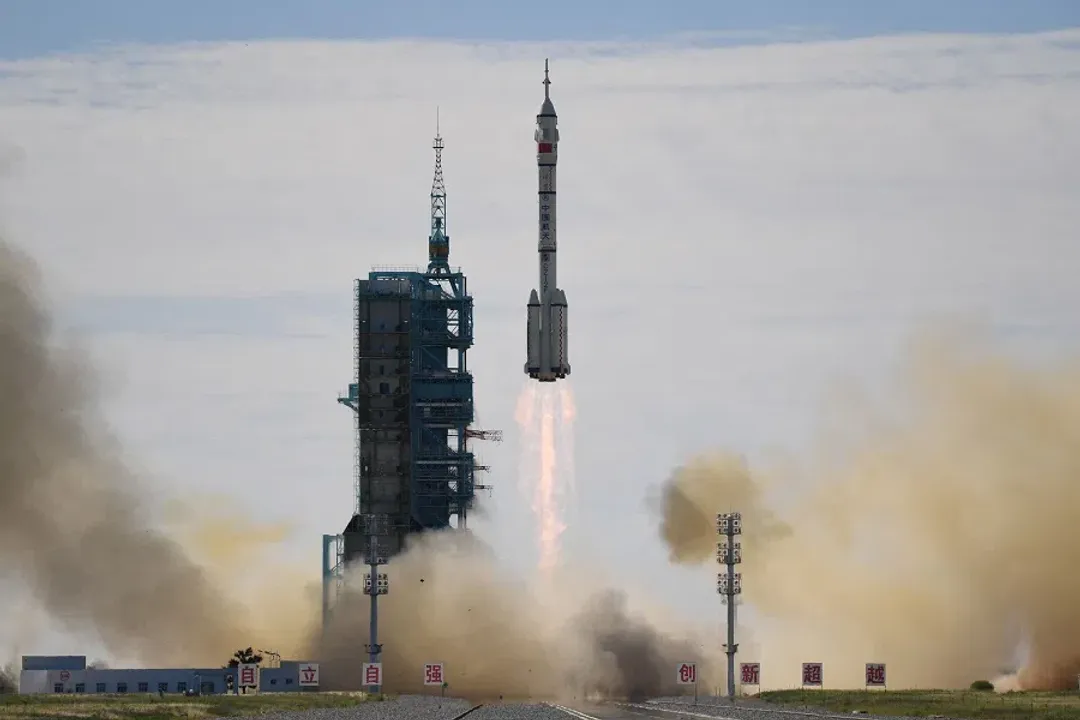
The question of accessing the International Space Station (ISS) for Chinese astronauts is firmly answered by current US policy: they are officially barred from participation. Since 2011, Chinese nationals have been explicitly prevented from flying on the ISS or cooperating directly with NASA on its operations. This policy stands in sharp contrast to the multinational nature of the orbiting laboratory, which represents a joint effort involving the United States, Russia, Europe, Japan, and Canada.
# Legislative Barriers

The primary obstacle is not technical capability or a lack of interest from the international crew members, but rather specific domestic legislation in the United States. The most cited prohibition is the Wolf Amendment. This measure, introduced by then-Representative Frank Wolf, generally forbids NASA from using appropriated funds to engage in bilateral cooperation with the Chinese government or any entity tied to it, unless explicitly authorized by Congress and the Federal Bureau of Investigation (FBI).
The rationale behind this legislative block centers on national security concerns and the fear of technology transfer that could benefit the Chinese military. While China has demonstrated significant advancements in human spaceflight—culminating in its own separate station—the US government maintains strict controls over involvement with its premier orbital asset. It is important to note that even before the Wolf Amendment formalized the ban, NASA was legally prohibited from direct, bilateral cooperation with China without specific Congressional approval dating back to 2011.
This legislative stance creates a stark divide. On one hand, the ISS represents an international symbol of post-Cold War collaboration, albeit one that has excluded a major space power for decades. On the other hand, the legislative climate has forced China to pursue an entirely independent track for its long-term presence in space. It is a complex geopolitical reality where scientific ambition runs headlong into national security considerations, effectively rendering the ISS unavailable to Chinese state-sponsored astronauts.
# ISS Consortium

The structure of the ISS itself dictates who gets access. The station is governed by a complex set of agreements between the primary space agencies: NASA, Roscosmos (Russia), the European Space Agency (ESA), the Canadian Space Agency (CSA), and the Japan Aerospace Exploration Agency (JAXA). For a nation to send its astronauts aboard, it generally requires either being a core partner or negotiating a separate agreement to purchase a seat or provide services/modules, a pathway that has been firmly closed to China by US fiat.
Interestingly, the exclusion is sometimes framed by observers as a missed opportunity for broader global scientific engagement. The ISS has hosted astronauts from many non-partner nations over the years, often through arrangements with ESA or via Russian Soyuz flights, yet China remains the notable exception among major space-faring nations.
The decision to exclude China from the ISS meant that, rather than integrating into an existing structure, China had to commit to building its own long-term habitat from the ground up. While the ISS partnership evolved over decades, starting from Russian Mir influence and early US shuttle-Mir missions, China was compelled to develop a fully domestic infrastructure for long-duration human habitation, skipping the phased integration process enjoyed by the ISS partners. This independent route required immense internal investment and time, but it ensured complete sovereign control over the resulting facility.
# Tiangong Development
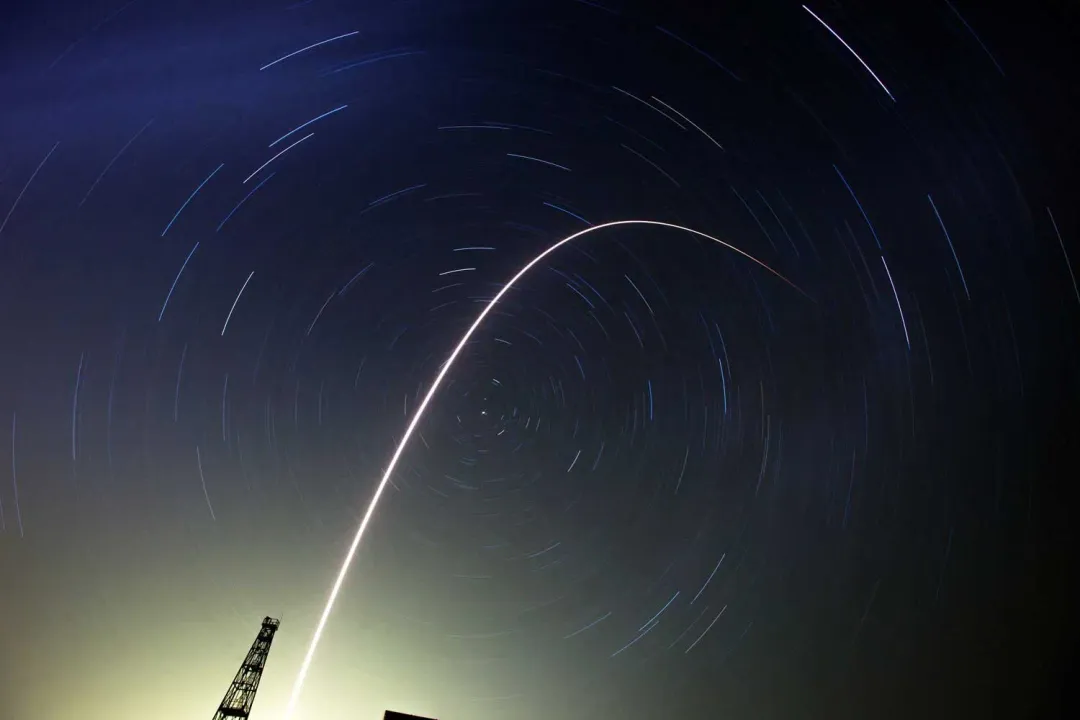
China’s response to being excluded from the ISS was the focused development of its own orbital outpost, the Tiangong Space Station (CSS). While the US and its partners were assembling the massive, modular ISS, China developed its earlier Tiangong-1 and Tiangong-2 space laboratories, which served as crucial stepping stones for the full station.
Tiangong, meaning "Heavenly Palace," began construction with the launch of the core module, Tianhe, in April 2021. By the end of 2022, China had successfully assembled the main three-module structure: the Tianhe core module, and the Wentian and Mengtian laboratory modules. This allowed the station to become continuously crewed, a milestone that firmly established China as a major, independent player in long-duration human spaceflight.
Tiangong is smaller than the ISS—designed with three main modules compared to the ISS's vast, sprawling structure—but it is designed for a similar lifespan and scientific mission. Crucially, because it is owned and operated entirely by the China Manned Space Agency (CMSA), it is open to international collaboration on its own terms. Unlike the ISS, which is governed by agreements that effectively bar Chinese participation, Tiangong is actively soliciting international experiments and collaboration with non-US partner nations.
# Orbital Future

The question of China using the ISS might soon become moot, simply due to the ISS’s planned retirement. Current projections estimate the ISS will be deorbited around 2030. This sets up a fascinating, near-term bifurcation in human presence in low-Earth orbit (LEO).
When the ISS ceases operations, Tiangong will likely remain the only operational, internationally accessible space station for a period. This reality means that if the US wishes to maintain a continuous human presence in LEO after 2030, it will have to choose between developing a successor station or seeking an accommodation with China to send astronauts to Tiangong—a move that would require overcoming the very legislative hurdles that led to the station's creation in the first place.
For the scientific community outside of the US sphere, Tiangong offers a new venue. While the ISS has historically been the focus for experiments involving ESA, JAXA, and CSA astronauts, the Chinese station presents a ready-made platform where those agencies—and others—can engage in research without the constraint of the Wolf Amendment acting as a veto power.
In essence, the inability of Chinese astronauts to board the ISS led to the creation of a competing, sovereign orbital platform. This development has fundamentally altered the structure of LEO operations. Instead of one dominant, Western-led outpost, the near future of human spaceflight looks set to feature two distinct national outposts, with Tiangong serving as the sole operational LEO habitat for a time after the ISS retires, a significant shift in the geopolitical balance of orbital access. The technology and expertise demonstrated by the Tiangong construction itself serve as a powerful testament to what can be achieved when state resources are singularly focused on an independent goal, bypassing decades of international negotiation.
#Videos
China's Space Station Ban - YouTube
Related Questions
#Citations
TIL Since 2011, Chinese astronauts are officially banned from ...
The silly reason the Chinese aren't allowed on the space station
China's space station, Tiangong: A complete guide
Why is China not involved in the International Space Station (ISS ...
Why China Was Banned from the International Space Station
Why is China still not invited to the ISS? (Or, why do certain ...
Will the US be left out of China's space station projects? - ThinkChina
Comparison of Chinese and NASA Space Stations - Facebook
China's Space Station Ban - YouTube