Why isn't China part of the International Space Station?
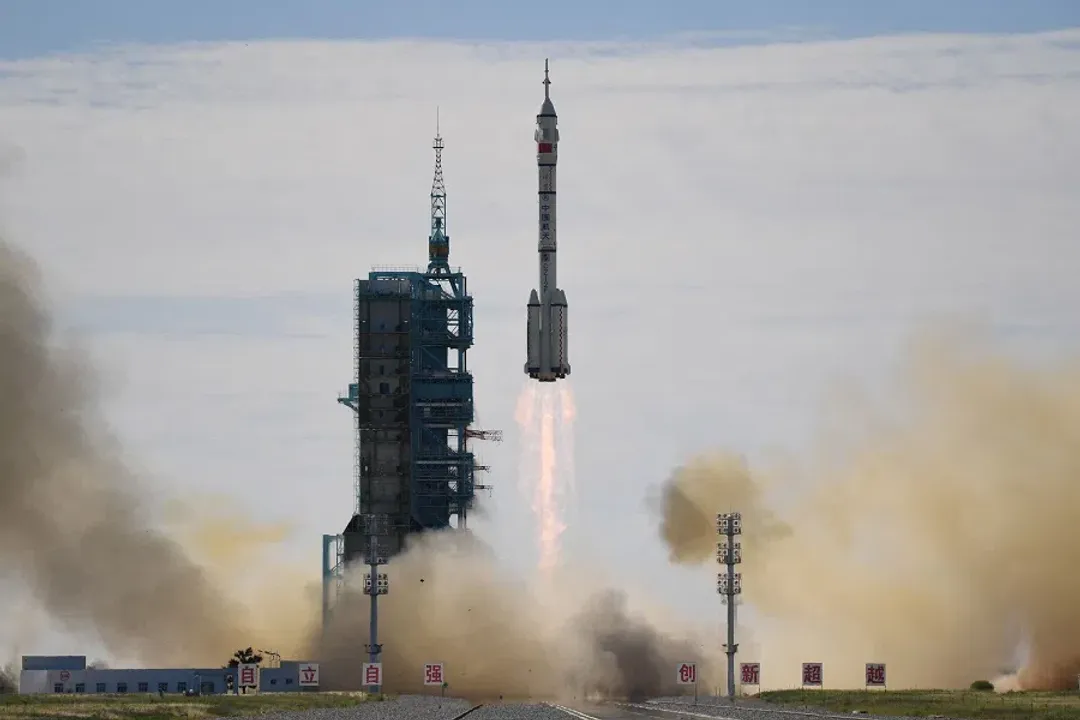
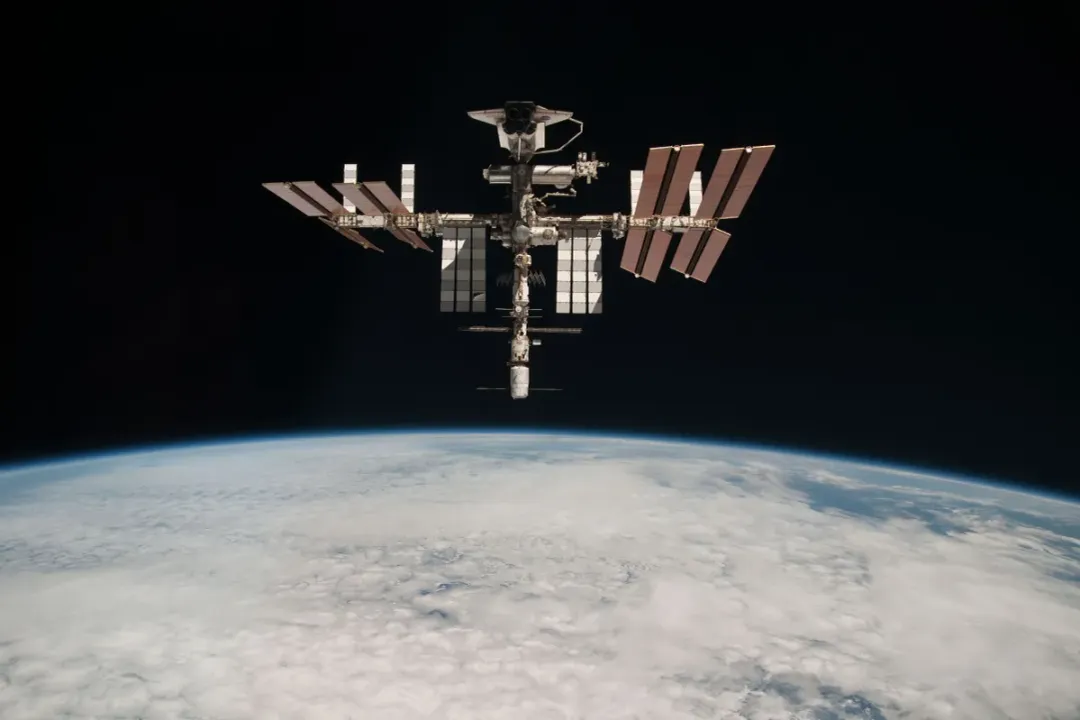
The International Space Station (ISS) stands as one of humanity’s most ambitious cooperative engineering feats, a permanent laboratory circling Earth featuring the flags of numerous partner nations. Yet, a conspicuous absence is that of the People's Republic of China. Despite its rapid advancements in rocketry and manned spaceflight—culminating in taikonauts becoming regular fixtures in orbit—Chinese astronauts are officially barred from setting foot on the ISS, a situation rooted deeply in American domestic legislation and geopolitical mistrust that dates back over a decade. [1]
# Legislative Foundation

The primary mechanism preventing Chinese participation in the ISS is not a formal international treaty rejection by the other partners, but rather a specific piece of United States legislation. [4] This restriction directly impacts NASA, which is the largest partner in the ISS program. [3]
The key piece of legislation frequently cited is often referred to as the Wolf Amendment. [5][9] This law effectively prohibits NASA from engaging in any bilateral cooperation with the Chinese government or any organization owned or controlled by the Chinese government unless the FBI and Congress explicitly certify that the cooperation would not result in any technology transfer to China that could benefit its military. [5][9] This measure was introduced by then-Representative Frank Wolf and signed into law. [1]
The impact of this prohibition became concrete in 2011. [1] Following this date, Chinese astronauts, or taikonauts, were officially excluded from visiting or participating in missions aboard the ISS. [1] While the ISS partnership agreement itself doesn't universally exclude any nation, the reliance of the station on American hardware, funding, and operational control—and the U.S. government’s legislative power over its primary agency, NASA—makes the American restriction a de facto veto over Chinese involvement. [3][4] The ban targets cooperation, preventing NASA astronauts from being exchanged or Chinese astronauts from flying on U.S. vehicles to the station, creating an immediate roadblock to integration. [7]
# Security Concerns

The motivations underpinning this legislative action are centered squarely on national security and concerns over technology transfer to a strategic rival. [2][9] The U.S. government has expressed apprehension that collaborating too closely with China on space infrastructure, particularly one as complex and valuable as the ISS, could see sensitive dual-use technologies—those applicable to both civilian science and military applications—falling into the hands of the Chinese People's Liberation Army (PLA). [2]
This concern is not isolated to space, as the U.S. has historically viewed China's space program as being inextricably linked to its military objectives. [2] For policymakers in Washington, allowing extensive cooperation would mean potentially aiding the modernization of China’s defense capabilities. The official stance often highlights issues beyond just technology, sometimes referencing human rights concerns as part of the broader context informing the restrictive posture toward the Chinese government. [9]
It is important to note that the initial design and construction phases of the ISS occurred during a period where Sino-American relations were different, but by the time the station became fully operational and collaboration became a standard procedure for international partners, the political climate had hardened significantly. [3] The US position is quite distinct from the arrangements made with other major partners like the European Space Agency (ESA), Canada, and Japan, who have been foundational members since the beginning. [3] The ISS itself is a testament to post-Cold War cooperation, making China's exclusion a significant anomaly in what was envisioned as a truly global space effort. [4]
# Independent Trajectory
Faced with the immovable legislative wall in the United States, China adopted a strategy of self-reliance and accelerated its domestic space station program. [6] Rather than waiting for an invitation or seeking a change in U.S. policy, China chose to develop its own independent orbital outpost. [4]
This independent effort culminated in the launch of the core module for the Tiangong Space Station. [6] The development shows a nation determined to maintain a continuous human presence in low Earth orbit regardless of external partnerships. [4] This focus allowed Chinese engineers and taikonauts to gain invaluable experience in long-duration missions, station assembly, and independent operation of life support and power systems—experiences that directly parallel the operational knowledge gained by ISS crews. [6]
The launch of the Tiangong core module marked a turning point, suggesting that while the ISS partners might have excluded China, they simultaneously spurred the creation of a competitive, parallel infrastructure in space. [6]
| Station | Primary Partners | Operational Status (Approx.) | Key Constraint |
|---|---|---|---|
| International Space Station (ISS) | US, Russia, ESA, Japan, Canada | Continuous since 2000 | US legislation restricts Chinese access [1][5] |
| Tiangong Space Station (CSS) | China (PRC) | Under construction/Operational since 2021 | Excluded from ISS partnership |
This parallel development presents an interesting dynamic for the future of space exploration. While the ISS partnership has successfully navigated complex technical and political waters for decades, its eventual retirement approaches. [3] China’s fully operational station ensures that there will be a state-of-the-art orbital facility available for international use, though likely only for nations without diplomatic or security conflicts with Beijing. [6]
# Missed Collaboration
The hard-line legislative stance, while successful in preventing the technology transfer feared by some US lawmakers, inadvertently created a situation where a major spacefaring nation was forced to build a rival structure, a consequence that might offer an interesting counterpoint to the initial security goals. Had the U.S. found a mechanism—perhaps a highly controlled, third-party mediated framework—to allow limited scientific exchange, the world might have benefited from an integrated research environment. The cost of exclusion is the loss of access to the unique scientific perspectives and engineering expertise that Chinese teams bring to the table, forcing researchers worldwide into separate silos. [4]
Moreover, this standoff has likely accelerated China’s timeline for achieving independent orbital capabilities. By placing an insurmountable political barrier in front of them, the U.S. may have inadvertently provided a unifying national goal that spurred domestic investment and focus in a way that mere competition alone might not have achieved as rapidly. The result is a space environment that is trending toward a bipolar structure rather than the unified, multinational model the ISS initially embodied. [6]
# Future Orbital Presence
As the ISS moves toward its planned decommissioning sometime after 2030, the landscape of human spaceflight in Low Earth Orbit (LEO) is set to change. [3] Currently, the ISS represents the only permanent, large-scale habitable platform available for global scientific utilization. However, China’s Tiangong station ensures that LEO will not become empty once the ISS retires. [6]
For non-partner nations, including those that are partners on the ISS, the situation presents a choice: rely on the aging ISS until its retirement, or seek access to the Tiangong station under terms set by Beijing. [6] While the ISS is governed by a multilateral agreement involving multiple sovereign entities, Tiangong is fundamentally a national asset controlled by the Chinese Manned Space Agency (CMSA). This difference in governance structure means that future international access to Tiangong will be determined solely by Chinese policy, which itself is heavily influenced by the security posture taken by nations like the United States. [4][6]
The current reality is that an American astronaut flying to the Chinese station is politically unthinkable under current laws, just as a Chinese taikonaut flying to the ISS is impossible due to the same laws. [1][5] This creates a strange mirror effect in orbit: two distinct, highly capable crews operating separate orbital habitats, symbolizing the geopolitical divisions on Earth extending into space. The absence of Chinese participation on the ISS is thus less about technical capability and more about a deliberate, legally enforced separation based on national security interpretations within the United States. [2][9] This legislative environment has guaranteed that the next era of orbital research will likely feature two distinct, competing stations rather than one unified home for international space science.
This legislative barrier, established to prevent the growth of a competitor, has instead ensured that competitor now has its own fully independent home in the stars. [4][6] For now, the ISS remains a monument to a particular phase of international partnership, one that Chinese astronauts were definitively legislated out of participating in.
#Videos
China's Space Station Ban - YouTube
Related Questions
#Citations
TIL Since 2011, Chinese astronauts are officially banned from ...
The silly reason the Chinese aren't allowed on the space station
Politics of the International Space Station - Wikipedia
Why is China not involved in the International Space Station (ISS ...
Why China Was Banned from the International Space Station
Will the US be left out of China's space station projects? - ThinkChina
Why is China still not invited to the ISS? (Or, why do certain ...
China's Space Station Ban - YouTube
Why Is China Banned From ISS? Beijing Launches First Part of Its ...