What is the mysterious bacteria on the Chinese space station?

The appearance of previously unknown microbial life on the exterior surfaces of China's Tiangong space station has sparked considerable scientific interest and no small amount of public curiosity. [1][2] This discovery, detailed by Chinese researchers, points toward organisms capable of surviving and perhaps thriving in the harsh conditions of low Earth orbit, challenging our understanding of microbial hardiness beyond our home planet. [6][5] The detection itself wasn't a matter of searching for new alien biology, but rather standard protocol: sampling the external environment to monitor biofouling and assess contamination risks. [1]
# Surface Sampling
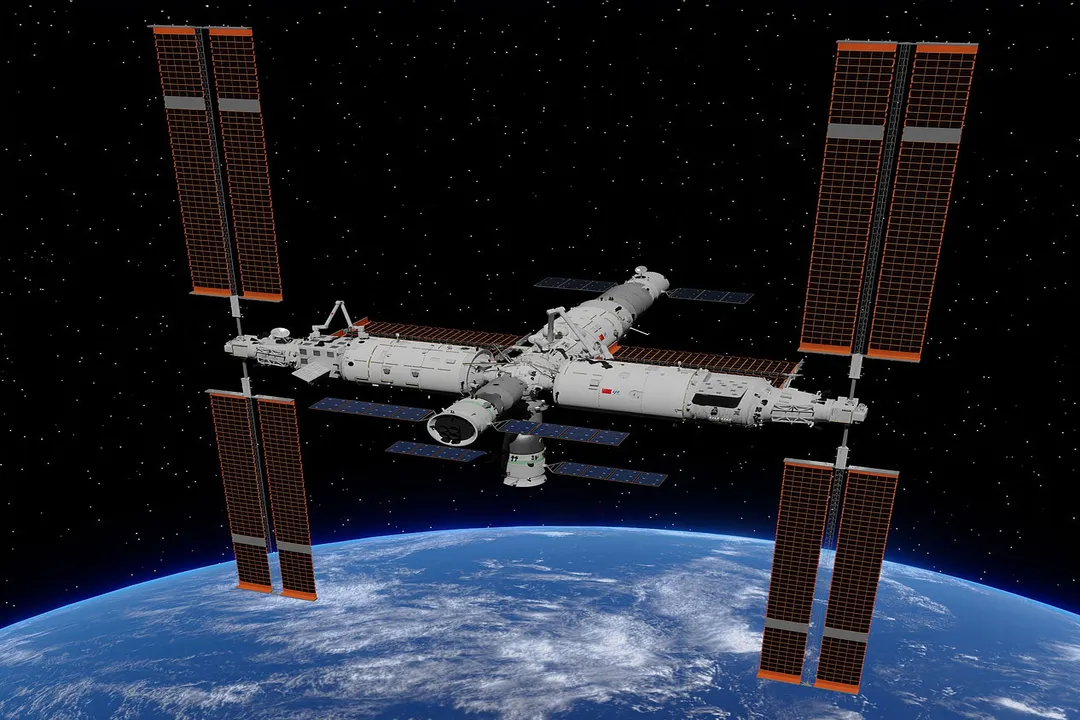
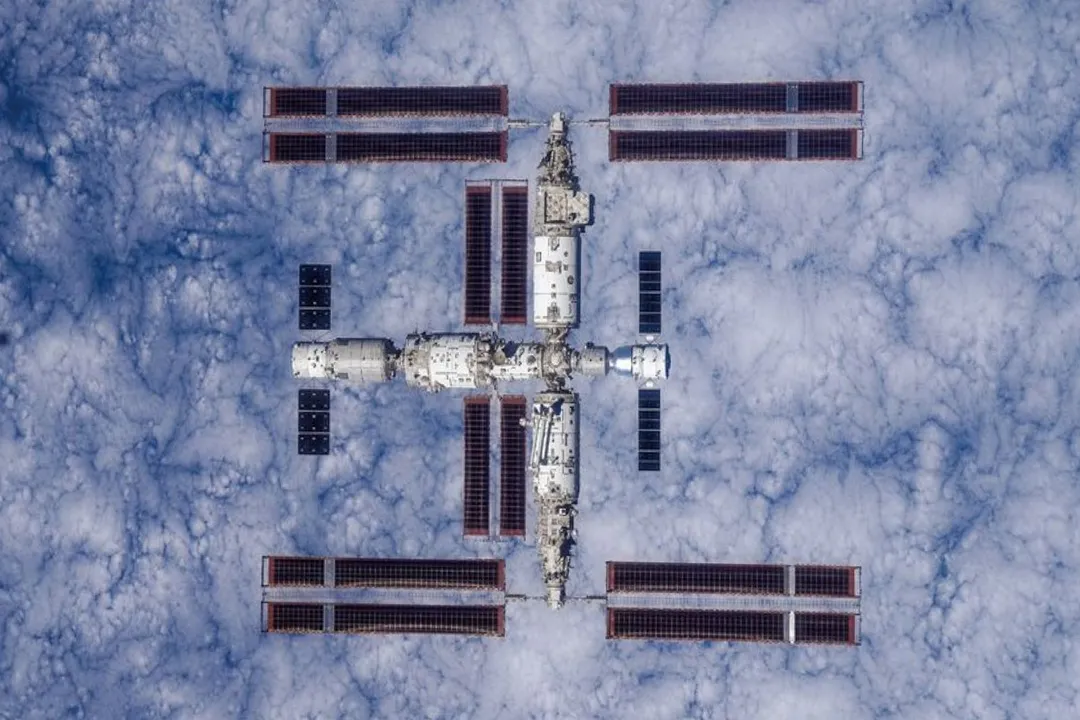
The samples were collected from the external components of the Tiangong space station. [1][7] Missions involving spacewalks or the retrieval of external scientific payloads often include swabbing various surfaces for microbial analysis. [1] This process is critical for tracking the transport of terrestrial microbes into space and monitoring their subsequent evolution or adaptation in the orbital environment. [1] While the specific locations on the station are not always widely publicized, external surfaces—exposed to vacuum, extreme temperature swings, and solar and cosmic radiation—are the most challenging environments for life to persist. [7]
The Chinese scientists identified this particular bacterium from these exterior swabs, confirming that terrestrial life can survive for extended periods outside the protective bubble of the station. [5] The fact that a viable, distinct community was identified suggests a high degree of resilience in this specific strain. [7]
# Microbial Identity
The organism in question has been tentatively linked to a known species, though with significant caveats that render it "mysterious". [7][9] Initial classification placed this microbe within the Bacillus genus. [7] More specifically, some findings suggest a relationship to Bacillus toyonensis. [7] However, the term "new species" has been used, indicating that while it may share a common ancestor or general classification with known Earth bacteria, its genetic makeup and functional characteristics appear distinct enough to warrant a separate designation or at least recognition as a highly unique strain. [4][6][9]
A key differentiator seems to be its adaptation. The bacteria exhibits properties that allow it to proliferate on the exterior of the station, a feat that common Earth microbes struggle with due to immediate desiccation or radiation damage. [1] This capability to sustain itself in a high-stress, near-vacuum environment is what elevates the finding from a routine contamination check to a significant biological observation. [6]
When considering these findings, it is useful to compare them with previous discoveries on the International Space Station (ISS). Both orbital laboratories act as unwitting bioreactors, testing how terrestrial organisms change when divorced from Earth's ecosystem stability. [1] The ISS has frequently yielded novel isolates, often Bacillus species, that demonstrate enhanced resistance to disinfectants or radiation compared to their ground counterparts. [1] The Tiangong discovery fits this emerging pattern, suggesting that the space environment acts as a selective filter, favoring the hardiest strains of common soil or skin bacteria. [1] The mystery here isn't necessarily an extraterrestrial origin, but rather the specific, accelerated evolutionary path taken by this particular population under orbital stress. [7]
# Unique Abilities
The functional characteristics observed in this bacterium are particularly noteworthy. [7] Researchers look beyond simple survival to examine how the organism manages to persist. This microbe reportedly demonstrated capabilities that set it apart from its closest known relatives found here on the ground. [7]
While the full spectrum of its unique abilities is still under investigation, the core finding is its apparent ability to survive and potentially metabolize or maintain structural integrity under conditions vastly different from a typical terrestrial habitat. [1][6] For instance, organisms surviving on the exterior must withstand prolonged exposure to intense ultraviolet light and the sharp temperature fluctuations that occur as the station orbits between sunlight and shadow every ninety minutes. [7]
If we look closer at the Bacillus genus, many members form resilient spores—dormant bodies encased in tough shells—which are notoriously difficult to eradicate. [7] This newly identified strain likely possesses an even more robust spore state or an enhanced DNA repair mechanism, allowing it to shrug off radiation that would destroy most life forms rapidly. [1] Imagine a microscopic seed perfectly engineered to wait out a solar storm; that is the level of biological persistence scientists are observing. [7]
One of the crucial analyses that follows such a discovery involves sequencing the genome to pinpoint the exact mutations or gene expressions responsible for these survival traits. [4] Does it produce novel protective pigments? Are its cell walls thicker? Does it regulate water loss with unprecedented efficiency? Answering these questions moves the discussion from mere documentation to practical microbiology. [9]
# Orbital Ecology Insights
The presence of any viable microbe on a spacecraft exterior has immediate implications for engineering and long-term mission planning. While this specific finding is exciting for astrobiology, it also presents an immediate, practical challenge for mission assurance and spacecraft longevity. [4]
Here is an area where we can apply a bit of engineering perspective: When designing protective coatings or sterilization protocols for future missions, traditional Earth-based data might be insufficient. [1] For example, if this bacterium can survive the vacuum-induced outgassing of adhesives or sealants, engineers might need to re-evaluate the materials used for long-duration exposure environments like deep-space habitats or planetary landers. [6] If a particular metal alloy or polymer is found to serve as an unexpected nutrient source or structural anchor for this super-resilient strain, it implies that our selection criteria for space hardware must expand to include microbial compatibility in addition to thermal stability and radiation tolerance. [4]
This leads to a vital, often overlooked aspect of crewed spaceflight: biocontamination mitigation strategy. For missions extending beyond Earth orbit, understanding this bacteria's radiation resistance is not just academic; it informs decisions about radiation shielding mass budgets. If the bacteria can repair DNA damage effectively under space conditions, any countermeasures designed to protect human DNA from radiation might also need to be robust enough to handle the unique damage patterns left by space radiation on microbial life, suggesting a common biological defense signature. [1] This isn't about alien life threatening the crew, but about terrestrial life evolving into a more formidable biofouling agent against essential equipment.
# Future Investigations
The next steps for the scientists involve rigorous testing and deeper genetic analysis. [4] They must definitively confirm its taxonomic status—is it a true new species, or an extremely adapted strain? Further experiments will focus on culturing the microbe under simulated space conditions to replicate the stresses it experienced on the exterior of Tiangong. [6][7]
The comparison with ISS findings is crucial here. [1] By comparing the genetic signatures of bacteria found on Tiangong versus those recovered from the ISS, researchers can start mapping out a "space microbiome profile." Are the organisms found on the Chinese station fundamentally different from those on the American/Russian station, suggesting different transport vectors or different material interactions? Or do they converge on a few highly successful, space-hardened phenotypes, indicating a universal selection pressure in low Earth orbit? Understanding this commonality or divergence is key to predicting what might survive a journey to Mars or beyond. [1]
The discovery reinforces the idea that space is not sterile and that returning samples from any extraterrestrial body—whether Mars dust or lunar regolith—will require extreme caution and sophisticated contamination protocols. [5] If a common Bacillus can evolve this far in orbit, what subtle adaptations might await us in the more extreme environments of other worlds? The bacteria on the Tiangong station serves as a small, yet potent, reminder of the adaptability of life and the constant biological exchange occurring between Earth and its orbital neighbors. [2][4] It’s a living data point confirming that even the seemingly empty void immediately surrounding our habitats is, biologically speaking, quite busy. [3]
#Videos
New Bacteria Discovered Aboard China's Space Station! - YouTube
Related Questions
#Citations
New Bacteria Have Been Discovered on a Chinese Space Station
Bacteria Have Unique Ability to Break Down Gelatine
Mysterious Bacteria Not Found on Earth Are Growing on China's ...
Scientists Discover New Microbe on China's Tiangong Space Station
Unknown Species of Bacteria Discovered in China's Space Station
New Space-Adapted Bacteria Discovered on China's Tiangong Station
Mysterious bacteria with 'unique abilities' discovered
New Bacteria Discovered Aboard China's Space Station! - YouTube
Unknown strain of bacteria found on China's Tiangong Space Station