Was lettuce grown in space?
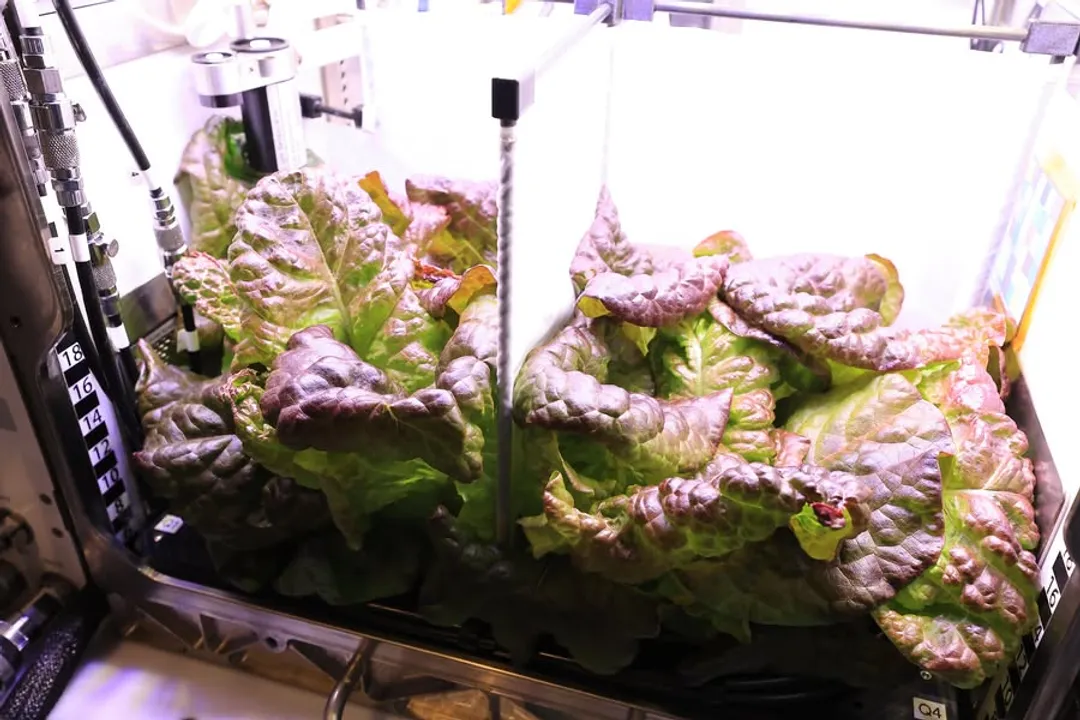
The successful cultivation of edible crops aboard the International Space Station (ISS) marks a quiet but significant step in humanity's prolonged stay off-world, directly answering the fundamental question of whether astronauts can grow their own fresh food. For crews enduring months or years far from Earth, the ability to nurture living plants transforms more than just the menu; it fundamentally alters the psychological environment of their orbiting home. The crispness and flavor of freshly harvested greens, something taken for granted on our planet, become a tangible connection to Earth and a powerful morale booster. [1][5]
# First Harvests
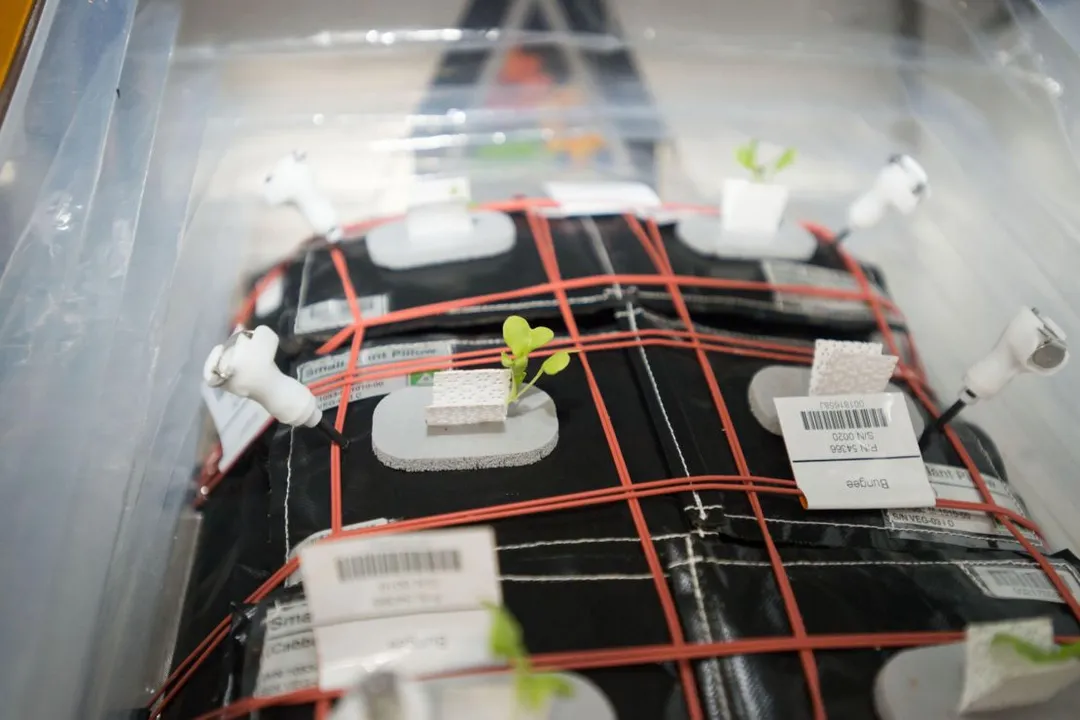
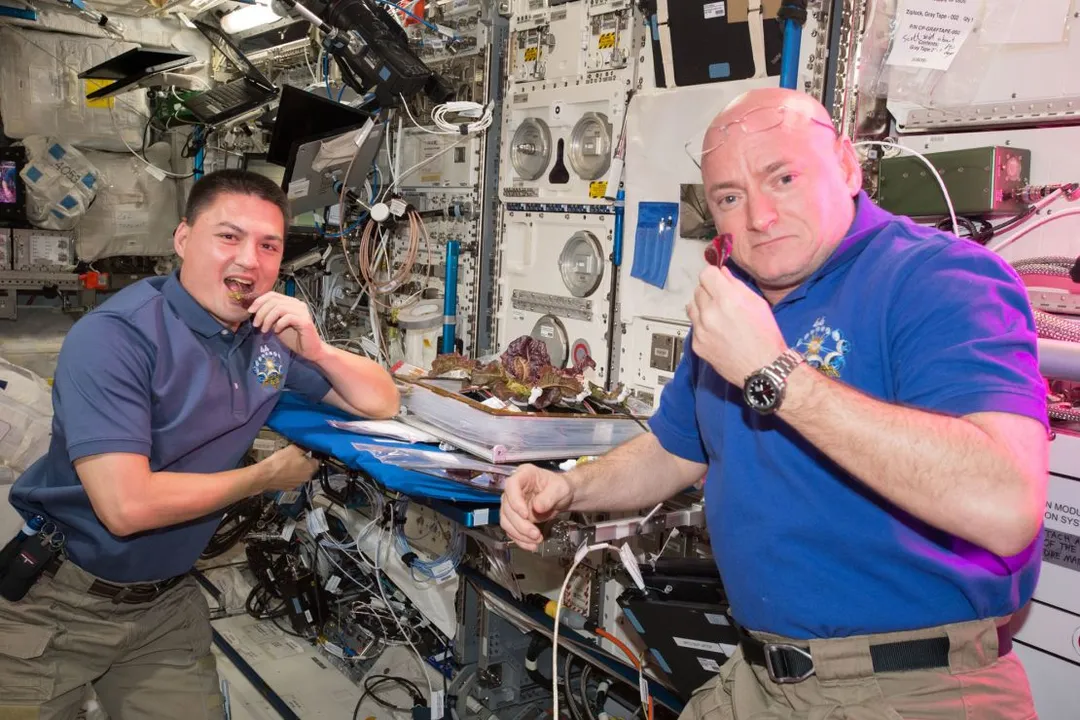
The headline act in this story of orbital agriculture was the Outredgeous Romaine lettuce variety. [8] This specific type of romaine was chosen not just for its hardiness but also because it was the focus of early experiments designed to prove that plants could indeed thrive in the unique environment of the space station. [4][8] Astronauts aboard the ISS had the distinct honor of being the first humans to consume fresh salad grown in space, a momentous occasion that occurred after careful preparation and monitoring. [5]
This initial success wasn't just about eating a tasty snack; it represented overcoming numerous biological and engineering hurdles. The process of harvesting and eating this space-grown produce was carefully documented, emphasizing the immediate positive impact on the crew. [1] When the leaves were finally cut, they were consumed immediately, often with a small packet of shelf-stable dressing, providing a welcomed textural and nutritional contrast to pre-packaged rations. [1][5] The variety, Outredgeous, carries a legacy, having been first cultivated for space research well before these ISS harvests, establishing its place in aerospace botany. [8]
# Growing Gear
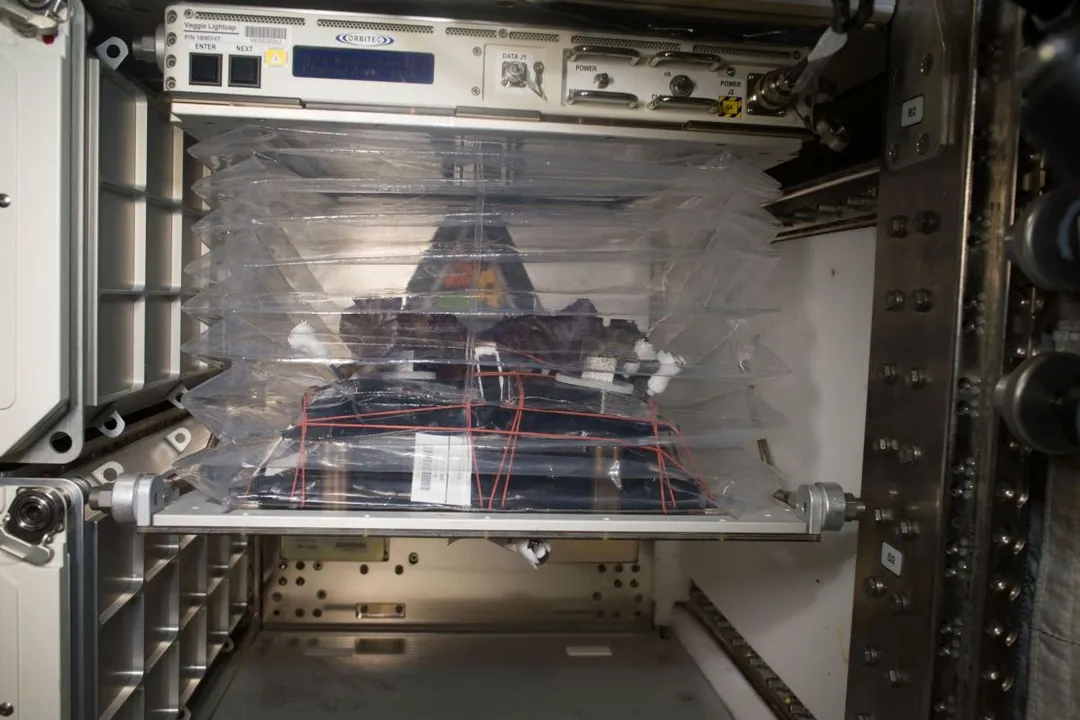
The hardware facilitating this micro-farming feat is as fascinating as the lettuce itself. NASA utilizes specialized growth chambers, most famously the Veggie system, designed to maximize growth potential within the constraints of a spacecraft. [7] This system doesn't rely on traditional soil; instead, plants are rooted in growth pillows, which are essentially self-contained packets containing a substrate like baked clay aggregate and a slow-release fertilizer. [9]
The entire process relies heavily on precisely controlled environmental factors. Water and nutrients are delivered carefully to keep the roots moist without drowning them—a significant challenge in microgravity where water tends to form floating spheres. [6] Crucially, the plants receive their light not from the sun, but from banks of LED lights carefully tuned to provide the necessary spectra for photosynthesis, often resulting in a rosy-red or purplish glow in the growth chamber. [7] This artificial lighting setup is a direct parallel to modern Controlled Environment Agriculture (CEA) on Earth. [9] Seeing videos of the process often reveals the neat, almost clinical setup, demonstrating the high degree of control required to support life in a vacuum. [3]

# Taste Check
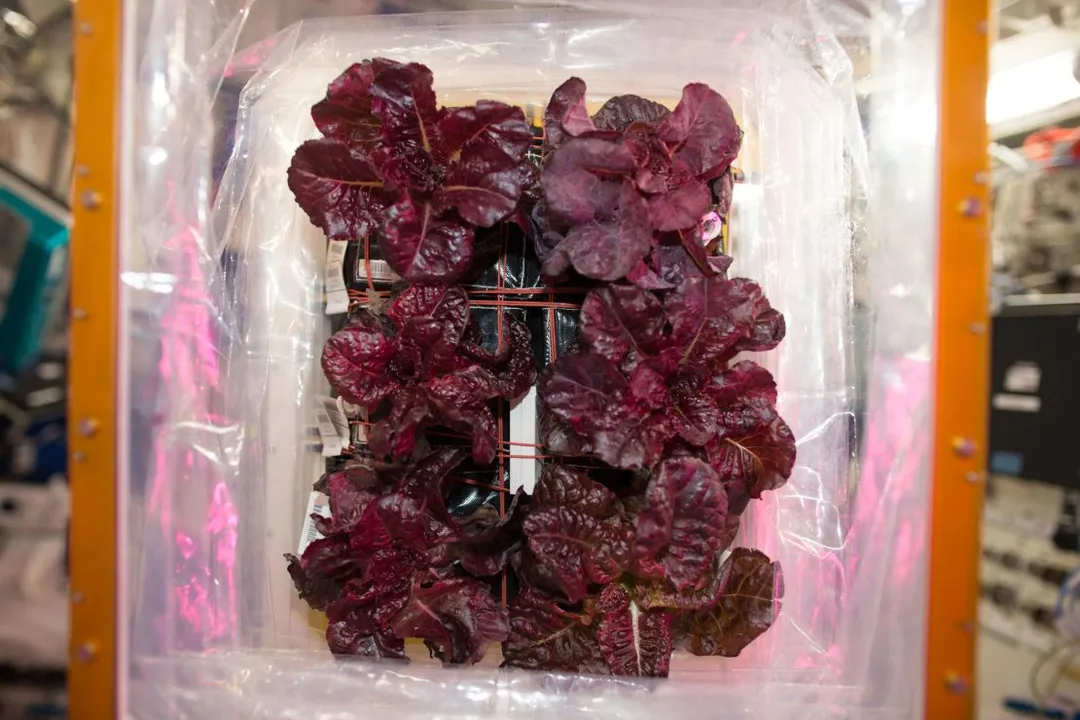
A question inevitably arises whenever space food is discussed: Does it taste different? Astronauts who have sampled the space-grown lettuce report on its flavor profile, suggesting that while it is indeed lettuce, there may be subtle differences. [2] The environment—particularly the lack of normal atmospheric pressure fluctuations and the specific conditions of the growth chamber—might impart a unique character. Anecdotally, some crew members noted that the fresh, crisp texture was the most immediately noticeable and enjoyable difference compared to the dried or thermostabilized vegetables they usually consume. [2]
This perception of taste is complex, often relying on smell, which is itself affected by the closed-loop air system of the ISS. However, the simple act of eating something fresh after prolonged consumption of shelf-stable food likely enhances the perceived flavor immensely. [2] If we look at the parallel processes on Earth, the lack of environmental stress (pests, unpredictable weather) in a growth chamber often leads to different flavor compounds compared to field-grown crops, suggesting the space lettuce might share subtle flavor characteristics with its terrestrial, indoor-farmed cousins. [9]
# Terrestrial Parallels
The research conducted on the ISS is not purely an exercise in orbital botany; it directly informs advancements in sustainable agriculture back on the ground. [9] The techniques refined for growing lettuce in space—minimal water usage, precise nutrient delivery, and reliance on artificial light in a closed system—mirror the core principles of high-tech terrestrial vertical farming operations. [9] This shared methodology is fascinating. While space agriculture must contend with the absolute constraint of limited mass, volume, and power, terrestrial CEA systems face high energy costs but benefit from gravity aiding water movement and the availability of replenishing resources. [9] When considering the implications of long-term space habitation, for example, on Mars or the Moon, the need for completely sustainable, low-waste food production becomes paramount, driving efficiencies that could revolutionize agriculture in arid or urban environments on Earth. [4] When you consider that the energy required to run the LED lights is a major operational cost for both orbital habitats and city-based vertical farms, the optimization of light spectrum becomes an area where both fields benefit from shared breakthroughs. [9]
# Scientific Gains
Beyond the dietary improvements, growing plants in space provides invaluable data for science and future exploration. Successful cultivation proves that complex biological processes, including reproduction and nutrient cycling, can be sustained reliably beyond Earth’s protective atmosphere and gravity field. [4] This research is critical for developing closed-loop life support systems, meaning future long-duration missions to Mars or beyond could rely less on resupply ships and more on onboard biological support. [4]
Furthermore, the mere act of growing plants has documented psychological benefits for astronauts. [1] Gardening engages them in a constructive, nurturing activity that breaks the monotony of station life. The visual presence of green, living things offers a profound connection to nature that cannot be replicated by technology alone, contributing significantly to crew mental health and well-being over extended isolation periods. [1] The data gathered on how plants use light and cycle nutrients under microgravity helps scientists model plant growth in other non-Earth environments. [4]
# Handling Water
Managing water is perhaps the most fundamental engineering challenge in space agriculture, far exceeding the difficulty of planting seeds. [6] On Earth, gravity ensures water flows down and air fills the remaining space around soil particles. In microgravity, water adheres to surfaces or forms bubbles that can suffocate roots if not managed. [6] The success with lettuce confirms that scientists have devised effective methods to deliver hydration directly to the root zone within the growth pillow, ensuring aeration and preventing fungal issues—a delicate balance that required significant engineering prowess. [9][6] This contrasts sharply with simple hydroponics; here, the entire substrate system acts as a careful buffer against gravitational effects, creating a localized, stable root environment. [9] For anyone managing high-density indoor growing systems on Earth, observing how the ISS scientists managed nutrient film delivery without gravity's assistance provides a masterclass in precise fluid dynamics management within a confined system. [4]

# Further Produce
The successful growth of Outredgeous Romaine was not the end goal, but rather a proof of concept that opened the door for more diverse future menus. Once the basic infrastructure and growth cycles were validated with lettuce, researchers could look toward cultivating more nutritious or calorie-dense crops. [1][8] Building on this foundation, the work paved the way for potentially growing tomatoes, peppers, and other vegetables, moving astronauts closer to truly self-sufficient food supplies during deep-space travel. [1] The legacy of the lettuce project is ensuring that future spacefarers have access to a varied, fresh, and morale-boosting diet, securing a small piece of Earth with them wherever they go. [5]
#Videos
Space in 4K - First Lettuce Grown and Eaten in Space - YouTube
Related Questions
#Citations
Space-grown lettuce to give astronauts a more varied diet | Nasa
Does Lettuce Taste Different in Space? - ISS National Laboratory
Space in 4K - First Lettuce Grown and Eaten in Space - YouTube
Space lettuce - Frontiers
Space-grown lettuce is safe to eat, says study. Delicious, say ... - CNN
VEGGIE: growing lettuce in space. Take a look at one of the ... - Reddit
The man growing lettuce for space station salads - BBC
A legacy of plant studies 'Outredgeous' romaine lettuce variety was ...
Space-grown lettuce success: 'Our growth techniques have many ...