What is a cloud of gas in space called?
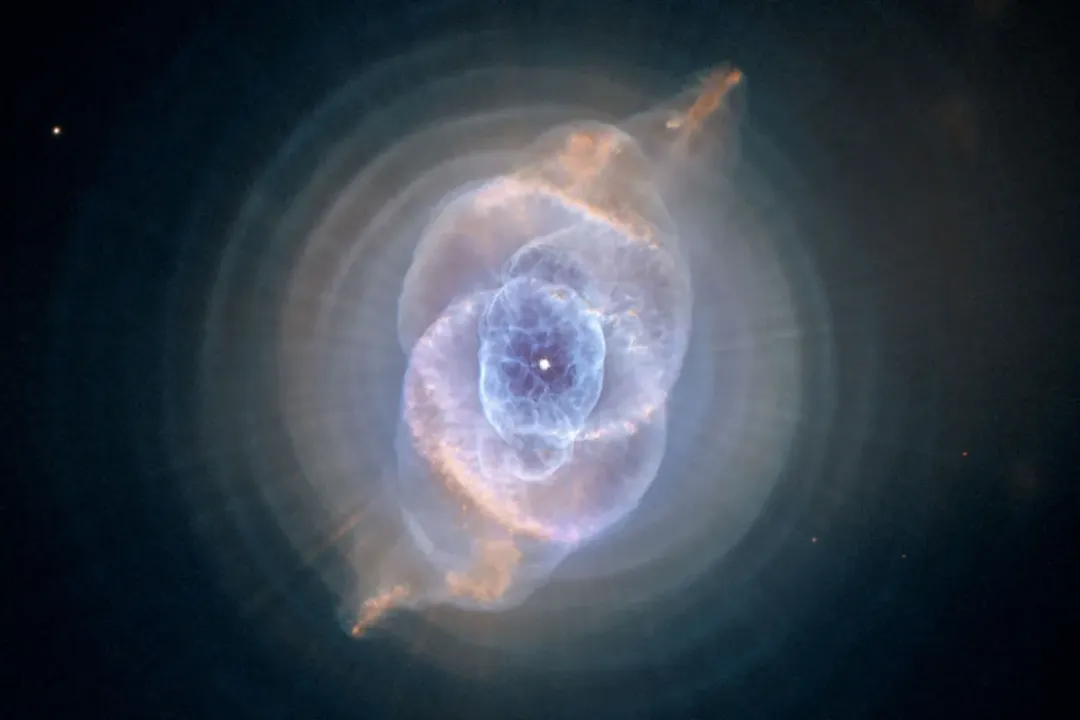
The vast, seemingly empty regions between the stars are anything but vacant; they are filled with gigantic, ethereal structures known as nebulae. [2][5] When astronomers look up and identify a cloud of gas floating in space, that is precisely what they are seeing—a nebula. [5][7] The term itself is rooted in Latin, translating quite literally to "cloud". [2] These cosmic clouds are far from simple wisps of air; they are immense interstellar mediums composed primarily of dust, along with fundamental elements like hydrogen and helium, often in an ionized state. [1][2][5] Their scale is staggering, frequently spanning distances measured in light-years. [1]
# Star Nurseries
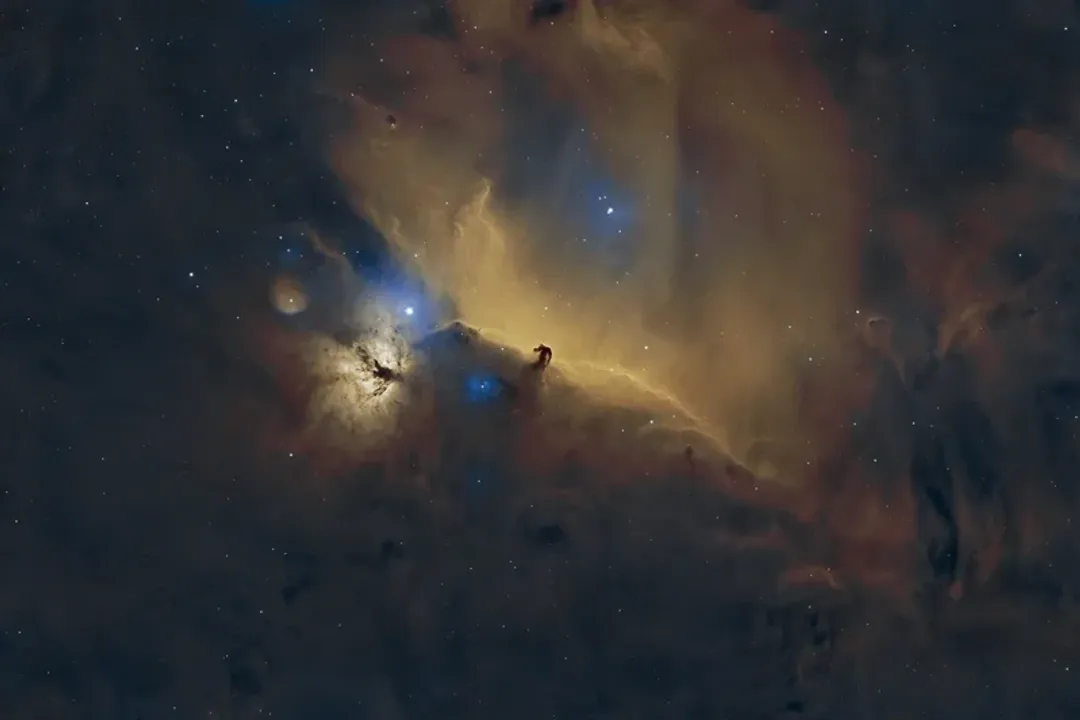
The most profound role these clouds play in the cosmos is their function as the birthplace of stars and planetary systems. [1][7] These areas, often termed "star nurseries," are where the gravitational collapse of denser clumps within the gas and dust eventually ignites nuclear fusion, giving birth to a new star. [1][7]
It is fascinating to consider that while a nebula can span light-years, the average density is incredibly low, often far less dense than the best vacuum achievable in a laboratory on Earth. [1] Yet, within this tenuous medium, small pockets exist where the concentration of matter is just sufficient for gravity to begin its slow, inexorable work. Imagine standing in one of these stellar nurseries; the background glow from distant galaxies might be visible, but the local concentration of material is so slight that if you held your hand out, the star-forming activity might be happening miles away from your fingers, yet the whole structure still feels unified. This variation in local density is the critical tipping point; a slight increase in local mass allows gravity to overcome the internal pressure and temperature fluctuations that keep the rest of the cloud diffuse.
# Appearance Types
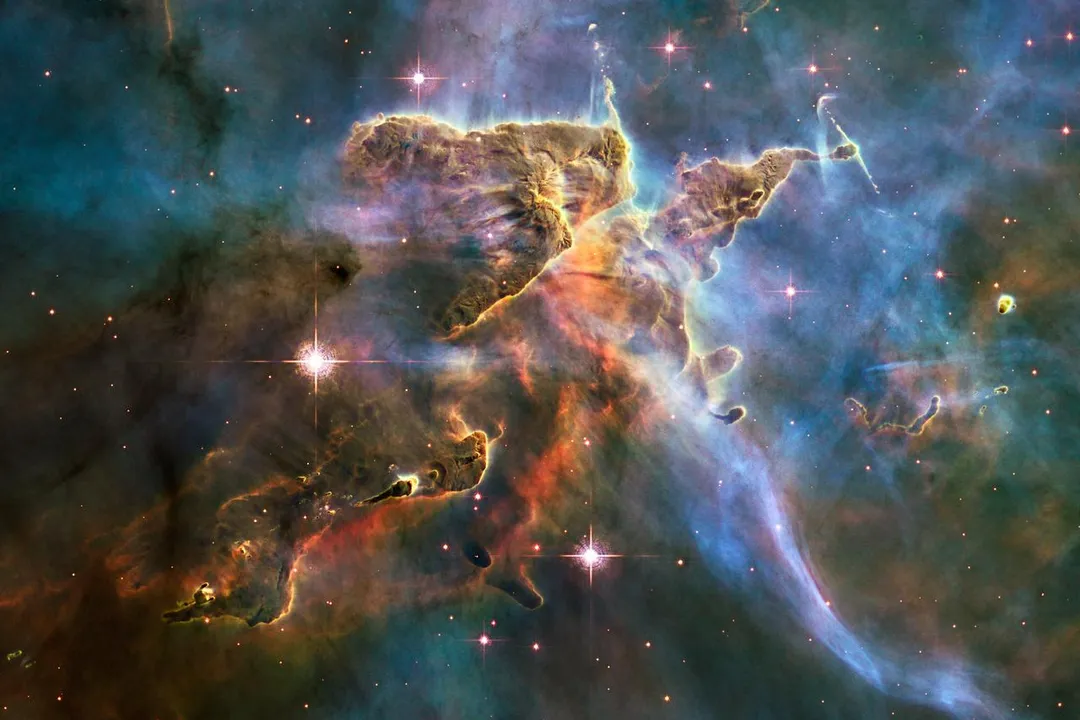
What makes a nebula visible to us on Earth depends entirely on how it interacts with the light from nearby or internal stars. [5] Nebulae are categorized based on these interactions, leading to several distinct visual appearances. [5]
# Glowing Clouds
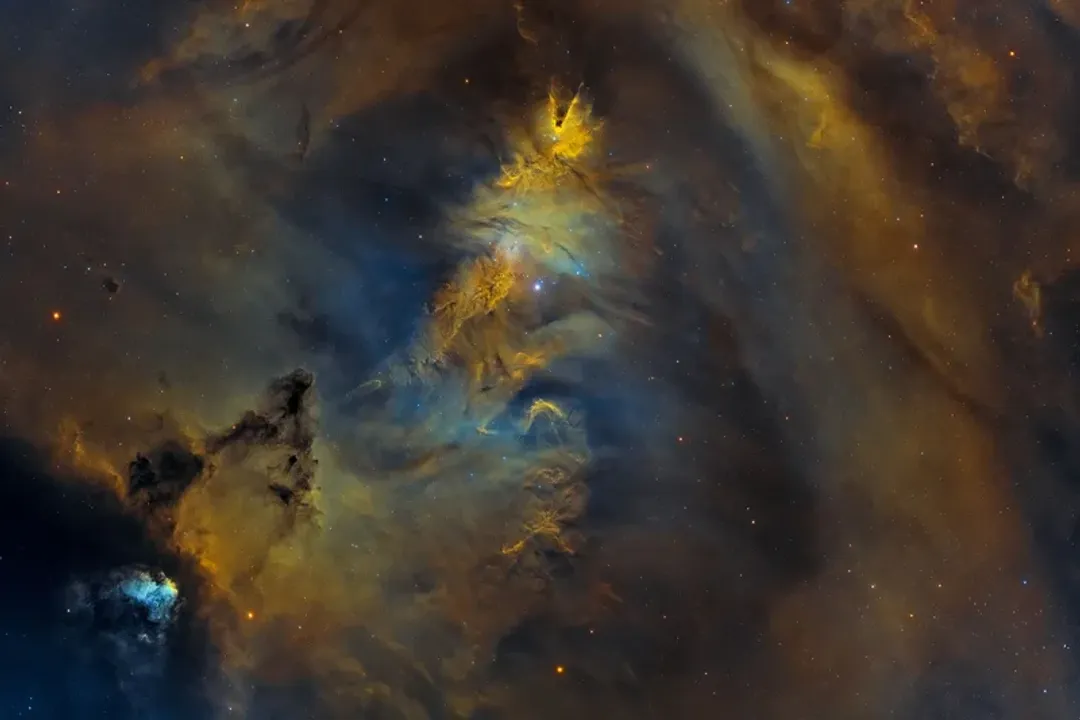
One major category is the emission nebula, which is characterized by its brilliant glow, often appearing in shades of red. [2][5] This coloration comes from the primary constituent, hydrogen gas, which becomes ionized—meaning its electrons are stripped away—by the intense ultraviolet radiation emitted by very hot, young stars embedded within or close to the cloud. [5] When the electrons recombine with the hydrogen nuclei, they release energy, producing visible light, predominantly in the characteristic red hue of the Balmer series for hydrogen. [5] The famous Orion Nebula stands as a prime example of this type of energetic celestial forge. [5]
# Scattered Light
A different mechanism creates the reflection nebula, which typically presents a distinctly blue color. [2][5] Unlike emission nebulae, reflection nebulae do not emit their own light. Instead, they scatter the light from nearby stars. [5] This process is similar to why our own sky appears blue during the day: atmospheric molecules scatter shorter, bluer wavelengths of light more effectively than longer, redder wavelengths. [5] If the illuminating star is not hot enough to ionize the gas, or if the cloud is predominantly dust, scattering dominates, resulting in the characteristic blue appearance. [2][5]
# Dark Patches
Conversely, some clouds are so dense and opaque that they block out light entirely, creating silhouettes against the brighter backdrop of the galaxy or other luminous nebulae. [2][5] These are termed dark nebulae. [2][5] They appear as dark patches or lanes when viewed against a background star field or emission nebula. [5] The Horsehead Nebula, a recognizable shape against the red glow of an emission nebula, is perhaps the most iconic example of a dark nebula silhouetted against emission light. [5] These dense knots are often sites where star formation is either imminent or currently underway, as the dust and gas are concentrated enough to begin gravitational collapse. [5]
# Stellar Endpoints
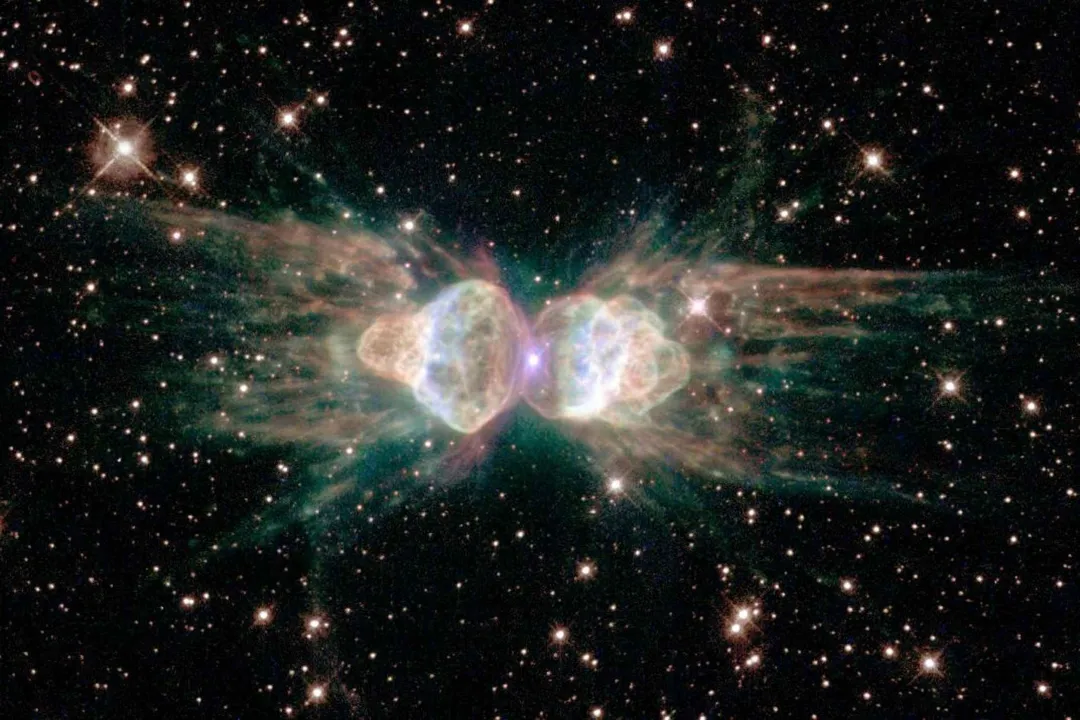
Nebulae are not only associated with birth but also with the dramatic demise of stars, resulting in two other significant classifications: planetary nebulae and supernova remnants. [2][5][8]
# Dying Stars
Planetary nebulae might have a misleading name; they have absolutely no connection to planets. [2][8] This historical misnomer arose because early astronomers observing them through less powerful telescopes saw them as faint, round, planet-like discs. [8] In reality, a planetary nebula is the spectacular shell of gas and plasma that a dying, sun-like star expels into space as it reaches the end of its active life. [8] The star shrinks down to become a white dwarf, and its intense residual heat excites the expelled outer layers, causing them to glow beautifully for a relatively brief cosmic period. [8] The Harvard-Smithsonian Center for Astrophysics notes that these structures mark the final stages for stars similar in mass to our Sun. [8]
# Explosive Aftermath
A far more violent event yields the supernova remnant. [5] When a very massive star exhausts its fuel, it collapses catastrophically, resulting in a spectacular explosion known as a supernova. [5] The nebula associated with this event is the expanding cloud of gas and debris ejected outward at high velocity from that explosion. [5] These remnants enrich the interstellar medium with heavier elements forged during the star's life and the explosion itself, seeding future generations of stars and planets.
When contrasting the lifespan of these two "death" nebulae, there’s a striking difference in duration. A planetary nebula phase, though visually stunning, is relatively short, lasting maybe tens of thousands of years as the central star cools. [8] Supernova remnants, while expanding much faster initially, also dissipate over time, but the dispersal of their heavy elements fundamentally alters the chemical composition of the galaxy over much longer timescales, perhaps millions of years, becoming integrated back into the general interstellar medium, ready for the next generation of molecular clouds.
# Composition and Dynamics
The general composition across all nebula types centers on the lightest elements, primarily hydrogen and helium, interspersed with fine dust particles. [1][2] The dust is crucial; it consists of heavier elements created inside stars—carbon, oxygen, silicon, and iron—that have been ejected into space through stellar winds or supernova blasts. [1] These dust grains are tiny, often much smaller than the wavelength of visible light, allowing them to efficiently scatter and absorb starlight. [1]
The dynamics within these clouds are governed by a constant interplay between gravity, internal pressure from heat and turbulence, and magnetic fields. [1] Star formation requires gravity to win, slowly condensing regions until the core becomes hot and dense enough to ignite fusion. [1] The energy from the newly formed stars then feeds back into the surrounding gas, creating stellar winds and radiation pressure that push and shape the remaining cloud material, sculpting the magnificent structures we observe. [5]
# Observing Nebulae
For amateur stargazers, observing nebulae offers a direct connection to cosmic creation and destruction. [3] While powerful professional telescopes capture their full, vivid colors by accumulating light over long exposures, many brighter nebulae are visible through amateur equipment. [3] Emission nebulae, being self-luminous, are generally easier to spot than reflection nebulae, which require a nearby bright star to illuminate them. Dark nebulae, requiring high contrast, are often best appreciated against a rich star field rather than a sparse one. [5] Learning to use averted vision—looking slightly to the side of a faint object—can sometimes reveal details in these faint gas clouds that are missed when looking directly at them. [3]
The cloud of gas in space is formally known as a nebula, a term that encompasses everything from the dense molecular clouds that collapse into stellar systems to the glowing shells expelled by aging stars. [2][5][8] They are the material of cosmic recycling, holding the raw ingredients for future stars and planets while simultaneously preserving the spectacular remnants of past stellar lives. [1][5]
#Videos
Nebulae: Crash Course Astronomy #36 - YouTube
Related Questions
#Citations
What Is a Nebula? | NASA Space Place – NASA Science for Kids
Nebula - Wikipedia
What is a nebula? Cosmic clouds and how to see them
Nebula interstellar cloud composition and formation - Facebook
Nebula: Definition, location and variants - Space
Nebulae: Crash Course Astronomy #36 - YouTube
What is a nebula? - Space Center Houston
Planetary Nebulas - Center for Astrophysics | Harvard & Smithsonian
Space Place in a Snap: What Is a Nebula? - NASA+