What is a gas cloud made of?
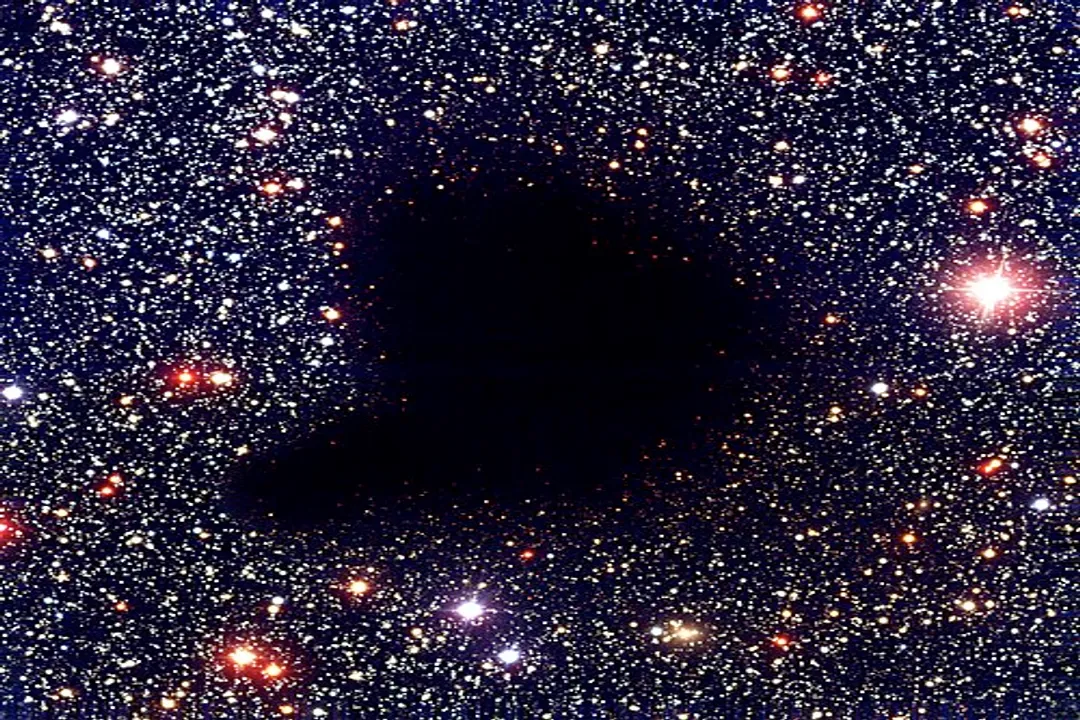
The vast, dark expanses between the stars are not empty voids; rather, they are filled with a diffuse substance we often call interstellar gas, which forms immense structures known as clouds. [3] When we think of a cloud, the mind often conjures images of the fluffy, white formations in Earth’s sky, but cosmic clouds operate on entirely different scales of size, temperature, and composition. The most significant of these structures, particularly for understanding where new stars come from, are the molecular clouds. [1]
# Cosmic Composition
At the most fundamental level, the material that makes up these giant interstellar clouds is overwhelmingly simple, yet it contains the building blocks for everything we see. The dominant ingredient in the interstellar medium is hydrogen gas. [3]
For an interstellar cloud to be classified as a molecular cloud, it must possess a high concentration of molecules, primarily molecular hydrogen (). [1] Hydrogen, being the most abundant element in the universe, forms the backbone of these stellar nurseries. [1] While is the main constituent, these clouds are not purely gas. They also contain trace amounts of other molecules, such as carbon monoxide (), and a small but astrophysically important component of solid interstellar dust grains. [1]
The abundance of molecular hydrogen is key because it requires specific conditions to form and persist. Atomic hydrogen () is easily broken apart by ultraviolet radiation from nearby stars. However, within the dense, opaque interior of a molecular cloud, the gas shields itself from this harsh radiation, allowing hydrogen atoms to combine into the more stable molecular form (). [1]
If we consider the composition in terms of mass, the breakdown is stark: molecular hydrogen accounts for about 74% of the total mass, helium makes up nearly 24%, and the remaining few percent consists of all other elements, including the dust. [1] This composition profile is surprisingly close to the elemental abundance of the universe as a whole, underscoring the fundamental nature of these regions. [1]
# Temperature State
The environment inside a molecular cloud is extremely cold, a necessity for molecules to remain bound together without being instantly ionized or dissociated. [1] Typical temperatures hover around 10 Kelvin (), which is about or . [1] This extreme cold is crucial; if the gas were significantly warmer, the kinetic energy would prevent the molecules from forming or cause the cloud structure to disperse too rapidly to collapse into stars. [1]
This contrasts sharply with the clouds we experience daily. Terrestrial clouds are visible because they consist of suspended liquid water droplets or ice crystals, which are much more effective at scattering visible light. [8] Interstellar molecular clouds, being primarily cold gas and extremely fine dust, are often dark—they absorb and block the light from stars behind them, making them appear as dark patches against the brighter background of the Milky Way. [1]
# Visibility Mysteries
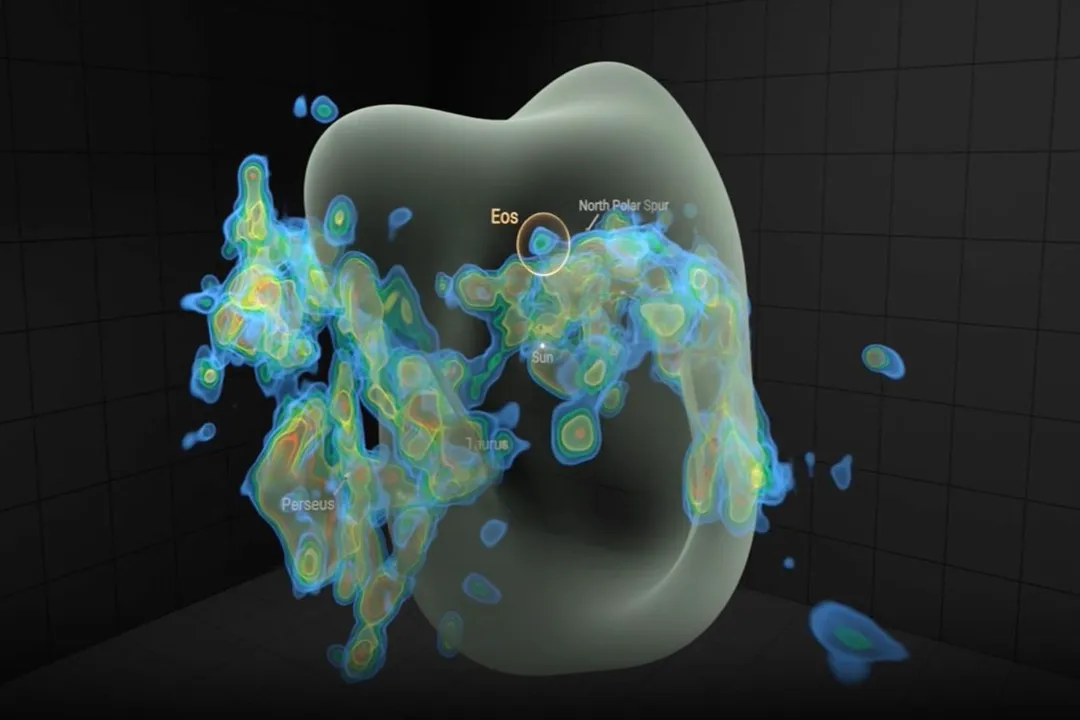
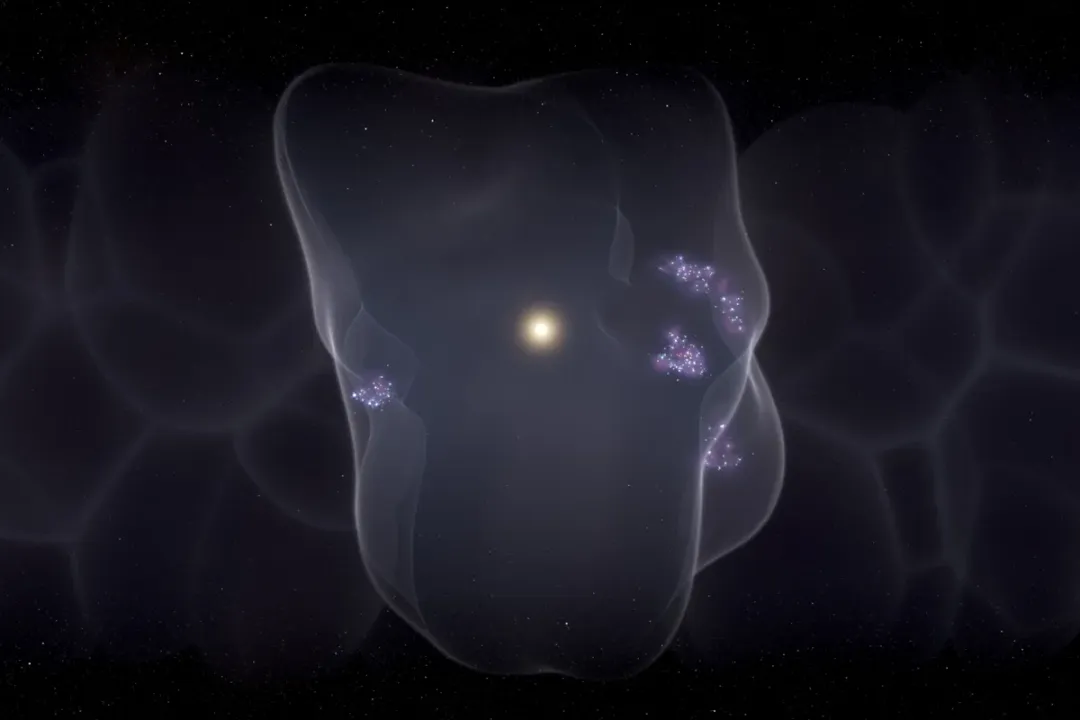
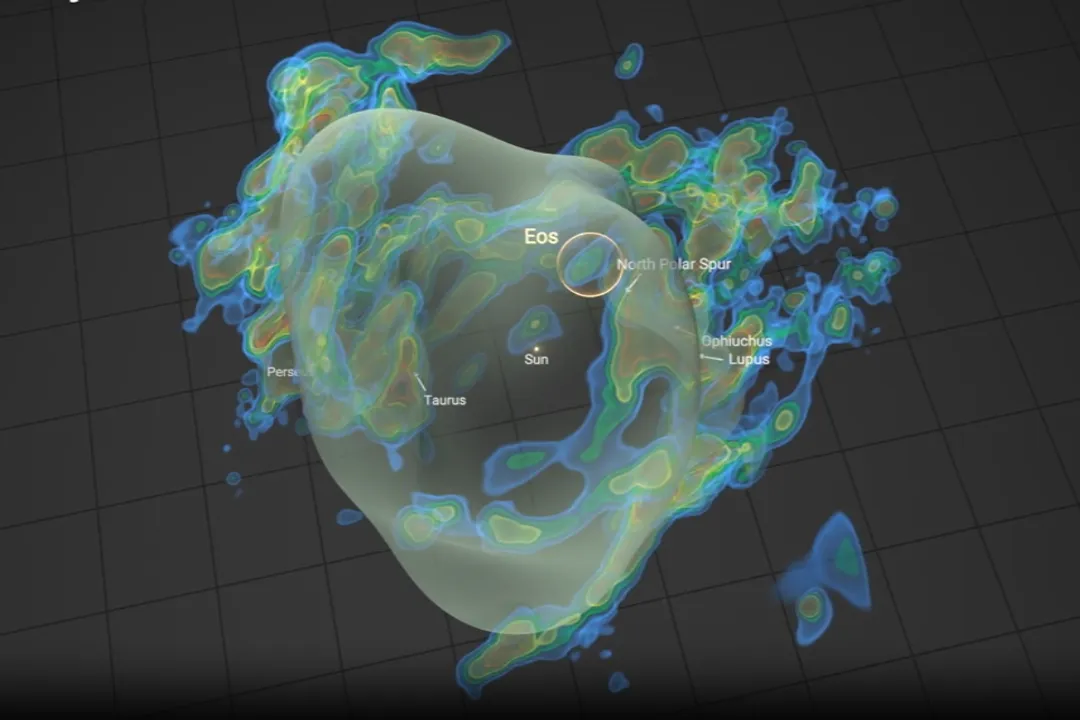
The concept of a cloud being "invisible" is a fascinating one in astronomy, especially when discussing objects near our own Sun. Recently, astronomers confirmed the presence of a massive molecular cloud system in our local stellar neighborhood that had managed to escape detection for a long time. [4][5][7] This structure is so vast that it contains enough material to form tens of thousands of Sun-like stars. [4]
One reason it remained hidden is that it is a cold, non-luminous cloud of gas and dust that absorbs background light, rendering it effectively black against the darkness of space. [4][7] It wasn't until researchers studied the faint infrared emission from its dust component, combined with data from gas tracers like carbon monoxide, that its true extent became clear. [5] The discovery, announced around April 2025 by teams including researchers from Rutgers and the University of Arizona, revealed a cloud system spanning hundreds of light-years across the sky, situated relatively close by in cosmic terms. [4][5][7]
However, this discovery also seems to bring up a related, possibly distinct, finding: the detection of a glowing structure near the Solar System. [2] When dealing with complex nebulae, light emission can come from several sources. Emission nebulae glow because nearby hot, young stars excite their gas into luminescence, while reflection nebulae scatter starlight. A structure that is both a dense molecular cloud (which tends to be dark) and a glowing structure warrants careful examination of its specific conditions. It is possible that the newly identified dark cloud is adjacent to or interacting with an already known emission region, or perhaps the "glowing structure" refers to evidence of interaction or heating along its edges that allowed for its initial detection by surveys that look for slightly warmer regions. [2][9] This interplay between the dark, cold interior and the potentially illuminated edges is a common feature in the Interstellar Medium (ISM). [3]
The challenge in identifying these local structures highlights a significant bias in astronomical surveys: our understanding of the immediate galactic neighborhood is heavily skewed toward objects that emit detectable light (visible, radio, infrared). The truly cold, dark components, which dominate the mass budget, require specialized techniques like looking for absorption against background sources or mapping dust emission at specific wavelengths. [4][5]
# Cloud Taxonomy
The term "gas cloud" is broad, and it is useful to categorize these structures based on their physical state, which dictates their behavior and potential for star formation. [1]
| Cloud Type | Primary Composition | Typical Temperature | Density Level | Role |
|---|---|---|---|---|
| Molecular Cloud | (Molecular Hydrogen) | Very Low (e.g., ) | High (for space) | Star Formation |
| H I Cloud | Atomic Hydrogen () | Moderate (e.g., ) | Low | Background reservoir |
| H II Region | Ionized Hydrogen () | High (Thousands of K) | Low to Moderate | Illuminated by hot stars |
The H I cloud, composed primarily of neutral atomic hydrogen, is warmer and less dense than its molecular counterpart. [1] These clouds are more transparent to light. The transition from an H I cloud to an H II region—where hydrogen is ionized by intense radiation from massive, hot stars—is a dramatic phase change. [1][3]
Molecular clouds, by contrast, represent the coldest and densest components of the ISM, where gravity can finally overcome the internal pressure to initiate gravitational collapse. [3] Without the shielding provided by the dust and gas density, the process of forming stars—which requires matter to clump together—would be effectively impossible in the thin, irradiated parts of the galaxy. [1]
# Stellar Nurseries
The primary scientific importance of molecular clouds lies in their status as the birthplaces of stars. [3] A large, dense, and cold molecular cloud provides the necessary conditions for gravity to begin winning the long struggle against internal gas pressure and magnetic fields. [1]
When a section of a molecular cloud becomes dense enough—reaching a certain threshold mass and density, often described by the Jeans Mass concept in astrophysics—it begins an inexorable collapse under its own gravity. [1] This process fragments the massive cloud into smaller clumps, which condense further, heat up due to the compression, and eventually ignite nuclear fusion in their cores, thus creating new stars. [3] Studying the composition, kinematics, and structure of these clouds, especially the recently cataloged nearby one, offers direct insight into the initial conditions for our own Sun and planetary system. [4][7]
For instance, the sheer scale of these local discoveries allows astronomers to map the ISM in unprecedented detail. The newly mapped invisible structure near us is thought to be associated with the Local Interstellar Cloud, providing better context for the Sun’s current galactic environment. [4]
When considering the relative importance of composition versus environment, it is instructive to note that while the chemistry (hydrogen and helium) is standard galactic background, the state (molecular and cold) is the true bottleneck for star formation. A cloud made of the right atoms but lacking the necessary temperature ( instead of ) will remain diffuse atomic gas, failing to form stars until an external trigger—like a supernova shockwave or passage through a spiral arm—compresses it sufficiently to cross the molecular threshold. [1][3]
The existence of massive molecular structures so close to us, yet previously undetected in their entirety, suggests that our map of the immediate cosmic vicinity is still incomplete. It implies that many more such reservoirs of stellar fuel might be lurking just beyond the sensitivity limits of past surveys, waiting for better infrared or sub-millimeter observations to reveal them. [5][9] The ability to study the chemistry of a cloud that is essentially in our own backyard provides an invaluable, local laboratory for testing theories of early star formation that previously relied only on observations of distant galaxies. [7]
#Videos
A newly found gas cloud lurks near the solar system | Science News
Related Questions
#Citations
Molecular cloud - Wikipedia
Giant, Glowing Gas Cloud Discovered Just 300 Light-Years Away
Interstellar Medium and Molecular Clouds | Center for Astrophysics
A Vast Molecular Cloud, Long Invisible, Is Discovered Near Solar ...
A vast molecular cloud, long invisible, is discovered near solar system
A newly found gas cloud lurks near the solar system | Science News
Long Invisible Molecular Cloud Discovered Near Our Solar System
Are clouds a gas, liquid, and/or solid? - Earth Science Stack Exchange
Scientists discover massive molecular cloud close to Earth | CNN