What are the famous gas clouds?
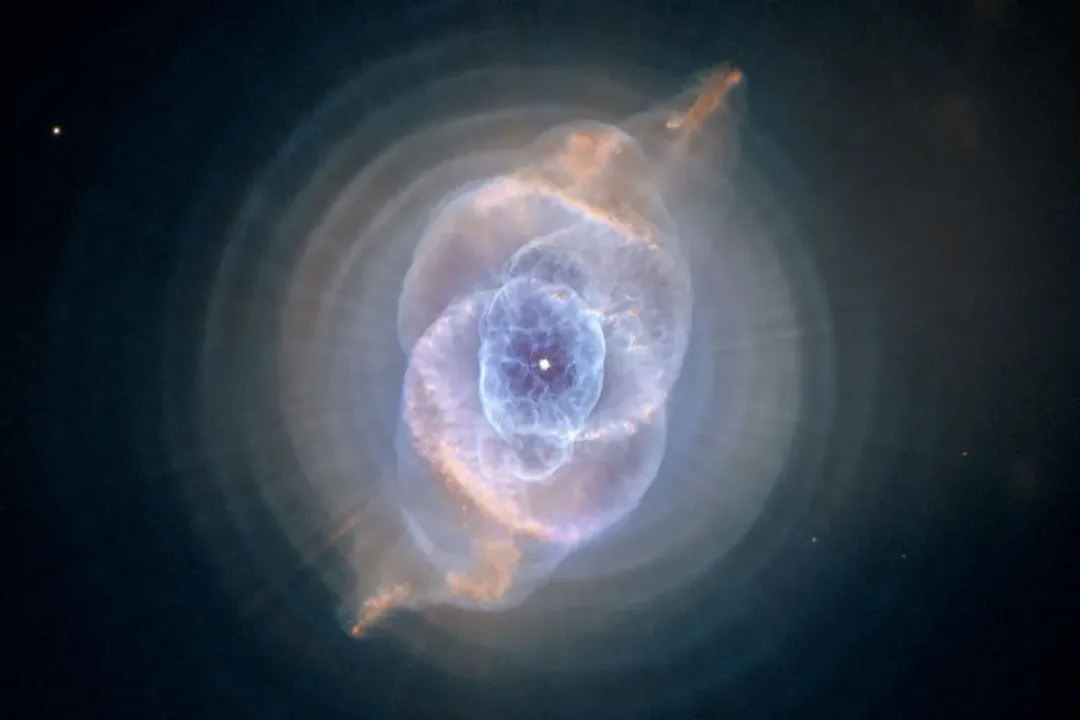
The term for these vast, ethereal structures scattered across the cosmos is a nebula, a word derived from the Latin term for "cloud" or "mist". Astronomers once used this term broadly to describe any faint, fuzzy deep-sky object, even including entire galaxies like the Andromeda Galaxy, which was historically known as the Andromeda Nebula. Today, the definition is refined, referring almost exclusively to the distinct, luminous concentrations of dust and gas found within a single galaxy—the interstellar medium. These clouds are the birthplace of stars and the graveyard of others, intrinsically linked to the cyclical nature of cosmic life.
# Cosmic Scale
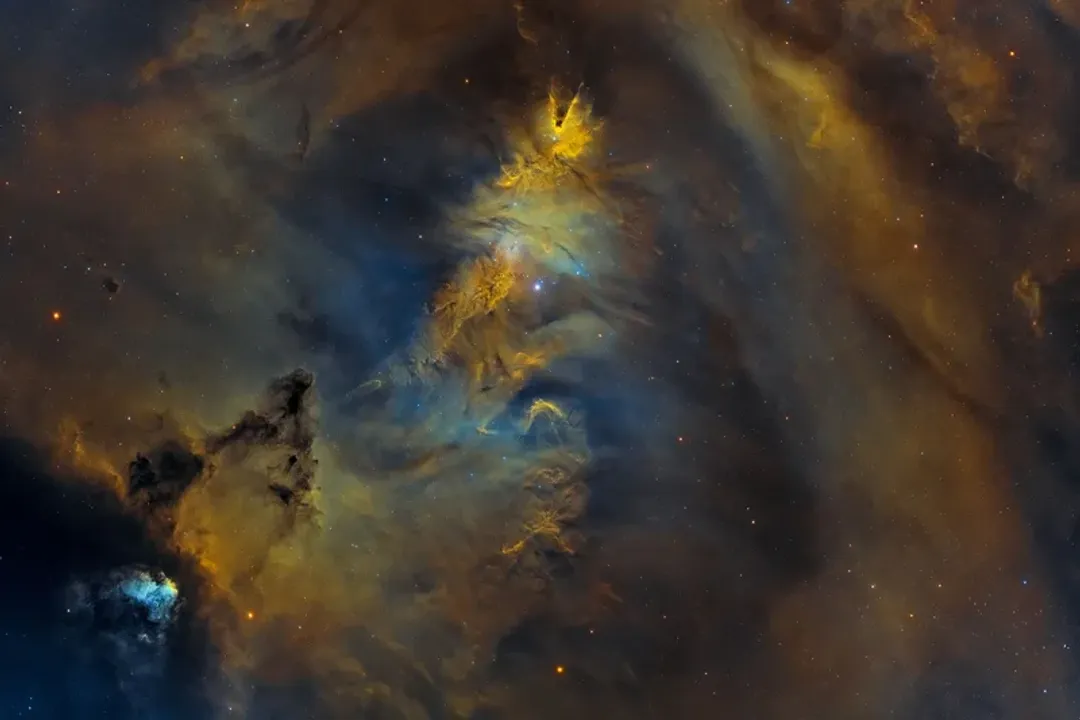
Nebulae are not mere wisps; they are immense structures, often spanning hundreds of light-years across. However, despite their staggering size, they are profoundly rarefied. The gas and dust within them are extremely spread out, making them far less dense than the best vacuum achievable on Earth. In fact, a cloud of nebula material with a volume equal to that of our own planet would weigh only a few kilograms. This paradox—being gigantic yet having almost no mass—is a key characteristic of these interstellar nurseries and ruins. They are sculpted into their "weird and wonderful shapes" by the interstellar winds of our galaxy and their own internal turbulence. Observationally, they are composed of about 90 percent hydrogen, nearly all the rest being helium, along with a smaller fraction of cosmic dust particles.
# Cloud Types
The appearance and behavior of a nebula depend heavily on its temperature, density, and its relationship to nearby stars. Astronomers generally sort nebulae into a few major categories based on how they interact with light.
# Luminous Clouds
Bright nebulae are comparatively dense clouds that either emit or reflect light.
- Emission Nebulae (H II Regions): These clouds generate their own glow, a direct result of the intense ultraviolet radiation emitted by very hot, massive stars embedded within or close to the gas. The radiation ionizes the hydrogen gas, causing it to emit spectral line radiation, often appearing red. These are frequently the regions where new stars are actively being formed.
- Reflection Nebulae: Unlike emission nebulae, these do not produce much visible light themselves. Instead, they are visible because nearby stars illuminate their dust grains, scattering the starlight toward us, which often results in a characteristic blue hue. The light surrounding the Pleiades star cluster is a famous example of this phenomenon.
# Dark Structures
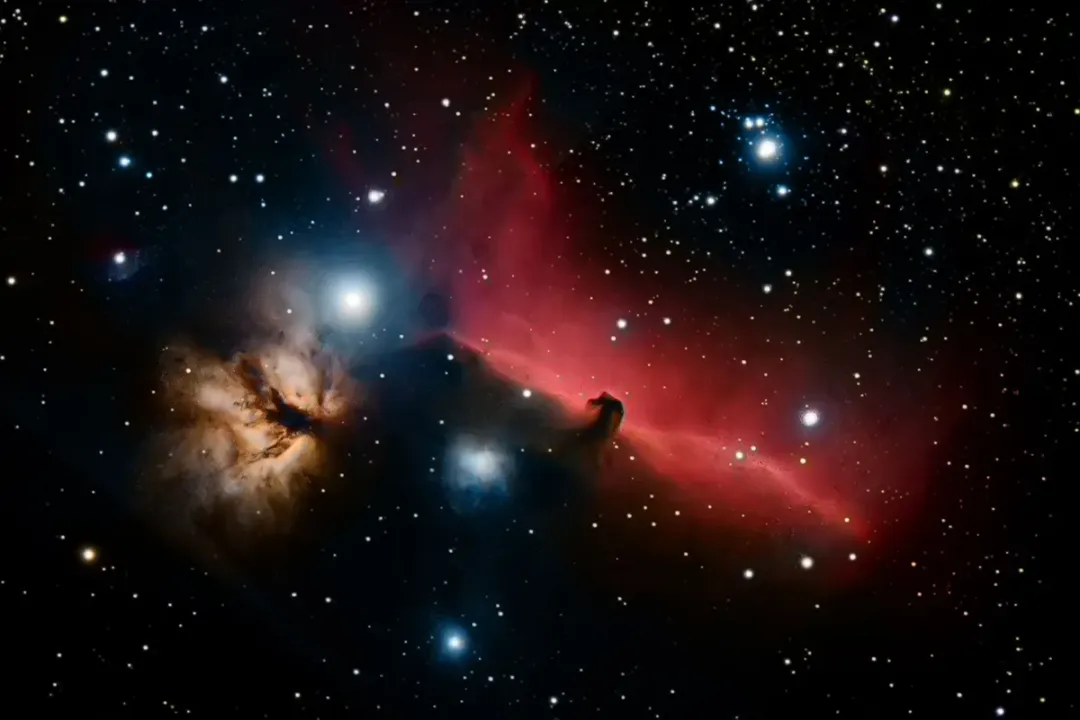
- Dark Nebulae: These clouds are so dense that they effectively absorb all light from objects lying behind them, appearing as dark, irregularly shaped patches against a brighter stellar background. They are typically very cold molecular clouds and are crucial sites for the earliest stages of star formation.
# Stellar Endpoints
These nebulae are directly tied to the death throes of stars.
- Planetary Nebulae: Despite the name, these have nothing to do with planets; they were named because they often appear as small, fuzzy, planet-like discs when viewed through older telescopes. They form when medium-mass stars, like our Sun, shed their outer atmospheres as they evolve into red giants, leaving behind a hot white dwarf core whose radiation illuminates the expelled shell. The Ring Nebula in Lyra is a well-known example.
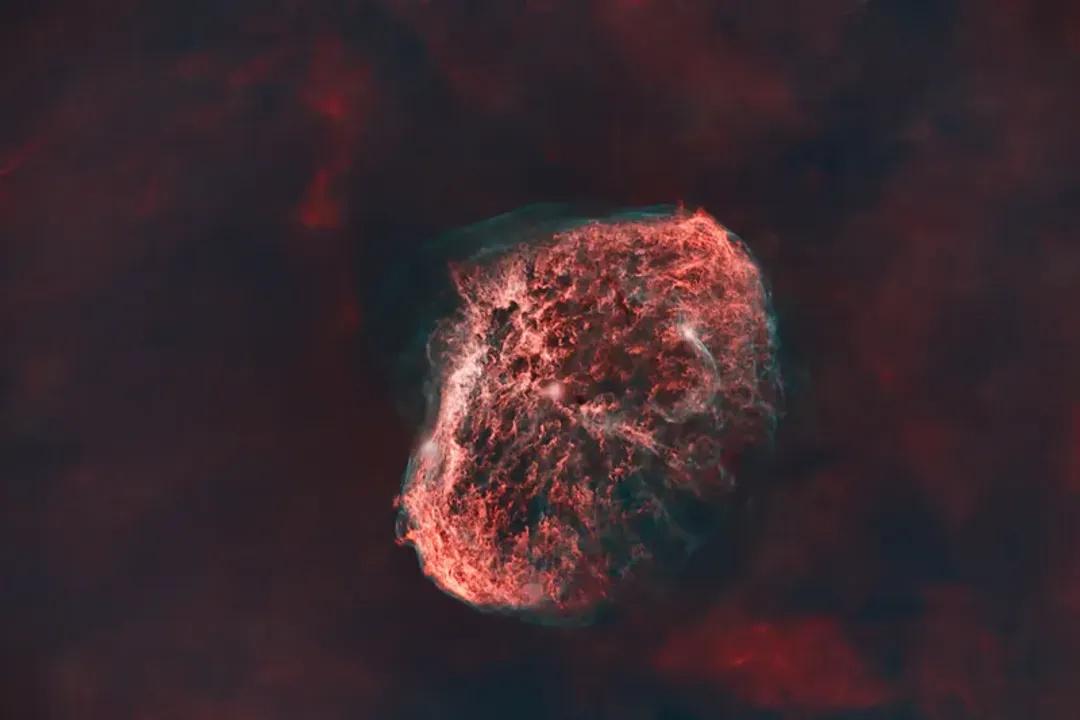
- Supernova Remnants: These are the expanding shells of gas resulting from the cataclysmic explosion of a massive star—a supernova. The gas is ionized by the extreme energy, and the expanding material can travel at hundreds or even thousands of kilometers per second.
# Specialized Structures
Astronomers recognize other specialized formations as well. Protoplanetary nebulae (PPNe) represent a brief, late evolutionary phase for intermediate-mass stars, bridging the gap between the red giant phase and the final planetary nebula stage; they glow intensely in the infrared. A less common, but fascinating, group are Integrated Flux Nebulae (IFNs), which are incredibly faint clouds found at high galactic latitudes, illuminated not by a single local star, but by the collective light of all the stars in the Milky Way, requiring very long exposures to capture.
# Stellar Genesis and Demise
The life cycle of stars dictates the creation and destruction of nebulae. Star formation begins when the diffuse gas and dust of the interstellar medium slowly clump together over immense timescales, driven by gravity. When these clumps—which become nebulae—achieve sufficient density, they collapse under their own weight, leading to further gravitational attraction and heating at the core, eventually igniting a star. Massive stars born this way significantly alter their surrounding environment through powerful stellar winds and ultraviolet radiation, disrupting the natal cloud and ending the star-forming phase within a few million years.
Conversely, the most spectacular nebulae mark stellar demise. The Crab Nebula (M1) is a classic example, marking the explosion of a star witnessed on Earth in the year 1054. Its core remains as a dense neutron star. The Boomerang Nebula, which is known to be the coldest place in the universe—even colder than the Cosmic Microwave Background—is also categorized as a type of planetary nebula, illustrating the extreme physical conditions that can result from a star's death.
# Famous Objects Highlighted
Many nebulae have achieved fame due to their brightness, striking shapes, or historical significance.
The Orion Nebula (M42) stands out as perhaps the most famous of all. It is the brightest nebula in the sky and is unique because it can be spotted with the naked eye as a faint, misty smudge below Orion's belt. It is a massive emission nebula, where the Trapezium cluster stars at its heart energize the entire cloud, causing it to glow. The structures within the Orion Nebula, famously imaged by Hubble, are known as the "Pillars of Creation," showcasing active star formation.
In contrast to the birthplace nebulae are the remnants. The Crab Nebula (M1) in Taurus offers a glimpse into a stellar catastrophe, remaining from a supernova observed centuries ago.
For visual observers, the distinction between expectation and reality is significant. The images produced by observatories like Hubble and Webb display vivid colors derived from filtering specific elemental emissions (like ionized hydrogen or oxygen) and assigning them to the red, green, or blue channels in the final composite image. For instance, the Swan Nebula (also called the Omega Nebula, M17) is a star-forming region in Sagittarius that shows curved, omega-like shapes. Observing these objects visually, however, typically results in faint, colorless grey shapes, as the human eye struggles to collect enough photons to register the subtle colors, even though the gas itself possesses a natural spectral color. It is a subtle but important difference: what the camera captures over minutes or hours of integration is a chemical map, while what the eye perceives is immediate light intensity.
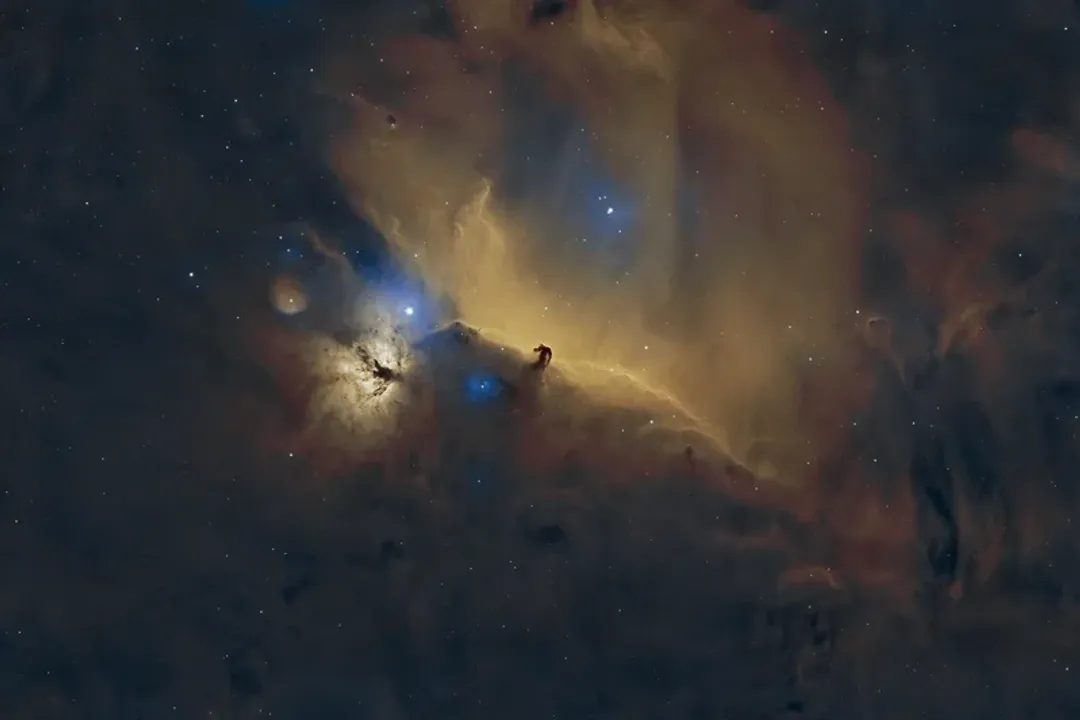
The Horsehead Nebula (Barnard 33) offers a striking example of a dark nebula, appearing as a dark silhouette against the bright background of the Orion Molecular Cloud Complex. To make out its famous profile, which resembles a horse's head, astronomers require instruments with significant aperture under dark skies. Other famous remnants include the Ring Nebula (M57) and the Helix Nebula; the latter is actually the closest known nebula to Earth, located about 700 light-years away in Aquarius. The Helix Nebula, with its concentric rings, famously resembles a giant eyeball in multi-wavelength images captured by telescopes like Spitzer and Hubble.
# Cataloging and Observation
Because so many nebulae were discovered piecemeal over centuries, they often carry multiple identifiers. Most recognizable ones are listed in historical catalogs like the Messier Catalogue (e.g., M42, M8, M27), the New General Catalogue (NGC), or the Index Catalogue (IC). Beyond these numerical designations, they acquire popular names based on appearance (like the Witch's Head Nebula) or location (like the North America Nebula, NGC 7000). While visual detection requires patience and good equipment, modern astronomy relies on electronic detectors like CCDs, which are far more sensitive than older photographic plates, allowing study across the entire electromagnetic spectrum, from X-rays to infrared, providing unparalleled insight into the physical conditions within the gas and dust. The study of their spectra remains the primary way astronomers decode their composition and physical states.
Related Questions
#Citations
What Is a Nebula? | NASA Space Place – NASA Science for Kids
Nebula - Wikipedia
What is a nebula? Cosmic clouds and how to see them
Nebula | Definition, Types, Size, & Facts - Britannica