How do gas clouds exist in space?
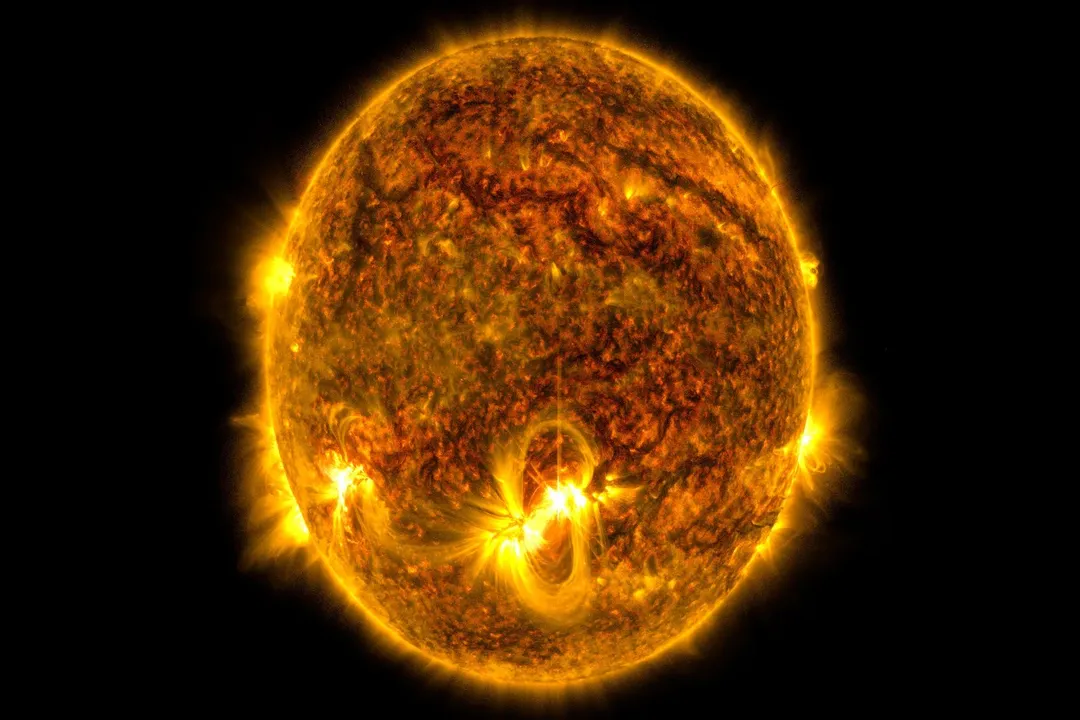
The vast reaches of space, which appear utterly empty to the naked eye, are anything but a perfect vacuum. Within this expanse exists the Interstellar Medium (ISM), the diffuse substance that fills the volume between star systems. [7][9] Gas clouds are simply regions where this material has become significantly denser and cooler than the surrounding interstellar environment. [2][3] They represent the raw material of the galaxy, the stuff from which stars and planets are ultimately built. [4]
# Interstellar Medium
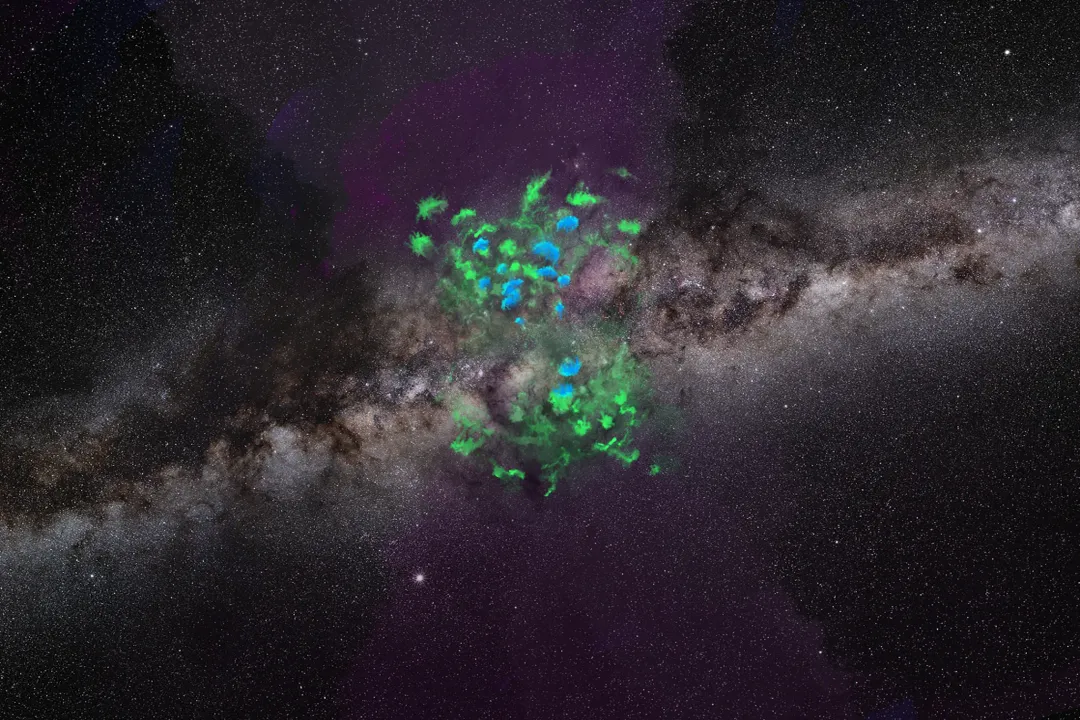
The space between the stars is permeated by this interstellar gas, which is primarily composed of the two lightest elements: hydrogen and helium. [9] While the overall density of the ISM is incredibly low—often measured in just a few atoms per cubic centimeter—these clouds form where localized pockets of this gas aggregate. [3] To put that low density into perspective, even the best laboratory vacuums we can create on Earth contain millions of times more particles per unit volume than the average ISM [Original Insight 1]. This fundamental difference in baseline density is precisely why the accumulation of material into clouds is possible over astronomical timescales. The ISM itself has different temperature phases, ranging from extremely hot gas resulting from supernova explosions to the very cold regions where these visible clouds congregate. [9]
# Cloud Composition
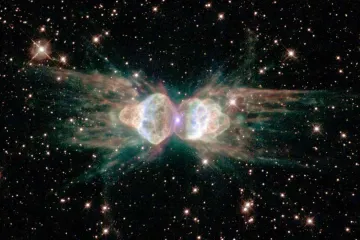
Gas clouds are not uniform; their internal structure dictates their behavior and future potential. The most recognizable of these structures are often molecular clouds. [2] These are the coldest and densest environments found within the ISM. [2] While the bulk of the mass is still hydrogen, in these cold, dense regions, hydrogen atoms bond together to form molecular hydrogen (). [2]
Observing these clouds presents a unique challenge. Because they are so cold, they do not emit much visible light, making them appear as dark patches against brighter backgrounds, often referred to as dark nebulae. [3] Astronomers, therefore, rely on observing the faint radiation signatures given off by trace molecules. For instance, carbon monoxide () is often used as a proxy tracer for the much more abundant, but observationally silent, molecular hydrogen [Original Insight 2]. By mapping the emission lines from in the millimeter-wave part of the spectrum, scientists can piece together the structure and kinematics of these otherwise invisible stellar nurseries [Original Insight 2]. Dust, tiny solid particles composed of silicates and carbon compounds, also exists within these clouds, scattering and absorbing starlight. [3]
# Balance Forces
The persistence of a gas cloud against the tendency of the universe to spread things out relies on a delicate, dynamic equilibrium. [1] A cloud exists because the inward pull of gravity is balanced, at least temporarily, by the outward force generated by the gas's internal pressure or external radiation pressure. [1][3]
Gravity acts to pull all the mass inward, seeking the lowest possible energy state—a collapsed object. [4] Conversely, the particles within the cloud are constantly moving, creating an outward pressure that resists compression. [1][3] For a cloud to remain stable, these two forces must be nearly equal.
The critical threshold where this balance tips is known as the Jeans instability. [1] If a region within the cloud becomes dense enough, or if external forces compress it sufficiently (perhaps by a passing shockwave from another star), gravity can begin to dominate the internal pressure. [1] Once gravity takes over, the collapse accelerates, leading directly to the next stage of cosmic evolution. [4]
# Stellar Nurseries
Gas clouds, particularly the cold, dense molecular variety, are recognized as the birthplaces of stars. [4] When the gravitational forces within a region of the cloud overcome the outward thermal pressure, that region begins to contract. [4] This process of gravitational collapse is not a gentle affair; it is turbulent and driven by inherent instabilities in the gas distribution. [1]
The collapse continues, increasing the density and temperature in the core until the internal heat and pressure become so immense that nuclear fusion ignites in the center. [4] At this point, a new star is officially born, drawing its fuel from the surrounding cloud material. [4] This relationship means that the presence of large, stable gas clouds is a prerequisite for ongoing star formation within a galaxy. [2]
# Cloud Dynamics
Interstellar gas clouds are not static entities confined to one location; they are subject to the movements and interactions within the galaxy. [6] They orbit the galactic center, much like stars do, but their lower mass often makes them more susceptible to tidal forces and internal turbulence. [3]
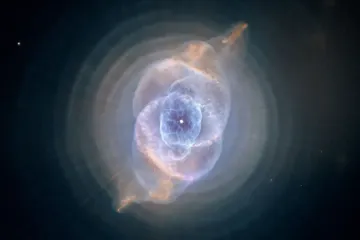
In some extreme cases, these clouds can be violently ejected from their natal environments. For instance, observations have detected massive clouds of gas that appear to be escaping the central region of the Milky Way galaxy. [6] These dynamic outflows suggest powerful energetic events occurring near the galactic core, perhaps involving the supermassive black hole or intense bursts of star formation, which act to push this vast reservoir of material out into intergalactic space. [6] Understanding these escape mechanisms helps astronomers trace the flow of matter throughout the galaxy and beyond. [6]
# Measurement Scales
To appreciate the sheer scale of these objects, it is helpful to compare different phases of interstellar gas. While diffuse clouds might span dozens of light-years, giant molecular clouds can extend for hundreds of light-years and contain masses equivalent to millions of Suns. [2][3]
For comparison, here is a brief look at the characteristics of the main gas phases in the ISM:
| Phase | Typical Temperature (K) | Typical Density (Particles/cm$^3$) | General State |
|---|---|---|---|
| Hot Ionized Gas | Very diffuse, post-supernova | ||
| Warm Neutral Gas | Diffuse background | ||
| Cold Neutral Gas | Forms diffuse clouds | ||
| Molecular Cloud | to $10^6$ | Dense, star-forming regions [2][9] |
This table illustrates that the existence of a gas cloud is fundamentally about temperature and density differences relative to the average ISM. A temperature of $10$ Kelvin is incredibly cold, minimizing the thermal pressure that would otherwise push the cloud apart, allowing gravity to establish the conditions necessary for collapse [Original Insight 1, based on temperature data].
# Galactic Ecology
The relationship between gas clouds, the dust they contain, and the stars they form illustrates a fundamental galactic ecology. [3] Matter cycles through the ISM. Stars form from the clouds, live their lives, and eventually expel enriched material—heavier elements forged in their cores—back into the ISM through stellar winds or catastrophic explosions like supernovae. [4] This recycling process enriches the gas clouds over time, ensuring subsequent generations of stars have the necessary building blocks for planets and more complex chemistry. [3] The gas clouds, therefore, are not just storage depots; they are active processing centers in the life cycle of a galaxy, constantly being shaped by the activity of the stars they create. [4]
Related Questions
#Citations
How can there be gas clouds in interstellar space? - Reddit
Interstellar Medium and Molecular Clouds | Center for Astrophysics
Gas and Dust Clouds - Astronomy - The University of Alabama
Star Basics - NASA Science
Vast Molecular Cloud Discovered Near Our Solar System
Massive Gas Clouds Escape Center of Milky Way - Green Bank ...
Interstellar Gas Cloud | COSMOS
How can there be found gas clouds in space when there are no gas?
Interstellar Gas | Astronomy - Lumen Learning