What is a gas cloud called?
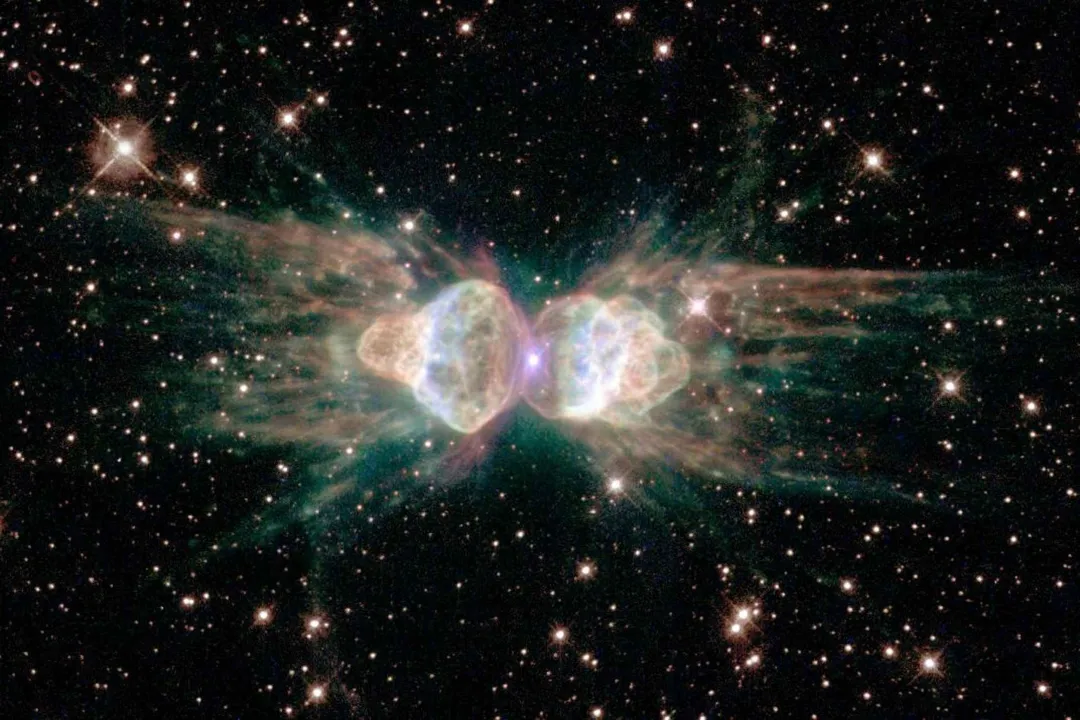
The cosmic substance known generally as a gas cloud floating in the immense void of space has several specific names depending on its composition, location, and behavior, but the most recognized and frequently used term is nebula. [2][5][9] These celestial formations are far from empty; they are vast, diffuse clouds composed primarily of gas—mostly hydrogen and helium—intermixed with microscopic particles of dust. [1][2][5] They represent the raw material of the universe, cradles where stars are born and the lingering ghosts of stars that have died. [2][5]
The context of where this cloud resides dictates part of its terminology. Astronomers often use the term interstellar cloud to describe any concentration of gas and dust that exists in the space between the stars within a galaxy. [4][7] A nebula is, therefore, a specific, often denser and more luminous, type of interstellar cloud. [1] While interstellar cloud is a broad descriptor for the diffuse material permeating the galactic medium, nebula typically refers to those regions where the material is dense enough to interact significantly with light, either by emitting, reflecting, or blocking it. [2]
# Primary Names
The word nebula itself is Latin, meaning "mist" or "fog," which aptly describes how these objects first appeared through early telescopes—as faint, cloudy patches in the night sky. [1][5] When discussing the general phenomenon of these large collections of cosmic dust and gas, nebula and interstellar cloud serve as the two primary labels. [4][7]
It is helpful to think of it like this: every nebula is an interstellar cloud, but not every patch of extremely sparse interstellar gas is classified as a nebula unless it exhibits some distinct optical property that makes it observable. [1][4] The distinction highlights scale and density. The average interstellar medium is incredibly thin, perhaps containing only a few atoms per cubic centimeter. [4] Conversely, the denser cores within nebulae, the ones where stars actually ignite, can reach densities that are high by astronomical standards, though still a near-perfect vacuum by terrestrial definitions. [2]
# Cloud Composition
The fundamental building blocks of these clouds dictate their eventual fate and appearance. The vast majority of the gas, often exceeding 90%, is elemental hydrogen. [1] Helium makes up most of the rest, with trace amounts of heavier elements—what astronomers call "metals"—left over from previous generations of stars. [1]
The dust component is what truly shapes the visual character of many nebulae. [2] This dust isn't composed of geological dirt; rather, it consists of tiny solid grains, often composed of silicates, carbon compounds, or iron. [1] These grains are incredibly small, sometimes only a few hundred atoms across. [1]
When considering the structure, one can observe a fascinating property: the appearance of a nebula is often a deceptive snapshot of a very long process. A visible nebula might be millions of years old, but the conditions driving its current glow or darkness—the heating from a newborn star, or the slow collapse of material—operate across timescales that dwarf human history. [2] It is a common misconception, for instance, that the colors we see in a photograph of a star-forming region represent the cloud as it looks right now from our vantage point; instead, we are seeing the integrated effect of energetic processes playing out over immense spatial and temporal scales. [2]
# Nebula Types
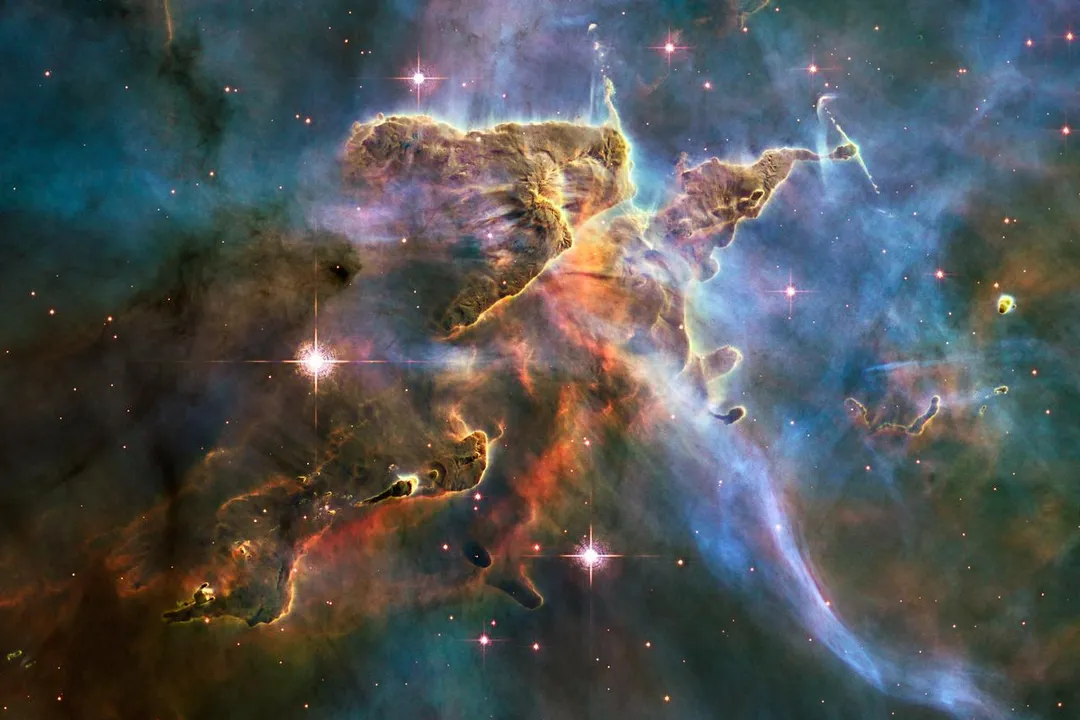
Nebulae are not monolithic objects; they are classified based on how they interact with light from nearby or embedded stars, leading to several distinct categories. [2] Understanding these types is key to understanding what a gas cloud does in the cosmos.
# Luminous Clouds
These clouds glow brightly due to internal or external energy sources. [2]
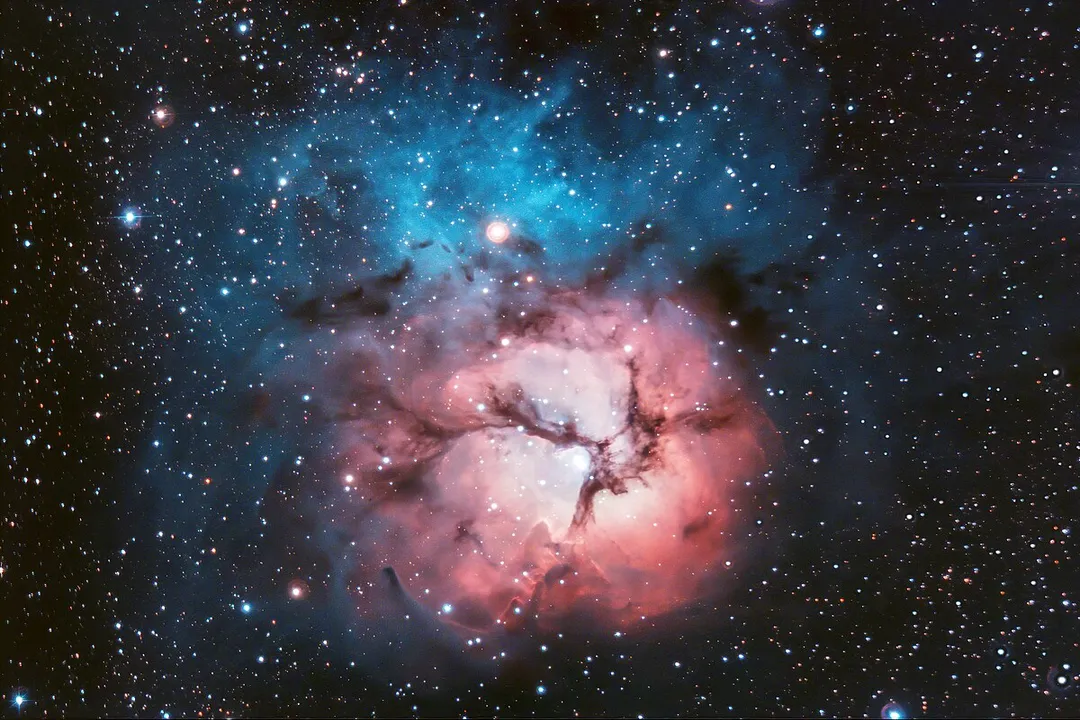
- Emission Nebulae: These are the glowing, often reddish or pinkish clouds seen in star-forming regions. [2] They consist of hot, ionized gas that emits light at specific wavelengths when electrons recombine with the atoms, usually after being excited by intense ultraviolet radiation from nearby, very hot, young stars. [2] The distinctive red glow often comes from ionized hydrogen. [2]
- Reflection Nebulae: Unlike emission nebulae, these clouds do not emit their own light significantly. Instead, they scatter the light from nearby stars that are not hot enough to ionize the gas. [2] These often appear blue because shorter wavelengths of light (blue) are scattered more efficiently by the fine dust particles, much like the Earth’s atmosphere scatters sunlight to make the sky look blue. [2]
# Obscuring Clouds
These clouds are defined by what they block rather than what they emit.
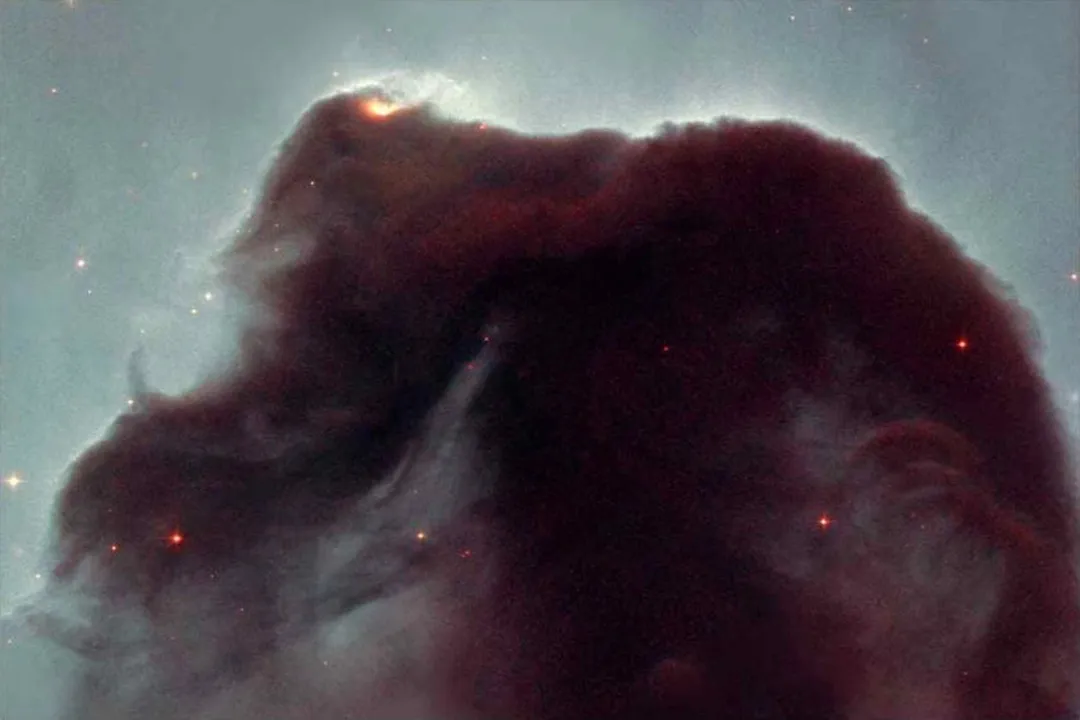
- Dark Nebulae: These are dense concentrations of gas and dust that are so opaque they block the light from stars or other nebulae located behind them. [2] They appear as dark patches or silhouettes against a brighter background sky or glowing nebula. [2] The Horsehead Nebula is a famous example of this phenomenon, where the dust cloud obscures the background emission source. [2]
# Stellar Remnants
These clouds mark the end stages of stellar life cycles.
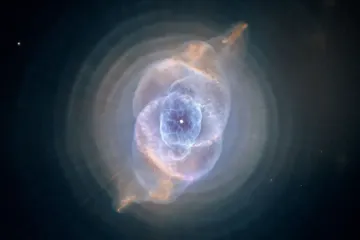
- Planetary Nebulae: Despite their name, they have absolutely nothing to do with planets. [1][5] This term dates back to early telescopic observations where they appeared as small, round, planet-like discs. [1] They are actually shells of gas ejected by a dying, medium-mass star (like our Sun) during its transition into a white dwarf. [1][2] They are relatively short-lived phenomena, lasting only tens of thousands of years. [2]
- Supernova Remnants: These are the expanding clouds of gas and plasma resulting from the catastrophic explosion of a massive star—a supernova. [2] These remnants can contain vast amounts of heavier elements created or scattered by the explosion, enriching the interstellar medium. [2]
# Classification Comparison
To better see how these categories relate to the simple question of "What is a gas cloud called?", we can look at their defining characteristic related to observation:
| Nebula Type | Primary Mechanism | Typical Appearance | Relation to Stars |
|---|---|---|---|
| Emission | Ionized Gas Emission | Red/Pink Glow | Ionized by nearby young, hot stars |
| Reflection | Light Scattering | Blue Haze | Illuminated by nearby stars |
| Dark | Light Absorption | Silhouette/Void | Blocks light from sources behind it |
| Planetary | Ejected Stellar Shell | Round, often colorful | Formed by a dying, small/medium star |
| Supernova | Explosive Shockwave | Irregular, rapidly expanding | Remnant of a massive star's death |
It is important to recognize that a single large region in space might contain several of these types simultaneously. For instance, a massive star-forming complex often features bright emission regions adjacent to dense, dark dust lanes, with the whole structure being illuminated by the scattered light of its newest members. [2]
# Cosmic Importance
The existence of these gas clouds, regardless of their specific name, is fundamental to galactic structure and evolution. They serve as the universal recycling centers. [2] Stars form within the densest parts of the interstellar clouds when gravity overcomes the internal pressure. [2] When these stars evolve and die—either gently as planetary nebulae or violently as supernovae—they return enriched material back into the interstellar medium, seeding the next generation of stars and planets with the heavier elements necessary for rocky worlds and life. [2]
The sheer volume of this material is staggering. While the density is low, the volume occupied by interstellar clouds within the Milky Way is enormous, containing the mass equivalent of billions of Suns. [4] Tracking these clouds allows astrophysicists to map the spiral structure of galaxies and model how the material within them cycles over cosmic time. [4]
One interesting observation, often missed when focusing only on the bright emission nebulae, is the role of the very cold, non-luminous molecular clouds. These are the coldest and densest types of interstellar clouds, often precursors to traditional nebulae. [4] While a typical H II region (emission nebula) is warm and actively ionizing, these molecular clouds can be only 10 to 20 Kelvin above absolute zero. [4] If you were able to observe one of these molecular clouds from within, using microwave or radio telescopes rather than visible light, the "cloud" would cease to be a glowing spectacle and instead appear as an immense, cold, relatively dark structure, revealing the initial conditions for star formation before the ultraviolet light has had a chance to energize the atoms. [4]
# Observational Challenges
Observing and naming these clouds presents ongoing challenges, particularly in differentiating faint or distant examples. While the Orion Nebula is clearly an emission nebula because of its powerful internal energy source, a smaller, fainter cloud located far from any bright star might only be classified as a dark nebula or a general interstellar cloud because the available light is insufficient to cause ionization or strong scattering. [2][4] Professional observatories often use spectroscopy, which analyzes the specific wavelengths of light absorbed or emitted by the cloud's atoms, to determine its exact chemical composition and temperature, something visual observation alone cannot achieve. [2] This spectral data confirms whether the cloud is simply reflecting starlight, or actively radiating due to high-energy processes.
Another subtle point arises when considering the remnants. A supernova remnant, like the Crab Nebula, begins as an enormous, fast-moving shockwave through existing interstellar gas. [2] Over time, as the remnant expands and cools, the distinction between the 'remnant' and a general 'emission nebula' can blur, becoming a large, slowly expanding shell of enriched gas that continues to glow for millennia before dissipating back into the general interstellar medium. [2] Thus, the name reflects its origin more than its current physical state at very late stages.
In essence, while nebula is the single best answer for "what is a gas cloud called" when it's visible or actively interacting with starlight, the full context requires acknowledging the broader interstellar cloud population, which includes both the spectacular glowing nurseries and the vast, cold reservoirs of future stars yet to be lit up. [1][4]
#Videos
Nebulae: Crash Course Astronomy #36 - YouTube
Types of Nebulae - Clouds of Gas and Dust - YouTube
Related Questions
#Citations
Nebula - Wikipedia
Nebula: Definition, location and variants - Space
Nebula interstellar cloud composition and formation - Facebook
Nebulae: Crash Course Astronomy #36 - YouTube
What is a gas cloud in space called? - Quora
What is an interstellar cloud of gas and dust called? - CK-12
What is a nebula? - Space Center Houston