What process creates a Planetary Nebula?
Answer
Gas shells ejected by a dying, medium-mass star.
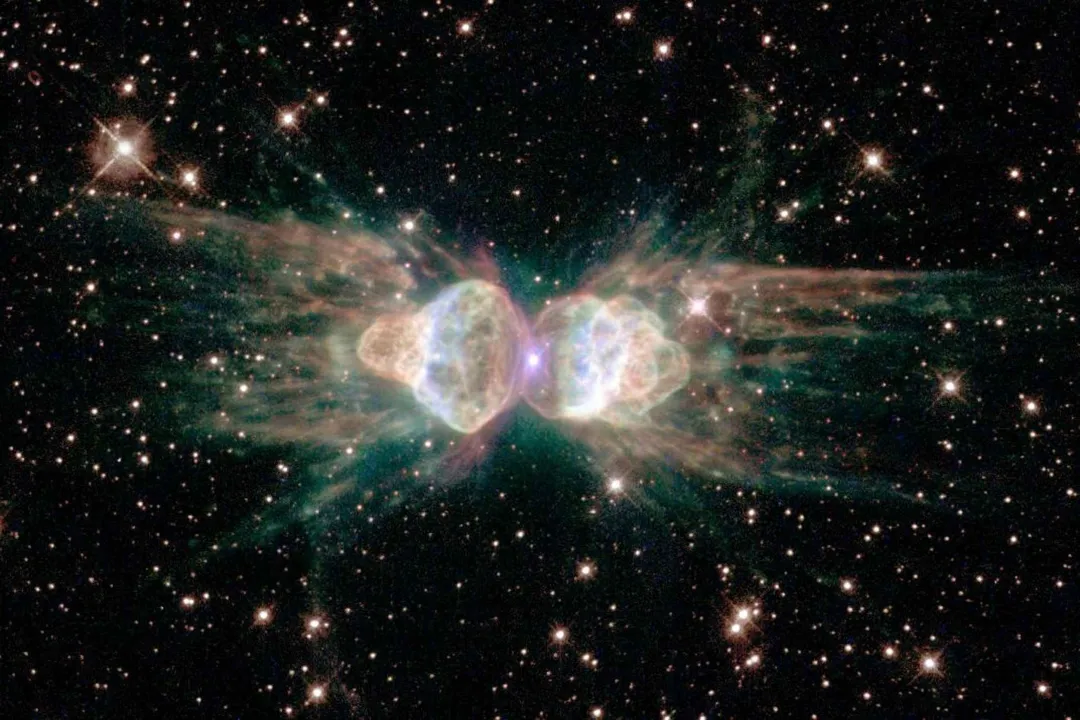
Planetary Nebulae represent the final stages of stellar life for medium-mass stars, such as our Sun, during their transition phase leading toward becoming a white dwarf. These nebulae are formed when the star gently expels its outer layers of gas into space, creating an expanding shell. Despite the name, they have no relation to planets; the misnomer arose because early telescopic views presented them as small, round, planet-like discs. These structures are relatively fleeting, existing for only tens of thousands of years before dispersing.
#Videos
Nebulae: Crash Course Astronomy #36 - YouTube
Types of Nebulae - Clouds of Gas and Dust - YouTube
Related Questions
What is the most recognized term for a general cosmic gas cloud?What element constitutes the vast majority of gas in cosmic clouds?Why do Reflection Nebulae often appear blue when illuminated?What process creates a Planetary Nebula?What is the defining visual characteristic of a Dark Nebula?How does a nebula specifically relate to a general interstellar cloud?How are very cold, non-luminous molecular clouds primarily observed?What materials primarily compose the solid dust grains in nebulae?What causes the distinctive red glow often seen in Emission Nebulae?What event results in the formation of a Supernova Remnant?