What is a cosmic cloud called?
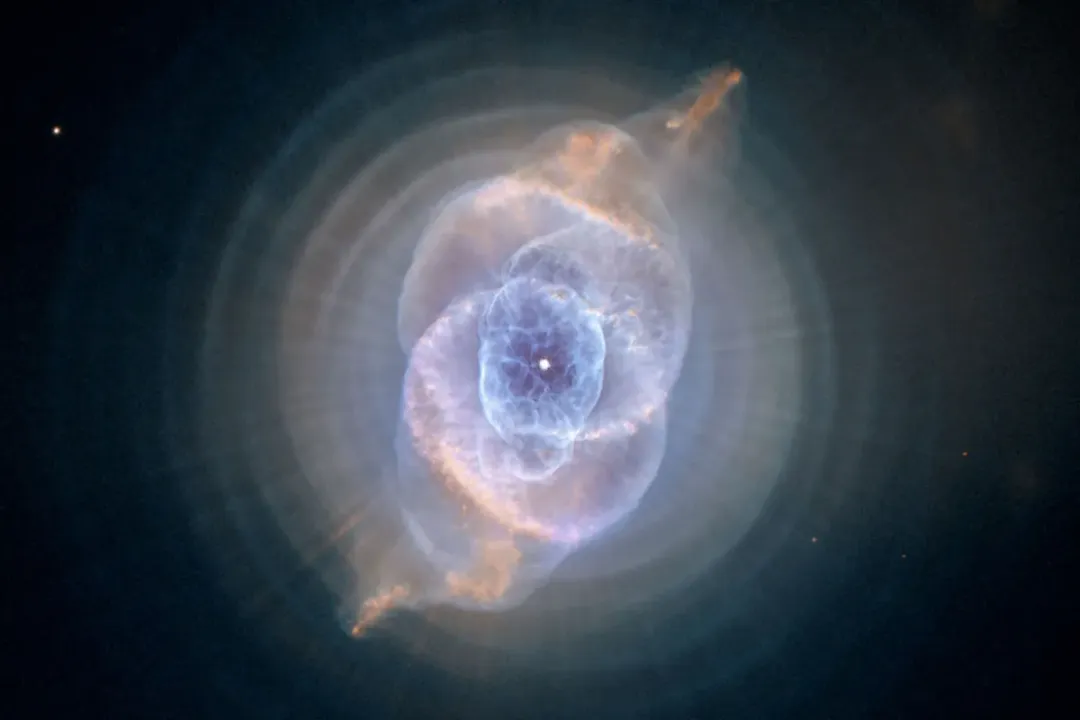
The vast expanse between the stars is not empty, but rather filled with enormous, diffuse structures of gas and dust. When you look up at the darkest night sky, these colossal accumulations are what astronomers formally call interstellar clouds. However, the most striking, luminous, and photogenic of these cosmic clouds have a more common, evocative name: nebulae, which derives from the Latin word for "mist," "fog," or "vapor".
For centuries, early astronomers struggled to distinguish between these true clouds and distant galaxies; both appeared as faint, fuzzy patches against the blackness. With the advent of more powerful instruments, the distinction became clear. Today, the term nebula is generally reserved for genuine clouds of gas and dust situated inside our own galaxy, the Milky Way. These objects are far more than just pretty patterns; they are the fundamental building blocks and the spectacular remnants of stellar life, essential to the ongoing chemical evolution of the cosmos.
# Cloud Makeup
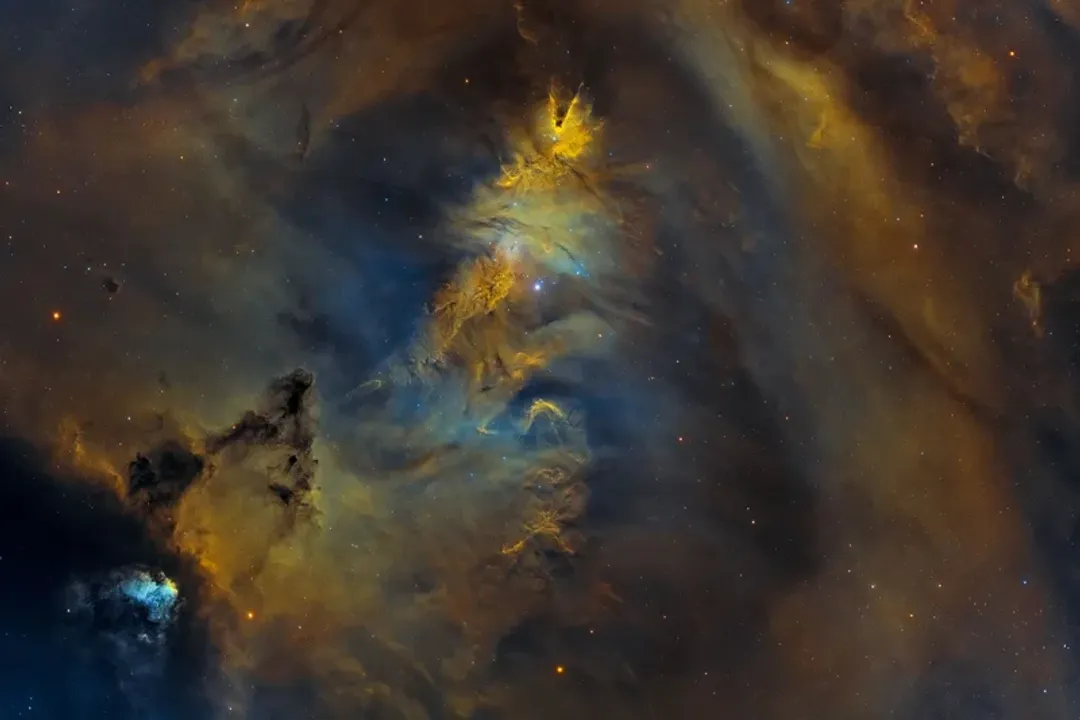
Fundamentally, an interstellar cloud is simply a region within the interstellar medium—the material spread throughout a galaxy—that is denser than the average surrounding space. The ingredients for these cosmic structures are straightforward, though their scale is anything but. The recipe relies on two main components: primarily hydrogen gas, the most abundant substance in the universe, followed by helium gas. Sprinkled throughout this gaseous soup are tiny particles of cosmic dust, which is often suggested to have originated from the explosions of ancient stars like supernovae.
The classification of an interstellar cloud often depends on the state of its hydrogen content and its density. When the hydrogen is neutral, the region is termed an H I region. If the gas is energized enough to become plasma, it is known as an H II region. Neutral and ionized clouds are sometimes grouped together and referred to as diffuse clouds. On the denser end of the spectrum are the molecular clouds, often simply called dense clouds, where the gas is cold enough for atoms to bond into molecules. Nebulae, the visually stunning subset, are frequently comprised of this diffuse or molecular material, sometimes energized and glowing, sometimes dark and obscuring.
An interesting, though less common, type of interstellar cloud is the High-Velocity Cloud (HVC). These clouds move significantly faster than expected based on the regular rotation of the Milky Way, typically possessing a radial velocity greater than 90 kilometers per second relative to our local standard of rest. Their origin remains a subject of study, with theories suggesting they might be leftover material from the galaxy's formation or matter being drawn in from neighboring galaxies.
# Stellar Cycles
The existence of a nebula is intrinsically linked to the life and death of stars. There are two primary "origin stories" for these magnificent clouds.
The first narrative is one of creation, where nebulae act as stellar nurseries. This process begins with a large, cold cloud of interstellar gas and dust—a Giant Molecular Cloud—drifting in the galaxy. Gravity, the persistent force that keeps us on Earth, slowly pulls the diffuse material together, causing it to clump and collapse under its own weight. The extreme coldness of the cloud is crucial, as it prevents the gas particles from moving too fast and resisting gravity's inward pull. As these pockets become increasingly dense, gravity continues to compress the material until the core reaches the critical mass needed to ignite sustained nuclear fusion, and a new star—or often, an entire cluster of new stars—is born. A single nebula can seed the birth of hundreds or even thousands of suns.
The second origin story is far more dramatic, detailing the remnants of stellar evolution. When a star much more massive than our Sun exhausts its fuel, it does not fade quietly; it ends in a catastrophic explosion known as a supernova. This event blasts the star’s outer layers—the material it synthesized during its lifetime—outward into space at incredible velocities, forming a glowing, expanding shell of gas and dust known as a supernova remnant. Similarly, when a sun-like star nears the end of its life, it gently puffs off its outer gaseous atmosphere, creating a different type of glowing shell known as a planetary nebula.
# Nebula Types
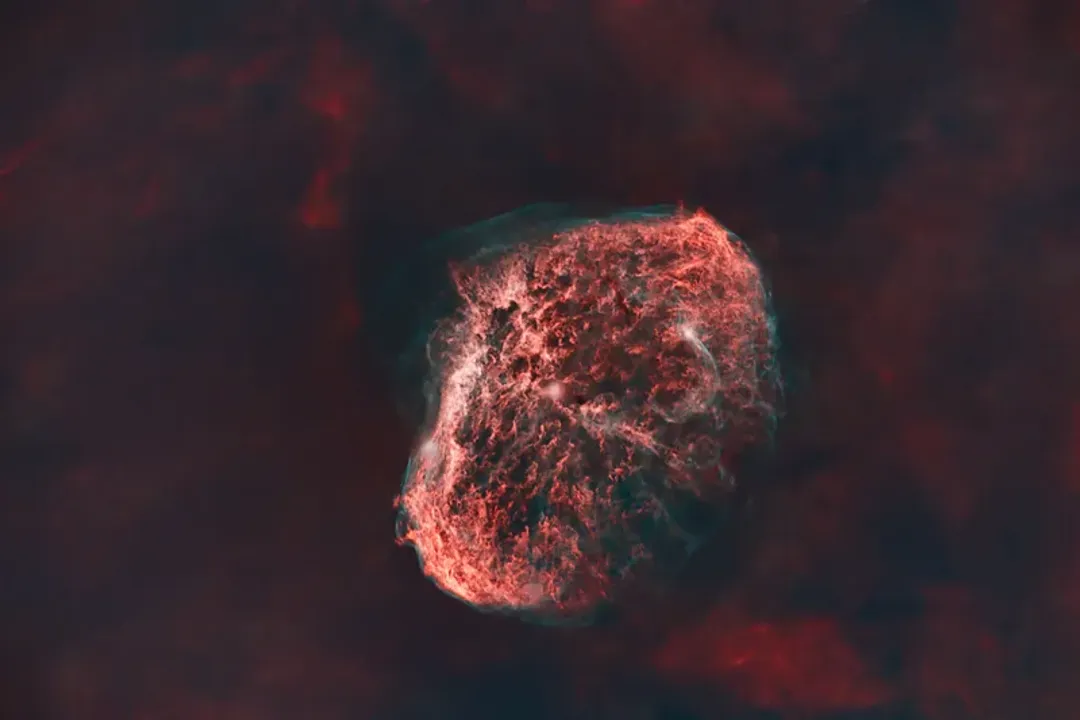
Because nebulae originate from such varied stellar processes, they display a wide array of appearances and physical states. Differentiating between them involves looking for clues about their internal energy sources or their density relative to background light.
Here is a breakdown of the major categories:
| Type of Nebula | Primary Appearance | Mechanism of Light | Stellar Connection | Example |
|---|---|---|---|---|
| Emission Nebula | Bright, glowing, often red or pink | Gas is ionized by intense radiation from internal hot, young stars, causing the gas (especially hydrogen) to emit its own light. | Star Birth (Stellar Nursery) | Orion Nebula (M42) |
| Reflection Nebula | Shimmering blue clouds | Dust within the cloud scatters light from nearby bright stars. Blue light scatters more effectively, similar to Earth's sky. | Near bright, existing stars | Around the Pleiades cluster |
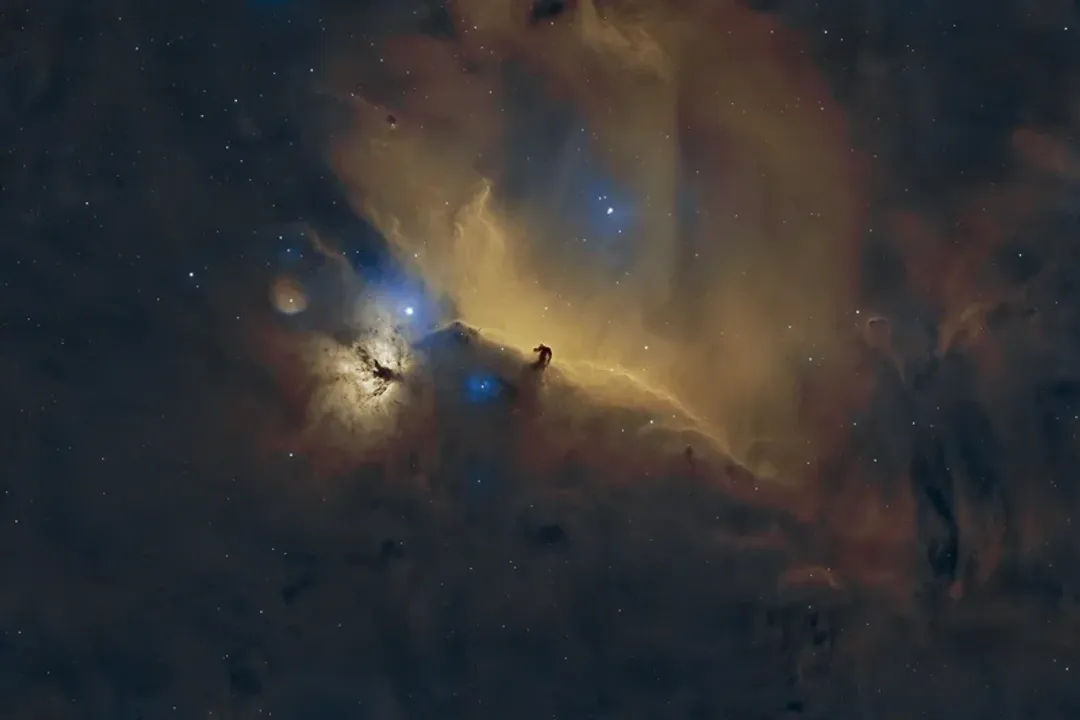
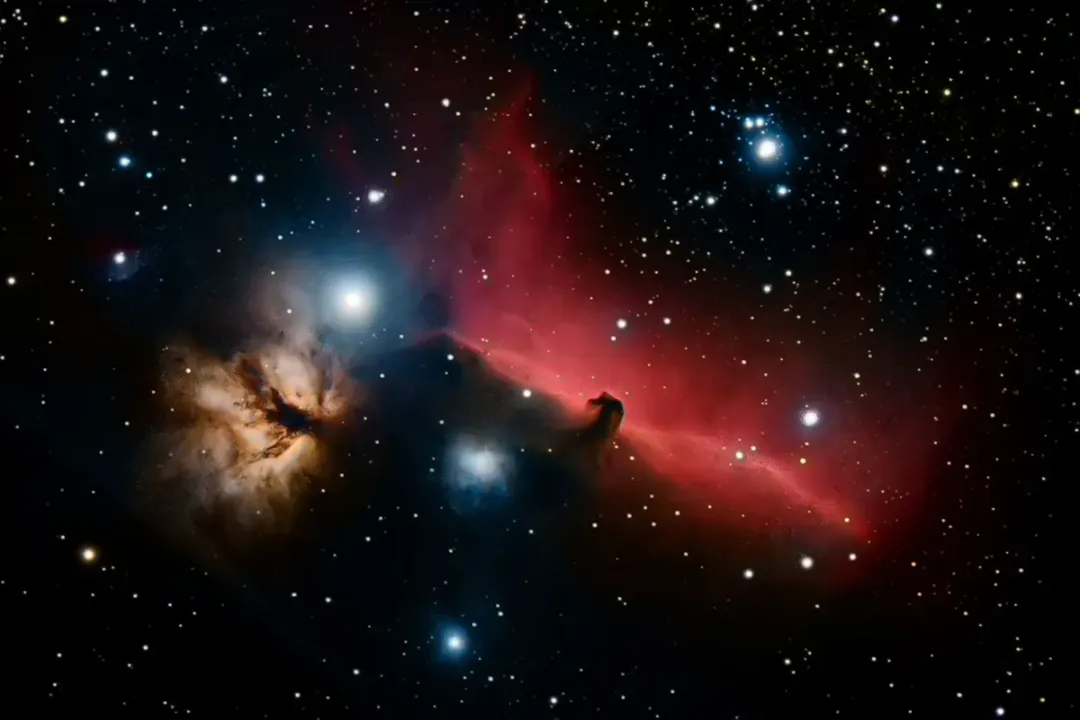
| Dark Nebula | Opaque, shadowy shapes against a bright background | The dust within the cloud is so incredibly dense it completely absorbs or blocks all light from objects situated behind it. | Ingredients gathering for future stars | Horsehead Nebula (B33) |
| Planetary Nebula | Often circular or disc-like, softly glowing shells | Gas expelled gently by a dying, sun-like star is illuminated by the remaining hot core (white dwarf). | Death of a Sun-like Star | Ring Nebula (M57) |
| Supernova Remnant | Spectacular, often irregular, expanding shells | The glowing debris flung out violently during the explosion of a massive star. | Explosive Death of a Massive Star | Crab Nebula (M1) |
The Orion Nebula (M42) is the archetypal emission nebula, teeming with newly formed stars whose radiation energizes the surrounding hydrogen gas into that characteristic rosy glow. Conversely, the Horsehead Nebula offers a stunning silhouette, being a classic dark nebula defined by the light it prevents from reaching us.
# Celestial Sculptures
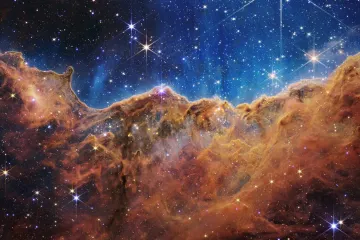
Some of the most famous nebulae highlight these processes in breathtaking detail. The Eagle Nebula (M16) is renowned for housing the Pillars of Creation, which are vast, towering columns of cool gas and dust. These structures are actively being sculpted by the intense stellar winds and radiation emanating from a nearby cluster of massive, young stars. Deep within these dusty towers, new stars are currently hiding and forming, waiting for their moment to shine.
It is fascinating to consider that the very structures we view are dynamic and temporal on a cosmic scale. For instance, the light from the Pillars of Creation that we see today might be showing them as they were thousands of years ago, and a supernova explosion that occurred nearby may have already destroyed them, but the light from that destructive event will not reach us for several hundred years.
Furthermore, studying the chemical makeup of these clouds provides unparalleled insight into stellar evolution. For example, the nebula NGC 6164/6165 was found by UK researchers to contain significant amounts of nitrogen, carbon, and oxygen that are typically locked away inside a star's core. The presence of these heavier elements strongly suggested that the nebula was the result of two stars merging violently, rather than a standard supernova or planetary nebula, showcasing how different stellar interactions leave unique chemical fingerprints. Understanding these chemical ratios allows astronomers to build more accurate models of how different star types live and die.
# Cosmic Recycling Analysis
The universe functions as a massive, continuous recycling program, and nebulae are the processing plants. Every element heavier than hydrogen and helium—the calcium in your teeth, the iron in your blood, the carbon in your food—was forged inside stars and subsequently scattered across space by nebulae. This material then serves as the raw ingredient for the next generation of stars, planets, and, eventually, life. The consistency of physics and chemistry across the entire observable universe, verifiable through techniques like spectroscopy—analyzing the light wavelengths emitted or absorbed by the gas—confirms that the processes happening in a nebula 10 billion light-years away follow the same atomic rules as those in our local galactic neighborhood.
When we analyze a nebula, the elemental ratios offer an immediate clue about its history. For instance, a nebula rich in hydrogen and helium, glowing red from energized hydrogen, is very likely a young emission nebula actively forming stars. In contrast, a supernova remnant will show a much higher proportion of heavier elements, especially those created by explosive nucleosynthesis, like iron, nickel, and other elements beyond iron on the periodic table, which are distributed during the star's violent demise. While Big Bang nucleosynthesis created mostly hydrogen, deuterium, and helium, the nebula acts as the dispersal agent for everything heavier, making the composition of these clouds a living record of cosmic enrichment.
# Visual Observation
The common image of a nebula, often seen from NASA or the European Space Agency, features vibrant, saturated colors—fiery reds, deep blues, and striking purples. This vivid reality, however, is often an artistic rendering based on the camera's capabilities, not the naked eye's perception.
When you look at a nebula through a backyard telescope or binoculars, the view is fundamentally different. Because the human eye needs a certain intensity of light to perceive color, nebulae, which are vast but very diffuse (a nebula the size of Earth would weigh only a few kilograms), typically appear as faint, ghostly smudges of greyish-white. Astrophotographers capture the true colors by using long exposures, sometimes lasting many minutes, to soak up as much light as possible, often employing specialized filters to isolate the spectral lines emitted by specific gases like hydrogen (H-alpha) or oxygen. These filtered images are then processed, assigning colors to the different spectral bands to create the breathtaking final products we usually associate with nebulae.
For a beginner, the Orion Nebula (M42) offers the best introduction, as it is the brightest nebula visible and can be detected with the naked eye under dark skies.
Here is a simple guide to your first successful nebula hunt:
- Locate Orion: Wait for the winter months (in the Northern Hemisphere) or look for the prominent constellation of Orion the Hunter when it is visible in your sky.
- Find the Belt: Identify the three bright stars forming Orion's belt in a straight line.
- Identify the Sword: Look directly below the belt for a dimmer line of stars hanging down—this is the sword.
- Spot the Fuzz: The middle "star" in that sword is not a sharp point of light; it will appear slightly fuzzy or misty to your eye. That is the Orion Nebula.
It is a unique experience, even without color, to know you are observing a true stellar nursery—a place where the raw materials are condensing under gravity to form new suns, a process that happened for our own Sun roughly 4.6 billion years ago.
# Cloud Longevity
The immense scale of these structures makes it hard to grasp their lifespan. They are not permanent fixtures. Over millions of years, the gas and dust within a nebula are engaged in a constant battle between dispersal and condensation. If gravity wins, the cloud collapses to form stars and planetary systems. If the cloud is near active star clusters, the intense radiation can simply blow the remaining material away, causing the cloud to slowly dissipate back into the general interstellar medium. In essence, nebulae mark the beginning and the end of stellar episodes, existing only as the active phase of material cycling, which means that even the most massive and recognizable clouds are temporary features in the grand sweep of cosmic time.
Related Questions
#Citations
Interstellar cloud - Wikipedia
What is a nebula? Cosmic clouds and how to see them
A 3D guide to cosmic clouds with Queen guitarist Brian May
What Is a Nebula? A Cosmic Cloud Guide - Space Ranger Fred
Nebula: Definition, location and variants - Space
Space Place in a Snap: What Is a Nebula? - NASA+