What is a piece of a comet called?
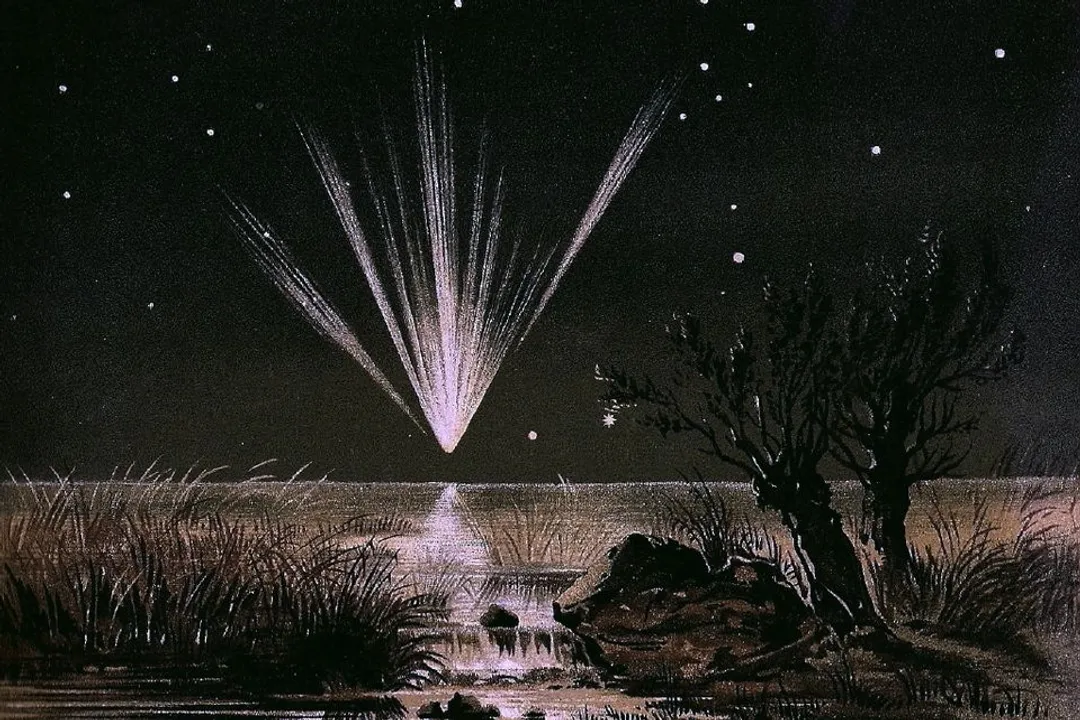
When we look up and see the delicate streak of a comet traversing the night sky, the object appears as one ethereal whole. However, this icy traveler is actually composed of several distinct parts, each playing a unique role in the spectacle we observe from Earth. The question of what a piece of a comet is called really depends on which structural component you are referring to: the solid core, the temporary atmosphere, or the streaming tail. Each component comes into existence only when the comet nears the Sun, transforming it from a dormant chunk of space ice into an active celestial body. [2][5]
# Dirty Snowball
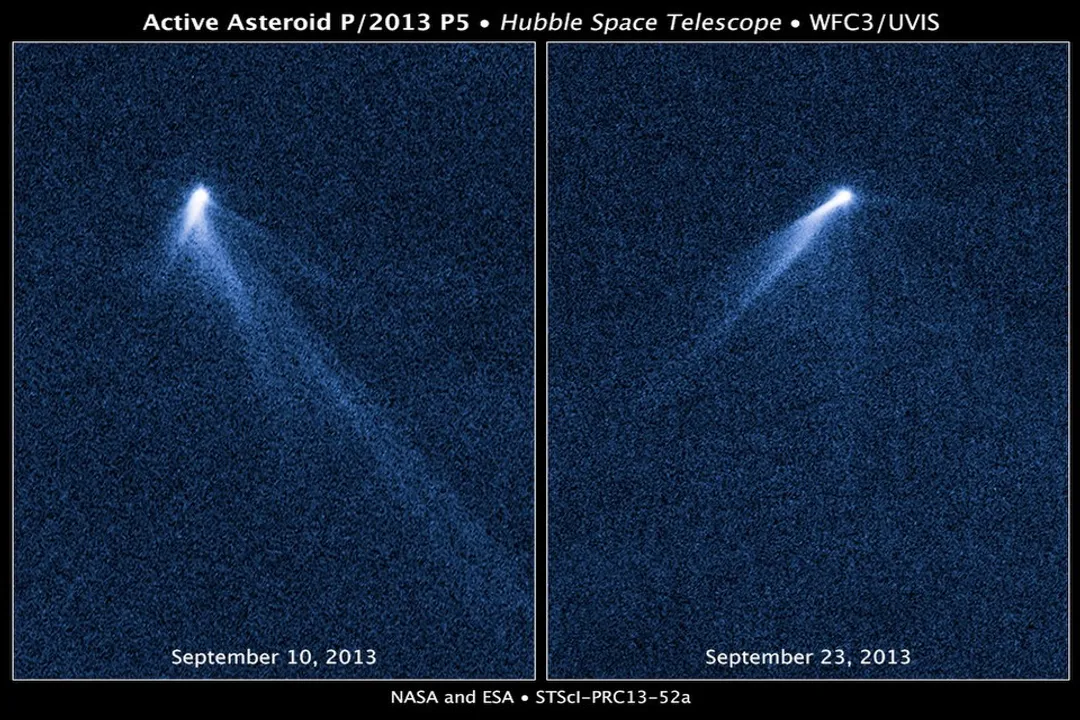
At its most fundamental level, a comet is often described using the famous analogy of a "dirty snowball". [2][3][5] This simple description captures the essence of its composition: a mixture of frozen gases (like water, carbon dioxide, and carbon monoxide), dust, and rocky materials held together by gravity. [5] These cosmic snowballs hail from the frigid outer reaches of the solar system, specifically the Kuiper Belt or the even more distant Oort Cloud. [9] Because they spend most of their existence far from the Sun's warmth, their volatile ices remain frozen solid, making them pristine relics from the solar system's formation era. The material that makes up a comet is generally much darker than the surface of the Moon, which is why they reflect so little light until they begin to warm up. [5]
# Nucleus Structure
The very heart of the comet, the solid, central piece that holds everything together, is called the nucleus. [2][5][6] This is the true comet; the rest of the magnificent structure seen from Earth is temporary and dependent on solar activity. Nuclei are relatively small, typically measuring only a few miles or kilometers across. [2][5] For instance, the nucleus of Comet 67P/Churyumov-Gerasimenko, studied closely by the Rosetta mission, was found to be irregularly shaped, measuring about 2.5 miles by 2.5 miles by 5 miles. [8]
The composition of the nucleus—the ratio of ice to dust and rock—is incredibly important. While the standard model holds true, the specific mix dictates how the comet behaves when heated. A nucleus rich in highly volatile ices, such as frozen carbon monoxide, will "activate" and begin shedding material at a much greater distance from the Sun than one primarily composed of frozen water. This means that a newly arrived comet from the far-flung Oort Cloud might exhibit a spectacularly bright coma early on, whereas an older, more frequently returning comet that has already lost most of its easily vaporized surface ices will likely only show activity when it is much closer to the Sun, presenting a much fainter spectacle. This difference in material volatility essentially serves as a marker of a comet's orbital history and age.
# Forming Coma
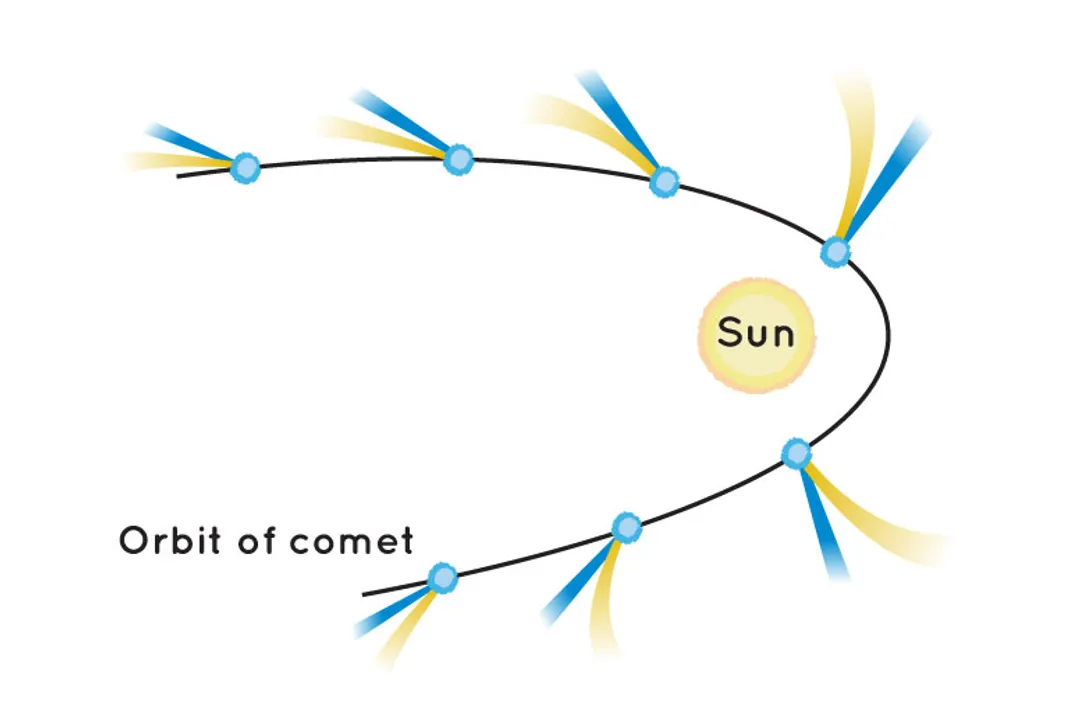
As the comet travels inward toward the Sun, the solar radiation begins to heat the nucleus. When the surface temperature rises enough, the frozen ices do not melt into liquid; instead, they turn directly into gas—a process called sublimation. [2][5] This escaping gas carries dust particles with it, forming a vast, hazy atmosphere surrounding the solid nucleus. [2][6] This temporary, expansive envelope is known as the coma. [2][5]
The coma can grow enormous, often ballooning out to hundreds of thousands of miles across, sometimes even larger than the planet Jupiter. [2] The dust particles within the coma scatter sunlight, which is what makes the comet visible to the naked eye. [5] The coma is essentially the boundary layer where the comet officially transitions from a cold, inert lump to an active object shining in the inner solar system.
# Dual Tails
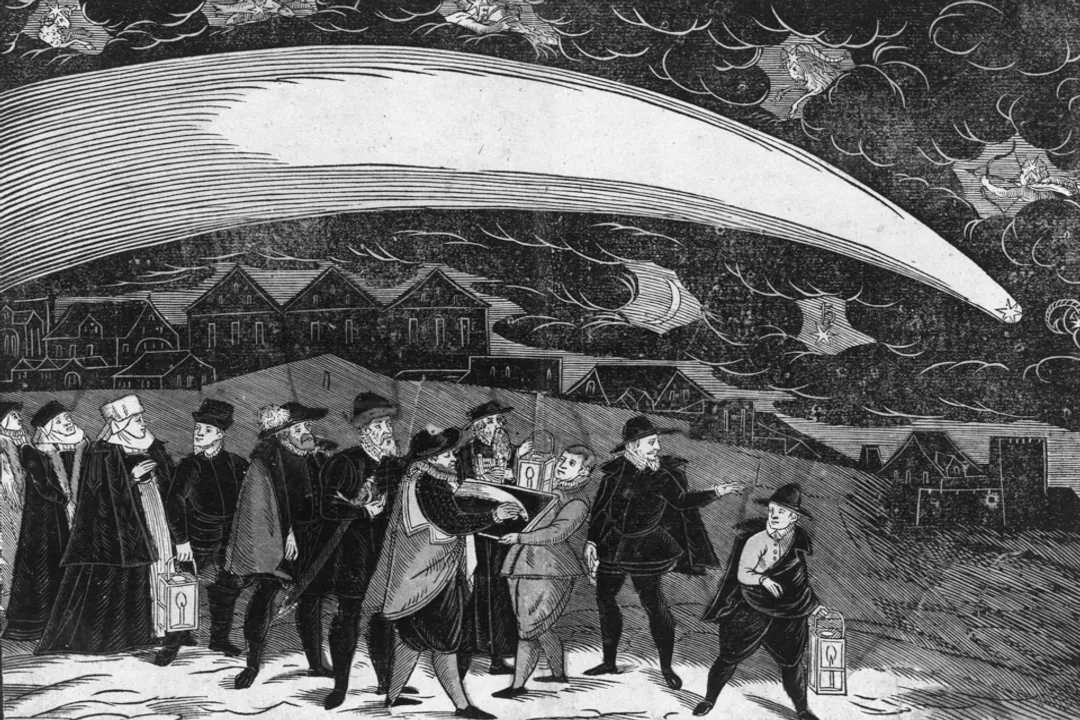
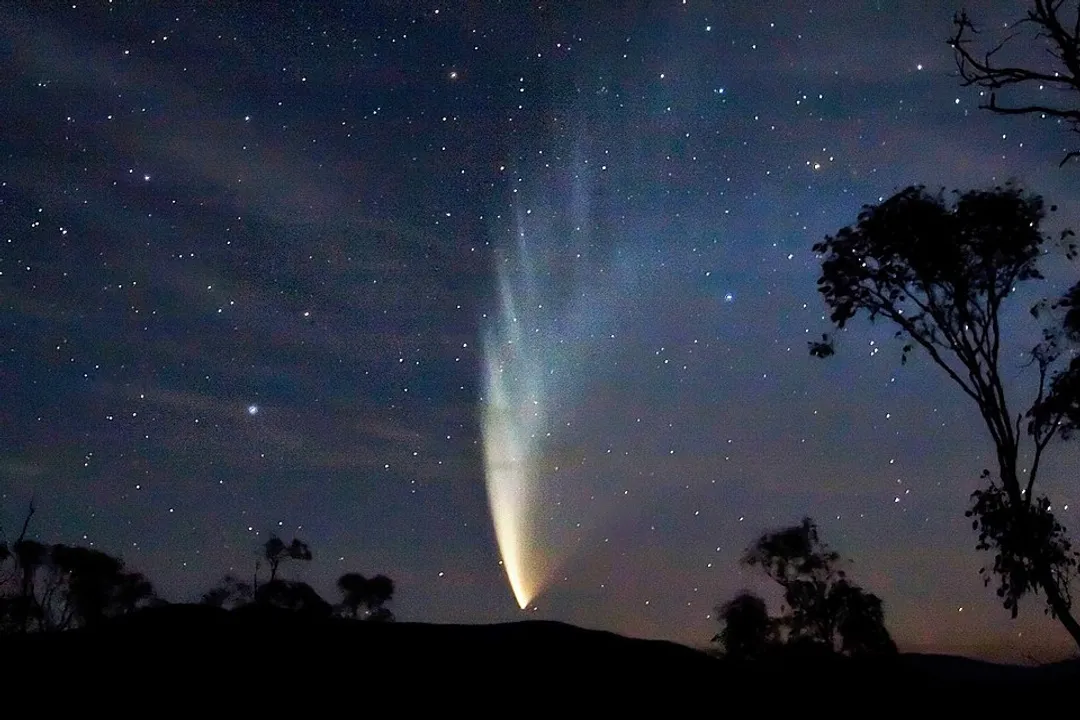
Perhaps the most iconic "pieces" of a comet are its tails, which are purely gaseous and dusty structures created by the pressure of solar radiation and the solar wind pushing material away from the coma. [2][5] A healthy, active comet usually develops two distinct tails that can stretch for millions of miles: the dust tail and the ion (or gas) tail. [6]
The dust tail is composed of tiny solid particles released from the nucleus that are swept back by solar radiation pressure. [6] Because the dust particles are relatively heavy, they do not move as fast as the gas ions and follow a slightly curved path dictated by the comet's orbital path, often appearing yellowish or white because they reflect sunlight. [2][5]
In contrast, the ion tail, or gas tail, is made up of ionized gas molecules. [6] These ions are strongly affected by the solar wind—the stream of charged particles flowing outward from the Sun. [2][5] This interaction causes the ion tail to be pushed directly away from the Sun, regardless of the comet’s direction of travel, making it appear straight and often blueish in color due to the way certain gases fluoresce. [6] It is interesting to note that an observer on Earth might see the dust tail curving back toward the comet's orbital track, while the ion tail points rigidly away from the Sun, leading to complex visual alignments depending on the comet's position relative to our planet. [6]
# Meteor Showers
What happens to the dust and debris that make up the less-defined, trailing edges of the comet? These shed "pieces" continue orbiting the Sun along the comet’s original path. [7] When Earth happens to pass through this ancient orbital stream of debris, we experience a meteor shower. [7] The debris particles, now called meteoroids, enter Earth's atmosphere at high speed, friction causes them to burn up, creating bright streaks of light we call meteors. [7] For example, the Perseid meteor shower, visible every August, originates from debris left behind by Comet Swift-Tuttle. [1] Thus, a collection of small, formerly attached pieces of a comet becomes a predictable annual celestial event for skywatchers on Earth. [1]
# Asteroid Comet Difference
Understanding what a comet is helps clarify what its pieces are, but it is also helpful to distinguish the whole object from its near-neighbors in space, asteroids. [7] While both reside in the solar system, their primary composition differs significantly, which dictates their structure. [7] Asteroids are generally rocky or metallic bodies, remnants from the formation of the inner solar system, and they typically orbit within the asteroid belt between Mars and Jupiter. [7] Comets, conversely, are icy bodies originating from the colder outer regions. [7] A key difference noted by scientists is that when an asteroid is heated by the Sun, it generally remains inert, whereas a comet reacts dramatically by developing that fuzzy coma and tails. [7] This fundamental material difference—ice versus rock—is why we see the various pieces of a comet only when it becomes active, something an asteroid will not do unless it suffers a major impact. [7]
Even the very smallest identifiable piece of a comet—a grain of dust perhaps smaller than a grain of sand, or a microscopic chunk of ice—is still fundamentally governed by the two forces that define its whole existence: the Sun's heat, which causes sublimation, and the solar wind, which shapes its tail. [6][5]
Related Questions
#Citations
Parts of a Comet - How Comets Work - Science | HowStuffWorks
What Is a Comet? | NASA Space Place – NASA Science for Kids
Comet - Wikipedia
Comet Anatomy | Research Starters - EBSCO
comet - Kids | Britannica Kids | Homework Help
ESA - Structure of a comet - European Space Agency
What's the Difference Between Asteroids, Comets and Meteors? We ...
Comets | Rosetta - The Open University
Comets Structure, Origin & Properties - Lesson - Study.com