What is a string of satellites called?
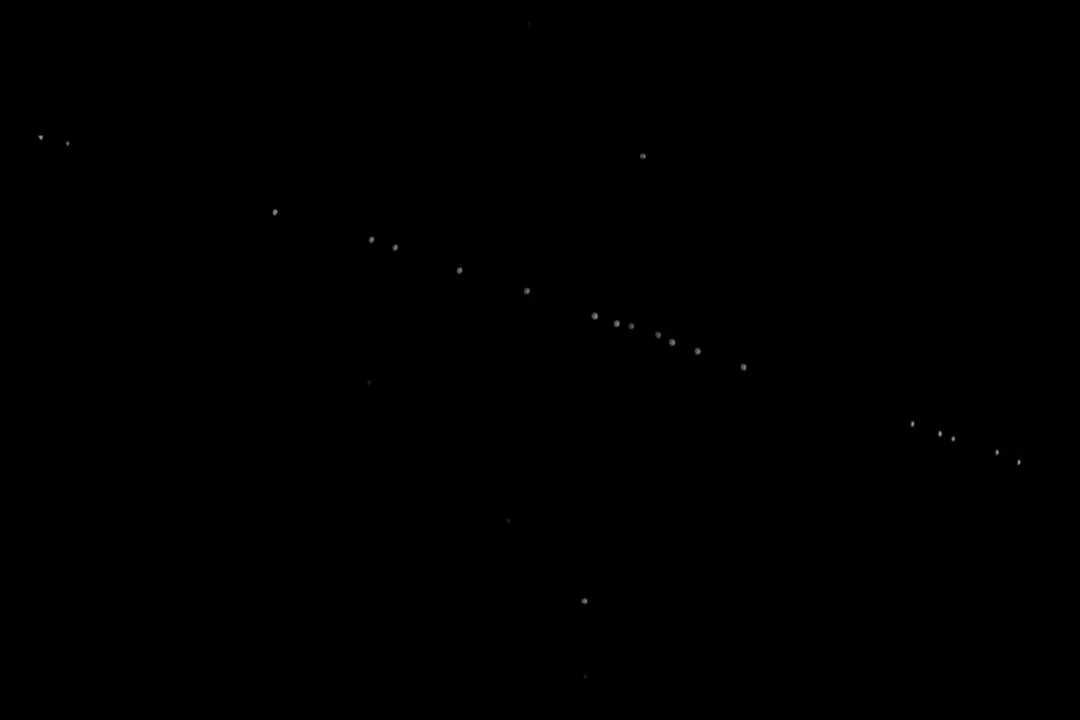
When people look up into the night sky and see a distinct, slow-moving line of bright lights, sometimes described as a cosmic pearl necklace or a ghostly train, the immediate question is often about the identity of this unusual phenomenon. This striking sight has become increasingly common, catching stargazers and casual observers completely off guard. While the casual description might settle on "a string of lights," the more precise technical term for this formation, especially when recently deployed, is a satellite train. Sometimes, this alignment is also poetically referred to as a string of pearls.
This specific visual event is overwhelmingly associated with one particular modern undertaking: the deployment of the Starlink satellite constellation operated by SpaceX. These are not meteors burning up, nor are they the typical, sporadic, lone satellites most people are accustomed to seeing drift across the darkness. Instead, what is being witnessed is a deliberate, tightly packed procession of newly launched spacecraft beginning their operational lives in low Earth orbit (LEO). Understanding why they appear this way requires looking past the simple label and examining the engineering behind these massive, interconnected systems.
# Defining the Sight
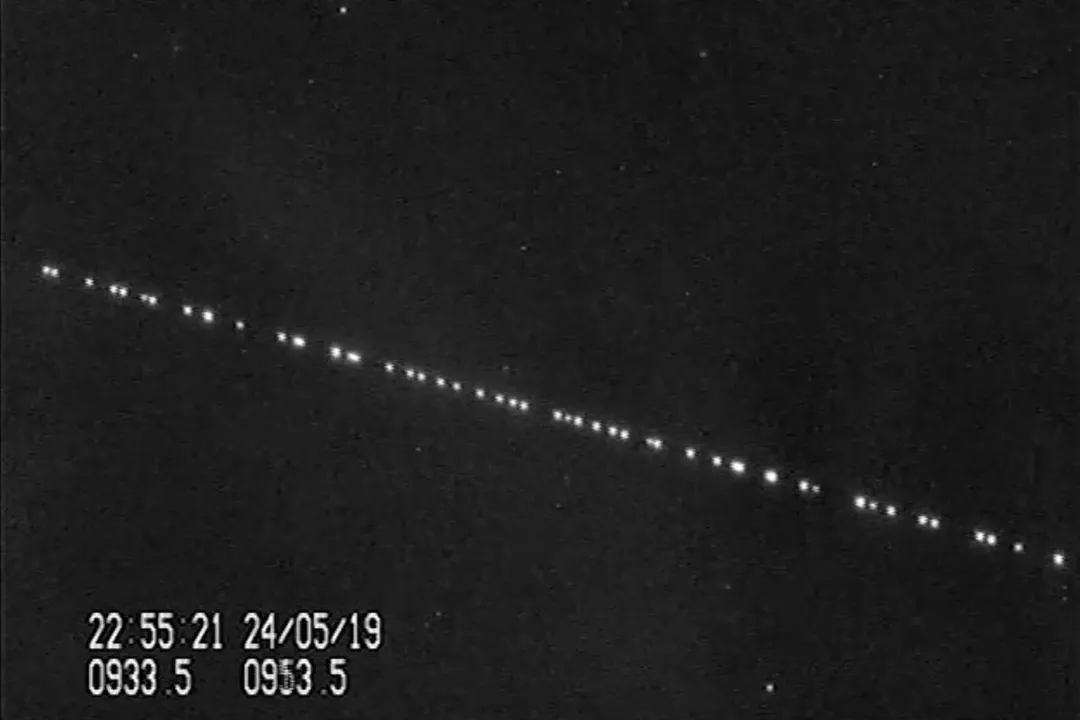
The appearance of a long, unbroken line of objects in the heavens prompts the need for clear terminology. A single satellite moving overhead is a common enough occurrence, but when dozens of them follow one another with near-perfect spacing, it creates a line that demands explanation. The term satellite train perfectly captures this linear arrangement. This configuration is a temporary, albeit sometimes persistent, feature of the deployment phase for mega-constellations.
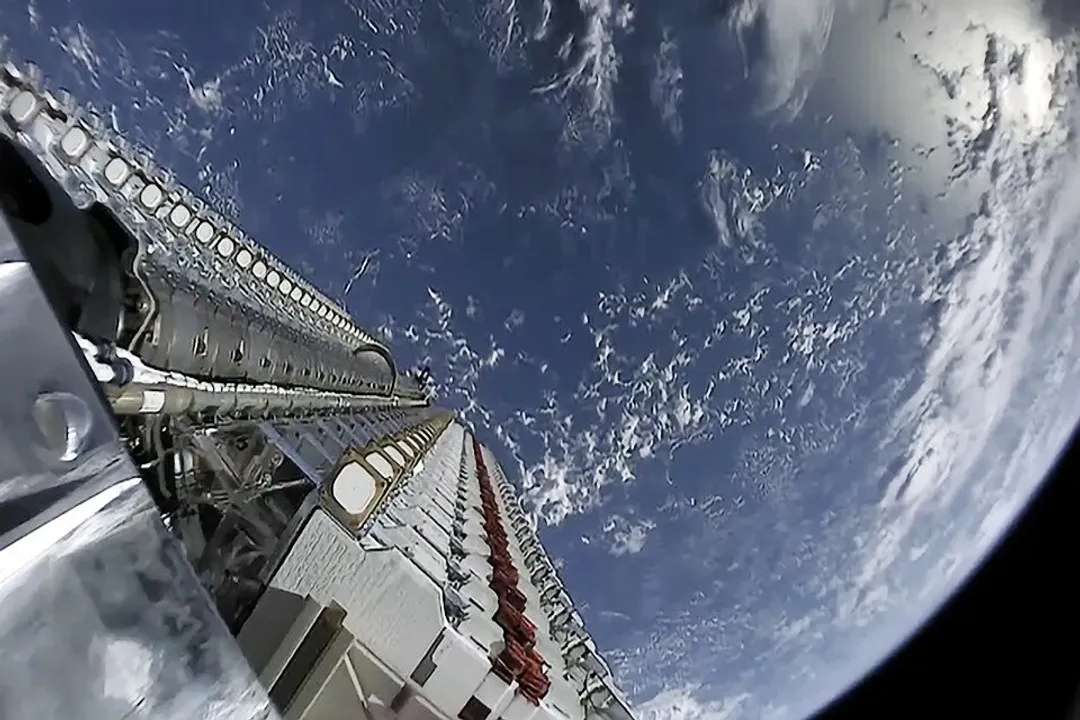
A constellation, in space terms, refers to a group of artificial satellites working together, often for a common purpose like global communications or Earth observation. Starlink is one such mega-constellation, planned to eventually consist of thousands of individual satellites. However, these satellites are not launched all at once in their final operational positions. They are grouped together, usually within a few dozen kilometers of each other, immediately after being deployed from the upper stage of the launch vehicle, forming that visible train.
The reason for the tightness of the formation during the initial phase is purely logistical. Launch vehicles, like the Falcon 9 rocket used by SpaceX, can carry multiple satellites in a single payload. Once the rocket stage reaches the initial deployment altitude—which is often lower than the final operational orbit—the satellites are sequentially released one after another. This sequential release creates the immediate visual effect of a line stretching across the sky. If you were to look at a diagram of the process, it would look like beads being dropped from a string at regular intervals. The satellites are traveling at high speeds, yet because they are all close together, they appear to move in formation until they execute their own maneuvering burns to spread out into their final, wider orbital slots.
# Starlink Scale
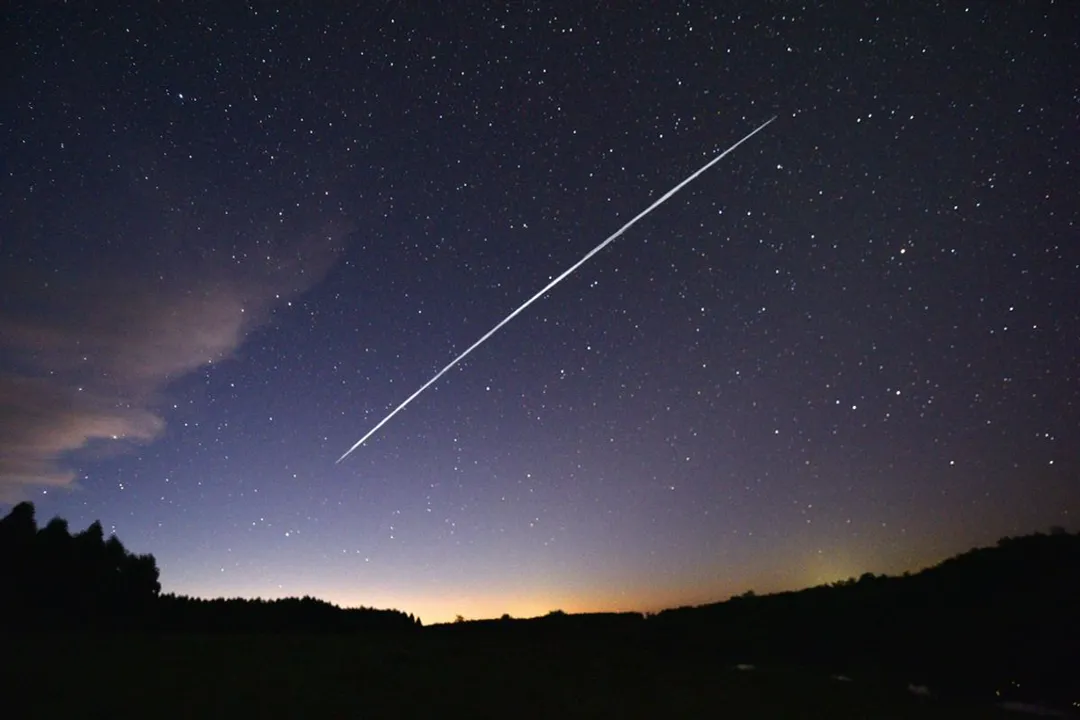
The primary reason this phenomenon has become so widely noticed in recent years is the sheer ambition and scale of the Starlink project. While other projects have utilized constellations, Starlink aims to blanket the globe with high-speed, low-latency internet access, requiring thousands of satellites operating in LEO. This dramatically increases the statistical probability of a sighting compared to older, smaller satellite networks.
A single launch can deploy 50 or 60 satellites simultaneously. Imagine 60 objects, spaced perhaps 5 to 10 kilometers apart, all reflecting sunlight at the same angle relative to an observer on Earth. That grouping of lights, lasting perhaps a few minutes as it crosses the visible sky, is what generates local news reports and social media posts across the globe.
The sheer number involved dictates that these trains are not rare anomalies but rather a regular, expected byproduct of an active launch schedule. For context, a fully deployed Starlink constellation could number in the tens of thousands, meaning dozens of deployment trains might be visible worldwide over the course of a single week, depending on the season and local geography.
It is worthwhile to consider the difference between the initial train and the established constellation. An established satellite in the operational network has usually moved to its designated altitude, which is often higher than the initial deployment orbit. Furthermore, these operational satellites are actively managed to control their orientation and minimize reflectivity, aiming to reduce interference for ground-based astronomy. The train, however, is the signature of the birth of a new segment of that constellation, characterized by very low altitude and very close proximity, which makes them exceptionally bright and conspicuous during the few days following launch.
# Seeing the Light
The visibility of these satellite trains depends entirely on geometry and timing, acting as a natural filter for when observers can spot them. For a satellite to be visible to the naked eye, it must be high enough above the local horizon to be seen, yet low enough in the atmosphere that it catches the sun's rays while the observer on the ground is already in darkness (or pre-dawn twilight).
This sweet spot typically occurs shortly after sunset or just before sunrise. If the satellites are too high, they will orbit into the Earth’s shadow before they pass over an observer situated in deep twilight, making them invisible. If they are too low, the observer is likely in full daylight, and the satellites will be lost in the blue glare of the sky. When the conditions align, the satellites, which are relatively small objects reflecting sunlight off their flat, polished surfaces (though newer iterations are attempting to mitigate this), can shine as brightly as stars, sometimes even brighter than the planet Venus.
The visual experience is quite distinct. Since all satellites in the train were deployed together, they follow nearly identical orbital paths, meaning they maintain their relative spacing as they traverse the sky. This is the key feature distinguishing them from aircraft, which have flashing navigation lights, or meteors, which streak and disappear quickly. The satellite train moves with a steady, silent, unblinking progression, appearing alien against the backdrop of fixed stars.
An interesting observation arises when comparing the initial train visibility with later sightings. As the satellites separate and raise their orbits through small onboard thrusters, the "train" effect dissipates. Over several weeks, the line spreads into a dispersed group of lights. If you spot a very tight, uniform line, you are likely seeing a deployment that occurred within the last few days. If you see a few bright dots moving in the same general direction but spread out over a wider area of the sky, you are seeing older, established members of the constellation. This difference in visual texture offers an immediate, albeit rough, indicator of the age of the orbital segment you are viewing.
# Tracking the Passage
For those who wish to move from accidental observer to intentional chaser of these orbital lines, knowing when and where to look is critical. The initial satellite train remains in a low, distinct formation for a limited period, usually just a few days or weeks, before the orbital spacing increases significantly. This limited window means timing is everything.
Several online resources have emerged to address this public curiosity. These tracking tools take the publicly available launch data and orbital mechanics to predict the visibility window for specific ground locations. Users input their city or zip code, and the service calculates the precise times when the satellites will be at the correct angle to reflect sunlight toward the observer.
The data provided usually includes:
- Time of Visibility: The exact minute the train will first become visible on the western horizon and the minute it will disappear on the eastern horizon (or dip into the Earth's shadow).
- Maximum Elevation: How high in the sky the train will get during its pass.
- Apparent Magnitude: A prediction of the brightness, often comparable to first-magnitude stars.
This data transforms a chance encounter into a scheduled event. When planning an observation, remember that the initial deployment orbit is often quite low, meaning the train may cross the sky more quickly than a high-altitude satellite, and its maximum elevation might be lower, making it harder to spot if there are obstructions like tall buildings or trees on the horizon.

# Orbital Mechanics and Human Impact
The term "string of satellites" is more than just a visual descriptor; it represents a profound shift in how we populate the near-Earth environment. Projects like Starlink have rapidly increased the total number of active satellites in LEO, leading to ongoing scientific and regulatory discussions.
One area of interest is the sheer density of objects in specific orbital shells. While the system is designed to maintain safe separation, the high concentration of active hardware brings concerns about potential collisions and the creation of space debris, often referred to as the Kessler Syndrome—a cascading chain reaction of impacts. In response, modern satellites are generally equipped with propulsion systems designed to de-orbit (safely re-enter the atmosphere) at the end of their useful lives, often within five years.
Another significant point of contention, directly related to what people see, is the impact on ground-based astronomy. Satellites reflecting sunlight can streak across long-exposure astronomical images, effectively ruining data for scientists studying faint celestial objects. While SpaceX and others are attempting various mitigation techniques, such as using non-reflective coatings or sun-shading visors, the visibility of the initial deployment trains highlights just how reflective these objects can be when at low altitudes and in precise solar alignment with an observer. The very engineering that makes them effective communicators (large, flat solar panels) makes them excellent reflectors of sunlight when in the right geometry.
Ultimately, the simple, arresting image of a satellite train—a line of silent, fast-moving lights—serves as a powerful, real-time indicator of the pace of modern space development. It is a fleeting visual reminder that the space environment just above our heads is actively being built out into a global infrastructure, visible to anyone patient enough to look up at the right time after the sun has set.
#Videos
Starlink satellites, the string of lights in the night sky. - YouTube
Related Questions
#Citations
Starlink satellites: Facts, tracking and impact on astronomy - Space
Starlink - Wikipedia
Starlink satellites, the string of lights in the night sky. - YouTube
Starlink satellites spotted in UK skies this morning A string of bright ...
What are those lights in the sky? Starlink satellites explained
String of lights in the sky | Brad Panovich explains SpaceX Starlink ...
People report line of lights in the night sky - WGAL
Starlink satellites spotted in UK skies this morning A ... - Instagram