What is the path of a satellite around the Sun called?

The scientific description for the track taken by any celestial body as it circles a larger mass, such as a planet around a star, is generally called an orbit. [5][9] When one asks for the name of the path a satellite takes around the Sun, the answer bridges two concepts: the general term for the path, and the specific reference plane defined by the solar system's geometry. For any object, whether it is a planet or a hypothetical satellite designed to orbit the Sun directly, the path itself is the orbit. [5] This path is typically elliptical, governed by the laws describing how objects move in gravitational fields. [5]
# General Path
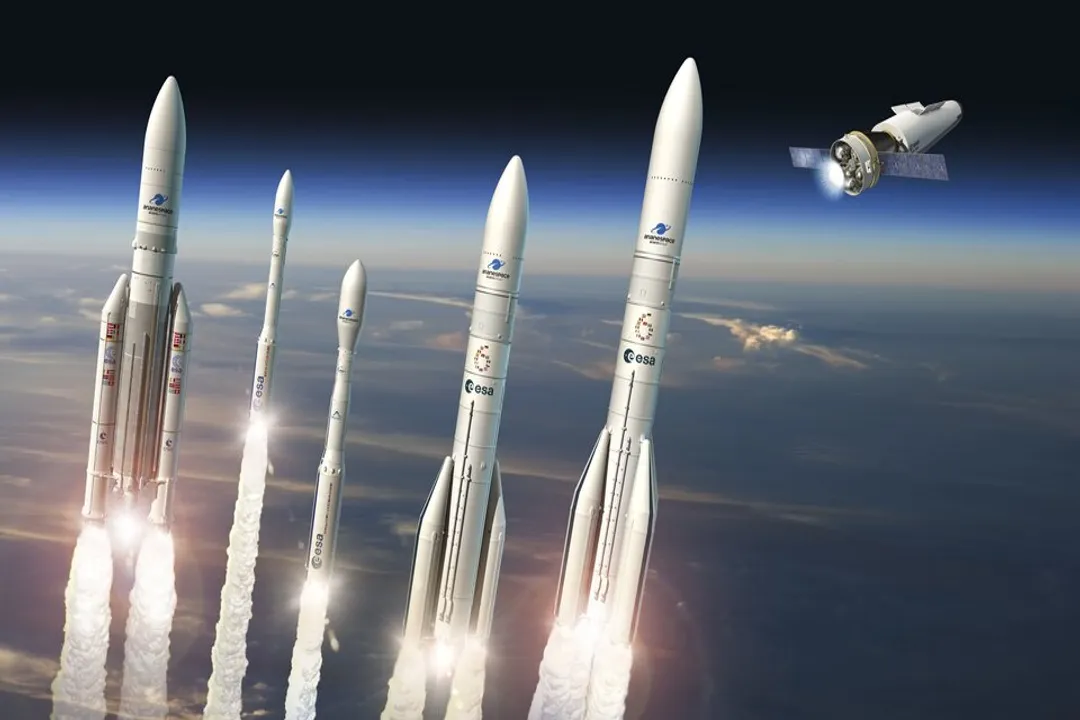
The most fundamental term applicable to the movement of any body around the Sun is orbit. [9] This path is a closed curve resulting from the balance between the object's forward motion and the Sun's gravitational pull. [5] A less common, but still technically correct way to describe the path of a satellite orbiting the Sun might be a solar orbit, distinguishing it from the more frequently discussed Earth-orbiting satellites. [9] Satellites orbiting Earth, for example, have paths defined relative to our planet, such as low Earth orbits or geosynchronous orbits. [9] However, for anything orbiting the Sun, the geometry of the solar system dictates a specific framework for defining that orbital path.
# Planetary Reference
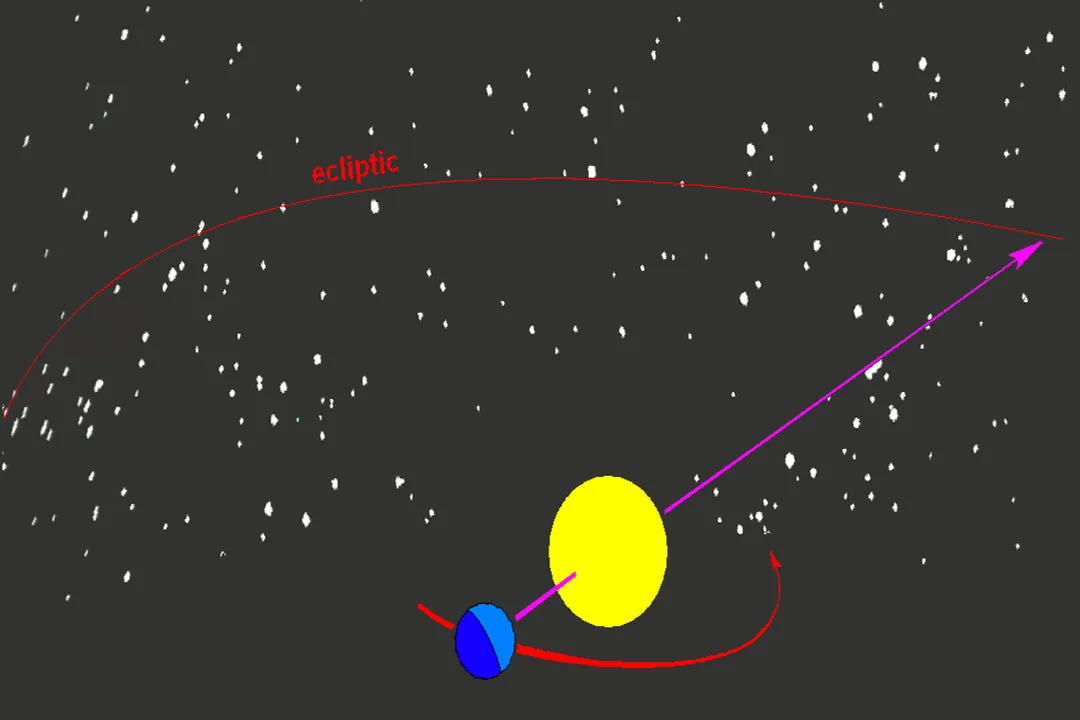
When astronomers discuss the paths of the major bodies in our solar system—the planets—the term that captures the plane containing their orbits around the Sun is the ecliptic. [1][8] The ecliptic is technically defined as the plane of Earth's orbit around the Sun. [1][3] Over the course of a year, the Sun appears to trace this path across the celestial sphere. [8] Because the solar system formed from a rotating disc of gas and dust, the orbits of the major planets tend to stay very close to this same plane. [1]
# Orbital Plane
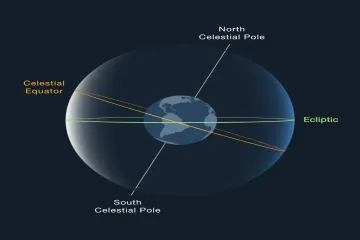
More broadly, the flat, two-dimensional surface that contains the entire path of any orbiting object is termed the orbital plane. [3] If a hypothetical satellite were launched into orbit around the Sun with the exact velocity and direction as Earth, its orbital plane would coincide perfectly with the ecliptic plane. [3] The concept of the orbital plane is crucial because it helps define the object's orientation relative to other bodies. For a satellite orbiting a planet, the orbital plane is often measured relative to the planet's equator, but for solar orbits, the ecliptic serves as the primary reference. [3][9]
The angle between an object's orbital plane and the reference plane (the ecliptic, in this case) is known as the inclination. [3] While the planets maintain very small inclinations relative to each other and the ecliptic, a spacecraft or asteroid entering the inner solar system from outside the plane of the planets would possess a significant inclination to the ecliptic. [1]
If we imagine sending a probe directly outward from Earth toward Mars, its initial trajectory might place it slightly above or below the ecliptic plane relative to the Sun. While the Sun's gravity immediately captures it into a solar orbit, that orbit's plane would only match the ecliptic perfectly if the probe's launch velocity had zero component perpendicular to the ecliptic plane in the first place. Any small deviation imparted by Earth's orbital velocity relative to the Sun results in an inclination—an angle between the object's orbital plane and the ecliptic. [1]
# Eclipses and Naming
The name ecliptic carries historical significance tied to observable phenomena. [8] Eclipses—both solar and lunar—can only occur when the Moon's orbital path crosses the ecliptic plane, allowing the three bodies to align correctly. [8] This crossing point is known as a node. [8] The observation of these rare alignments likely solidified the ecliptic as the fundamental reference plane for measuring positions in the heavens for millennia. [1][8]
Considering the immense scale, the near-coplanarity of the planets is striking. If the solar system were scaled down so that the orbit of Jupiter, the furthest major planet, was only as wide as a standard dining room table (roughly 6 feet across), the Earth's orbit (the ecliptic reference) would be about 4 inches in diameter, and the Sun itself would be invisible to the naked eye. The fact that every major planet orbits within a few degrees of this tiny disc emphasizes how flat our solar system is, making the ecliptic a highly effective reference plane for any object entering the inner solar system. [1]
# Summary of Terms
To summarize the terminology, the path itself is an orbit, [5] and when referring to the dominant plane in which major bodies travel around the Sun, that plane is the ecliptic. [1][8] Therefore, a satellite orbiting the Sun follows an orbit lying within a certain orbital plane, which may or may not align with the ecliptic, depending on its initial conditions relative to Earth's motion. [3]
Related Questions
#Citations
Ecliptic - Wikipedia
What is the scientific name for the path of a planet around the Sun?
Orbital Plane - National Geographic Education
The Ecliptic: the Sun's Annual Path on the Celestial Sphere
Orbit Definition, Motion & Paths | Study.com
Satellite Characteristics: Orbits and Swaths
What name is given to the path of a planet around the sun? - Testbook
The ecliptic is the path of the sun - EarthSky
ESA - Types of orbits - European Space Agency