What planets have we crashed satellites into?
The act of sending an artificial object toward another world often culminates in a planned or unplanned collision, a final punctuation mark in a long mission. When considering which planets have borne the brunt of these human-made impacts, the list is surprisingly short for controlled landings, but longer when accounting for atmospheric entries and mission failures. Our primary target for intentional, high-velocity impacts has generally been the Moon or asteroids, rather than the major planets themselves, largely due to the scientific value gleaned from observing the immediate aftermath of a controlled smash-up or the complexities of orbital mechanics required for a precise atmospheric dive. [1][7]
# Impacts on Giant Worlds
The outer solar system's gas and ice giants have served as the terminal points for several scientific missions, effectively crashing their probes into the planet's upper atmosphere, where pressure and heat rapidly destroy the hardware. This controlled disposal is often a necessity to prevent the spacecraft from contaminating potentially habitable moons orbiting these giants.
Jupiter has been the site of at least one deliberate, spectacular impact. The Galileo probe, after years of orbiting Jupiter and studying its moons, including strong evidence suggesting subsurface oceans on Europa, was intentionally sent into the planet's atmosphere in 2003. [1] This was a precautionary measure, fulfilling planetary protection guidelines to ensure the probe, which had interacted closely with the Jovian system, would not inadvertently crash onto a moon like Europa or Ganymede and potentially introduce terrestrial microbes. [4] The probe hit the cloud tops at an extremely high speed—roughly 17 kilometers per second—and was crushed and vaporized within minutes of entry. [1] While this wasn't a kinetic "crash" in the sense of striking a solid surface, it was a high-speed, terminal descent into the atmosphere, providing valuable data on atmospheric composition on the way down. [3]
Saturn has also hosted a controlled end-of-life scenario for a major probe. The Cassini spacecraft, after a wonderfully productive 13-year mission studying Saturn, its rings, and its icy moons, was sent into Saturn's atmosphere in 2017 for similar planetary protection reasons. [1] Like Galileo, Cassini was vaporized high above the observable cloud decks, ending its service via atmospheric incineration rather than a surface impact. [1]
# Rocky Body Terminations
The terrestrial planets—Mercury, Venus, and Mars—have a more complex history involving both successful landings and spectacular, uncontrolled failures that resulted in crashes or orbital decay into the atmosphere.
Mars is a world that has hosted numerous impact sites, though many were simply the final, non-functional resting places of rovers or orbiters that ran out of fuel or suffered catastrophic failures. For instance, the Mars Polar Lander in 1999 was lost, presumably ending its mission as an impact on the Martian surface or a descent into the atmosphere, though the exact fate was never fully determined. [1] More intentionally, the Mars Climate Orbiter was lost in 1999 due to a failure to convert data from English units to metric units, leading it to enter the atmosphere too low and break apart, an entirely preventable crash caused by terrestrial error rather than design. [1] Even successful landers, like the original Viking 1 lander, have now become part of the Martian surface, though their intended final state was a stationary observation post, not a kinetic impact. [1]
Venus, with its crushing atmospheric pressure and searing heat, has proven instantly fatal to any probe that attempts to survive on the surface for long. Many Soviet Venera landers successfully reached the surface, but the environment ensured their operational lives were short, often measured in minutes or hours before they were destroyed. [1] While not a "crash" in the kinetic sense of an intentional high-speed strike, any lander that stops functioning due to atmospheric breakdown is essentially absorbed by the planet's environment.
Mercury has seen fewer direct impacts from dedicated probes designed to end their lives there, primarily because the intense heat and technical challenges have favored flybys or orbital missions. However, any spacecraft destined for Mercury that misses its final orbital insertion burn may end up on a collision course with the planet itself, though specific high-profile, satellite-to-Mercury intentional crashes are less common than those at Jupiter or the Moon. [1]
# The Case of the Moon and Asteroids
While the question specifically asks about planets, it is impossible to discuss human-caused impacts without referencing the Moon and asteroids, as these are the primary bodies where we have deliberately executed high-energy collisions for scientific study. These controlled impacts serve as direct analogs for what could be done to a planet, and they demonstrate the level of precision our engineering allows. [7]
The Moon has been struck many times intentionally. Missions like LCROSS (Lunar Crater Observation and Payload Response for Exploration) in 2009 deliberately impacted a permanently shadowed crater near the lunar south pole to kick up a plume that was then analyzed for water ice. [7] This was a targeted, scientific crash into a solid, non-atmospheric body.
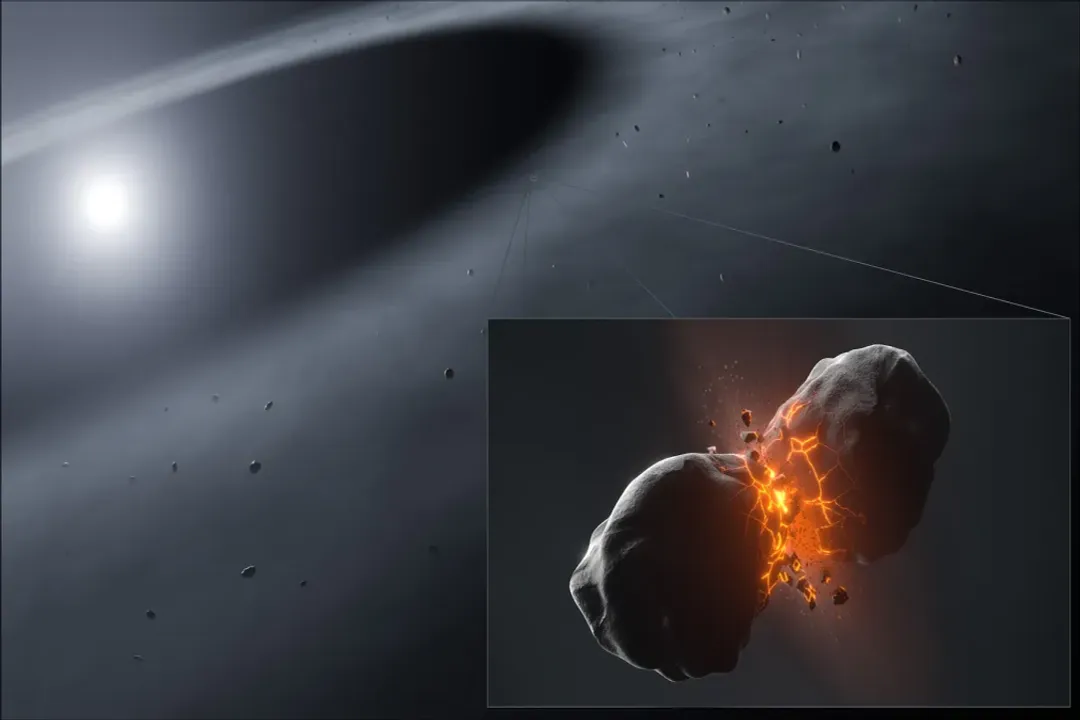
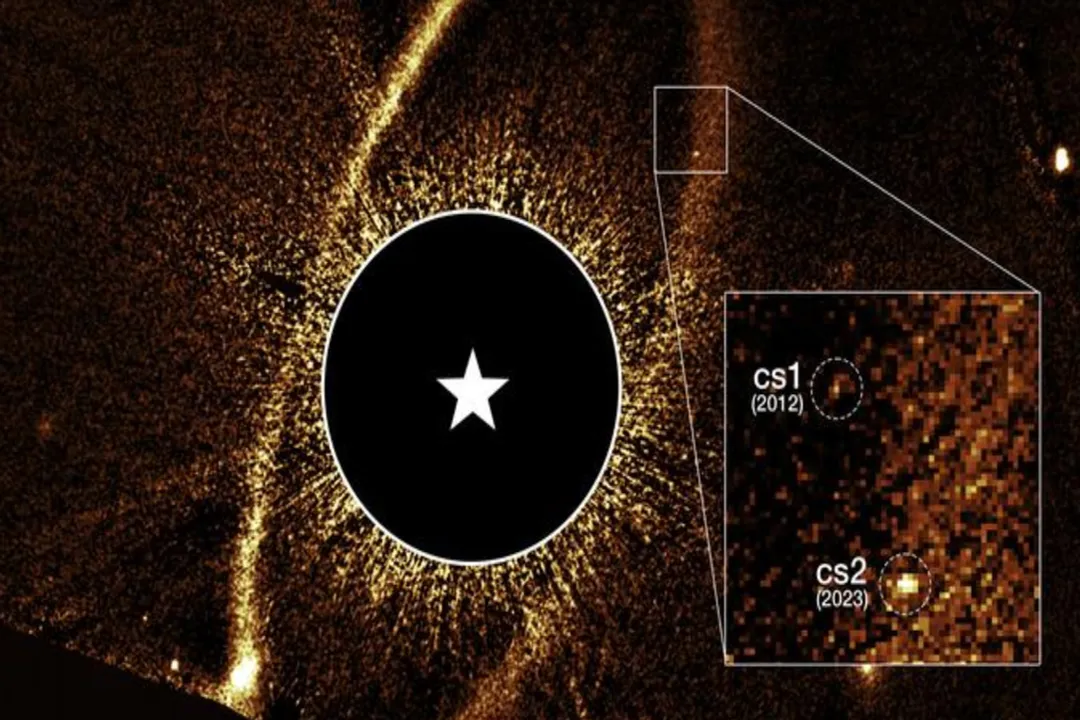
Asteroids have also been popular targets. The DART mission, for example, was designed to crash into the asteroid Dimorphos to test planetary defense techniques—a clear example of using a satellite to create a controlled, measurable impact on a small celestial body. [7] Observing these planned crashes gives scientists a direct way to measure an object's surface properties and mechanical response to force, something that is much harder to achieve on a massive planet with deep atmospheres. [5][6] In fact, astronomers have captured direct images of collisions happening naturally around other stars, providing the cosmic context for why we study these controlled impacts here. [5][8]
# Planetary Protection and Scientific Trade-offs
A fascinating element arising from this subject is the trade-off between scientific exploration and planetary protection, which directly influences which planets we crash into versus which we only orbit. The reason we sent Galileo and Cassini into Jupiter and Saturn, respectively, is precisely because we did not want them to crash onto potentially life-bearing moons. [4] If a probe had sufficient fuel, the mission planners might opt for an extended observation period near a moon like Enceladus or Europa, but when fuel runs low, the safest option regarding the search for extraterrestrial biology is to deliberately incinerate the craft in a massive atmosphere. [4]
Consider Mars again. Despite decades of exploration, we have not intentionally crashed a functioning satellite onto the Martian surface since the early atmospheric entry probes. The reason is a conscious decision to avoid forward contamination—the risk of introducing terrestrial organisms to Mars, where they could potentially survive, obscure the search for native Martian life, or even outcompete fragile existing ecosystems. [4] If a rover breaks down, it is left in place, essentially becoming space junk on the surface, but a deliberate, high-velocity impact from an orbiter is usually avoided if the orbiter has any remaining scientific utility. This contrasts sharply with the Moon, which is generally considered biologically inert and thus a much safer target for impact studies. [1]
In a fascinating side-note derived from observing natural phenomena, we know that catastrophic collisions are a routine part of planetary system evolution. Astronomers have captured direct images of collisions in nearby star systems, essentially watching the wreckage where planets are forming or breaking apart. [5][6] This natural violence provides reassurance that a small, human-made satellite impacting a planet or moon is unlikely to significantly alter its long-term geological or atmospheric history, though it remains an important scientific data point for the near-term. [9]
To summarize the explicit, non-atmospheric terminal events for satellites onto planets: the primary confirmed destination for intentional, high-energy, end-of-mission kinetic impacts has been the Moon or asteroids, as detailed in mission logs. [1][7] The gas giants have received the "crash" of probes deliberately steered into their atmospheres for atmospheric science and disposal. [1][3] For the rocky planets, the "crashes" have largely been a collection of mission failures and end-of-life orbital decays, rather than pre-planned, high-velocity strikes on the solid surface itself. [1]
One interesting metric to consider when looking at the history of planetary exploration is the ratio of Successful Landings to Uncontrolled End-of-Life Impacts on Mars. While dozens of orbiters have been sent, only about half have successfully completed their primary mission objectives on or above the surface, meaning a significant fraction of missions—nearly as many as those that succeeded in some form—ended with an unplanned crash or mission loss. [1] This suggests that for rocky, accessible planets, the difficulty of a controlled, soft landing is so high that an uncontrolled, high-speed impact is a relatively common outcome for mission failure, even if it is not a scientific goal. Another observation is the sheer volume of controlled atmospheric entries into the giants versus the limited surface impacts on the terrestrial worlds. Jupiter and Saturn effectively act as massive cosmic garbage disposals, swallowing our hardware whole, whereas for Mars, we have been comparatively cautious, opting to leave older, potentially contaminated hardware on the surface rather than risk a high-energy impact that might disturb sensitive geology, a clear reflection of evolving planetary protection protocols over the decades. [4]
| Celestial Body | Primary End-of-Mission Outcome for Probes | Intentional Kinetic Impact? |
|---|---|---|
| Jupiter | Atmospheric incineration (controlled) [1] | No (Atmospheric Entry) [3] |
| Saturn | Atmospheric incineration (controlled) [1] | No (Atmospheric Entry) [1] |
| Mars | Orbital decay, unplanned surface impact, or planned landing [1] | Mostly No (Due to contamination concerns) [4] |
| Venus | Crushed by pressure (uncontrolled/short operational life) [1] | No |
| Mercury | Flyby or orbital insertion failure [1] | No documented intentional impact |
| The Moon | Numerous intentional kinetic impacts for science [1][7] | Yes |
| Asteroids | Intentional kinetic impact for defense/science [7] | Yes |
The decision to crash a satellite, whether into a giant planet's atmosphere or an asteroid's surface, ultimately boils down to science and safety. In the case of the planets, the goal is usually atmospheric analysis followed by planetary protection. For smaller bodies, the crash is the experiment, providing tangible data on mechanics and composition that remote sensing cannot match. [7] The inventory of human debris in the solar system is growing, but for the major planets, we have mostly managed to control the final moments of our explorers, steering them toward a dramatic end that serves a final scientific purpose or, at the very least, keeps them away from places where life might thrive. [4]
#Videos
These Are the Coolest Collisions In Space - YouTube
Related Questions
#Citations
List of landings on extraterrestrial bodies - Wikipedia
These Are the Coolest Collisions In Space - YouTube
A Crash On Mercury - NASA Scientific Visualization Studio
What planets and moons have we seeded with life (if any)?
Astronomers capture 1st direct images of collisions in a nearby star ...
Astronomers See the Wreckage Where Planets Crashed Into Each ...
Remember when we crashed a spacecraft into an asteroid ...
Space objects collide in a star system, rare event's images captured
First-of-its-kind cosmic collision spotted 25 light-years from Earth