What is the path followed by a planet called?
The curved line traced by a planet as it moves around a star, or any celestial object around another, has a specific scientific designation. This well-defined track is known as an orbit. It is the fundamental geometric relationship between any two bodies locked in a mutual gravitational dance throughout the cosmos.
# Path Name

To answer the question directly, the path a planet follows around the Sun is called its orbit. This concept is not restricted to planets; moons orbit planets, and artificial satellites orbit Earth. Fundamentally, an orbit describes the closed path an object takes when moving around a point or another object due to the influence of gravity. It is the visible and mathematically predictable course that celestial mechanics dictate.
# Orbital Shape
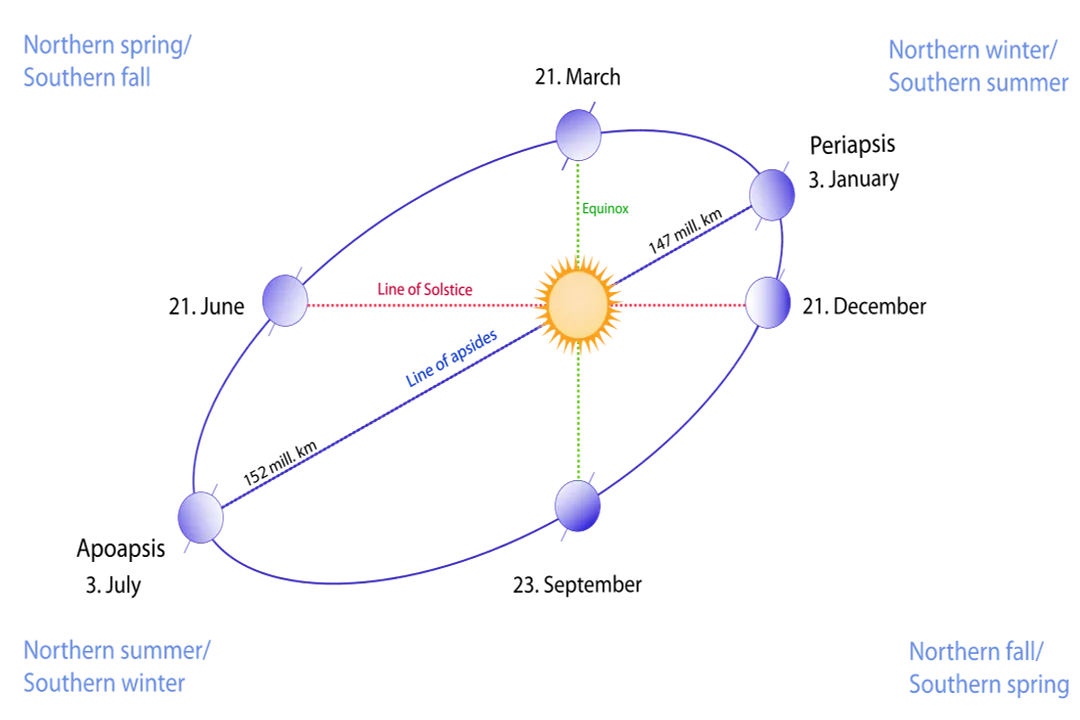
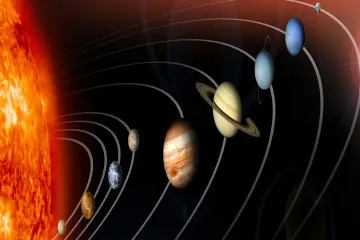
While we often visualize orbits as perfect circles, especially when looking at simplified diagrams of the solar system, the true shape of most planetary paths is something slightly different: an ellipse. An ellipse is essentially a squashed or stretched circle, characterized by having two focal points, or foci, instead of a single center point.
For a planet orbiting a star, the star itself sits at one of these two foci of the ellipse. This arrangement directly dictates how the planet's distance from the star changes throughout its revolution.
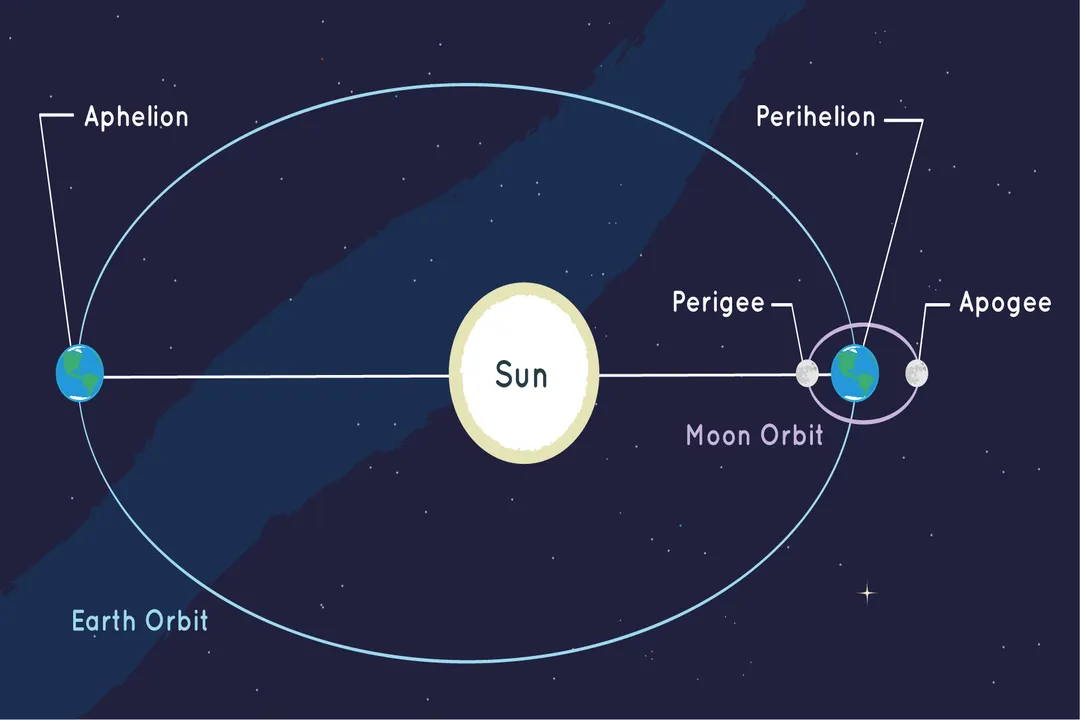
The Earth’s orbit, for example, is an ellipse that is extremely close to being a perfect circle. In fact, for many objects in the solar system, the eccentricity—the measure of how much the ellipse deviates from a circle—is very small. If a body’s orbit has zero eccentricity, it is a perfect circle; if it is greater than zero but less than one, it is an ellipse.
It is an interesting point of observation that while the mathematical definition insists on the ellipse, looking at data for the major planets, the difference between the closest approach and the farthest point is often visually insignificant unless one is examining high-precision measurements. For instance, if we consider the Sun's location as the center of our coordinate system, the Earth's orbital path looks visually circular to the casual observer, but the fact that the Sun sits off-center, at one focus, is what drives the small, predictable changes in Earth's apparent brightness and slightly varying speed throughout the year. This slight deviation from perfect circularity is crucial for understanding the system's dynamics, even if it is hard to see with the naked eye.
# Governing Force
The entire path that a planet follows is determined by a single, universal interaction: gravity. The gravity of the central body—the Sun, in the case of our solar system—constantly pulls the planet inward. If the planet did not have sideways velocity (inertia), it would fall directly into the star. Conversely, if there were no gravity, the planet would fly off in a straight line into space.
The orbit is the perfect balance struck between the planet’s forward momentum and the central body’s gravitational pull. This balance ensures the object stays trapped in a continuous, repeating path rather than spiraling inward or escaping outward.
# Describing Motion
The mathematical description of these orbital paths was revolutionized by Johannes Kepler in the early 17th century, whose laws provide the precise rules governing planetary motion.
Kepler's Laws are cornerstones of orbital mechanics:
- The Law of Ellipses: As established, the orbit is an ellipse with the central body at one focus.
- The Law of Equal Areas: A line segment joining a planet and the Sun sweeps out equal areas during equal intervals of time.
- The Law of Periods: The square of a planet's orbital period () is proportional to the cube of the semi-major axis () of its orbit ().
These laws are incredibly accurate for two-body systems dominated by gravity, like a planet and its star. Understanding these laws allows astronomers to predict exactly where a planet will be at any point in the future, provided the initial conditions—its current position and velocity—are known.
# Orbital Elements
While "orbit" names the path and "ellipse" names the shape, describing a specific orbit in space requires a set of parameters called orbital elements. These elements define the size, shape, and orientation of the orbit relative to a fixed reference plane. Think of it this way: saying "it's an ellipse" is like describing a city block as a rectangle; the orbital elements are the precise coordinates, lengths, and angles needed to locate that specific rectangle on a map.
Key orbital elements include:
- Semi-major axis: Half of the longest diameter of the ellipse, which determines the size of the orbit and is related to the orbital period.
- Eccentricity: Defines the shape of the path, as mentioned earlier (how much it deviates from a circle).
- Inclination: The angle between the orbital plane and a reference plane (like the ecliptic plane for planets in our solar system).
- Longitude of the Ascending Node: Defines the orientation of the orbital plane in space.
When all these elements are known, the path is fully defined, allowing for precise tracking, whether for a natural planet or a human-made satellite.
# Contextualizing Orbits
It is easy to get caught up in the specific terminology of planets revolving around a star, but the concept of an orbit extends into many areas of physics and engineering. For instance, the path followed by an artificial satellite orbiting Earth is still an orbit, and it is still governed by elliptical geometry, although propulsion systems are often used to maintain a near-circular path against atmospheric drag.
Considering the definition broadly reveals a fundamental pattern in the universe. We see orbits in binary star systems, where two stars revolve around a common center of mass, known as the barycenter. Even within a galaxy, stars are orbiting the galactic center in complex paths influenced by the mass distribution of the entire structure. The principle remains the same: a continuous, closed trajectory dictated by mutual attraction.

# Real World Paths
When we discuss the path followed by a planet, we are speaking of a theoretical ideal derived from Newtonian physics and Kepler's laws. However, the solar system is not a sterile, two-body environment. The path is technically never exactly an ellipse described by Kepler’s first law because there are other gravitational influences at play. Every planet exerts a minute gravitational tug on every other planet, and even on asteroids and comets.
This means the actual path a planet takes is a slightly perturbed, or wobbly, orbit. Over vast stretches of time, the parameters like the eccentricity and inclination shift slightly due to these minor gravitational interactions, a phenomenon known as orbital perturbation. For example, the orbit of Mercury is the most affected by general relativistic effects due to its closeness to the massive Sun, which causes a slow rotation of the elliptical path itself, known as precession, that cannot be fully explained by Newtonian gravity alone. These deviations from the perfect Keplerian ellipse are what give the study of celestial mechanics its depth and complexity, moving from simple geometry to advanced perturbation theory. The basic term remains "orbit," but the fidelity of its description depends on how many other influences you choose to include in your calculations.
Related Questions
#Citations
Orbit - Wikipedia
What Is an Orbit? | NASA Space Place – NASA Science for Kids
What is the scientific name for the path of a planet around the Sun?
Orbit - National Geographic Education
What name is given to the path of a planet around the sun? - Testbook
Earth's orbit - Simple English Wikipedia, the free encyclopedia
Paths of the Planets
The path along which a planet travels around the sun is ... - Brainly
What's the actual path of the planets? - Physics Stack Exchange