What are the three factors that make a planet habitable?
The quest to determine if a planet can support life rests on a set of environmental parameters, often extrapolated from the one world we know intimately: Earth. Finding a truly habitable world—one that can sustain life for an extended period—is far more complex than simply looking for an Earth-sized rock in a specific orbit. While life, as we understand it, requires an energy source, conditions allowing for the assembly of complex organic molecules, and, most critically, the presence of liquid water, these foundational needs are influenced by a cascade of astrophysical and geophysical requirements. When we break down the conditions necessary for this process to begin and continue across geological timescales, the requirements coalesce into three primary, interacting domains: the location relative to the parent star, the planet’s intrinsic protective mechanisms, and the availability of the necessary chemical scaffolding supported by a constant energy supply.
# Stellar Distance

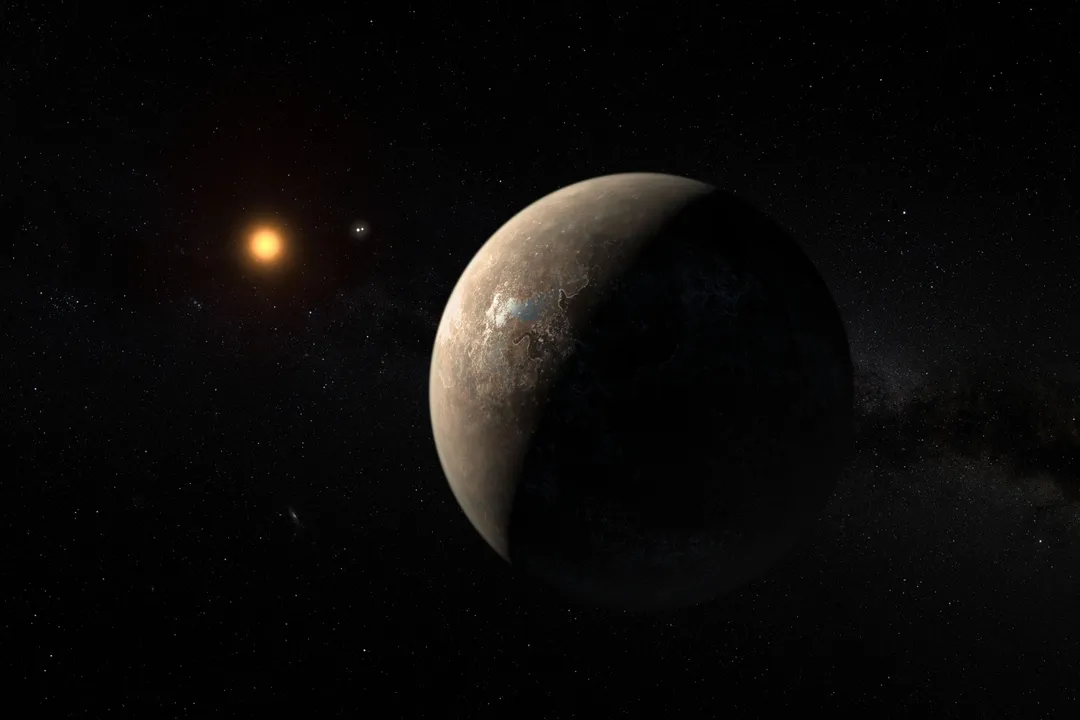
The most commonly discussed metric for habitability revolves around the distance between a planet and its host star, defining the region known as the Habitable Zone (HZ), or the "Goldilocks Zone". This shell of space is generally where temperatures allow water to exist in a liquid state on the surface, a prerequisite for life as we know it, since water acts as the universal solvent, transporting nutrients both into and out of cells. A planet orbiting too close faces intense heat, risking the evaporation of its water supply and potentially becoming tidally locked, leaving one side perpetually scorched. Conversely, too far out, the world becomes an icy expanse where water remains frozen, rendering necessary chemical reactions sluggish or impossible.
However, recent thinking suggests that these zones, traditionally calculated based on Earth-like compositions, might be too restrictive. The resilience of a world appears highly dependent on its composition, especially its water content and atmosphere. Simulations show that "land planets"—worlds with less surface water than Earth—are more robust against cooling than their water-rich counterparts. This dryness allows them to withstand lower stellar luminosity without succumbing to a catastrophic freeze, known as runaway glaciation, where increased surface ice reflects more light, creating a permanent snowball state. Land planets can maintain liquid water at distances where traditional models suggest freezing, effectively expanding their potential HZ outward.
The quality of the host star is intrinsically linked to this proximity. A star must be stable enough, both in its luminosity and its radiation output, to give life time to evolve—hundreds of millions of years at minimum. Stars that fluctuate wildly, such as many variable stars, bathe their orbiting worlds in lethal doses of high-frequency radiation during flares, potentially stripping away any protective atmosphere. Furthermore, the star's type dictates the HZ's stability. While massive, short-lived stars have a wide HZ, their brief existence leaves little time for complex life to take hold. Conversely, long-lived, dimmer stars like M-dwarfs may offer trillions of years for evolution, but planets must huddle very close to their star, often leading to tidal locking. A tidally locked world presents a severe challenge, requiring an extremely efficient atmosphere to distribute heat from the sun-facing side to the eternal night side, lest the dark side freeze solid.
Beyond the immediate stellar relationship, the architecture of the entire system matters. The presence of massive outer gas giants, often dubbed "Good Jupiters," can be beneficial by gravitationally deflecting catastrophic asteroid impacts, thus protecting inner terrestrial worlds. The Earth benefited not just from Jupiter’s distant presence but, in its early history, from its gravitational scattering, which delivered critical volatiles like water to the inner Solar System via impacting icy bodies. Stability, therefore, is not just about the planet's path, but its orbital neighborhood and the long-term evolution of the entire system.
# Planetary Shielding
Once a planet is at the correct distance, its internal mechanics become the next line of defense against cosmic threats and the key to maintaining a stable surface environment. This aspect hinges significantly on the planet's mass and size. Low-mass worlds struggle with gravity, making it difficult to retain an atmosphere. Gas molecules can escape when agitated by solar winds or collisions, resulting in a thin blanket that offers poor insulation, minimal protection from meteoroids and high-frequency radiation, and insufficient atmospheric pressure to permit liquid water, even if the temperature is otherwise suitable. Mars serves as a prime example of a low-mass world that has lost much of its atmosphere.
A planet must be massive enough to maintain a sufficient atmosphere, which serves three critical functions: trapping heat to maintain stable surface temperatures, blocking harmful stellar and cosmic radiation, and providing necessary atmospheric compounds like nitrogen or carbon dioxide. The ability to retain this atmosphere over billions of years is tied directly to the second major shielding component: the magnetic field.
This protective field is generated by a process called the dynamo effect, which requires a large, rotating, molten metallic core—in Earth's case, the iron outer core. A sufficiently large planet has enough internal heat, derived from formation energy and radioactive decay, to keep its core liquid, driving the convection necessary for the dynamo. Without this field, the solar wind continuously strips away the atmosphere, rendering the surface sterile. The geological activity that facilitates this, specifically plate tectonics, is also crucial. On Earth, plate tectonics recycles vital chemicals, like carbon dioxide, which acts as a global thermostat, regulating the climate over vast timescales despite the Sun’s slow increase in brightness.
A deep dive into planetary structure reveals a fascinating aspect of habitability that is rarely intuitive. While we assume a massive, hot core is necessary, the source of that heat matters, and its interaction with surface mechanics is deeply entangled. For instance, Earth’s relatively large Moon, formed from a colossal impact, may have stabilized our axial tilt, preventing extreme seasonal variations that could have hindered evolution. Furthermore, the theory suggests that the same impact that created the Moon differentiated Earth’s interior, leading to the convective motions in the core that generate the magnetic field, and simultaneously set the stage for plate tectonics in the mantle. In essence, a singular, dramatic event early in a planet's life may have been necessary to kickstart the dual systems of magnetic shielding and geological cycling that keep the surface habitable long-term. A planet could theoretically be the right size and in the right orbital spot, but if it is geologically inert—lacking the necessary internal engine—it fails the shielding test.
# Chemistry and Energy

Even with a temperate zone and a strong magnetic shield, life cannot arise or persist without the correct building blocks and a mechanism to power its operations. This leads to the third essential domain: Geochemistry and Energy.
The most fundamental chemical requirement is the presence of life's key ingredients—primarily carbon, hydrogen, oxygen, and nitrogen—which must be present in available, non-toxic forms. Carbon, with its unparalleled bonding versatility, is the assumed backbone for complex life structures like proteins and carbohydrates. Beyond these structural elements, the availability of a solvent, typically liquid water, is paramount for chemical transport.
However, mere presence isn't enough; there must be a system for nutrient cycling. On Earth, this happens via the water cycle, volcanic activity, and atmospheric processes that continuously deliver essential elements to organisms. If a planet has the right chemistry locked away or too thinly spread—for example, spread thinly across a massive gas giant—life struggles to organize. The required elements must be concentrated enough to support complex biochemistry, a level of organization that single-celled organisms might tolerate better than complex, multicellular animal life.
Crucially, this chemistry requires energy to run metabolic processes. For most environments near the surface, the star provides the primary light energy. But energy can also be drawn geochemically from the subsurface through chemical reactions, such as those occurring near hydrothermal vents, which can sustain life even far from starlight.
The distinction between simple and complex life highlights a subtle but important point in habitability assessment. While the presence of liquid water and basic elements might enable the emergence of microbes (like Earth's extremophiles thriving near thermal vents), sustaining complex, multicellular organisms places much stricter demands on planetary processes. For complex life to flourish, the cycling must be consistent and the energy input predictable, requiring a planet to move beyond just having the ingredients to actively managing the environment, as Earth's CO2 cycle does. A planet might be chemically capable of supporting microbial life below an ice crust, such as Europa, but the difficulty in accessing the necessary ingredients from the surface or the required energy gradient for diverse metabolic pathways might prevent evolution beyond the simplest forms. Therefore, habitability for us—for complex life—demands not just the ingredients, but the active, sustained delivery and utilization of those ingredients through global cycles.
These three factors—location, planetary defense, and chemistry—must align over vast timescales. There is a meta-layer, the Cosmological Factor, which argues that the very laws governing the universe must be precisely balanced for life to exist anywhere. If fundamental forces like gravity or electromagnetism were even slightly different, atoms wouldn't form, stars wouldn't burn correctly, or molecules couldn't bond, making any planetary conditions irrelevant. While this view leads to philosophical discussions like the Anthropic Principle, for practical exoplanet hunting, it serves as a reminder that the physical rules of the game are non-negotiable. The confluence of a suitable star, a well-defended terrestrial world in the right orbital groove, and an active chemical engine defining its surface environment creates the slim possibility for life to take hold and persist.
#Videos
Planet Earth - What Makes It Habitable? - YouTube
Related Questions
#Citations
[PDF] Factors that Contribute to Making a Planet Habitable
Planetary habitability - Wikipedia
Why is the Earth habitable? | AMNH
Planet Earth - What Makes It Habitable? - YouTube
What Are The Factors That Make A Planet Habitable? - ScienceABC
What makes a planet habitable? | BBC Sky at Night Magazine
What makes a planet habitable? : r/worldbuilding - Reddit
What really makes a planet habitable? Our assumptions may be wrong