What discoveries did Opportunity make?
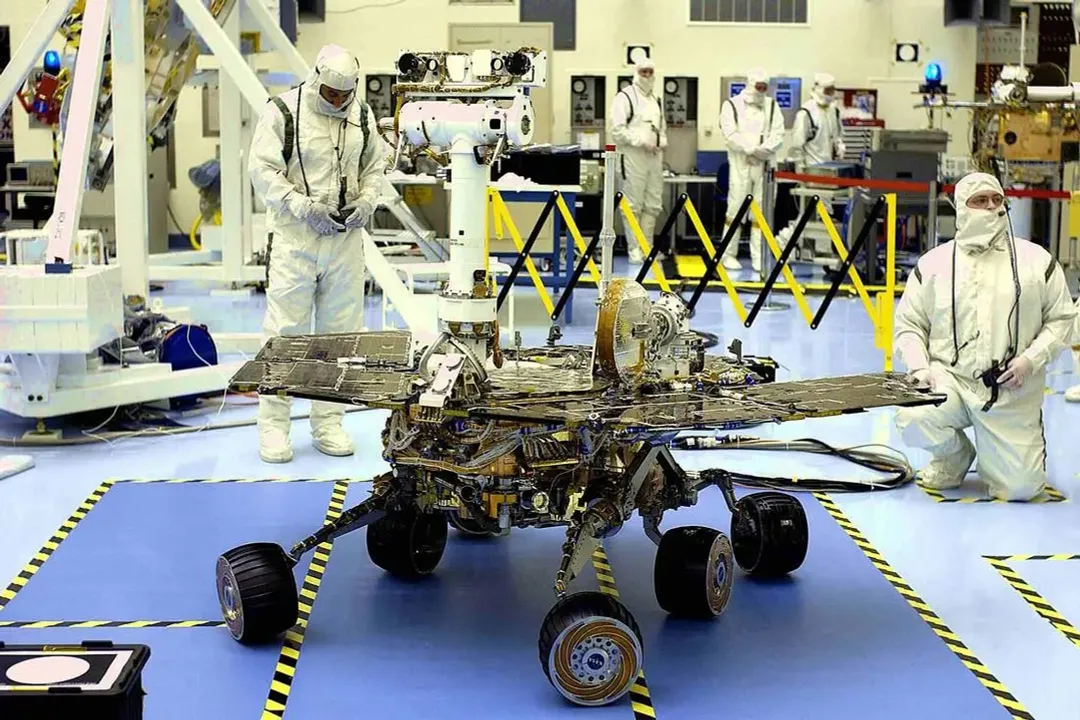
The twin Mars Exploration Rovers, Spirit and Opportunity, were originally slated for missions lasting just 90 Martian sols, a duration perhaps reflecting the initial uncertainty about landing survival on the Red Planet. [5] Opportunity, however, proved to be a marvel of engineering tenacity, far outliving its planned lifespan to deliver an astonishing bounty of data over nearly 15 Earth years. [5][6] Its primary objective was to seek out and characterize rocks and soils that have recorded the history of water activity on Mars, a search that fundamentally altered our understanding of the planet’s past habitability. [3]
# Initial Target
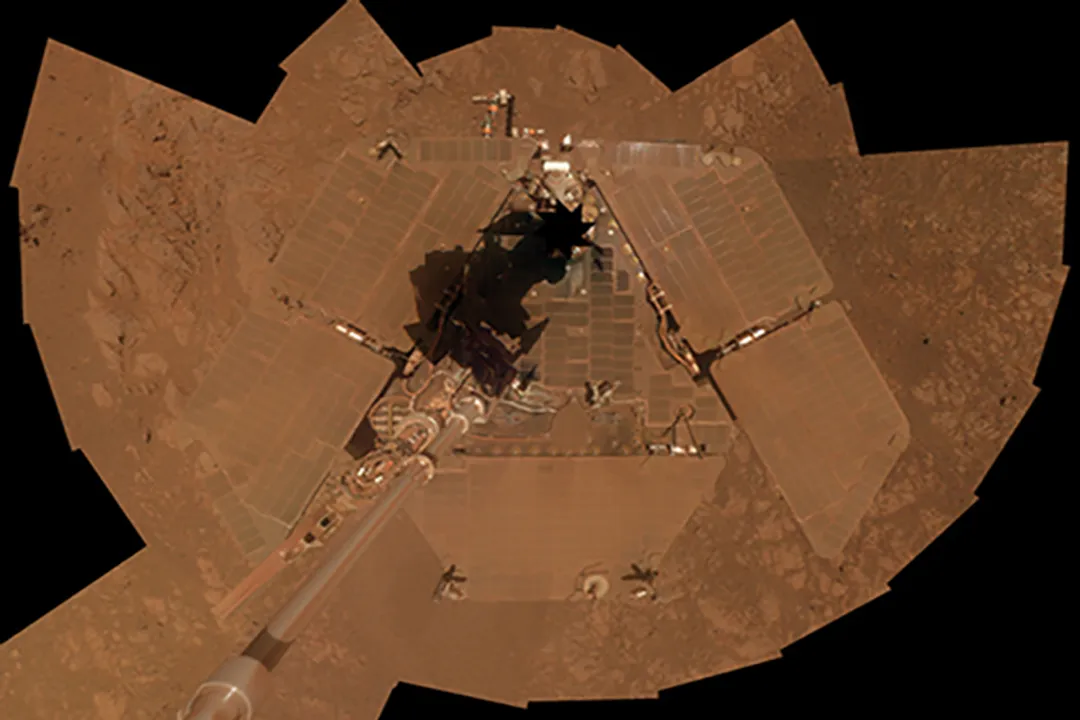
The landing itself was a success story, placing Opportunity in Meridiani Planum in early 2004. [1] This landing site was specifically chosen because orbital observations suggested it held vast deposits of hematite, a mineral that typically forms in the presence of liquid water on Earth. [3] Upon deployment, the rover quickly began to examine its immediate surroundings, which appeared to be an ancient, eroded plain, but the first real surprises were waiting just under the surface dust. [2]
# Blueberry Spheres
One of the earliest and most iconic discoveries Opportunity made involved small, spherical concretions embedded in the bedrock. [2] These features, often nicknamed "blueberries," were found in abundance across Meridiani Planum. [4] Scientists determined these hematite spherules formed when groundwater flowed through the soil and minerals precipitated around small nuclei. [2][3] Finding these concretions was a strong indicator that liquid water had been present, not just as ice, but as substantial, flowing, aqueous environments in this region long ago. [2] The rover’s ability to drill into these rocks, like the one dubbed "Pinta Island," allowed for detailed chemical analysis confirming their water-formed nature. [3]
# Evidence of Ancient Lakes
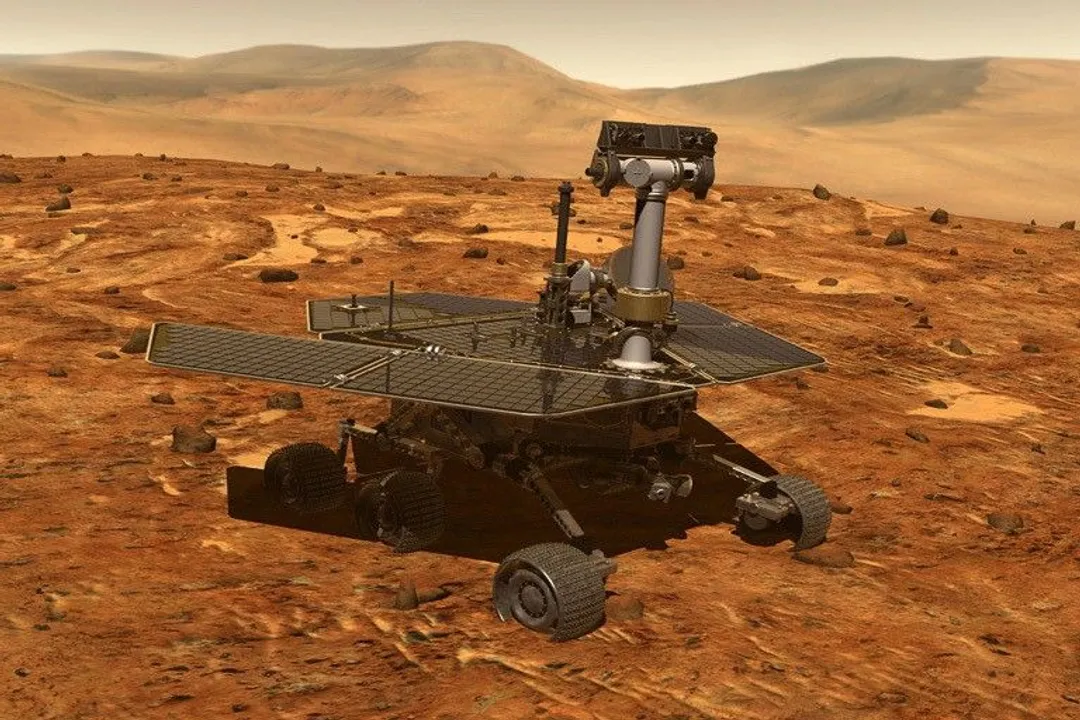
While Meridiani Planum offered compelling evidence of past surface water, Opportunity’s subsequent treks took it to terrains that suggested even more significant bodies of water had existed. [2] The rover managed to drive across vast distances, far beyond the planned traverse, allowing it to investigate features that hinted at a wetter, more dynamic past. [5]
The analysis of sedimentary rocks proved crucial. Opportunity found layered rocks exhibiting features characteristic of sedimentary structures laid down by moving water, much like those found in terrestrial riverbeds or lake bottoms. [3] The texture and layering within some rock targets suggested they were formed in a quiet, low-energy water environment, perhaps the bottom of a long-lived lake, rather than a brief splash of water. [2]
One particularly insightful finding came from examining the internal structure of rocks. When the rover used its rock abrasion tool to grind away the weathered surface of a rock, it sometimes revealed distinct sulfate-rich veins cutting across the rock material. [3] These veins are analogous to mineral deposits left behind when water flows through cracks in terrestrial rock formations. [3] The chemistry revealed by instruments like APXS (Alpha Particle X-ray Spectrometer) pointed to minerals like jarosite, another strong indicator of acidic water conditions. [3] It’s fascinating to consider that these deposits, once hidden beneath meters of regolith, are now being analyzed by a robot millions of miles away, painting a detailed portrait of ancient Martian chemistry. [7] The sheer volume of geological strata Opportunity traversed, covering different rock types and ages, gave geologists a much more complete timeline than initially envisioned. [5]
# Extreme Durability
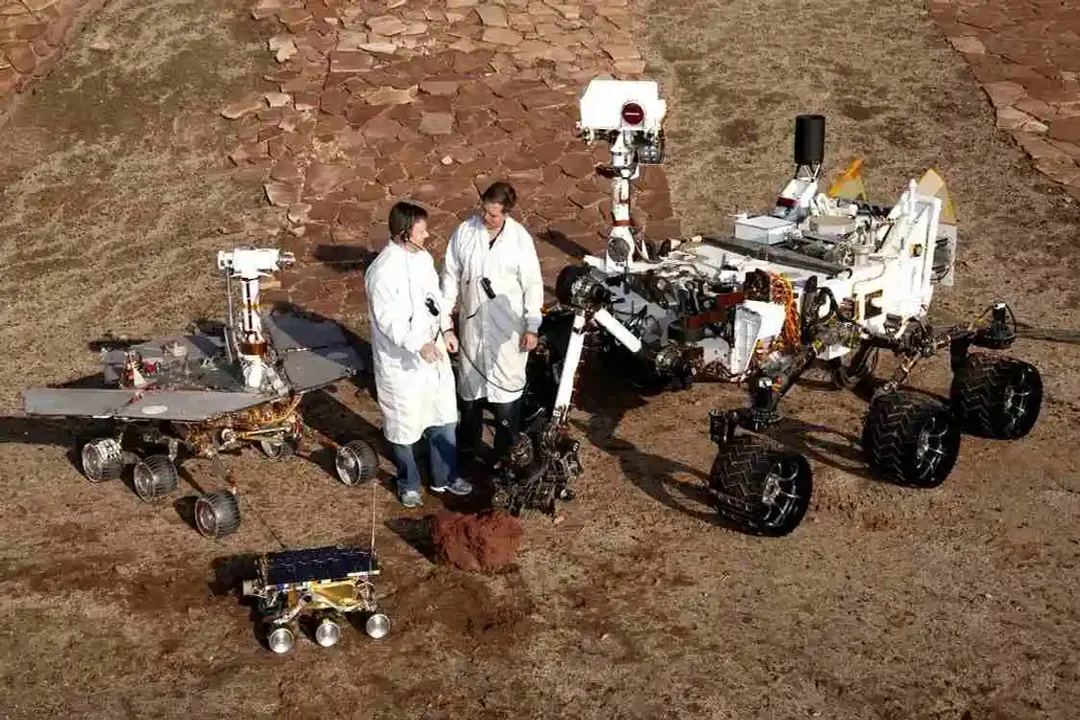
The mission’s success wasn't just about the science it collected; it was about how long it collected it. The planned 90 sols extended into years, then a decade, and finally over 14 years of operation. [6][5] This longevity allowed the rover to observe seasonal changes and undertake epic treks, most notably driving across terrains far more challenging than anticipated. [1][5]
The initial design called for a vehicle built to withstand the Martian environment for a short window, yet Opportunity endured multiple severe dust storms that choked solar panels and tested its batteries to the limit. [6] This unexpected lifespan shifted the scientific goalposts. Instead of simply confirming the presence of water, the extended mission allowed scientists to map the extent of the former aquatic environment and establish a geological chronology for the region. [7] The initial success of the landing and subsequent operations meant that engineers were essentially getting years of free data from hardware that was only designed to function for three months. This unplanned duration gave researchers the latitude to aim for more ambitious destinations, like the rim of Endeavour Crater. [1]
If we view the mission purely from a risk assessment standpoint, the initial three-month budget seems incredibly conservative. The fact that the power systems and mobility hardware survived factors like long-term radiation exposure and thermal cycling for so long demonstrates an engineering margin that became the foundation for nearly fifteen years of planetary science.
# Visiting New Terrains
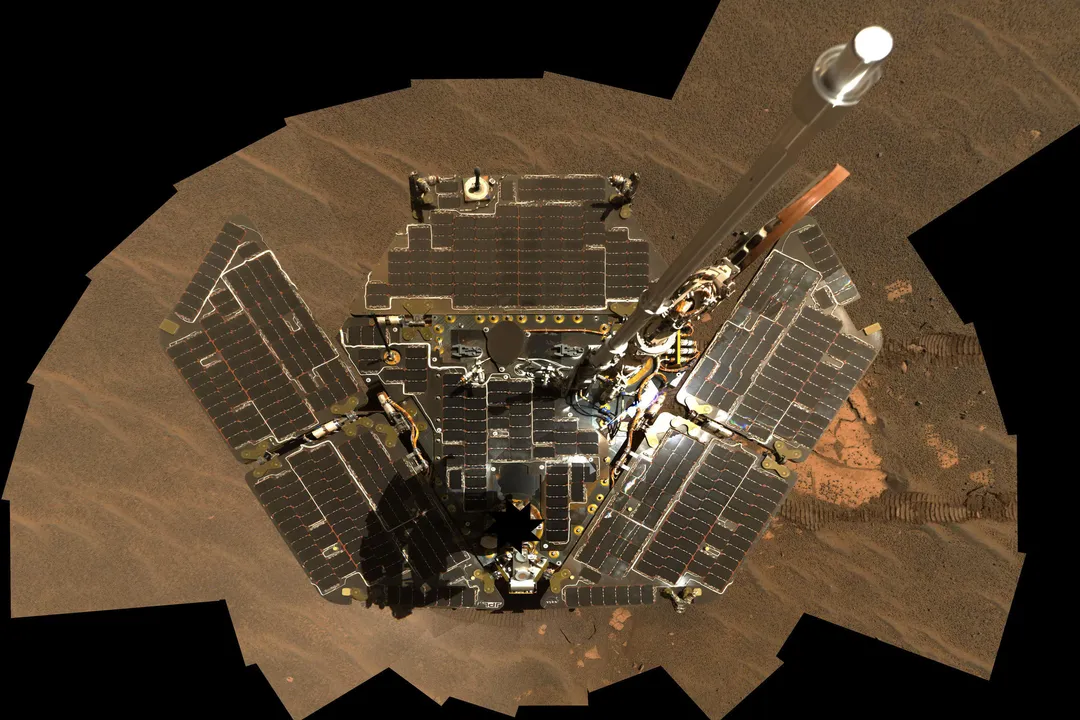
Opportunity’s later travels were defined by its slow, methodical climb toward Endeavour Crater, a feature so massive it held the promise of exposing much older Martian crust. [1] The rover spent the final phase of its life exploring the crater's rim and the exposed strata, seeking different chemical signatures than those found at Meridiani Planum. [1]
Driving toward the crater rim, Opportunity analyzed different geological formations, providing comparative data. For instance, the rover encountered rocks that appeared to be igneous, contrasting sharply with the sedimentary and chemical precipitates of the plains. [4] These later observations provided a richer context, showing that Mars wasn't uniformly wet or dry, but possessed a varied geological history involving volcanism, erosion, and hydrothermal activity. [4] The sheer distance covered—over 28 miles—is a staggering feat for a machine designed for a short hop. [5] Analyzing the layers exposed on the crater walls allowed scientists to "read" the Martian past like pages in a book, with deeper layers representing older epochs. [1]
# The Final Silence
The mission concluded in June 2018 when a planet-encircling dust storm enveloped Mars. [6] This storm blocked out the sun so completely that Opportunity could not recharge its batteries. [6] After sending its last communication on June 10, 2018, NASA patiently waited for the storm to clear and the rover to resume contact. [6] When the scheduled wake-up calls went unanswered, the agency declared the mission complete in February 2019. [6]
The dust storm itself, while ending the mission, provided a dramatic, if unfortunate, capstone to the operational narrative. It was a natural event that finally defeated the machine that had outlasted every predicted failure point. While the end was somber, the volume of data returned—from spectral analyses of surface minerals to panoramic images of two distinct Martian regions—had already secured its place in planetary exploration history. [2]
# Scientific Return
The accumulated data from Opportunity provides an unparalleled view of the transition of Mars from a potentially wet world to the cold, dry planet we see today. [7] The findings collectively suggest that water was present for long periods and under varying conditions, sometimes acidic and sometimes neutral. [3]
To better illustrate the sheer scope of the discoveries, one can summarize the key chemical and morphological evidence gathered:
| Discovery Type | Key Observation | Implication for Water | Primary Location |
|---|---|---|---|
| Spherules | Hematite-rich concretions ("blueberries") | Groundwater flow and precipitation | Meridiani Planum |
| Veins/Fractures | Sulfate-rich mineral deposits cutting rock | Water flowed through cracks in ancient crust | Meridiani Planum and later sites |
| Sedimentary Layers | Fine-grained, layered rock structures | Quiet, sustained presence of standing water (lakes/seas) | Various traverse points |
| Igneous Rocks | Presence of basaltic and volcanic material | Evidence of internal heating and crust formation | Later crater exploration |
The legacy of Opportunity lies in its ability to transform the narrative of Mars from one of speculation to one built on concrete, physically sampled evidence. [7] Had the mission ended on schedule, the conclusion might have simply been "water evidence found." Because of its perseverance, the conclusion became a detailed geological and chemical history of an ancient, habitable environment. [5] This reinforces a lesson for future long-duration missions: the true value often lies not in confirming the primary hypothesis, but in the geological context gathered during the bonus years of operation. The sheer volume of the data set, captured over 5,000 Sols, acts as a longitudinal atmospheric and geological monitor, something no orbital craft can replicate with surface-level, in situ precision.
#Videos
How Opportunity Shocked NASA Scientists | Supercut - YouTube
Related Questions
#Citations
Opportunity - NASA Science
The greatest discoveries from NASA's Mars Opportunity Rover
The Weirdest Mars Discoveries by Opportunity and Spirit Rovers
Mars Rovers Spirit, Opportunity Exceeded Expectations
This is what we learned after 15 years exploring Mars
NASA's Opportunity at 10: new findings from old rover - The Source
How Opportunity Shocked NASA Scientists | Supercut - YouTube
Mars Exploration Rovers Update: Opportunity…