What was the job of the Spirit and Opportunity rovers when they landed on Mars?
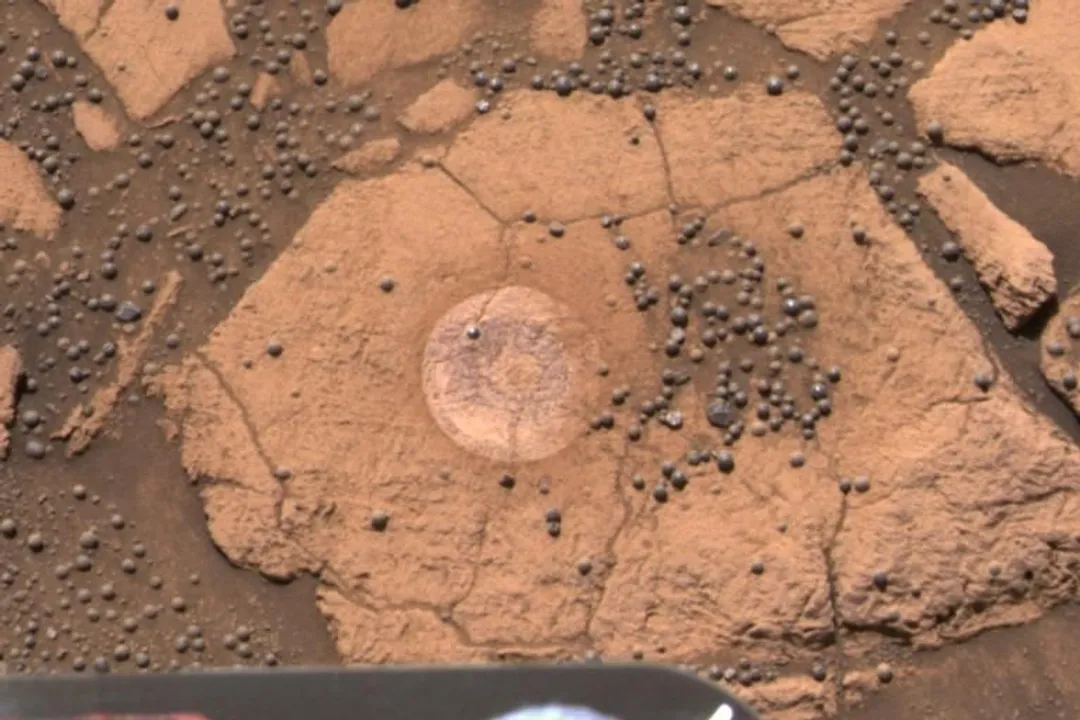
The twin robotic geologists, Spirit and Opportunity, were not merely decorations placed on the Martian surface; they were sent with a clear, primary directive upon their arrival in January 2004: to find definitive proof that liquid water once flowed on Mars. These two golf-cart-sized explorers touched down on opposite sides of the planet, each tasked with conducting an intensive geological survey to determine if Mars ever possessed the environmental conditions capable of supporting life as we know it. Their initial jobs were highly specialized, dependent entirely on where they landed, yet unified by the search for ancient aqueous history.
# Landing Sites
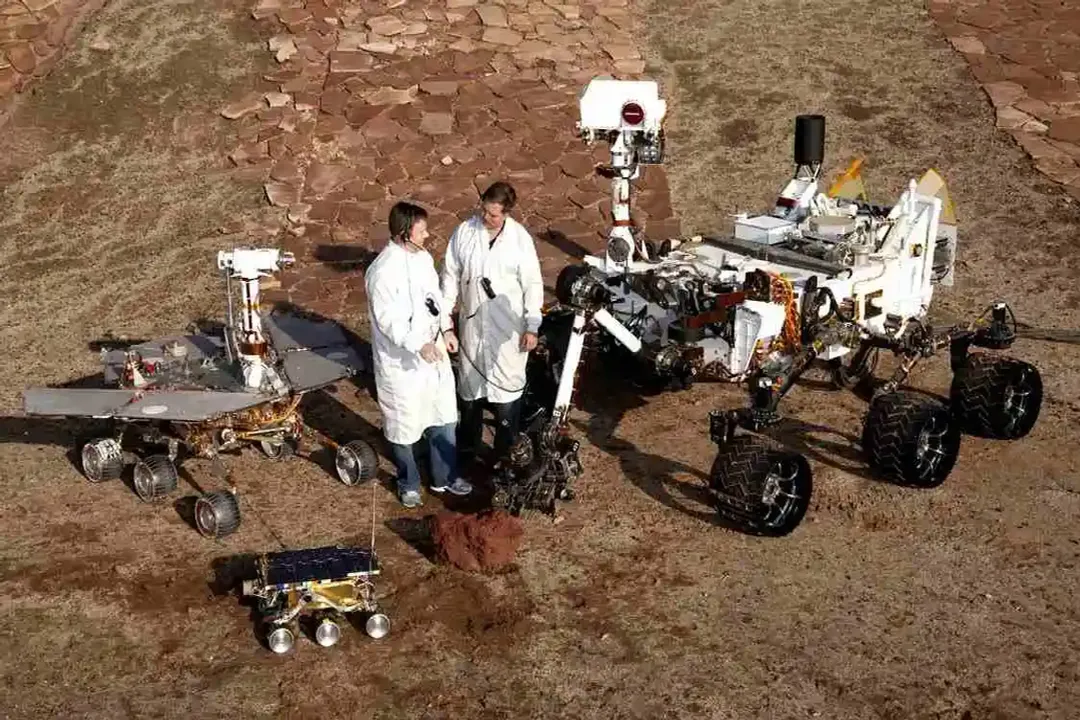
The success of the initial job was entirely predicated on choosing the right patch of Martian real estate. NASA selected two distinct locations for the Mars Exploration Rover (MER) mission because different landing sites offered different windows into the planet’s past.
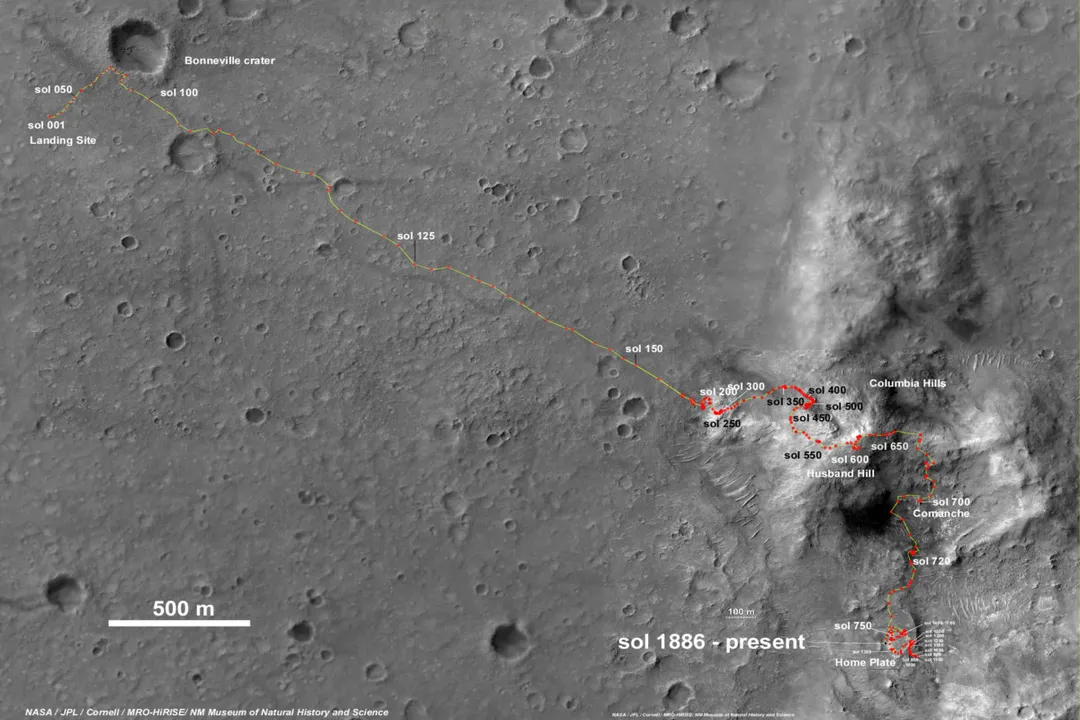
Spirit, which landed first on January 4, 2004 (UTC), touched down in Gusev Crater. This site was chosen because orbital imagery suggested the presence of ancient channels flowing into the crater, leading scientists to hypothesize that it might have once held a lake. Spirit's immediate task was to drive toward the rim of a small, nearby crater named Bonneville to examine strata (layers of rock) that might reveal sedimentary evidence of this supposed lakebed environment. If Gusev was indeed a former lake, Spirit needed to drill, scan, and analyze the rocks to find minerals definitively formed in the presence of water.
Approximately three weeks later, Opportunity arrived at Meridiani Planum on January 25, 2004. This location was selected based on spectral data indicating a high concentration of hematite, a mineral that typically forms in water or by volcanic processes on Earth. Opportunity’s first imperative was to investigate these surface deposits, specifically the small, bluish-gray spherules dubbed “blueberries,” which appeared to be concretions formed by mineral-rich water seeping through existing rock. Its initial path was less about driving long distances and more about immediate, high-value inspection of the soil and exposed bedrock right where it landed.
# Core Objectives
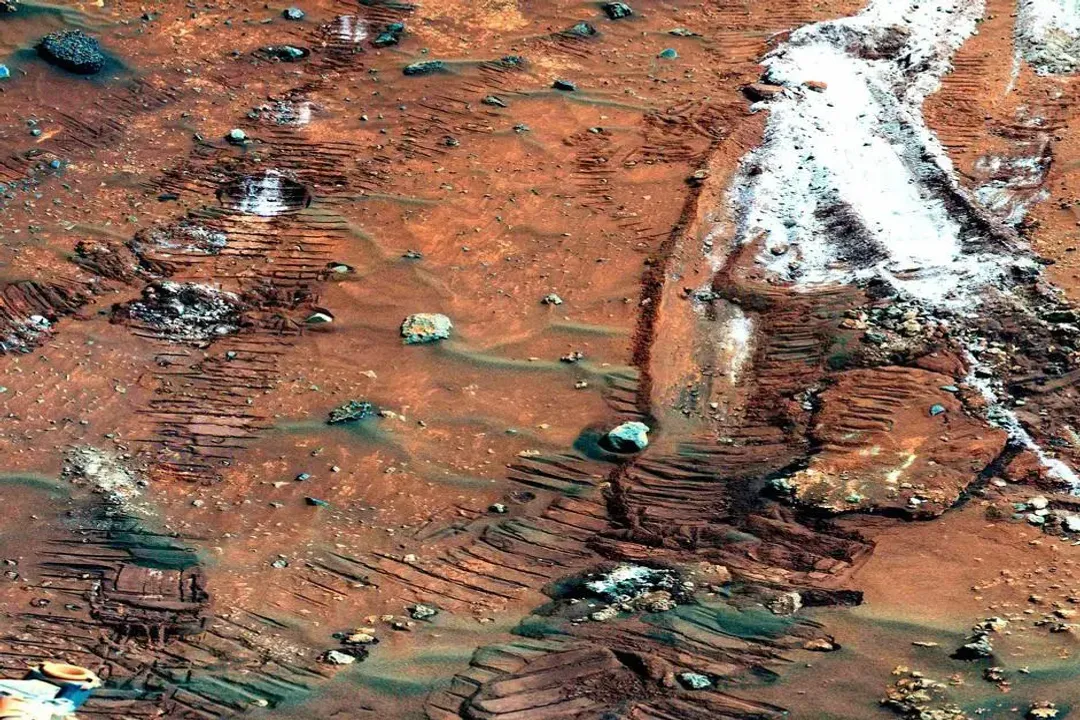
The job description for both rovers was essentially a scientific checklist, a series of go/no-go targets that, if met, would validate the entire multi-billion dollar mission. The official primary mission for each rover was set for a duration of just 90 Martian sols (about three Earth months).
The fundamental tasks required of Spirit and Opportunity involved:
- Rock Composition Analysis: Using the Alpha Particle X-ray Spectrometer (APXS) to determine the elemental makeup of rocks and soil. This technique reveals the chemical signature, which can strongly suggest whether water was involved in their formation or alteration.
- Mineral Identification: Employing the Miniature Thermal Emission Spectrometer (Mini-TES) to look for specific water-related minerals, such as hydrated sulfates or carbonates, across a wider area.
- Imaging Context: Capturing high-resolution panoramic images (Pancams) and microscopic images (Microscopic Imager) to document the geological structures, textures, and layering of the terrain surrounding the landing sites. Understanding where a mineral was found was as important as what the mineral was.
The challenge lay in the fact that the rovers were remotely controlled, meaning their jobs were carried out through a painstaking process of communication delays, planning sessions on Earth, and execution sequences uplinked daily. Every movement and measurement had to be meticulously planned to maximize scientific return within the short operational window.
The contrast between the two immediate tasks is revealing. Spirit was tasked with looking down into a basin that might have held water, seeking evidence in sedimentary layers. Opportunity, conversely, was tasked with looking at rocks that already suggested water interaction on the surface, demanding confirmation of the chemical process that created the hematite spheres. Both were looking for water, but one sought the aftermath of a large body of water, while the other sought evidence of groundwater activity or surface pooling.
# Exceeding Initial Scope
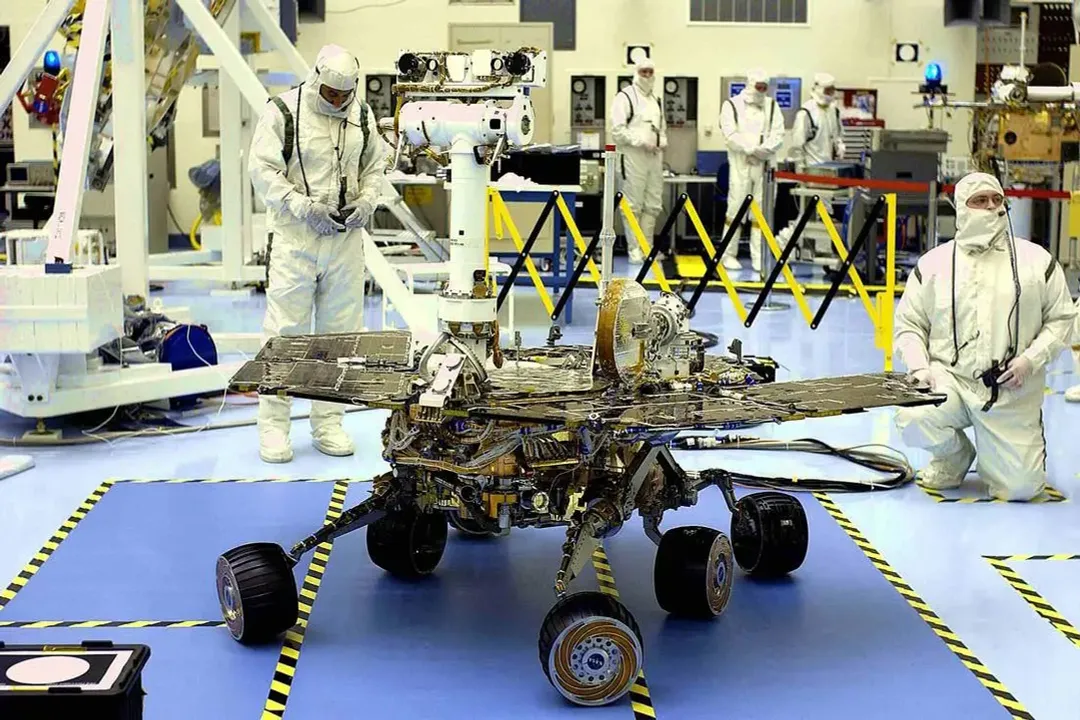
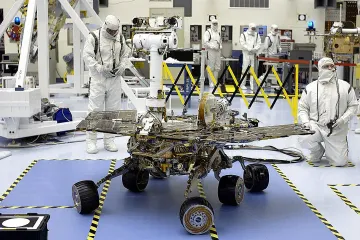
What makes the initial job so fascinating is how quickly they completed it—and then kept going. The primary mission was only a three-month sprint. Yet, the initial success of both rovers essentially redefined their ongoing job description.
For example, Opportunity’s landing site quickly provided compelling evidence far exceeding the initial expectations for the Meridiani region. Within its first few weeks, it found evidence that the small spherules were indeed hematite concretions, confirming that subsurface water had moved through and altered the rock, cementing the idea that ancient Meridiani Planum was once wet. This initial success meant that the rover’s new, informal job became "explore this unexpected water-rich region as far as possible".
Similarly, Spirit’s initial drive to the nearby crater provided context for the Gusev basin floor, though its most transformative work later involved analyzing the Columbia Hills, which suggested volcanic processes interspersed with hydrothermal activity—another form of water interaction. A subtle but critical difference in their initial directives, therefore, was the implied type of water environment each was seeking: lake water for Spirit, groundwater/surface alteration for Opportunity.
It’s worth considering that the engineers built these machines to survive for 90 sols, banking on a small statistical chance of long life. When they survived the dust storms and the initial drives, the mission controllers essentially had to invent a whole new, long-term job description: long-duration geological surveyor. This pivot from short-term objective confirmation to long-term geological mapping is perhaps the greatest success story of the MER program, proving that the initial job—finding water evidence—was so soundly achieved that the rovers were immediately upgraded to planetary archaeologists.
# Instrumental Roles
To execute the primary job, each rover carried a sophisticated suite of instruments that worked in concert, illustrating the complexity of their directives.
| Instrument | Primary Function for Initial Job | Key Measurement Target |
|---|---|---|
| Pancam | High-resolution color stereo imaging | Texture, layering, terrain context |
| Microscopic Imager | Close-up surface photography | Grain size, features of concretions (blueberries) |
| APXS | Elemental chemical analysis | Identifying rock-forming elements (Silicon, Iron, Sulfur) |
| Mini-TES | Thermal emission spectroscopy | Detecting hydrated minerals formed by water |
When Spirit analyzed a rock near its landing site, it would first take panoramic images to document the location. Then, it would maneuver its arm into position, often grinding away the dusty outer layer of a rock with a Rock Abrasion Tool (RAT) to expose fresh material for the APXS and Microscopic Imager. This sequence—Observe, Grind, Analyze—was the core physical routine of the job, repeated hundreds of times over the subsequent years, but defined in the first few weeks. The ability to perform this sequence in abrasive, cold conditions was a major part of the job requirement built into the rover’s physical design.
The engineering behind the success of this initial job deserves a moment of reflection. Designing electronics and mechanical systems to function reliably for years in an environment where temperatures swing wildly and fine abrasive dust permeates everything, all based on a three-month success model, is an immense challenge. The fact that the rovers kept communicating, kept driving, and kept analyzing samples long after their warranty expired speaks volumes about the margin of safety built into their primary operational requirements. This margin allowed them to transition from proving a hypothesis (Water was here) to mapping an entire region (Here is the extent of the ancient water influence).
Ultimately, the job of Spirit and Opportunity upon landing was incredibly direct: Find the mineralogical and textural evidence of past liquid water in their respective landing zones within 90 days. They succeeded so thoroughly that their mission timelines were extended multiple times, allowing them to take on a much broader, long-term role as planetary geologists rather than mere proof-of-concept explorers. Their initial success permanently altered our understanding of Martian habitability, moving the needle from "maybe ancient water" to "definite, widespread evidence of past water activity".
Related Questions
#Citations
Spirit & Opportunity - ROBOTS: Your Guide to the World of Robotics
Mars Exploration Rover - Wikipedia
Mars Rovers Spirit, Opportunity Exceeded Expectations
Mars Exploration Rovers | The Planetary Society
20 years ago this month, NASA's Spirit and Opportunity rovers ...
Mars Exploration Rover | Facts, Spirit, & Opportunity - Britannica
Happy 20th, Spirit and Opportunity! How the Mars rovers expanded ...
MER mission
History of NASA Mars Rovers - Blue Marble Space Institute of Science