Could Mars rover talk?
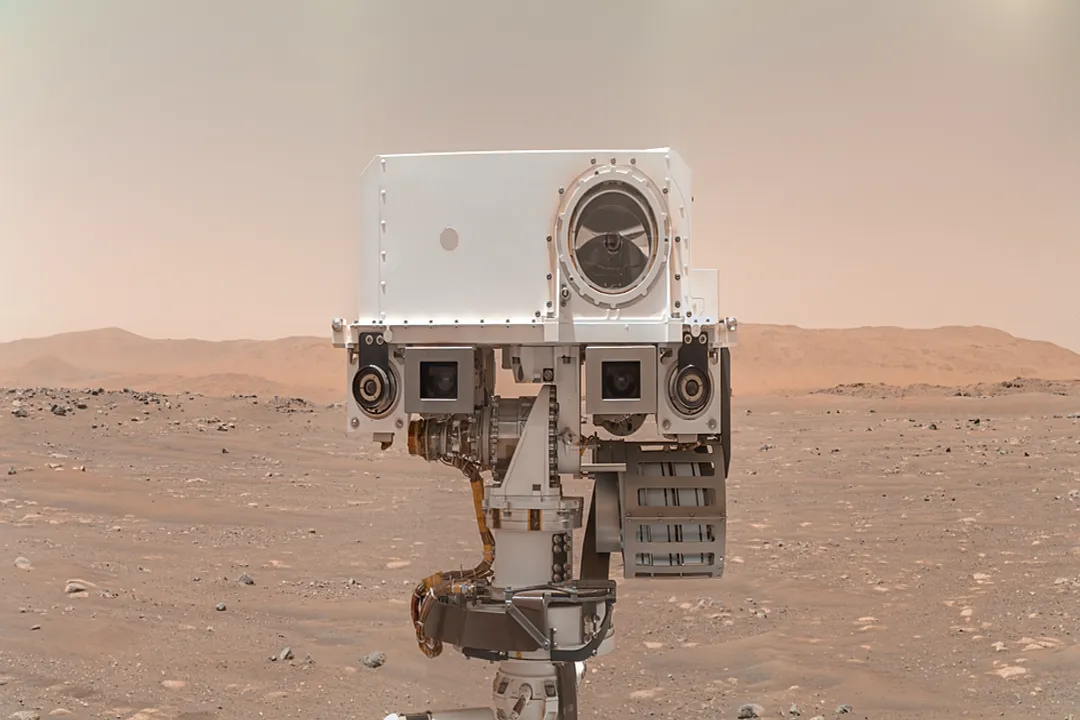
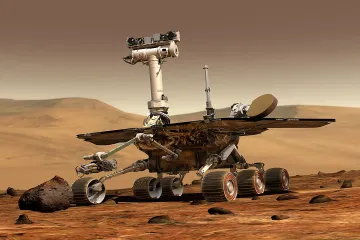
The perception that NASA's robotic explorers on Mars are having conversations or expressing feelings in perfectly formed sentences is a charming, yet inaccurate, byproduct of how we consume space exploration news. When we hear a rover like Opportunity report, "My battery is low and it's getting dark," it sounds wonderfully sentient, as if the machine has grasped the existential weight of the Martian sunset. However, the reality is that these robots are sophisticated data transmitters, not conversationalists capable of spontaneous, fluent speech. [1] The 'talking' is, in fact, a carefully managed translation process occurring light-years away on Earth. [1]
# Signal Path
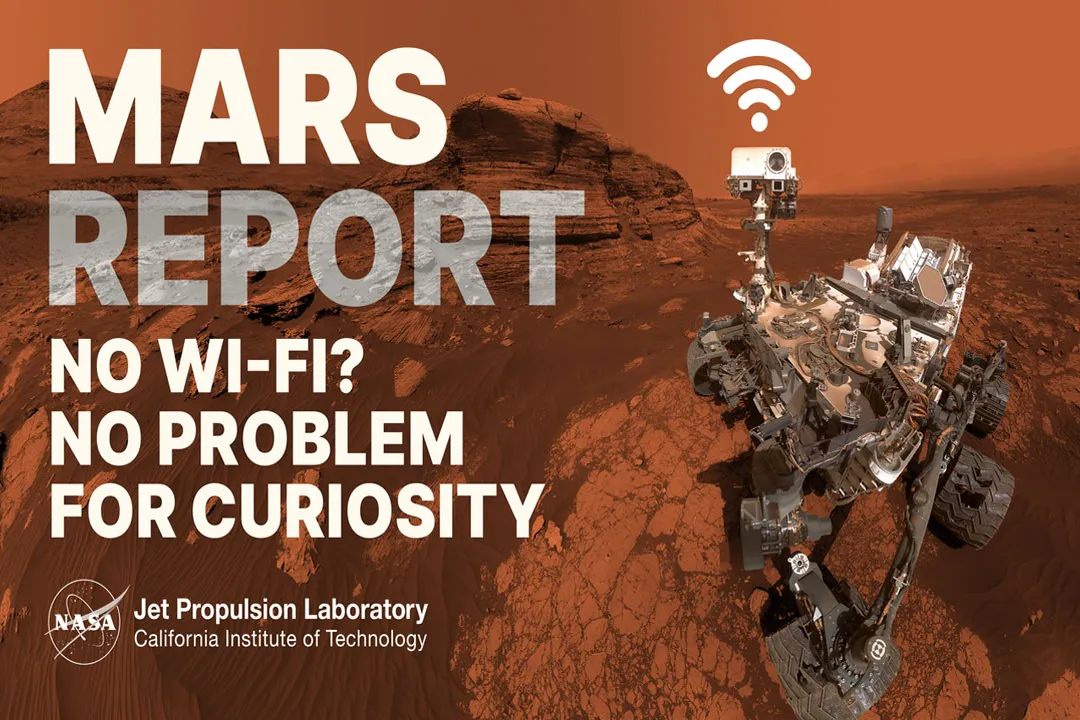
The fundamental challenge of communicating with a distant machine on another planet is the sheer physical distance, which dictates the method of data transmission. A Mars rover does not speak directly to mission control in Houston; the signal must follow a relay route. [2][5]
When a rover gathers data—be it images, instrument readings, or telemetry—that information is packaged and beamed toward Earth. Due to the limitations of the rover’s own antenna power and the necessity of maintaining directional alignment across vast distances, direct-to-Earth communication is rare and typically reserved for high-priority, brief exchanges. [5] The primary conduit for routine data transmission involves relay orbiters currently circling Mars. [2] These orbiters, such as the Mars Reconnaissance Orbiter (MRO) or others in orbit, capture the data sent up from the surface and then re-transmit it back to Earth using their more powerful, higher-gain antennas. [2][5]
On Earth, the receiving stations are part of the Deep Space Network (DSN). [5] This network of massive radio antennae, strategically located across the globe, is required to maintain constant contact, regardless of where Mars is in its orbit relative to Earth. [5] The sheer volume of data, combined with the need for error correction and deep-space communication protocols, makes this linkage an engineering marvel in itself. [2]
# Sending Orders
If the rover cannot talk, it certainly cannot issue commands to itself. Every action, from driving a specific distance to deploying a drill or analyzing a rock sample, must be pre-programmed and uploaded from mission control. [2]
The process for sending these instructions is also carefully orchestrated. The commands are often packaged into daily or sol-long command sequences back on Earth. [2] Engineers and scientists write the necessary code, which is then transmitted via the DSN to the orbiting relay satellites, who then bounce the package down to the rover. [2] It is a one-way transmission of instructions followed by a one-way transmission of results. There is no back-and-forth dialogue; it is more akin to sending a detailed script to an actor who must perform it perfectly before reporting back on the outcome. [2]
Consider the complexity of coordinating movement. When you watch a rover navigate, it appears active and intelligent, but this appearance stems from incredibly detailed planning on the ground. A sequence of commands dictates speed, wheel turns, and sensor activation for a set duration. If the rover encounters an unforeseen obstacle, it can only execute pre-programmed contingency behaviors; it cannot spontaneously decide to take a detour or call out to Earth for new instructions in real-time. [2]
# Distance Delay
The physical speed limit of the universe—the speed of light—imposes an absolute barrier on any concept of conversation. Because Mars and Earth are separated by millions of miles, a radio signal takes a significant amount of time to cross the interplanetary gulf. [2]
This light-time delay is variable, depending on the orbital positions of the two planets. At its closest approach, the one-way signal delay is about 3 minutes, but when Mars is on the far side of the Sun, that delay can stretch to over 20 minutes. [2][5]
If an engineer on Earth sent a simple query—"How are you?"—and the rover were somehow capable of understanding and responding instantly, the mission controller would still wait at least 6 minutes for a reply (3 minutes out, 3 minutes back) when the planets are near. [2] When the distance is maximized, that wait time balloons to over 40 minutes. [2] This inherent latency makes anything resembling a natural conversation—where replies are expected in seconds—entirely impossible. [5] The operational schedule is built entirely around this delay, requiring long periods of command preparation followed by long periods of data reception. [5]
# Human Voice
The source of those eloquent, anthropomorphized status updates lies squarely with the ground teams, not the software running on the rover's computers. When a rover detects a critical status event, like a low power reserve or a thermal issue, it transmits a string of numerical telemetry data representing that status. [1]
Engineers on Earth decode this telemetry. For public relations and educational purposes—to help the public connect with the mission—the science team then crafts a human-readable, often witty, sentence or two that summarizes the meaning of that data stream. [1] For example, a specific code indicating the sun is setting, the solar arrays are producing minimal current, and the internal temperature is dropping, gets packaged by a public affairs officer into: "My battery is low and it's getting dark". [1] The rover itself never formed that sentence; it simply transmitted the numbers that caused the sentence to be written back on Earth. [1] This practice adds context and personality to the mission, transforming dry engineering logs into engaging narratives. [1]
It is fascinating to consider the efficiency trade-off here. Transmitting a few bytes of raw telemetry indicating a low battery state is far more efficient in terms of bandwidth and power than attempting to transmit a complex, syntactically correct English sentence from the rover itself. The decision to send only data, and have humans construct the narrative later, is a necessary constraint imposed by the hardware and the Martian environment. [4]

# Hearing Mars
While the rovers don't "talk" in the human sense, recent missions have added equipment that allows us to hear the Martian environment. The Perseverance rover, for instance, is equipped with microphones, a feature that previous missions like Curiosity also included. [9]
The primary purpose of these audio recording devices is not for two-way communication or for the rover to speak, but rather to capture the sounds of Mars itself. [9] Hearing the wind blow across the red dust, the sounds of the rover’s own wheels grinding over the terrain, or even the impact of drilling into a rock provides invaluable scientific context that visual data alone cannot supply. [9] These microphones record acoustic data, which, like images, is packaged, transmitted via the orbiter relay, and sent back to Earth for analysis. [9] When NASA releases these audio files, we are hearing the planet, not the robot speaking in full sentences.
If we were to imagine a future scenario where rovers did communicate autonomously with each other—a concept interesting for base-building scenarios—the architecture would still have to account for the fundamental constraints. While local communication latency between two closely positioned robots would drop to milliseconds, they would still be operating on rigidly scheduled, pre-approved command sequences uploaded from Earth. [4] The need for centralized control and the power drain associated with maintaining an active receiver and processing complex natural language make autonomous inter-rover chat an unlikely feature for current-generation exploration robots. [4] The operational logic prioritizes collecting science and surviving the environment over establishing social protocols. [4]
# Command Flow
The entire communication system functions as a highly structured, slow-motion exchange of coded information. The mission control pipeline dictates that Earth sends commands, the rover executes them, and then sends back raw data reflecting the execution. [2]
To illustrate the layered nature of this exchange, imagine the following simplified sequence based on mission structure:
- Earth Teams Plan: Scientists determine the next sol's goals.
- Command Sequence Generation: Software engineers create a sequence of binary commands ( to $100$ megabits of data for complex operations). [2]
- Transmission Outbound: The DSN beams the sequence to a Mars orbiter.
- Relay Downlink: The orbiter transmits the sequence to the rover.
- Execution: The rover runs the commands, recording every step as telemetry data.
- Transmission Inbound: The rover beams its telemetry packet to the orbiter.
- Relay Uplink: The orbiter sends the data packet to Earth.
- Decoding and Reporting: Engineers decode the telemetry, verify success, and—if deemed useful for public outreach—translate the status codes into plain language statements. [1]
This entire loop, from step 2 to step 8, can take over 40 minutes, meaning a rover’s 'thoughts' are always at least 6 minutes old, and often much older, by the time they reach human ears. The current technology favors reliability and data integrity over conversational fluidity, a sensible engineering choice when the cost of a miscommunication is mission failure. [5] The closest we get to the rover talking is when the audio system captures the physical sounds of that distant, silent world. [9]
#Videos
NASA's Perseverance Rover Captures the Sounds of Mars - YouTube
Related Questions
#Citations
How can NASA's rovers communicate in fluent sentences so ... - Quora
Communicating with Curiosity - NASA Science
NASA's Perseverance Rover Captures the Sounds of Mars - YouTube
Why would Mars rovers talk to each other?
Mars in a Minute: Phoning Home – Communicating from Mars – Video
Earth to Mars: How NASA Keeps Curiosity Connected (Mars Report)
Mars Microphones | The Planetary Society