What did the Spirit rover find on Mars?
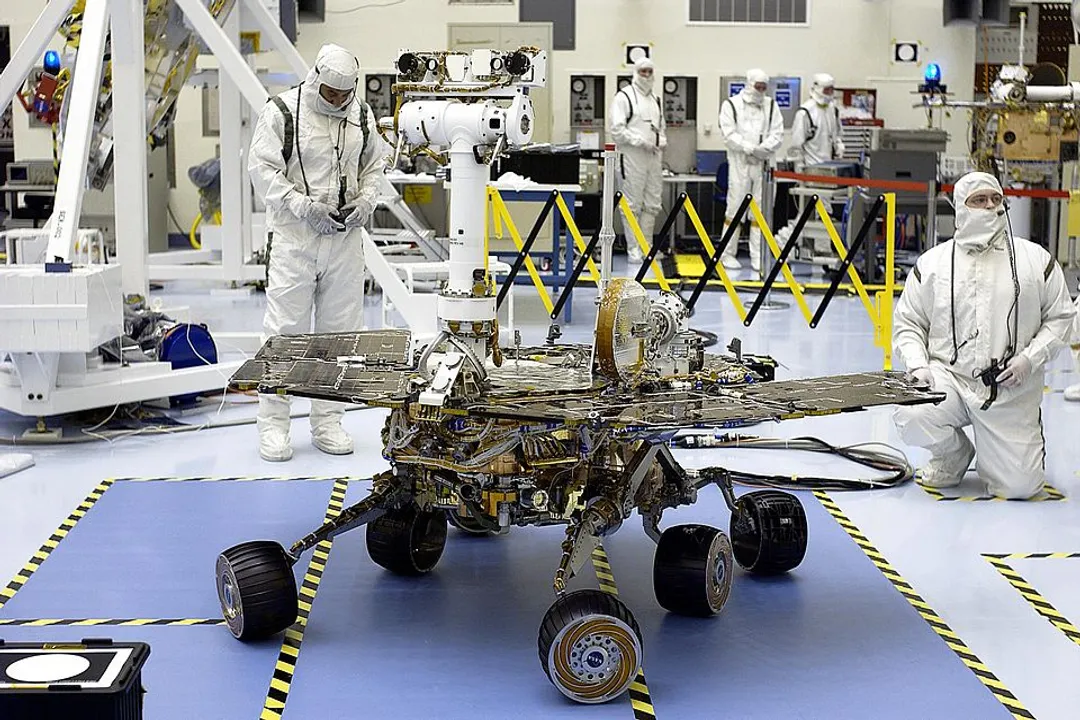
The Mars Exploration Rover Spirit landed on the Red Planet with a singular, profound objective: to determine if ancient Mars ever possessed the necessary conditions to support life. This meant looking for definitive geological evidence of past liquid water activity. Spirit touched down in the vast basin of Gusev Crater in January 2004, a location chosen because orbital observations suggested it might have once contained a large, sustained lake or a river delta system.
# Mission Lifespan
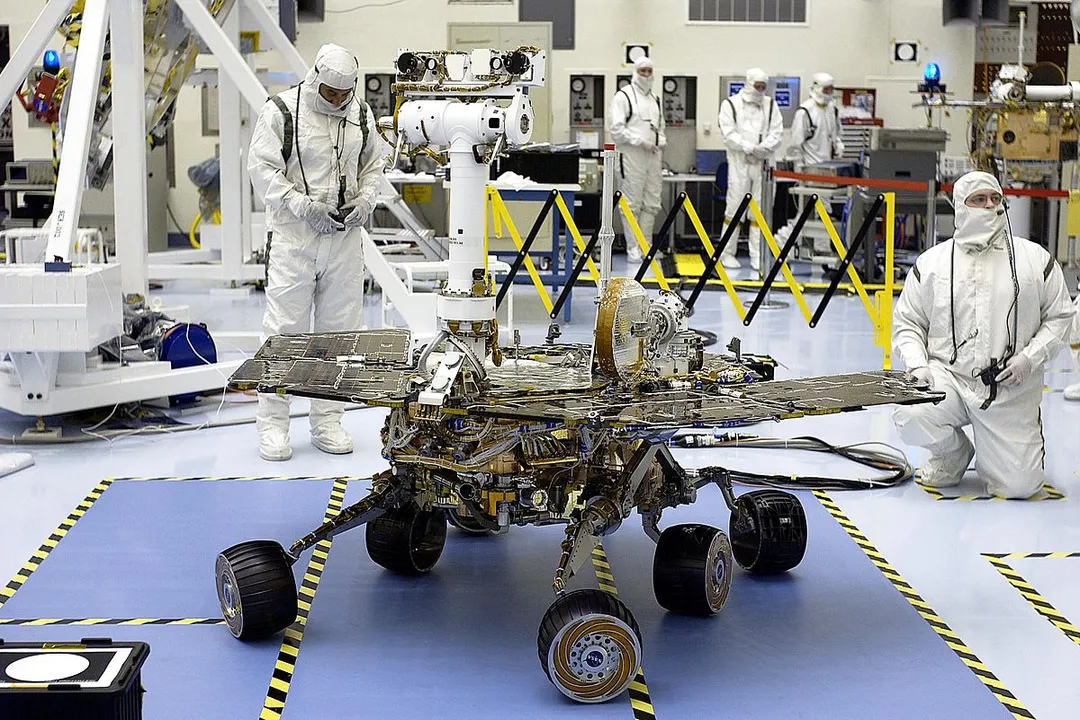
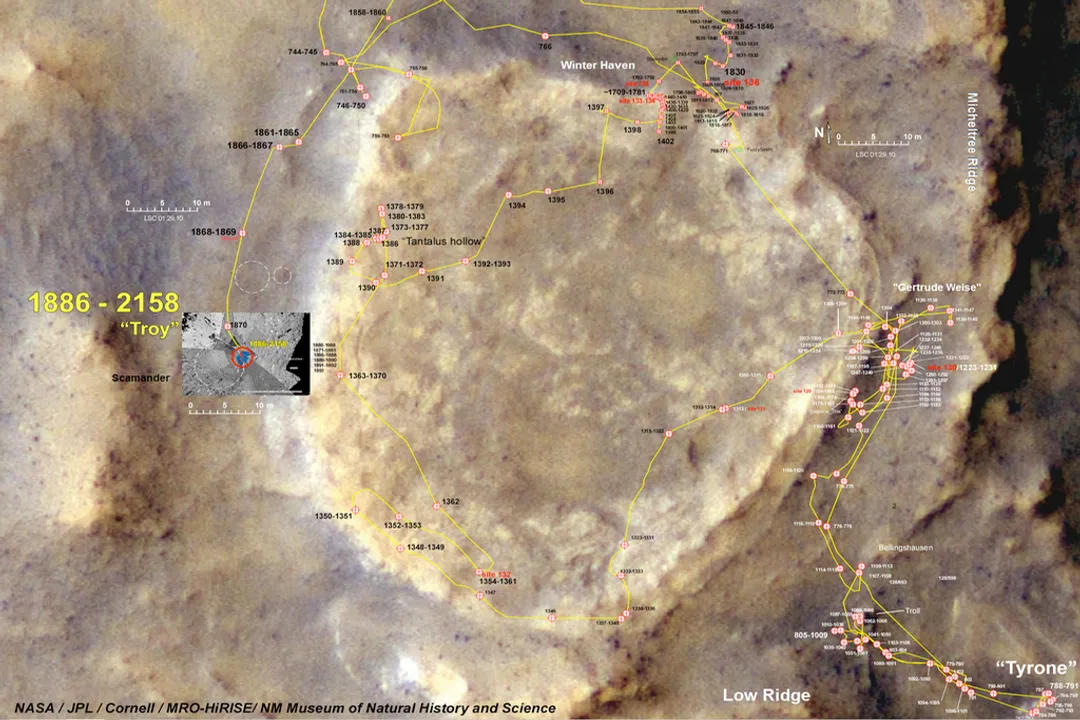
The mission timeline itself is a story of unexpected success. The primary operational lifespan for Spirit was scheduled to be a mere 90 Martian sols (about three Earth months). Against those modest expectations, Spirit operated for over six Earth years, surviving far longer than anticipated. It wasn't until May 2009 that the rover drove into soft soil at a location nicknamed "Troy," causing its wheels to sink past their axles, making escape impossible. Although engineers made continuous efforts to free it, communication ceased in March 2010, and NASA officially declared the mission over in January 2011. The total cost for the twin rover program, including Spirit and Opportunity, amounted to approximately $408 million.
# Water Signatures
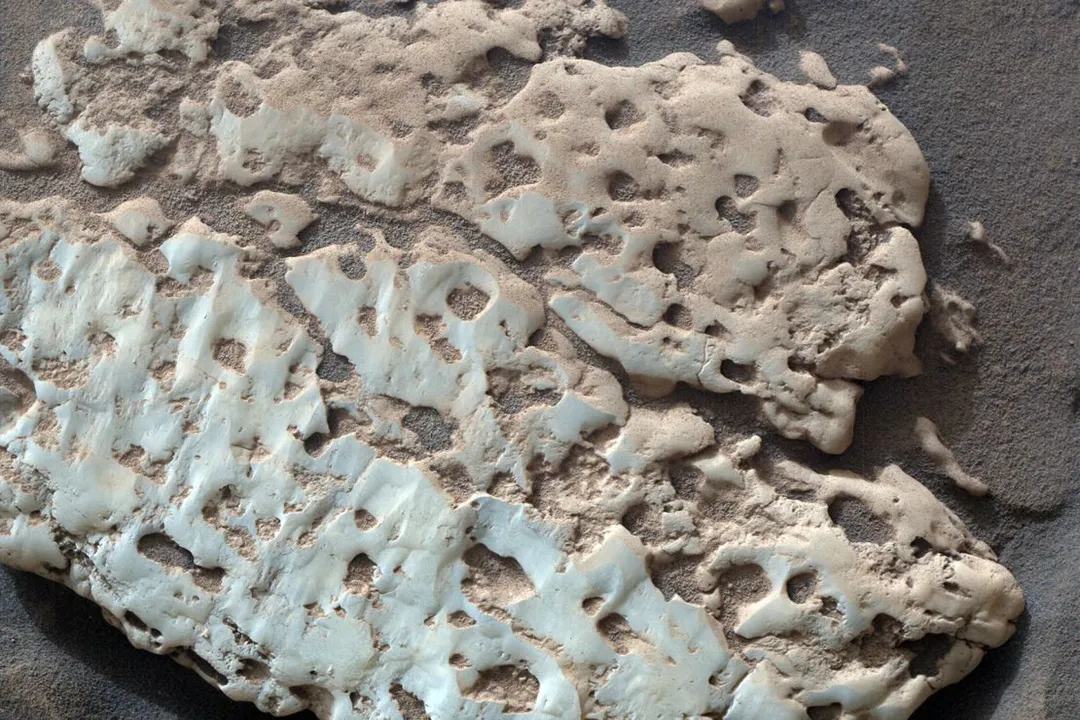
The core findings of Spirit centered on geological proof that water had indeed been present in Gusev Crater, albeit perhaps not in the massive, ancient lake scenario initially theorized. The scientific goal was not to find life itself, but rather to find the environments where life could have thrived.
The rover successfully identified several key water-related materials:
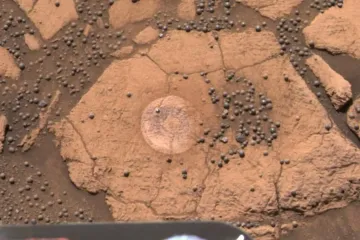
- Hematite Spherules: Early in the mission, Spirit found small, grey, marble-sized objects scattered across the surface, often referred to as "blueberries". These were confirmed to be rich in the mineral hematite. On Earth, these spherules typically form when water precipitates minerals out of flowing liquid.
- Altered Minerals: Spirit's instruments detected various minerals within rocks and soil that show signs of having been chemically altered by the interaction with liquid water. The presence of hydrated minerals confirms that water played a role in shaping the local geology.
While the surface plains of Gusev provided evidence of water interaction, the most compelling geological story emerged when Spirit began climbing the Columbia Hills.
# Discoveries on Hills
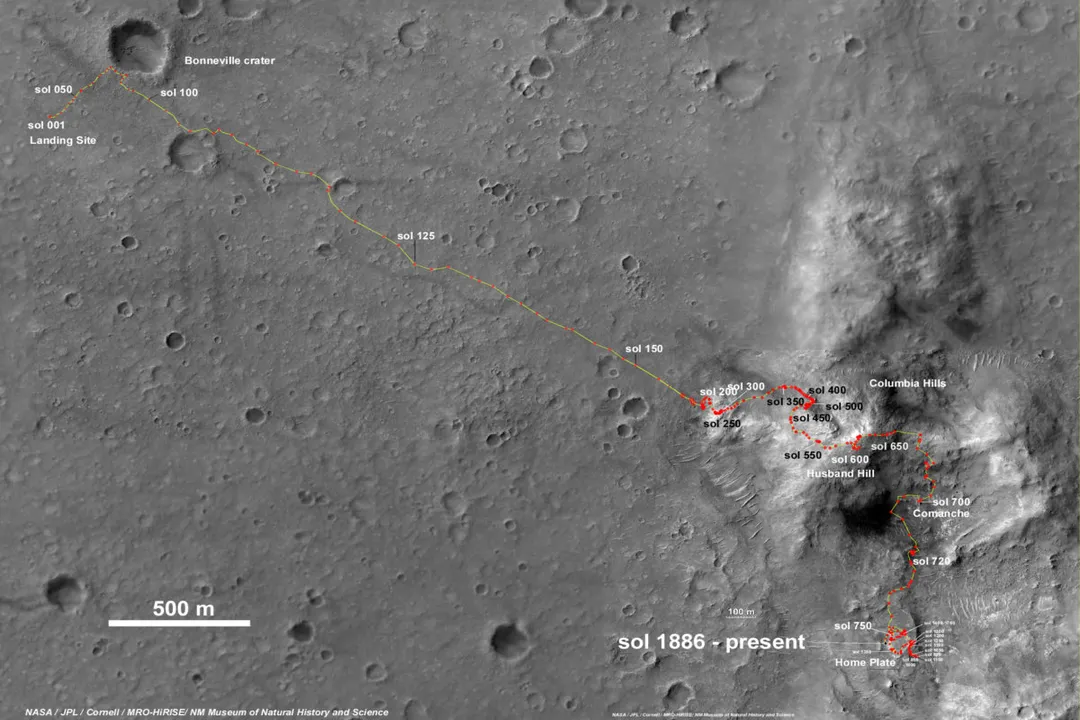
The ascent of the Columbia Hills provided Spirit with access to older, deeper materials that had been uplifted by subsequent geological forces. Here, the rover found evidence of a more complex and energetic past than the relatively flat plains suggested.
The rocks on the hills appeared to be volcanic in origin but had undergone intense modification by water and heat. One particular rock, nicknamed "Zurich Swiss," stood out. Chemical analysis of this rock and the surrounding soil suggested they formed in the presence of standing water, likely associated with an ancient hydrothermal system—essentially, hot springs. This finding is scientifically profound because warm, water-rich environments created by volcanic activity are considered prime candidates for where microbial life might have originated or persisted on early Mars.
Examining the data collected by Spirit's onboard instruments, such as the APXS and Mössbauer spectrometer, reveals a distinct chemical signature in the Columbia Hills material compared to the plains below. The materials on the plains hinted more at erosion from wind and perhaps brief surface water contact. In contrast, the hill samples showed pervasive chemical alteration, indicating that heated, acidic fluids had circulated through the rock matrix over time. This geological stratification between the plain surface and the hill bedrock gives scientists a layered record, where the hills offer a clearer glimpse into a geologically active, aqueous past than any uniform surface deposit could provide. [1]
# Engineering Successes
To achieve these complex chemical and textural analyses, Spirit relied on its sophisticated instrument suite. This included the Panoramic Camera (Pancam) for wide-angle, color imaging and the Microscopic Imager (MI) for extreme close-ups of rock surfaces and textures. The success of the mission was just as much an engineering feat as a scientific one, given the hostile Martian environment.
The sheer longevity of the mission is instructive. Spirit's endurance, vastly outlasting its design specification, was largely due to the careful management of its solar panels by the ground teams. Dust accumulation on these panels can quickly lead to power failure, yet mission control managed driving and positioning schedules to maximize dust shedding during windy periods.
The final fate of Spirit offers a cautionary tale for future planetary exploration. Unlike its twin, which continued operating until 2018, Spirit's immobility stemmed from terrain hazards. When it became permanently mired in soft sand, the rover could no longer orient its panels to optimally catch the weak Martian sunlight, leading to insufficient power storage to survive the cold Martian night. This experience demonstrates that for future mobile explorers, landing site selection must heavily weigh terrain mechanics and dust hazards alongside pure scientific interest. A mission planner must account for the possibility that reaching the most scientifically interesting spot might involve navigating soft regolith that could trap the vehicle, making slow, multi-sol terrain testing a necessary priority even if it costs initial science collection time. [2]
# Lasting Impact
Spirit did not directly detect any undeniable biosignatures—the chemical or physical evidence of ancient life. However, its work, alongside Opportunity, was instrumental in transforming the scientific perception of Mars. The rovers conclusively proved that Mars was not always the arid, cold desert it appears to be today; it was once a place that harbored the essential ingredient for life: liquid water.
By identifying environments like the water-altered rocks in the Columbia Hills, Spirit successfully pinpointed the precise types of locations—hydrothermal systems—that subsequent, more advanced missions would need to target in their dedicated search for fossilized Martian microbes. The mission established the capability for long-duration, mobile surface geology, laying the foundation of knowledge for all rovers that followed.
#Videos
Did Spirit really find hot spring deposits on Mars? - YouTube
Related Questions
#Citations
Spirit (rover) - Wikipedia
Science Highlights
NASA's Spirit Rover: Everything you need to know - Space
Did Spirit really find hot spring deposits on Mars? - YouTube
Spirit rover adds to evidence of Mars water - NBC News
Mars Exploration Rovers | The Planetary Society
Did the Spirit Mars Rover Find a Biosignature of Past Life?
NASA's Curiosity rover makes its 'most unexpected' find on Mars | CNN