Can Spirit rover talk?

The idea that a machine exploring Mars can communicate with us in fluent, narrative sentences is captivating. When we hear about Mars rovers, perhaps from past missions like Spirit or its twin, Opportunity, expressing concerns like low battery or the onset of night, it certainly sounds like they are talking to us in a human way. [3] However, the reality of interplanetary communication is far more technical, involving layers of orbiting spacecraft, massive antennas, and carefully translated data packets. The short answer is that the Spirit rover, or any rover for that matter, does not "talk" in the way humans converse; it transmits engineering data which is then interpreted and sometimes embellished on Earth. [1][3]
# Data Transmission

The fundamental act of a Mars rover communicating is the transmission of its status, telemetry, and scientific findings back to Earth. This process is not instantaneous, nor is it a direct radio link like a walkie-talkie. [5] Because Mars is so far away, direct communication would require an enormous amount of power and prohibitively large antennas on the rover itself. [2] Instead, NASA relies on a sophisticated relay system.
The rover, such as Spirit, first transmits its data down to a robotic intermediary orbiting Mars, like an orbiter or a Mars-synchronous satellite. [5] These orbiters act as high-speed postal carriers, collecting the relatively low-bandwidth transmissions from the surface and then beaming that collected data back toward Earth when they have a clear line of sight to us. [2][5] On Earth, this signal is captured by one of the massive dishes of the Deep Space Network (DSN), which can be located in places like California, Madrid, or Canberra. [2]
Once the data arrives at the DSN, it is routed to mission control centers, like the Jet Propulsion Laboratory (JPL), where engineers process the raw telemetry. The data stream consists of numbers, status codes, diagnostic readings, and scientific measurements, rather than English prose. [1] It is this raw engineering information that tells mission controllers everything from the tilt of the solar panels to the temperature inside the electronics bay. [1]
# Report Format
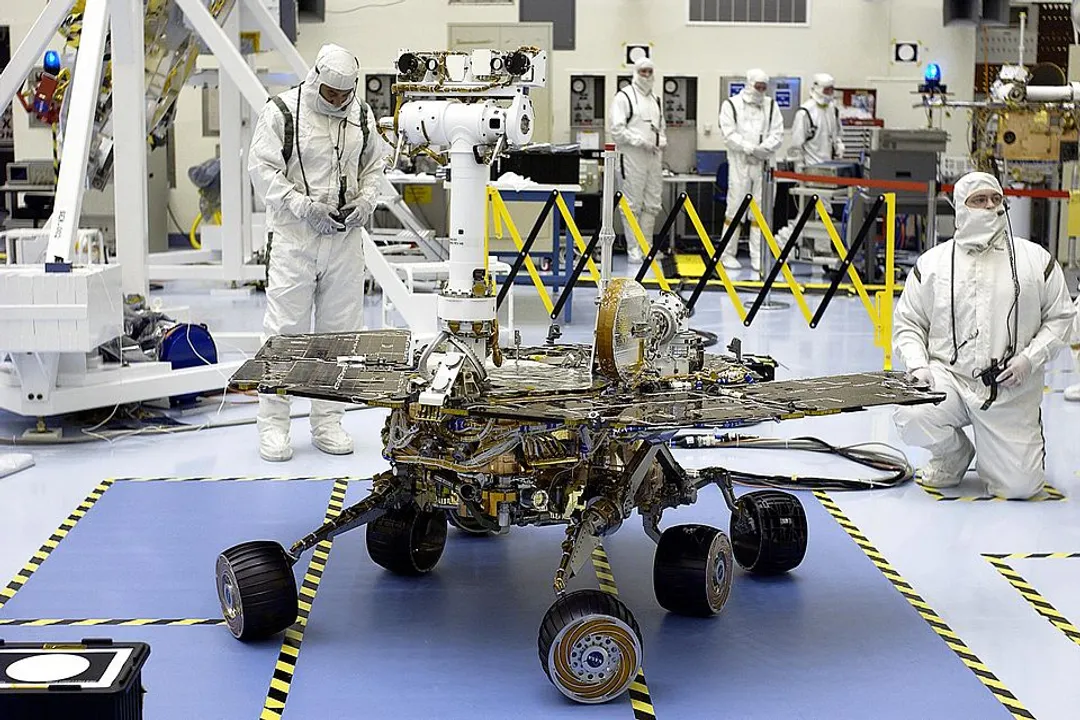
The perception that Spirit or Opportunity was "talking" comes from how mission control translates that telemetry for the public, and sometimes for internal updates. For instance, a string of binary code indicating a low voltage on a specific battery circuit might be translated by an engineer into the plain-language report: "Battery level critically low; rover entering safe mode". [1]
The famous sentiments, such as the one attributed to Opportunity about low battery and darkness, are a key example of this translation process. [3] Those messages were not formed by the rover's onboard computer deciding to express existential dread or concern over the fading light. They were almost certainly canned, pre-written phrases developed by the ground team. [3] These phrases are programmed into the command sequence for specific low-power or end-of-day scenarios. They serve as an efficient, emotive summary of the actual engineering status. For a general audience, hearing a rover say, "My battery is low, and it's getting dark," is far more engaging than reading a telemetry stream reporting a voltage reading of 12.8V. [3]
It is interesting to consider the sheer inefficiency of sending full, natural sentences versus raw data. If the rover had to compose a grammatically correct English sentence for every status update, the power and time required would dramatically slow down science operations. Binary telemetry is the most efficient carrier of information across interstellar distances, meaning the "voice" we hear is a carefully curated abstraction of the actual machine status. [1]
# Spirit Status
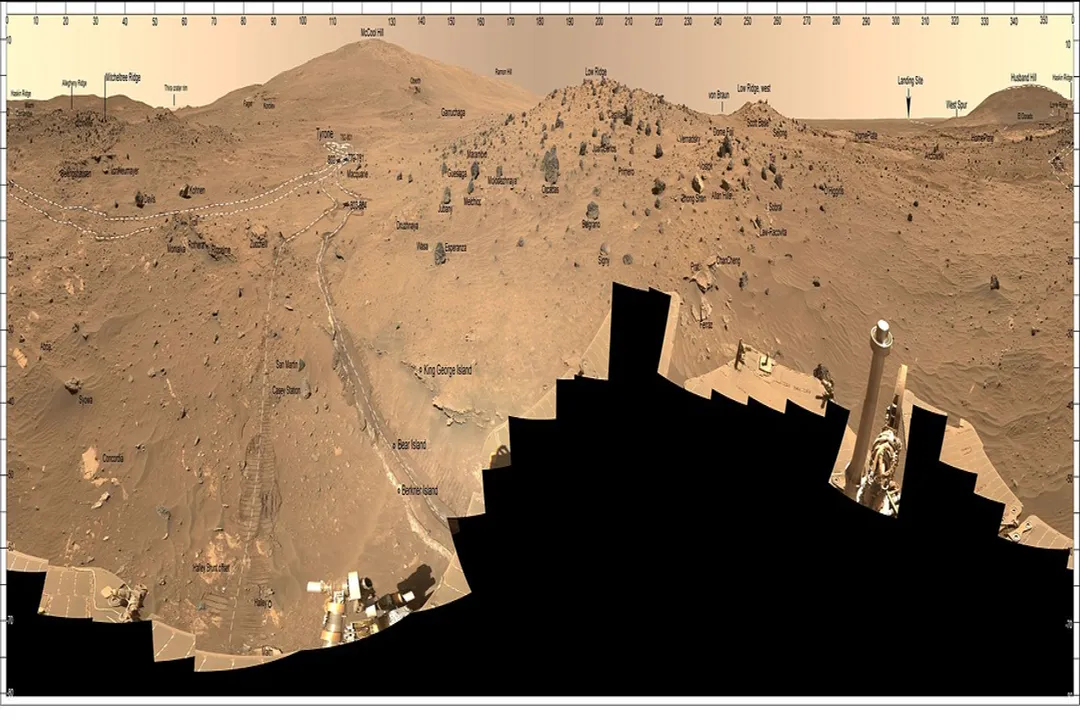
The Spirit rover, along with its twin Opportunity, were part of the Mars Exploration Rover (MER) mission, which far outlasted its planned 90-sol (Martian day) mission length. [8] Spirit operated successfully on Mars for over six years until January 2010, when it became permanently stuck in soft soil and contact was lost in March 2010. [8] Therefore, the "talk" from Spirit ceased years ago, though the data it collected continues to inform science.
While the communication architecture for Spirit was similar to later missions, the processing and public presentation methods evolve. The key takeaway is that the rover's direct output is not natural language; it is an electronic signal representing machine state. [1] Any fluent sentence is a product of human decision-making on the receiving end.
# Audio Files
To make the data even more accessible and immediate for the public, NASA engineers sometimes convert the telemetry reports into audible formats. This is where the concept of a rover "talking" takes on a slightly more literal, yet still manufactured, meaning. [9] These are not recordings of the rover's physical mechanisms, like a whirring motor, but rather synthesized audio files generated from the status reports. [9]
These files translate data points into sound waves that mimic human speech patterns or simply read the English summary text aloud. [9] For example, the JPL website has offered audio files where the synthesized voice presents the latest findings or health status of the rovers. [9] This method bridges the gap between the cold, numerical reality of deep-space telemetry and the human desire for a direct connection with an active explorer millions of miles away.
The complexity of this process highlights an inherent engineering trade-off. The effort put into creating these synthesized audio reports—a process that requires human curation, text conversion, and formatting—represents a deliberate investment in public engagement. Had the goal been purely internal engineering communication, this layer would likely be skipped entirely, relying only on screen displays of numerical readouts. [2][3]
When we compare the Spirit era to later missions, we see this prioritization continue. While Spirit sent data, later systems, like those used by Curiosity, benefit from higher-bandwidth relay capabilities, allowing for more frequent, richer data packets, though the fundamental nature of the translation—from binary to sentence—remains. [2] Ultimately, the rover is a remote data-gathering instrument, and its voice is a carefully constructed echo, made audible by the dedication of the teams monitoring its distant work. [5]
#Videos
NASA's Perseverance Rover Captures the Sounds of Mars - YouTube
Related Questions
#Citations
Why can mars rovers talk to us? : r/NoStupidQuestions - Reddit
Communicating with Curiosity - NASA Science
How can NASA's rovers communicate in fluent sentences so ... - Quora
NASA's Perseverance Rover Captures the Sounds of Mars - YouTube
Mars in a Minute: Phoning Home – Communicating from Mars – Video
Why would Mars rovers talk to each other?
Earth to Mars: How NASA Keeps Curiosity Connected (Mars Report)
Spirit (rover) - Wikipedia